Parental Preference on K-12 vs. K-10 Curricula
DOI:
https://doi.org/10.23917/ppd.v12i3.10752Keywords:
curricula, filipino families, parents, elementary educationAbstract
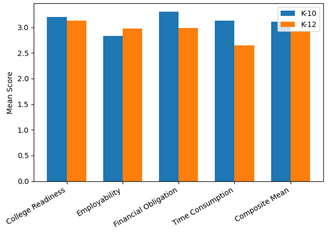
The implementation of the K–12 curriculum in the Philippines introduced major structural changes to the basic education system. However, ongoing debates and policy discussions regarding the possible return to the K–10 system have raised important questions about how families perceive the benefits and challenges associated with these two educational structures. This study examined parental preferences between the K–12 and K–10 curricula in the Philippines based on four key indicators: college readiness, employability, financial burden, and time consumption. Using a descriptive quantitative approach, the study surveyed 600 parents of elementary school students from three public schools in Laguna Province through a 4-point Likert scale questionnaire. The results revealed that parents generally perceived both curricula as capable of preparing students for college and employment. However, the K–10 curriculum was slightly preferred due to its lower financial burden and shorter duration of study. An independent samples t-test also indicated significant gender-based differences, with mothers perceiving the K–12 curriculum as more demanding in terms of time and financial cost compared to fathers. The study underscores the need for educational reforms that are aligned with the capacities, expectations, and socio-economic realities of Filipino families.
Downloads
Downloads
Submitted
Accepted
Published
How to Cite
Issue
Section
License
Copyright (c) 2025 Mark Gabriel Wagan Aguilar, Victa Sari Dwi Kurniati , Adhi Kusuma

This work is licensed under a Creative Commons Attribution-NonCommercial 4.0 International License.