
Optimising mathematics teaching practice in an ODeL context: A subject-specific supervisor’s perspectives
Article Sidebar
- Mathematic supervision, Open distance and e-learning, Supervisors, Teaching practice
Abstract
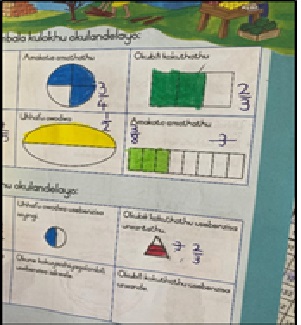
Many student teachers in Open Distance e-Learning (ODeL) contexts struggle to develop strong teaching competencies, partly because supervision is often not subject-specific. This gap limits the quality of feedback needed to address discipline-related misconceptions. The study, therefore, examined how subject-specific supervision can optimise mathematics teaching practice in an ODeL environment. A qualitative, multiple-case study was conducted with five student teachers, three from Mathematics and two from Natural Sciences & Technology, participating in the Mathematics Specialist-Supervisor Pairing Programme (SSPP). Data were generated through classroom observations, lesson analysis, field notes, and reflective feedback meetings, and were thematically analysed using Pedagogical Content Knowledge (PCK) as the guiding framework. Findings showed that subject-specific supervisors were able to identify and correct key misconceptions, including misuse of brackets, misunderstanding the distributive property, misrepresenting geometric fractions, and interpreting chemical equations arithmetically. Targeted probing, modelling, and immediate feedback helped student teachers refine both content knowledge and pedagogical strategies. The study concludes that subject-specific supervision significantly enhances instructional quality in Mathematics and related STEM subjects within ODeL settings. It recommends institutionalising subject-specialist pairing models to strengthen student teachers’ PCK, improve feedback quality, and better prepare graduates for effective classroom practice.
Full text article
References
Abidin, Z., & Maizah, S. (2023). Analisis Pendidikan Bermutu Melalui Tugas dan Kompetensi Supervisor. Pedagogika: Jurnal Ilmu-Ilmu Kependidikan, 3(1), 50–57. https://doi.org/10.57251/ped.v3i1.958
Ackerman, K., & Horn, C. (2021). The Positive Implications of Intentional Feedback. Journal of Special Education Preparation, 1(1), 16–24. https://doi.org/10.33043/JOSEP.1.1.16-24
Anshori, I. (2020). Improvement of Mathematics Teacher Performance Through Academic Supervision With Collaborative Approaches. International Journal of Educational Research Review, 5(3), 227-242. https://doi.org/10.24331/ijere.735935
Auslander, S. S., & Myers, K. (2022). Keep Inquiring: A Collective Examination of Elementary Mathematics Specialist Preparation. In T. Bourke, D. Henderson, R. Spooner-Lane, & S. White (Eds.), Reconstructing the Work of Teacher Educators (pp. 51–69). Springer Nature Singapore. https://doi.org/10.1007/978-981-19-2904-5_3
Aquilar Solano, M. (2020). Triangulation and trustworthiness: Advancing research on public service interpreting through qualitative case study methodologies. FITISPos-International Journal, 7(1), 31–52. https://doi.org/10.37536/FITISPOS-IJ
Becker, K., & Park, K. (2011). Effects of integrative approaches among science, technology, engineering, and mathematics (STEM) subjects on students' learning: A preliminary meta-analysis. Journal of STEM Education: Innovations and Research, 12(5-6), 23-37. https://www.jstem.org/jstem/index.php/JSTEM/article/view/1509
Beckmann, J. (2017). University research ethics clearances: Safety nets, or a false sense of legal immunity? South African Journal of Higher Education, 31(3). https://doi.org/10.20853/31-3-1049
Canals, L., Granena, G., Yilmaz, Y., & Malicka, A. (2020). Second Language Learners’ and Teachers’ Perceptions of Delayed Immediate Corrective Feedback in an Asynchronous Online Setting An Exploratory Study. TESL Canada Journal, 37(2), 181–209. https://doi.org/10.18806/tesl.v37i2.1336
Das, K. (2020). A Study on Misconception of Using Brackets in Arithmetic Expression. Shanlax International Journal of Education, 8(4), 76-80. Https://doi.org/10.34293/education.v8i4.3252
Ekeh, M. C., & Ramsaroop, S. (2022). Mathematics subject supervisors' role in ensuring quality teaching in preprimary and primary schools. South African Journal of Childhood Education, 12(1), 1-9. https://doi.org/10.4102/sajce.v12i1.1220
Etim, A. S. (2023). Boosting Students’ Performance, Career Readiness, and Earnings: An Analysis Based on the Context of Poverty Reduction. In J. Etim & A. Etim (Eds.), Advances in Educational Marketing, Administration, and Leadership (pp. 78–87). IGI Global. https://doi.org/10.4018/978-1-7998-9678-4.ch005
Fatmasari, R., & Suripto. (2018). Teaching Practice in Distance Education Context. SHS Web of Conferences, 42, 00099. https://doi.org/10.1051/shsconf/20184200099
Febriana Sari, H., & Agustini, R. (2024). Develpoment of Four Tier Multiple Choice Diagnostic Test Instrument to Detect Misconception on Chemical Bonding. JIIP - Jurnal Ilmiah Ilmu Pendidikan, 7(9), 10494–10499. https://doi.org/10.54371/jiip.v7i9.5410
Fuchs, K. (2023). A Systematic Guide for Conducting Thematic Analysis in Qualitative Tourism Research. Journal of Environmental Management and Tourism, 14(6), 2696. https://doi.org/10.14505/jemt.v14.6(70).17
Hamerská, L., Matěcha, T., Tóthová, M., & Rusek, M. (2024). Between Symbols and Particles: Investigating the Complexity of Learning Chemical Equations. Education Sciences, 14(6), 570. https://doi.org/10.3390/educsci14060570
Jha, Dr. A., & Manushi, M. (2022). Foundational learning skills: Panacea for quality education. International Journal of Multidisciplinary Trends, 4(1), 204–208. https://doi.org/10.22271/multi.2022.v4.i1c.169
Jojo, Z. (2022). Engaging mathematics student-teachers in an Open Distance e-learning context. Perspectives in Education, 40(1), 196–211. https://doi.org/10.38140/pie.v40i1.5350
Kanapathipillai, K. (2022). Innovation of alternative supervision practices for completion of action research project in covid-19 pandemic situation – a study based on the bachelor of education (Hon.) In special needs education (Bedsne) offered by the Open University of Sri Lanka. Isagoge - Journal of Humanities and Social Sciences, 2(4), 58–75. https://doi.org/10.59079/isagoge.v2i4.112
Leach, J. L., Leach, L. F., & Post, K. (2024). A Metacognitive Teaching Intervention to Overcome Student Misunderstandings About Negligence. Journal of Legal Studies Education, 41(2), 95–105. https://doi.org/10.1111/jlse.12151
Livers, S. (2012). Coaching the coaches: Supporting university supervisors in the supervision of elementary mathematics instruction. [University of Louisville]. https://doi.org/10.18297/etd/846
Lumpkin, A. (2022). Checking for Understanding Strategies Using Formative Assessments for Student Learning. Global Research in Higher Education, 5(1), 50–58. https://doi.org/10.22158/grhe.v5n1p50
Mafa-Theledi, O. N. (2024). Teachers’ Pedagogical Content Knowledge and Subject Matter Content Knowledge: Is the Framework Still Relevant in Teaching of STEM. International Journal of Research and Innovation in Social Science, VIII(IV), 836–846. https://doi.org/10.47772/IJRISS.2024.804061
Maurice-Ventouris, M., Muller Moran, H. R., Alharbi, M., Ahn, B. T., Harley, J. M., & Lachapelle, K. J. (2021). The study of visuospatial abilities in trainees: A scoping review and proposed model. Surgery Open Science, 5, 25–33. https://doi.org/10.1016/j.sopen.2021.05.001
Mohamed, H., Arulprasam, J., & Hussain, M. A. M. (2024). Impact of Teacher’s Professional Development Programme on Students’ Performance in Secondary Schools. International Journal of Academic Research in Progressive Education and Development, 13(3), Pages 5092-5106. https://doi.org/10.6007/IJARPED/v13-i3/22839
Mulaudzi, M. A., Du Toit, A., & Golightly, A. (2023). Hybrid problem-based learning in Technology teacher preparation: Giving students a voice in their learning process. Journal of Education (University of KwaZulu-Natal), (90), 128-148. https://orcid.org/0000-0001-7055-5093
Musingafi, M. C. C., Dhliwayo, T., & Namusi, W. (2019). Challenges and Prospects for Teaching Practice in the Zimbabwe Open University: Learning from Experiences in the First Semester 2016 Teaching Practice Supervision Exercise in Masvingo, Bulawayo, Matabeleland North and Matabeleland South. Journal of Education and Practice, 10(7), 77–83. https://doi.org/10.7176/JEP/10-7-09
Nahouli, Z., Mackenzie, J.-M., Aresti, A., & Dando, C. (2023). Rapport building with offenders in probation supervision: The views of English probation practitioners. Probation Journal, 70(2), 104–123. https://doi.org/10.1177/02645505221137448
Ngara, R., & Simuforosa, M. (2017). Issues of Quality in Teaching Practice Supervision Among Open Distance Students: Student and Lecturer Input. European Journal of Education Studies, 3(8), 824-835. https://doi:10.5281/zenodo.887411
Nii Laryeafio, M., & Ogbewe, O. C. (2023). Ethical consideration dilemma: Systematic review of ethics in qualitative data collection through interviews. Journal of Ethics in Entrepreneurship and Technology, 3(2), 94–110. https://doi.org/10.1108/JEET-09-2022-0014
Nurcahyono, N. A., Prabawanto, S., Suryadi, D., Wibowo, T., & Novarina, E. (2020). Analysis of Instrument Validity to Measure Junior High School Students’ Mathematical Imagination. Universal Journal of Educational Research, 8(7), 3136–3141. https://doi.org/10.13189/ujer.2020.080741
Potvin, P., Boissard, B., Durocher, É., Hasni, A., & Riopel, M. (2024). Empowering professional learning communities of secondary science teachers to uncover and address their students’ misconceptions via research-oriented practices. Frontiers in Education, 9(2024), 1419714. https://doi.org/10.3389/feduc.2024.1419714
Quinio, K., & Cuarto, P. (2023). Mathematical Misconceptions of Senior High School Students: Implications to Mathematics Curriculum. JPAIR Institutional Research, 21(1), 44–66. https://doi.org/10.7719/872
Robinson, S. P. A., & Knight, V. (Eds.). (2019). Handbook of Research on Critical Thinking and Teacher Education Pedagogy: IGI Global. https://doi.org/10.4018/978-1-5225-7829-1
Saracco, S. (2023). Visual Thinking. In S. Saracco, Plato, Diagrammatic Reasoning and Mental Models (pp. 37–44). Springer Nature Switzerland. https://doi.org/10.1007/978-3-031-27658-3_3
Schmidt, T., Cloete, A., Davids, A., Makola, L., Zondi, N., & Jantjies, M. (2020). Myths, misconceptions, othering and stigmatizing responses to Covid-19 in South Africa: A rapid qualitative assessment. PLOS ONE, 15(12), 1–20. https://doi.org/10.1371/journal.pone.0244420
Sekar, D., & Bhuvaneswari, M. (2024). Exploring the Depths: Qualitative Research in Psychology. In A. Demircioğlu (Ed.), Advances in Information Quality and Management (pp. 267–292). IGI Global. https://doi.org/10.4018/979-8-3693-1726-6.ch014
Sethusha, M. J. (2014). Challenges Experienced by Teaching Practice Supervisors in an Open and Distance Learning Environment. Mediterranean Journal of Social Sciences, 5(15), 409-413. https://doi:10.5901/mjss.2014.v5n15p409
Shulman, L. S. (1986). Those who understand: Knowledge growth in teaching. Educational Researcher, 15(2), 4-14. https://doi.org/10.3102/0013189X015002004
Suwidiyanti, A. I. (2020). Improvement of Mathematics Teacher Performance Through Academic Supervision With Collaborative Approaches. International Journal of Educational Research Review, 5(3), 227–242. https://doi.org/10.24331/ijere.735935
Tongco, Ma. D. C. (2007). Purposive Sampling as a Tool for Informant Selection. Ethnobotany Research and Applications, 5, 147–158. https://doi.org/10.17348/era.5.0.147-158
Uaiana Prates, & Matos, J. F. (2021). Mathematics Education and Distance Learning: A systematic literature review (p. 1838654 Bytes) [Dataset]. SciELO journals. https://doi.org/10.6084/M9.FIGSHARE.14304728
Zubaidah, T., Johar, R., Annisa, D., & Safitri, Y. (2023). Teacher’s Pedagogical Content Knowledge (PCK) in implementing Realistic Mathematics Education (RME). Beta: Jurnal Tadris Matematika, 16(1). https://doi.org/10.20414/betajtm.v16i1.550
Authors
Copyright (c) 2026 Mbazima Ngoveni, Ramashego Shila Mphahlele, Gabriel Mphuthi

This work is licensed under a Creative Commons Attribution-NonCommercial 4.0 International License.