Decoding the Architectural Geometry of Plaosan Temple: An Ethnographic Exploration for Contextual Mathematics Education
DOI:
https://doi.org/10.23917/varidika.v38i3.16204Keywords:
plaosan temple, ethnography, EthnomathematicsAbstract
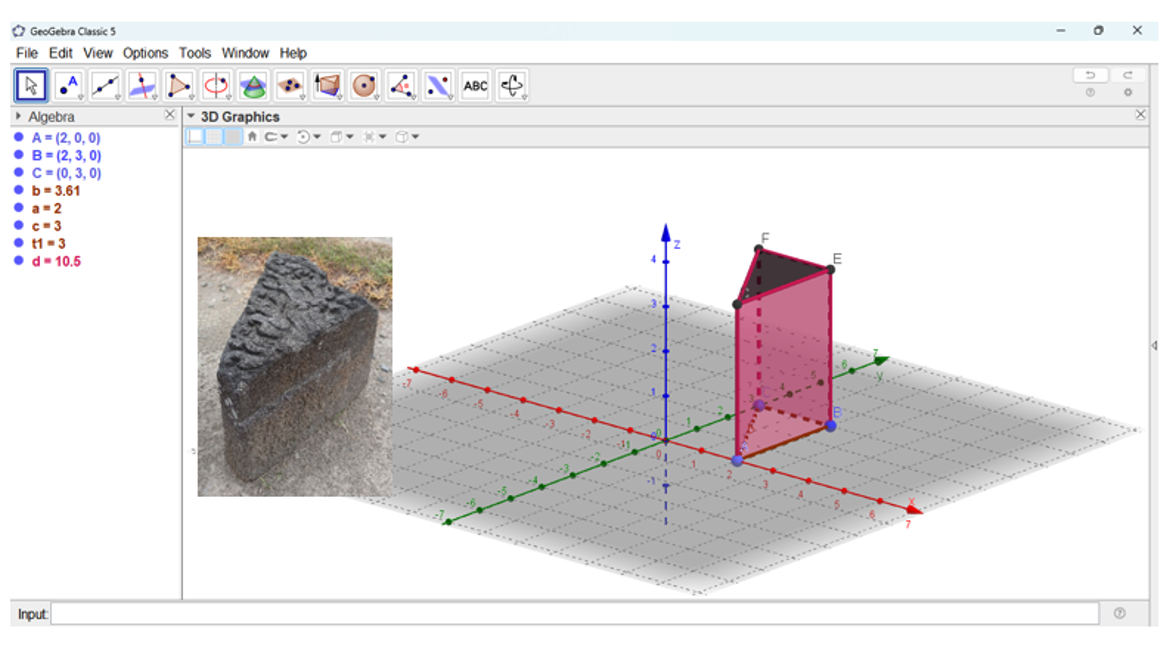
Student Many ethnomathematical studies in Indonesia have explored mathematical concepts embedded in cultural products such as batik, traditional houses, and other temple architectures. However, there has been little to no research specifically investigating the geometric aspects of Plaosan Temple as a cultural heritage site. Therefore, the current study aims to explore the geometrical concepts embedded in Candi Plaosan using an ethnographic approach. The study used ethnography as an approach by answering four principal questions, namely, "Where do I start looking?", "how do I find it?", "how do I recognize that it has found something significant?", and "how to understand what it is?". By answering these questions, the researchers successfully examined the geometrical concepts contained in Plaosan Temple. This study reveals that the concepts embedded in Plaosan Temple are focused on the geometrical aspect, namely, (1) plane geometry such as squares, rectangles, rhombuses, right triangles, trapezoids, and circles; (2) solid geometry such as cubes, rectangular prisms, and triangular prisms; (3) geometric transformations such as dilation and reflection; and (4) symmetry, similarity, and congruence. The findings are expected to introduce Plaosan Temple to students through contextual mathematics learning while supporting its preservation as cultural heritage. Future studies may further examine the effectiveness of Plaosan Temple–based learning with GeoGebra in enhancing students’ understanding of geometry concepts.
Downloads
References
Ardiwidjaja, R. (2018). Arkeowisata: Mengembangkan Daya Tarik Pelestarian Warisan Budaya. Deepublish. Retrieved from https://deepublishstore.com/produk/buku-arkeowisata-mengembangkan/
D’Ambrosio, U. (1985). Ethnomathematics and Its Place in the History and Pedagogy of Mathematics. For the Learning of Mathematics, 5(February 1985), 44-48 (in 'Classics').
Fitri, N. L., & Prahmana, R. C. I. (2020). Designing learning trajectory of circle using the context of Ferris wheel. JRAMathEdu (Journal of Research and Advances in Mathematics Education), 5(3), 247–261. https://doi.org/10.23917/jramathedu.v5i3.10961
Gunawan. (2023). Konsep Geometri Bangun Datar Pada Artefak Dan Relief Candi Plaosan. Jurnal Derivat, 10(3), 180–188. https://doi.org/https://doi.org/10.31316/jderivat.v10i3.5544
Hardiarti, S. (2017). Etnomatematika: Aplikasi Bangun Datar Segiempat Pada Candi Muaro Jambi. Aksioma, 8(2), 99–110. https://doi.org/10.26877/aks.v8i2.1707
Irsyad, M., Sujadi, A. A., & Setiana, S. (2020). Eksplorasi Etnomatematika pada Candi Asu. UNION: Jurnal Pendidikan Matematika, 8(1), 11–19. https://doi.org/10.30738/union.v8i1.7609
Judith, H., & Markus, H. (2008). Introduction to GeoGebra. GeoGebra. www.geogebra.org
Mahuda, I. (2020). Eksplorasi Etnomatematika Pada Motif Batik Lebak Dilihat Dari Sisi Nilai Filosofi Dan Konsep Matematis. Lebesgue, 1(1), 29–38. https://doi.org/10.46306/lb.v1i1.10
Maula, N. R., & Sumitro, N. K. (2023). Eksplorasi Etnomatematika Artefak Candi Songgoriti Batu. Jurnal of Millenial Education (JoME), 2(2), 147–156. Retrieved from https://journal.mudaberkarya.id/index.php/JoME/article/view/91
Moleong, L. J. (2017). Metodologi Penelitian Kualitatif (Edisi Revisi). PT Remaja Rosdakarya. Retrieved from https://rosda.id/product/metodologi-penelitian-kualitatif-edisi-revisi
Nursyeli, F., & Puspitasari, N. (2021). Studi Etnomatematika pada Candi Cangkuang Leles Garut Jawa Barat. Plusminus: Jurnal Pendidikan Matematika, 1(2), 327–338. https://doi.org/10.31980/plusminus.v1i2.905
Prahmana, R. C. I., & D’Ambrosio, U. (2020). Learning Geometry and Values from Patterns: Ethnomathematics on The Batik Patterns of Yogyakarta, Indonesia. Journal on Mathematics Education, 11(3), 439–456. https://doi.org/10.22342/jme.11.3.12949.439-456
Purwanto, Y. (2007). Matematika SMP Kelas IX. Jakarta: Erlangga. Retrieved from https://www.erlangaonline.co.id
Putra, R. Y., Wijayanto, Z., & Widodo, S. A. (2020). Ethnomathematics : Soko Tunggal Mosque For Geometry 2D Learning. Jurnal Riset Pendidikan dan Inovasi Pembelajaran Matematika (JRPIPM), 4(1), 10–22. https://doi.org/10.26740/jrpipm.v4n1.p10-22
Putri, A., Sujadi, I., Nursanti, Y. B., & Nurhasanah, F. (2025). Systematic Literature Review on Mathematical Representation: The Connection between Theories and Implementation International Journal of Review in Mathematics Education Systematic Literature Review on Mathematical Representation: The Connection between Theories and Implementation. International Journal of Review in Mathematics Education | P-ISSN Xxxx-Xxxx, 01(01), 1–23. https://journals2.ums.ac.id/ijrime/index
Qomaria, N., & Wulandari, A. Y. R. (2022). Etnomatematika Madura: Keraton Sumenep sebagai Sumber Belajar Matematika. Indiktika: Jurnal Inovasi Pendidikan Matematika, 5(1), 76–89. https://doi.org/10.31851/indiktika.v5i1.9875
Rachmad, R. (2017). Konstruksi Arsitektur Candi Hindu-Buddha di Jawa. Universitas Airlangga Press. Retrieved from https://perpustakaan.unair.ac.id
Rodríguez-Nieto, C. A., & Alsina, Á. (2022). Networking Between Ethnomathematics, STEAM Education, and the Globalized Approach to Analyze Mathematical Connections in Daily Practices. Eurasia Journal of Mathematics, Science and Technology Education, 18(3), 1–22. https://doi.org/10.29333/EJMSTE/11710
Setyawan, F., Kristanto, Y. D., & Ishartono, N. (2018). Preparing In-Service Teacher Using Dynamic Geometry Software. International Journal of Engineering & Technology, 7(4.30), 367. https://doi.org/10.14419/ijet.v7i4.30.22317
Soedjadi, R. (2000). Kiat Pendidikan Matematika di Indonesia: Konsep dan Pembinaan. Ditjen Dikti – Depdiknas. Retrieved from https://books.google.co.id/books/about/Kiat_pendidikan_matematika_di_Indonesia.html?id=lEUoAAAACAAJ
Sugiyono. (2019). Metode Penelitian Kuantitatif, Kualitatif, dan R&D. Bandung: Alfabeta. Retrieved from https://cvalfabeta.com/product/metode-penelitian-kuantitatif-kualitatif- dan-rd-mpkk/
Sukino. (2006). Matematika untuk SMA/MA Kelas X. Jakarta: Erlangga. Retrieved from http://layanan.dispusip.bandung.go.id/opac/detail-opac?id=31486
Sulistyawati, E., & Rofiki, I. (2022). Ethnomathematics and creativity study in the construction of batik based on fractal geometry aided by GeoGebra. International Journal on Teaching and Learning Mathematics, 5(1), 15–28. https://doi.org/10.18860/ijtlm.v5i1.10883
Sutama. (2019). Metode Penelitian Pendidikan Kuantitatif, Kualitatif, PTK, Mix Method, R&D. Jasmine. Surakarta: Jasmine. Retrieved from https://sinta.kemdikbud.go.id/books/9786026871534
Tegar, Y.S., Hisda Mahmudah, M., Yulindra, D., & Waliyuddin Pakpahan, A. (2026). Reflective Thinking and Self-Efficacy: A Meta-Analysis and Its Implications for Mathematics Learning International Journal of Review in Mathematics Education Reflective Thinking and Self-Efficacy: A Meta-Analysis and Its Implica-tions for Mathematics Learning. International Journal of Review in Mathematics Education | P-ISSN Xxxx-Xxxx, 1(1), 24–49. https://journals2.ums.ac.id/ijrime/index
Zuliana, E. (2017). The Geometrical Patterns and Philosophical Value of Javanese Traditional Mosque Architecture for Mathematics Learning in Primary School : An Ethnomathematic Study. Journal of Education Culture and Society, 14(2), 512–532. https://doi.org/10.15503/jecs2023.2.512.532
Downloads
Submitted
Accepted
Published
Versions
- 04/29/2026 (2)
- 04/18/2026 (1)
Issue
Section
License
Copyright (c) 2026 Karolyne Michelia Putri, Naufal Ishartono

This work is licensed under a Creative Commons Attribution 4.0 International License.