
Exploring Buginese ethnomathematics in Saoraja La Tenri Bali to foster cultural intelligence
Article Sidebar
- Buginese ethnomathematics, Cultural intelligence, Mathematical concepts, Philosophical meanings, Saoraja La Tenri Bali
Abstract
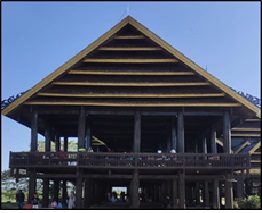
Mathematics is often taught without sufficient cultural context, resulting in limited relevance and student disengagement. To address this issue, integrating ethnomathematics into mathematics instruction is essential for enhancing both mathematical understanding and cultural intelligence. This study explores the mathematical concepts embedded in the architectural design of the Saoraja La Tenri Bali, a traditional Buginese house, and examines its potential as a culturally grounded learning resource. Using a qualitative descriptive design with an ethnographic approach, data were collected through observations, documentation, and in-depth interviews, and analysed using Spradley’s ethnographic model. The findings identify various mathematical concepts, including linear equations (parallel, intersecting, and perpendicular lines) and geometric transformations (reflection, translation, rotation, and dilation), reflected in the house’s architectural structure. These mathematical elements are closely intertwined with Buginese philosophical values such as sipakalebbi, sipakaraja, sipakatau, and sipakainge, which emphasise mutual respect and social harmony. The study highlights that integrating traditional architecture into mathematics education can strengthen mathematical reasoning while fostering students’ cultural intelligence. Therefore, culturally responsive learning models that incorporate local wisdom are recommended to support both academic achievement and intercultural competence.
Full text article
References
Abdullah, A. S. (2017). Ethnomathematics in perspective of sundanese culture. Journal on Mathematics Education, 8(1), 1–16. https://doi.org/10.22342/jme.8.1.3877.1-15
Andrade Da Silva, K., & Klein, A. (2020). The Development of Cultural Intelligence in Situated Learning. Academy of Management Proceedings, 2020(1), 21535. https://doi.org/10.5465/ambpp.2020.21535abstract
Ang, S., Ng, K. Y., & Rockstuhl, T. (2020). Cultural intelligence. In R. J. Stemberg (Ed.), The Cambridge handbook of intelligence (pp. 820–845). Cambridge University Press. https://doi.org/10.1017/9781108770422.035
Barton, B. (1985). Ethnomathematics and curriculum change.
Bishop, J. (1994). Cultural confl icts in mathematics education: developing a research agenda. For the Learning of Mathematics Journal, 114(2), 15–18.
Busrah, Z., Buhaerah, Aras, A., & Pathuddin, I. (2023). Mathematical ability of Bugis community in designing Lipa’ Sabbe of Sengkang. JRAMathEdu (Journal of Research and Advances in Mathematics Education), 8(1). https://doi.org/https://doi.org/10.23917/jramathedu.v8i1.2524
Cesaria, A., Adnan, M., Kemal, E., Rismen, S., Ramadoni, R., & Delyana, H. (2025). Exploring concepts of ethno-mathematics to introduce the local culture and its values for higher education students. Al-Jabar : Jurnal Pendidikan Matematika, 16(1), 315–335. https://doi.org/10.24042/ajpm.v16i1.26490
D’Ambrosio, U. (1985). Ethnomathematics and Its Place in the History and Pedagogy of Mathematics. For the Learning of Mathematics, 5(1), 44–48. https://doi.org/http://www.jstor.org/stable/40247876
D’Ambrósio, U. (2007). Peace, social justice and Ethnomathematics. The Montana Mathematics Enthusiast, 1((2007)), 25–34. https://doi.org/10.1108/book-978-1-60752-614-820251004
D’Ambrosio, U. (2016). An overview of the history of Ethnomathematics. In In Current and Future Perspectives of Ethnomathematics as A Program (pp. 5–10). Cham : Springer. https://doi.org/10.1007/978-3-319-30120-4_2
DeVries, R. (2000). Vygotsky, Piaget, and Education: a reciprocal assimilation of theories and educational practices. New Ideas in Psychology, 18(2–3), 187–213. https://doi.org/10.1016/S0732-118X(00)00008-8
Dhema, M., Cholily, Y. M., & Rahardjanto, A. (2025). Tracing local wisdom in the integration of ethnomathematics in vocational high school mathematics education: A Scopus systematic review. Indonesian Journal of Science and Mathematics Education, 8(2), 472–485. https://doi.org/10.24042/ijsme.v8i2.28208
Dogra, A. S., & Dixit, V. (2016). Cultural intelligence: Exploring the relationship between leader cultural intelligence, team diversity and team performance. ELK Asia Pacific Journal of Human Resource Management and Organisational Behaviour, 3(1).
Hartoyo, A., Fitriawan, D., Siregar, N., & Ganda Putra, F. (2025). Connecting cultural roots with mathematical thinking: A comprehensive meta-analysis of ethnomathematics practices in indonesian classrooms. Al-Jabar : Jurnal Pendidikan Matematika, 16(2), 673–689. https://doi.org/10.24042/ajpm.v16i2.28734
Khasanah, B. A., Prahmana, R. C. I., Adiputra, S., & Arnal-Palacián, M. (2025). The beauty of mathematics in Indonesian culture: An impactful and meaningful context in number patterns learning. JRAMathEdu (Journal of Research and Advances in Mathematics Education), 10(2), 68–80. https://doi.org/10.23917/jramathedu.v10i2.10441
Koreň, L. (2024). Cultural intelligence, shared intentionality and human cognitive uniquenes. Biology and Philosophy, 39(5). https://doi.org/10.1007/s10539-024-09966-w
Maryati, & Prahmana, R. C. I. (2019). Ethnomathematics: Exploration of the muntuk community. International Journal of Scientific and Technology Research, 8(6), 47–49.
Nosratabadi, S., Bahrami, P., Palouzian, K., & Mosavi, A. (2020). Leader cultural intelligence and organizational performance. Cogent Business & Management, 1–17. https://doi.org/https://doi.org/10.1080/23311975.2020.1809310
Nur, A. S., Waluya, S. B., Kartono, K., & Rochmad, R. (2021). Ethnomathematics Perspective and Challenge as a Tool of Mathematical Contextual Learning for Indigenous People. International Journal on Emerging Mathematics Education, 5(1), 1. https://doi.org/10.12928/ijeme.v5i1.17072
Nur, A. S., Waluya, S. B., Rochmad, R., & Wardono, W. (2020). Contextual learning with Ethnomathematics in enhancing the problem solving based on thinking levels. JRAMathEdu (Journal of Research and Advances in Mathematics Education), 331–344. https://doi.org/10.23917/jramathedu.v5i3.11679
Pathuddin, H., Kamariah, & Ichsan Nawawi, M. (2021). Buginese ethnomathematics: Barongko cake explorations as mathematics learning resources. Journal on Mathematics Education, 12(2), 295–312. https://doi.org/10.22342/jme.12.2.12695.295-312
Pathuddin, H., Kamariah, & Mariani, A. (2023). Ethnomathematics of Pananrang: A guidance of traditional farming system of the Buginese community. Journal on Mathematics Education, 14(2), 205–224. https://doi.org/10.22342/jme.v14i2.pp205-224
Payadnya, I. P. A. A., Wulandari, I. G. A. P. A., Puspadewi, K. R., & Saelee, S. (2024). The significance of ethnomathematics learning: a cross-cultural perspectives between Indonesian and Thailand educators. Journal for Multicultural Education, 18(4), 508–522. https://doi.org/10.1108/JME-05-2024-0049
Pradana, K. C., Rizki Putra, A., & Rahmawati, Y. (2022). Ethnomathematics on Traditional Culture: A Bibliometric Mapping Analysis and Systematic Review on Database Scopus. International Journal Corner of Educational Research, 1(1), 1–8. https://doi.org/10.54012/ijcer.v1i1.61
Prahmana, R. C. I., Arnal-Palacián, M., Risdiyanti, I., & Ramadhani, R. (2023). Trivium curriculum in Ethno-RME approach: An impactful insight from ethnomathematics and realistic mathematics education. Jurnal Elemen, 9(1), 298–316. https://doi.org/10.29408/jel.v9i1.7262
Prahmana, R. C. I., & D’Ambrosio, U. (2020). Learning geometry and values from patterns: Ethnomathematics on the batik patterns of yogyakarta, indonesia. Journal on Mathematics Education, 11(3), 439–456. https://doi.org/10.22342/jme.11.3.12949.439-456
Pratama, R. A., & Yelken, T. Y. (2024). Effectiveness of ethnomathematics-based learning on students’ mathematical literacy: a meta-analysis study. Discover Education, 3(1), 202. https://doi.org/10.1007/s44217-024-00309-1
Ratau, A., Cholily, Y. M., Rahardjanto, A., Effendi, Moh. M., & Inganah, S. (2025). Exploring ethnomathematics in the traditional houses of Tamarele, Buano Utara village, as a source of mathematics learning. Indonesian Journal of Science and Mathematics Education, 8(3), 519–530. https://doi.org/10.24042/ijsme.v8i3.29420
Risnanosanti, R., Ristontowi, R., & Ramadianti, W. (2024). Mathematics Concepts in Making Kites as a Tool in Ethno-STEM Based Learning. International Journal of STEM Education for Sustainability, 4(1), 24–37. https://doi.org/10.53889/ijses.v4i1.301
Rosa, M., D’Ambrósio, U., Orey, D. C., Shirley, L., Alangui, W. V., Palhares, P., & Gavarrete, M. E. (2016). Current and future perspectives of ethnomathematics as a program. University of Hamburg. https://doi.org/10.1007/978-3-319-30120-4
Rosa, M., & Orey, D. (2011). Ethnomathematics : the cultural aspects of mathematics Etnomatemática : os aspectos culturais da matemática. Revista Latinoamericana de Etnnomatematica, 4(2), 32–54.
Sadiku, M. N. O., Olaleye, O. D., Ajayi-majebi, A., Musa, S. M., Perry, R. G., A, P. V., & View, P. (2020). Cultural intelligence : A primer. International Journal of Trend in Research and Development, 7(4), 2–5.
Sari, A. K., Budiarto, M. T., & Ekawati, R. (2022). Ethnomathematics study: cultural values and geometric concepts in the traditional “tanean-lanjang” house in Madura - Indonesia. JRAMathEdu (Journal of Research and Advances in Mathematics Education), 46–54. https://doi.org/10.23917/jramathedu.v7i1.15660
Setyaningrum, A., & Untarti, R. (2024). Ethnomathematics Exploration in The Joglo House of Banyumas. AlphaMath : Journal of Mathematics Education, 10(2), 244. https://doi.org/10.30595/alphamath.v10i2.22505
Spradley, J. P. (2007). Metode Etnografi (M. Yahya (ed.); 2nd ed.). Tiara Wacana.
Sugiman, S., Fauzan, A., Maulyda, M. A., Johar, R., & Anwar, L. (2025). Ethnomathematics: Ideofacts, Sociofacts, and Artefacts of Mathematical Context in Yogyakarta. Journal of Education Culture and Society, 16(1), 451–479. https://doi.org/10.15503/jecs2025.2.451.479
Tampa, A., Firdaus, A. M., Ja’faruddin, J., & Chen, W.-H. (2023). 21st Century Skills Learning Using Lemmang Learning Resources: A Study of Ethnomathematical Bugis Makassar. Lentera Pendidikan : Jurnal Ilmu Tarbiyah Dan Keguruan, 26(2), 295–310. https://doi.org/10.24252/lp.2023v26n2i6
Thomas, D. C. (2015). Cultural Intelligence. Wiley Encyclopedia of Management, 1–3. https://doi.org/https://doi.org/10. 1002/9781118785317.weom060051
Turmuzi, M., Suharta, I. G. P., Astawa, I. W. P., & Suparta, I. N. (2024). Mapping Ethnomathematical Research Directions and Trends in the Scopus Database: A Bibliometric Analysis. International Journal of Educational Methodology, volume-10-2024(volume-10-issue-3-august-2024), 431–453. https://doi.org/10.12973/ijem.10.3.431
Umbara, U., Prabawanto, S., & Jatisunda, M. G. (2023). Combination of mathematical literacy with ethnomathematics: How to perspective sundanese culture. Infinity Journal, 12(2), 393–414. https://doi.org/10.22460/infinity.v12i2.p393-414
Vygotsky, L. S. (1980). Mind in Society (M. Cole, V. Jolm-Steiner, S. Scribner, & E. Souberman, Eds.). Harvard University Press. https://doi.org/10.2307/j.ctvjf9vz4
Wulandari, D. U., Mariana, N., Wiryanto, W., & Amien, M. S. (2024). Integration of Ethnomathematics Teaching Materials in Mathematics Learning in Elementary School. IJORER : International Journal of Recent Educational Research, 5(1), 204–218. https://doi.org/10.46245/ijorer.v5i1.542
Zuliana, E., Dwiningrum, S. I. A., Wijaya, A., & Purnomo, Y. W. (2023). The Geometrical Patterns and Philosophical Value of Javanese Traditional Mosque Architecture for Mathematics Learning in Primary School: An Ethnomathematic Study. Journal of Education Culture and Society, 14(2), 512–532. https://doi.org/10.15503/jecs2023.2.512.532
Authors
Copyright (c) 2026 Andi Aras, Sudirman, Fawziah Zahrawati B

This work is licensed under a Creative Commons Attribution-NonCommercial 4.0 International License.