When Culture Promotes Justice, but Women Workers Face Challenges:A Case Study in Makassar, Indonesia
DOI:
https://doi.org/10.23917/indigenous.v11i2.17394Keywords:
gender inqeuality, Organizational justice, Bugis, Makassar, women workersAbstract
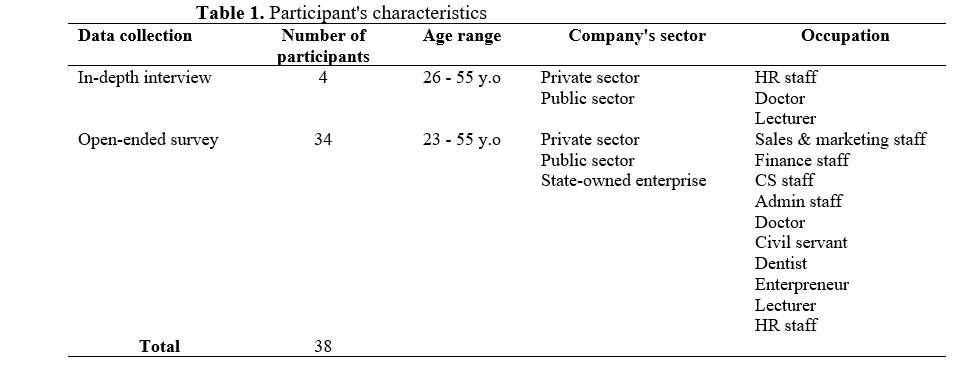
This research investigates how workplace gender inequality is perpetuated in Makassar through the integration of Bugis–Makassar cultural values within organizational frameworks. It looks into how moral concepts such as sipakatau (mutual respect), sipakainge (reminding each other), sipakalebbi (honoring others), and siri’ na pacce (dignity and empathy) are reinterpreted to reinforce gender hierarchies. Instead of serving as equalizing factors, these values are frequently utilized to promote women's obedience, resilience, and restraint, transforming moral virtues into tools that justify inequality. This study utilizes a multiple-case approach involving thirty-eight women from various sectors, including education, health, administration, and services in Makassar, Indonesia. Data was gathered through open-ended questionnaires, in-depth interviews, and unstructured observations, and were analyzed employing Critical Discourse Analysis (CDA). The results indicate that cultural expressions are ingrained in managerial practices that prioritize compliance and symbolic acknowledgment over genuine equality. Institutional frameworks such as pangngaderreng have progressively become more discretionary, where rights are redefined as personal favors, and career progression is influenced by patron–client relationships and informal "chemistry" with leaders. The study illustrates that inequality manifests through normalized expectations of modesty, loyalty, and emotional labor, reinforced by microaggressions and moral scrutiny. Nonetheless, these cultural values possess a transformative potential if reinterpreted as collective and institutional responsibilities. Merging local ethical principles with gender equality initiatives presents a culturally relevant approach to promoting justice, where equality is perceived not as a challenge to culture but as its ethical fulfillment
References
Acker, J. (1990). Hierarchies, Jobs, Bodies: A Theory of Gendered Organisations. Gender & Society, 4(2), 139–158. https://doi.org/10.1177/089124390004002002
Akil, A., Yudono, A., Latief, I., & Radja, A. M. (2014). Application of Buginese-Makassarese Culture in Ma-kassar City, Indonesia: A Reference in the Coastal City Planning. International Review for Spatial Planning and Sustainable Development, 2(4), 68–80. https://doi.org/10.14246/irspsd.2.4_68
Allen, T. D., Herst, D. E. L., Bruck, C. S., & Sutton, M. (2000). Consequences Associated With Work-to-Family Conflict: A Review and Agenda for Future Research. Journal of Occupational Health Psycho-logy, 5(2), 278–308. https://doi.org/10.1037/1076-8998.5.2.278
Amriyati, A., Nurbaiti, S., Rumita, M., & Layola Nainggolan, F. (2023). Women Worker Protection: A Syste-matic Review On Maternity Protection In Indonesia. Devotion : Journal of Research and Community Service, 4(2), 392–401. https://doi.org/10.36418/devotion.v4i2.394
Bapuji, H., Ertug, G., & Shaw, J. D. (2020). Organizations and Societal Economic Inequality: A Review and Way Forward. Academy of Management Annals, 14(1), 60–91. https://doi.org/10.5465/annals.2018.0029
Beasley, S. W., Khor, S., Boakes, C., & Jenkins, D. (2019). Paradox of Meritocracy in Surgical Selection, and of Variation in the Attractiveness of Individual Specialties: To What Extent Are Women Still Disadvan-taged? ANZ Journal of Surgery, 89(3), 171–175. https://doi.org/10.1111/ans.14862
Bourabain, D. (2024). Racial and Gender Inequality as a (Non)Crisis: The Discursive Strategies of Academic-Managers in Belgian and Danish universities. Journal of Business Research, 178, 114659. https://doi.org/10.1016/j.jbusres.2024.114659
Bumbungan, B., Bafadal, I., Ulfatin, N., & Supriyanto, A. (2022). School Principal’s Wanua Mappatuo Naewai Alena Leadership: A Strategy to Develop School Entrepreneurship. Pegem Journal of Educa-tion and Instruction, 13(1), 309–318. https://doi.org/10.47750/pegegog.13.01.34
Calas, M. B., & Smircich, L. (2006). From the ‘Woman’s Point of View’ Ten Years Later: Towards a Feminist Organization Studies. In The SAGE Handbook of Organization Studies (pp. 284–346). SAGE Publica-tions Ltd. https://doi.org/10.4135/9781848608030.n9
Castilla, E. J., & Benard, S. (2010). The Paradox of Meritocracy in Organizations. Administrative Science Quarterly, 55(4), 543–676. https://doi.org/10.2189/asqu.2010.55.4.543
Charman, M., & O’Connor, C. D. (2023). The Gendered Impacts of Boomtowns: How Financial Dependence, Family, and Victimization Intersect with Hegemonic Masculinity. International Journal of Rural Cri-minology, 7(3), 289–312. https://doi.org/10.18061/ijrc.v7i3.8988
Choi, S. (2011). Organizational Justice and Employee Work Attitudes: The Federal Case. The American Review of Public Administration, 41(2), 185–204. https://doi.org/10.1177/0275074010373275
Correll, S. J., Benard, S., & Paik, I. (2007). Getting a Job: Is There a Motherhood Penalty? American Journal of Sociology, 112(5), 1297–1339. https://doi.org/10.1086/511799
Fairclough, N. (2013). Critical Discourse Analysis. Routledge. https://doi.org/10.4324/9781315834368
Faisal, F. F., & Salendu, A. (2024). The Role of Culture, Leader Motivating Language, and Procedural Justice Climate on Organizational Identification. Indigenous: Jurnal Ilmiah Psikologi, 9(2), 170–181. https://doi.org/10.23917/indigenous.v9i2.4793
Gani, A. W., & Gani, H. A. (2024). Culture of Siri’ Na Pacce As Part of Legal Awareness of the Bugis-Makassar Community, 687–701. KnE Social Sciences. https://doi.org/10.18502/kss.v9i2.14891
Glick, P., Berdahl, J. L., & Alonso, N. M. (2018a). Development and Validation of the Masculinity Contest Culture Scale. Journal of Social Issues, 74(3), 449–476. https://doi.org/10.1111/josi.12280
Grzelec, A. (2024). Doing gender equality and undoing gender inequality—A practice theory perspective. Gender, Work & Organization, 31(3), 749–767. https://doi.org/10.1111/gwao.12935
Hamzah, H., Zubair, A., & Satriadi, S. (2023a). The Relevance of the Buginese Local Wisdom Values to Reli-gious Moderation. Al-Qalam, 29(1), 185. https://doi.org/10.31969/alq.v29i1.1173
Hapsari, R. K. M., Nisa, M. A., Sukmawan, Y. A., Basrowi, R. W., & Novitasari, P. D. (2025). Mindfulness for the Mental Health of Working Women: How Effective Is It and What Are the Challenges? Indigenous: Jurnal Ilmiah Psikologi, 10(1). https://doi.org/10.23917/indigenous.v10i1.11733
Hasanuddin, A. S., Setyawan, J., & Edy, D. F. (2025). Social Identity of Buginese-Makassarese Migrant Stu-dent. Journal of Psychological Perspective, 7(1), 41–50. https://doi.org/10.47679/jopp.7110492025
Hasbi, Armin, Sakaria, Sabiq, M., Murni, A., Yusuf, M., & Malik. (2022). Determinants of “Punggawa-Sawi” Power Relations and Capital on the Socio-Economic Household of the Fishing Community in Paotere Port of Makassar City. Aquaculture, Aquarium, Conservation & Legislation Bioflux, 15(1), 164–173. Retrieved from http://www.bioflux.com.ro/aacl
Hideg, I., & Krstic, A. (2021). The quest for workplace gender equality in the 21st century: Where do we stand and how can we continue to make strides? Canadian Journal of Behavioural Science / Revue Canadienne Des Sciences Du Comportement, 53(2), 106–113. https://doi.org/10.1037/cbs0000222
Ilaa, D. T., & Agustin, R. (2026). The Implementation of Menstrual Leave for Female Workers in Indonesia through The Perspective of Sustainable Development Goals (SDGs 3, SDGs 5 & SDGs 8). Priviet Social Sciences Journal, 6(6), 216–225. https://doi.org/10.55942/pssj.v6i6.1930
Karami, A., Swan, S. C., White, C. N., & Ford, K. (2024). Hidden in plain sight for too long: Using text mi-ning techniques to shine a light on workplace sexism and sexual harassment. Psychology of Violence, 14(1), 1–13. https://doi.org/10.1037/vio0000239
Kobayashi, Y., & Kondo, N. (2019). Organizational Justice, Psychological Distress, and Stress-Related Beha-viors by Occupational Class in Female Japanese Employees. PLOS ONE, 14(4), e0214393. https://doi.org/10.1371/journal.pone.0214393
Lease, S. H., Shuman, W. A., & Gage, A. N. (2020). Female and Male Coworkers: Masculinity, Sexism, and Interpersonal Competence at Work. Psychology of Men & Masculinities, 21(1), 139–147. https://doi.org/10.1037/men0000218
Li, P. (2013). Physical Attractiveness and Femininity: Helpful or Hurtful for Female Attorneys. SSRN Electro-nic Journal. https://doi.org/10.2139/ssrn.2318802
Machin, D., & Mayr, A. (2023). How to Do Critical Discourse Analysis: A Multimodal Introduction. SAGE Publications, Inc. https://doi.org/10.4135/978103621293
Moyser, M., & Burlock, A. (2018). Time use: Total work burden, unpaid work, and leisure. Women in Cana-da: A Gender-Based Statistical Report, 30. https://www150.statcan.gc.ca/n1/pub/89-503-x/2015001/article/54931-eng.pdf
Pirmasari, D. A. (2021). To Veil or Not to Veil? Islamic Dress and Control over Women’s Public Appearance. Journal of Gender Studies, 30(2), 136–149. https://doi.org/10.1080/09589236.2020.1863199
Putri, R. A., & Mediawati, N. F. (2024). Implementation of Menstrual Leave Policy for Female Workers at PT. XYZ. Indonesian Journal of Public Policy Review, 25(4). https://doi.org/10.21070/ijppr.v25i4.1437
Rahman, F., Akhmar, A. M., Hasyim, M., Dalyan, M., & Rahman, F. F. (2022). The Principle Of Worldview And Core Values Of Buginese In Their Culture: Philosophy, Religion, And Moral Perspectives. Al-Qalam, 28(2), 197. https://doi.org/10.31969/alq.v28i2.1108
Rudman, L. A., & Glick, P. (2001). Prescriptive Gender Stereotypes and Backlash Toward Agentic Women. Journal of Social Issues, 57(4), 743–762. https://doi.org/10.1111/0022-4537.00239
Setyawan, J., & Asmoro, A. R. (2024). Analysis of Aggressive Behavior Studies in the Workplace in Indone-sia: A Systematic Literature Review. Community Medicine and Education Journal, 5(2), 449–454. https://doi.org/10.37275/cmej.v5i2.526
Shen, A. (2024). Positionality, Gender and Reflexivity in Outsider-Insider Research. Journal of Legal Rasmoe-search Methodology, 3(1), 1-30. https://doi.org/10.19164/jlrm.v3i1.1320
Solorzano, D., Ceja, M., & Yosso, T. (2000). Critical Race Theory, Racial Microaggressions, and Campus Ra-cial Climate: The Experiences of African American College Students. The Journal of Negro Education, 69(1/2), 60–73. http://www.jstor.org/stable/2696265
Stake, R. E. (2006). Multiple case study analysis. Guilford Press.
Sue, D. W., Capodilupo, C. M., Torino, G. C., Bucceri, J. M., Holder, A. M. B., Nadal, K. L., & Esquilin, M. (2007). Racial Microaggressions in Everyday Life: Implications for Clinical Practice. American Psy-chologist, 62(4), 271–286. https://doi.org/10.1037/0003-066X.62.4.271
Sun, J., Yang, Z., Zhu, T., Jiang, Z., Zheng, X., Li, C., & Cao, X. (2023). The impact of organizational justice on psychological distress among Chinese public hospitals nurses: A cross-sectional study. Medicine, 102(17), e33684. https://doi.org/10.1097/MD.0000000000033684
Swain, J., & King, B. (2022). Using Informal Conversations in Qualitative Research. International Journal of Qualitative Methods, 21, 16094069221085056. https://doi.org/10.1177/16094069221085056
The University of Queensland. (2018, March). Lower Risk Research.Retrived from. https://research-support.uq.edu.au/resources-and-support/ethics-integrity-and-compliance/human-ethics/ethics-application/lower-risk-research
Thomas, G. (2011). A Typology for the Case Study in Social Science Following a Review of Definition, Dis-course, and Structure. Qualitative Inquiry, 17(6), 511–521. https://doi.org/10.1177/1077800411409884
Tobing, C. N. (2020). Legal Protection On Female Workers Subject To Harassment In Work Relations. Jurnal Hukum Dan Peradilan, 9(3), 337. https://doi.org/10.25216/jhp.9.3.2020.337-362
Um, S. (2023). The militarized workplace: How organizational culture perpetuates gender inequality in Korea. Gender, Work & Organization, 30(5), 1676–1693. https://doi.org/10.1111/gwao.13005
Veelen, R. van, Derks, B., & Endedijk, M. D. (2019). Double Trouble: How Being Outnumbered and Negati-vely Stereotyped Threatens Career Outcomes of Women in STEM. Frontiers in Psychology, 10. https://doi.org/10.3389/fpsyg.2019.00150
Wardihan, F., Yunus, R., & Nasution, A. (2020). Value Relevance of Gender Equality in Buginese and Makas-sarese Culture. Proceedings of the Proceedings of the 4th International Conference on Accounting, Management, and Economics, ICAME 2019, 25 October 2019, Makassar, Indonesia. https://doi.org/10.4108/eai.25-10-2019.2295322
Wodak, R., & Meyer, M.. 2016. Methods of critical discourse studies 3rd edition. Sage.
Zhu, X., Cooke, F. L., Chen, L., & Sun, C. (2022). How inclusive is workplace gender equality research in the Chinese context? Taking stock and looking ahead. The International Journal of Human Resource Ma-nagement, 33(1), 99–141. https://doi.org/10.1080/09585192.2021.1988680
Zubair, A., Hamzah, H., & Satriadi, S. (2022). Living Religious Moderation within the Sipakatau, Sipakainge’, and Sipakalebbi Cultures of the Bugis Community. Walisongo: Jurnal Penelitian Sosial Keagamaan, 30(2), 195–214. https://doi.org/10.21580/ws.30.2.13048
Downloads
Submitted
Accepted
Published
How to Cite
Issue
Section
License
Copyright (c) 2026 Indigenous: Jurnal Ilmiah Psikologi

This work is licensed under a Creative Commons Attribution 4.0 International License.