Educational versus Non-Educational Backgrounds: A Nationwide Assessment of Physics Teacher Competencies in Indonesia
DOI:
https://doi.org/10.23917/varidika.v38i3.19431Keywords:
Teacher Professional Education, Pedagogical Content Knowledge, Physics Teacher Education, Institutional Mapping, Cluster AnalysisAbstract
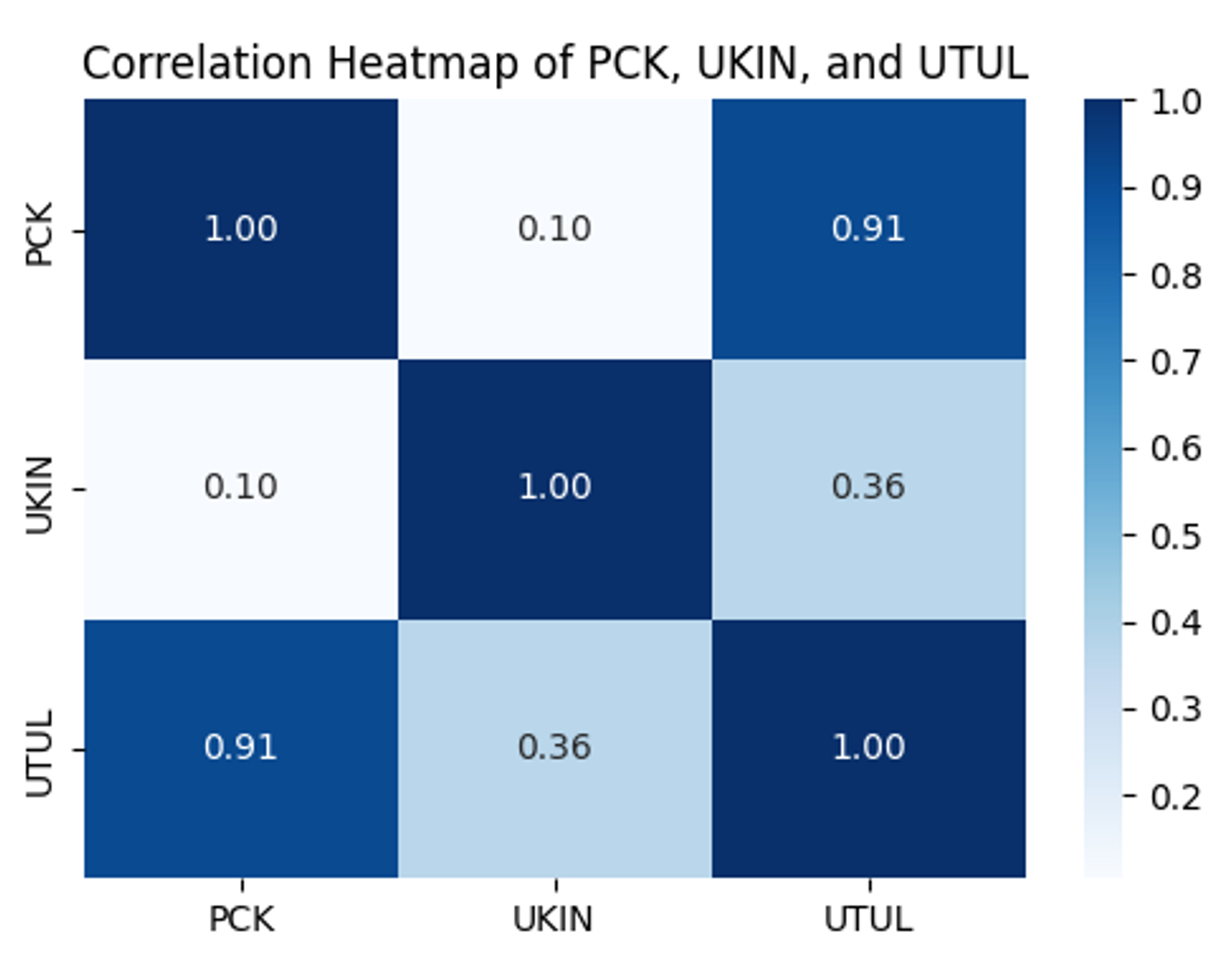
The caliber of teacher training in Indonesia poses a significant obstacle, especially within the Teacher Professional Education Program (TPEP), which enrolls individuals from both educational and non-educational fields. Although common beliefs imply that graduates from educational disciplines exhibit enhanced pedagogical preparedness, comprehensive national comparative data is markedly limited. This ex post facto quantitative investigation seeks to fill this void by assessing the professional abilities of 728 physics TPEP graduates from 31 institutions. The study specifically contrasts performance based on academic backgrounds, explores institutional disparities, identifies determinants of Pedagogical Content Knowledge (PCK), and delineates graduate competencies. Statistical evaluations—including ANOVA, ANCOVA, and multiple regression—indicated that undergraduate background does not significantly influence professional competence following TPEP completion. Graduates from educational and non-educational tracks showed no statistically significant differences in PCK, UKIN (Portfolio), or UTUL (Written Test) scores. Instead, institutional context emerged as a notable source of variation. Regression modeling demonstrated that UTUL scores and recency of graduation are robust predictors of PCK, whereas undergraduate background is negligible. Interestingly, UKIN scores exhibited a negative association with PCK. Furthermore, cluster analysis segmented graduates into distinct low, moderate, and high-performance profiles, highlighting significant heterogeneity among the cohort. Ultimately, these findings indicate that a teacher's professional competence is driven by general academic preparedness, institutional environment, and study recency, rather than their initial undergraduate discipline. By providing a nationwide mapping of TPEP outcomes, this research challenges traditional assumptions regarding teacher preparation and provides a foundation for targeted, differentiated professional development strategies.
Downloads
References
Aartun, I., Walseth, K., Standal, Ø. F., & Kirk, D. (2022). Pedagogies of embodiment in physical education – a literature review. Sport, Education and Society, 27(1), 1–13. https://doi.org/10.1080/13573322.2020.1821182
Abidin, Z., Hindriana, A., & Arip, A. (2023). Pedagogic content knowledge (PCK) in teacher competence development. Community Empowerment. https://doi.org/10.31603/ce.9058
Agustiani, M. (2024). Teacher professional education program in indonesia: benefit and challenge. Enrich: Jurnal Pendidikan, Bahasa, Sastra Dan Linguistik, 5(2), 28–37. https://doi.org/10.36546/enrich.v5i2.1314
Amalia, T., & Hodiyanto, H. (2026). Deep Learning Research Trends in Mathematics Learning: A Scoping Review And Bibliometric Analysis (ScoRBA). International Journal of Review in Mathematics Education, 1(3), 218–239. https://doi.org/10.23917/ijrime.18504
Angeli, C., & Valanides, N. (2009). Epistemological and methodological issues for the conceptualization, development, and assessment of ICT–TPCK: Advances in technological pedagogical content knowledge (TPCK). Computers & Education, 52(1), 154–168. https://doi.org/10.1016/j.compedu.2008.07.006
Aydin-Gunbatar, S., Ekiz-Kiran, B., & Oztay, E. S. (2020). Pre-service chemistry teachers’ pedagogical content knowledge for integrated STEM development with LESMeR model. Chemistry Education Research and Practice, 21(4), 1063–1082. https://doi.org/10.1039/D0RP00074D
Basikin, B. (2024). The Contribution of Inservice Teacher Education Program (TPEP) on Teachers’ Professionalism. English Language Teaching Educational Journal. https://doi.org/10.12928/eltej.v6i2.10076
Bloomfield, B. S., Fox, R. A., & Leif, E. S. (2024). Multi-Tiered Systems of Educator Professional Development: A Systematic Literature Review of Responsive, Tiered Professional Development Models. Journal of Positive Behavior Interventions, 26(3), 168–188. https://doi.org/10.1177/10983007231224028
Bostock, J. (2019). Exploring in-service trainee teacher expertise and practice: Developing pedagogical content knowledge. Innovations in Education and Teaching International, 56(5), 605–616. https://doi.org/10.1080/14703297.2018.1562358
Celik, I. (2023). Towards Intelligent-TPACK: An empirical study on teachers’ professional knowledge to ethically integrate artificial intelligence (AI)-based tools into education. Computers in Human Behavior, 138, 107468. https://doi.org/10.1016/j.chb.2022.107468
Chang, C. F., Annisa, N., & Chen, K. Z. (2024). Pre-service teacher professional education program (TPEP) and Indonesian science teachers’ TPACK development: A career-path comparative study. Education and Information Technologies, 30(7), 8689–8711. https://doi.org/10.1007/S10639-024-13160-6/TABLES/7
Darling-Hammond, L. (2023). Reprint: How Teacher Education Matters. Journal of Teacher Education, 74, 151–156. https://doi.org/10.1177/00224871231161863
Estapa, A., & Davis, J. (2023). Prospective Teachers’ Instructional Decisions and Pedagogical Moves when Responding to Student Thinking in Elementary Mathematics and Science Lessons. International Journal of Science and Mathematics Education, 21(5), 1703–1724. https://doi.org/10.1007/S10763-022-10304-3/TABLES/6
Evens, M., Elen, J., Larmuseau, C., & Depaepe, F. (2018). Promoting the development of teacher professional knowledge: Integrating content and pedagogy in teacher education. Teaching and Teacher Education, 75, 244–258. https://doi.org/10.1016/j.tate.2018.07.001
Favier, T., Van Gorp, B., Cyvin, J. B., & Cyvin, J. (2021). Learning to teach climate change: students in teacher training and their progression in pedagogical content knowledge. Journal of Geography in Higher Education, 45(4), 594–620. https://doi.org/10.1080/03098265.2021.1900080
Hubbard, A. (2018). Pedagogical content knowledge in computing education: a review of the research literature. Computer Science Education, 28(2), 117–135. https://doi.org/10.1080/08993408.2018.1509580
Ishartono, N., Putri, R. O. E., Fenyvesi, K., & Malonisio, M. O. (2026). A Systematic Critical Review: Flipped Learning and Its Impact on Self-Efficacy in Mathematics Education. International Journal of Review in Mathematics Education, 1(3), 205–217. https://doi.org/10.23917/ijrime.17530
Iskandar, I., Jumadi, J., Sastradika, D., & Defrianti, D. (2021). Development of TPACK and EQ-based 21st century learning through the teacher certification programme in Indonesia. South African Journal of Education, 41(Supplement 2), S1–S9. https://doi.org/10.15700/saje.v41ns2a1952
Julia, J., Subarjah, H., Maulana, M., Sujana, A., Isrok’atun, I., Nugraha, D., & Rachmatin, D. (2020). Readiness and Competence of New Teachers for Career as Professional Teachers in Primary Schools. European Journal of Educational Research, 9, 655–673. https://doi.org/10.12973/eu-jer.9.2.655
Kamenarac, O. (2024). Why shouldn’t teacher education produce ‘ready-to-teach’ graduates? Mapping a pathway to alternative teacher education and teacher becomings. Higher Education Research & Development, 44, 431–445. https://doi.org/10.1080/07294360.2024.2399068
Kertesz, J., & Brett, P. (2020). Defining and designing impact consciousness in teacher education. Teaching Education, 31, 363–380. https://doi.org/10.1080/10476210.2019.1583728
Komarudin, K., & Suherman, S. (2024). Evaluación del conocimiento tecnológico pedagógico del contenido (TPACK) entre los profesores en formación: modelo de medición Rasch. Pixel-Bit, Revista de Medios y Educación, (71), 59–82. https://doi.org/10.12795/pixelbit.107599
Krepf, M., Plöger, W., Scholl, D., & Seifert, A. (2018). Pedagogical content knowledge of experts and novices—what knowledge do they activate when analyzing science lessons? Journal of Research in Science Teaching, 55, 44–67. https://doi.org/10.1002/TEA.21410
Lachner, A., Fabian, A., Franke, U., Preiß, J., Jacob, L., Führer, C., Küchler, U., Paravicini, W., Randler, C., & Thomas, P. (2021). Fostering pre-service teachers’ technological pedagogical content knowledge (TPACK): A quasi-experimental field study. Computers & Education, 174, 104304. https://doi.org/10.1016/j.compedu.2021.104304
Lakens, D. (2013). Calculating and reporting effect sizes to facilitate cumulative science: a practical primer for t-tests and ANOVAs. Frontiers in Psychology, 4, 863. https://doi.org/10.3389/fpsyg.2013.00863
Leonet, O., Cenoz, J., & Gorter, D. (2020). Developing morphological awareness across languages: translanguaging pedagogies in third language acquisition. Language Awareness, 29(1), 41–59. https://doi.org/10.1080/09658416.2019.1688338
Li, J., & Copur-Gencturk, Y. (2024). Learning through teaching: the development of pedagogical content knowledge among novice mathematics teachers. Journal of Education for Teaching, 50(4), 582–597. https://doi.org/10.1080/02607476.2024.2358041
Loughran, J. (2020). Pedagogical Content Knowledge. Science Education for Australian Students. https://doi.org/10.4324/9781003117223-11
Mahler, D., Bock, D., Schauber, S., & Harms, U. (2024). Using longitudinal models to describe preservice science teachers’ development of content knowledge and pedagogical content knowledge. Teaching and Teacher Education, 144, 104583. https://doi.org/10.1016/j.tate.2024.104583
Mardhiah, M., Musgamy, A., & Lubis, M. (2023). Teacher Professional Development through the Teacher Education Program (TPEP) at Islamic Education Institutions. International Journal of Learning, Teaching and Educational Research, 22(11), 80–95. https://doi.org/10.26803/ijlter.22.11.5
Mayer, P., & Girwidz, R. (2019). Physics Teachers’ Acceptance of Multimedia Applications—Adaptation of the Technology Acceptance Model to Investigate the Influence of TPACK on Physics Teachers’ Acceptance Behavior of Multimedia Applications. Frontiers in Education, 4. https://doi.org/10.3389/feduc.2019.00073
Mishra, P., & Koehler, M. J. (2006). Technological Pedagogical Content Knowledge: A Framework for Teacher Knowledge. Teachers College Record: The Voice of Scholarship in Education, 108(6), 1017–1054. https://doi.org/10.1111/j.1467-9620.2006.00684.x
Musa, H., Rusli, R., & Jufri, H. (2024). Perceptions of Mathematics Education Professional Teacher Education Program (TPEP) Students towards the TPEP Program. ARRUS Journal of Mathematics and Applied Science. https://doi.org/10.35877/mathscience2763
Nganga, L., & Kambutu, J. (2024). Culturally Responsive Professional Development Programs for Teacher Educators Using Community-Based Collaborative Learning: Lessons Learned from a Native American Community. Education Sciences. https://doi.org/10.3390/educsci14070787
Nind, M. (2020). A new application for the concept of pedagogical content knowledge: teaching advanced social science research methods. Oxford Review of Education, 46(2), 185–201. https://doi.org/10.1080/03054985.2019.1644996
Ningsih, S., Turmudi, & Juandi, D. (2020). Pedagogical content knowledge (PCK) profile of prospective teachers in mathematics learning. Journal of Physics: Conference Series, 1521. https://doi.org/10.1088/1742-6596/1521/3/032057
Nkundabakura, P., Nsengimana, T., Uwamariya, E., Nyirahabimana, P., Nkurunziza, J. B., Mukamwambali, C., Dushimimana, J. C., Batamuliza, J., Byukusenge, C., & Iyamuremye, A. (2024). Effectiveness of the continuous professional development training on upper primary mathematics and science and elementary technology teachers’ Pedagogical Content Knowledge in Rwanda. Discover Education, 3(1), 12. https://doi.org/10.1007/s44217-024-00091-0
Nsingo, E., & Chirume, S. (2026). ARIMA Forecasting of Ordinary Level Mathematics Pass Rates: A 13-Year Critical Review from a Zimbabwean High School. International Journal of Review in Mathematics Education, 1(3), 194–204. https://doi.org/10.23917/ijrime.15830
Ong, Q. K. L., & Annamalai, N. (2024). Technological pedagogical content knowledge for twenty-first century learning skills: the game changer for teachers of industrial revolution 5.0. Education and Information Technologies, 29(2), 1939–1980. https://doi.org/10.1007/s10639-023-11852-z
Palincsar, A., DellaVecchia, G., & Easley, K. M. (2020). Teacher Education and its Effects on Teaching and Learning. In Oxford Research Encyclopedia of Education. Oxford University Press. https://doi.org/10.1093/acrefore/9780190264093.013.905
Parkhouse, H., Lu, C., & Massaro, V. (2019). Multicultural Education Professional Development: A Review of the Literature. Review of Educational Research, 89, 416–458. https://doi.org/10.3102/0034654319840359
Pawan, F., Li, S., Nijiati, S., Dopwell, M., Harris, A., & Iruoje, T. (2023). Culturally- and Linguistically-Responsive Online Teacher Learning Professional Development. Online Learning. https://doi.org/10.24059/olj.v27i4.4003
Roca-Campos, E., Renta-Davids, A.-I., Marhuenda-Fluixá, F., & Flecha, R. (2021). Educational Impact Evaluation of Professional Development of In-Service Teachers: The Case of the Dialogic Pedagogical Gatherings at Valencia “On Giants’ Shoulders”. Sustainability, 13, 4275. https://doi.org/10.3390/SU13084275
Ruifeng, L., & Ping, D. (2021). A Thorough Review of Pedagogical Content Knowledge (PCK) in TOBACCO framework. Tobacco Regulatory Science. https://doi.org/10.18001/trs.7.5.16
Sari, W. R., Komarudin, K., Badrujaman, A., & Tola, B. (2023). Systematic Review of The Impact Evaluation of Teacher Profession Education Programmes in Indonesia. International Journal of Business, Law, and Education. https://doi.org/10.56442/ijble.v4i2.186
Sarkar, M., Gutierrez-Bucheli, L., Yip, S. Y., Lazarus, M., Wright, C., White, P. J., Ilic, D., Hiscox, T. J., & Berry, A. (2024). Pedagogical content knowledge (PCK) in higher education: A systematic scoping review. Teaching and Teacher Education, 144, 104608. https://doi.org/10.1016/J.TATE.2024.104608
Schiering, D., Sorge, S., Tröbst, S., & Neumann, K. (2023). Course quality in higher education teacher training: What matters for pre-service physics teachers’ content knowledge development? Studies in Educational Evaluation, 78, 101275. https://doi.org/10.1016/J.STUEDUC.2023.101275
Schmidt, D. A., Baran, E., Thompson, A. D., Mishra, P., Koehler, M. J., & Shin, T. S. (2009). Technological Pedagogical Content Knowledge (TPACK). Journal of Research on Technology in Education, 42(2), 123–149. https://doi.org/10.1080/15391523.2009.10782544
She, J., Chan, K. K. H., Wang, J., Hu, X., & Liu, E. (2025). Effect of Science Teachers’ Pedagogical Content Knowledge on Student Achievement: Evidence From Both Text- and Video-Based Pedagogical Content Knowledge Tests. American Educational Research Journal, 62(1), 92–135. https://doi.org/10.3102/00028312241278627
Shing, C. L., Saat, R., & Loke, S. H. (2015). The Knowledge of Teaching--Pedagogical Content Knowledge (PCK). Malaysian Online Journal of Educational Sciences, 3, 40–55.
Shulman, L. S. (1986). Those Who Understand: Knowledge Growth in Teaching. Educational Researcher, 15(2), 4–14. https://doi.org/10.3102/0013189X015002004
Simanjorang, M., Mansyur, A., & Gultom, S. (2020). Reconstruction of Professional Teacher Education Program. Journal of Education and Practice. https://doi.org/10.7176/jep/11-16-12
Solihin, R., Iqbal, M., & Muin, M. T. (2021). Konstruksi Kompetensi Pedagogik Guru dalam Pembelajaran. SCAFFOLDING: Jurnal Pendidikan Islam Dan Multikulturalisme. https://doi.org/10.37680/scaffolding.v3i2.1085
Su, Y. (2023). Delving into EFL teachers’ digital literacy and professional identity in the pandemic era: Technological Pedagogical Content Knowledge (TPACK) framework. Heliyon, 9(6), e16361. https://doi.org/10.1016/j.heliyon.2023.e16361
Taşar, M. F., & Yılmaz Ergül, D. (2023). Technological Pedagogical Content Knowledge (TPACK) in Physics Education. In The International Handbook of Physics Education Research: Teaching Physics (pp. 1-1-1–30). AIP Publishing LLCMelville, New York. https://doi.org/10.1063/9780735425712_001
Tseng, J.-J., Chai, C. S., Tan, L., & Park, M. (2022). A critical review of research on technological pedagogical and content knowledge (TPACK) in language teaching. Computer Assisted Language Learning, 35(4), 948–971. https://doi.org/10.1080/09588221.2020.1868531
Wang, X., Hamat, A. Bin, & Shi, N. L. (2024). Designing a pedagogical framework for mobile-assisted language learning. Heliyon, 10(7), e28102. https://doi.org/10.1016/J.HELIYON.2024.E28102/ASSET/05196F2C-2ED7-4956-B11F-64BA1C2F16F2/MAIN.ASSETS/GR5.JPG
Warahmah, M., Daud, A., & Novitri, N. (2021). OBSTACLES FACED BY PRE-SERVICE ENGLISH TEACHERS DURING TEACHERS PROFESSIONAL EDUCATION PROGRAM (TPEP). International Journal of Educational Best Practices. https://doi.org/10.31258/ijebp.v5n2.p153-167
Werler, T., & Tahirsylaj, A. (2020). Differences in teacher education programmes and their outcomes across Didaktik and curriculum traditions. European Journal of Teacher Education, 45, 154–172. https://doi.org/10.1080/02619768.2020.1827388
Yuniawatika, Muksar, M., Angga Rini, T., & Alfan, M. (2022). Online Teacher Professional Education Program (TPEP) Practices Through Moodle-Based E-learning. 2nd International Conference on Information Technology and Education (ICIT&E), 60–64. https://doi.org/10.1109/ICITE54466.2022.9759894
Downloads
Submitted
Accepted
Published
Versions
- 09/09/2026 (2)
- 09/09/2026 (1)
Issue
Section
License
Copyright (c) 2026 Dian Artha Kusumaningtyas, Fahrudin Nugroho, Muhammad Syahriandi Adhantoro, Efi Kurniasari

This work is licensed under a Creative Commons Attribution 4.0 International License.