Meaningful Ethnoscience Integrated Problem-Based Learning for Analytical Thinking and Curiosity
DOI:
https://doi.org/10.23917/varidika.v38i2.15213Keywords:
Problem-Based Learning, Meaningful Learning, Ethnoscience, Analytical Thinking, CuriosityAbstract
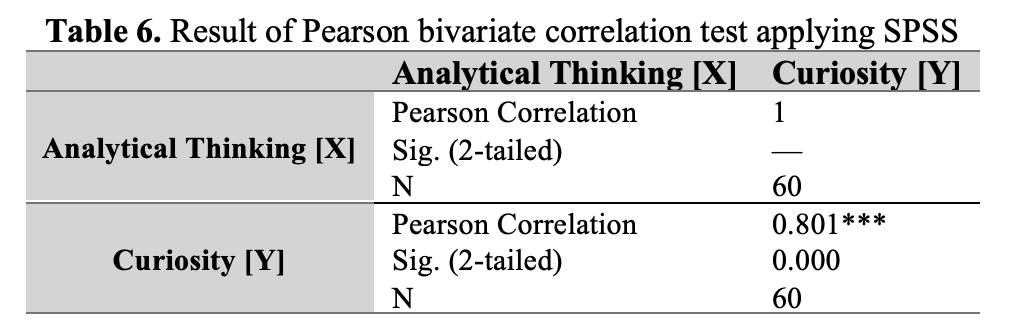
This study aimed to examine the effectiveness of Problem-Based Learning (PBL) integrated with meaningful learning and ethnoscience in enhancing analytical thinking and curiosity among junior high school students. The study was motivated by low student engagement and the dominance of conventional teacher-centered instruction that lacks contextualization and incorporation of local knowledge. A quantitative quasi-experimental design with a non-equivalent control group was employed, involving 60 eight-grade students divided into experimental and control classes. Analytical thinking was assessed through a validated essay test, while curiosity was measured using an observation checklist, both demonstrating adequate validity and reliability. Data analysis included normality and homogeneity tests, independent samples t-tests, and Pearson correlation. Results indicated a significant improvement in analytical thinking in the experimental class compared to the control (t = –33.289, p < .001), and curiosity was also significantly higher (t = –20.079, p < .001). Furthermore, a strong positive correlation was found between analytical thinking and curiosity (r = 0.801, p < .001), indicating that curiosity accounts for approximately 64.16% of the variance in analytical thinking. These findings confirm that integrating PBL, meaningful learning, and ethnoscience effectively improves students’ analytical thinking, as indicated by a high N-Gain in the experimental class (0.703) compared to a low N-Gain in the control class (0.206), and increases students’ curiosity, as shown by higher posttest mean scores in the experimental group than in the control group. The study implies that educators should adopt problem-based learning contextualized with local knowledge to improve science learning quality and 21st-century competencies.
Downloads
References
Ajid, S. N., Kusumaningtyas, D. A., Ratih, K., & Lava, S. (2025). Strategies for Integrating Problem-Based Learning, Teaching Modules, and Formative Assessments to Enhance Learning Outcomes and Critical Thinking Skills. Indonesian Journal on Learning and Advanced Education (IJOLAE), 218–232. https://doi.org/10.23917/ijolae.v7i2.8612
Amini, J. N., Irwandi, D., & Bahriah, E. S. (2021). THE EFFECTIVENESS OF PROBLEM BASED LEARNING MODEL BASED ON ETHNOSCIENCE ON STUDENT’S CRITICAL THINKING SKILLS. JCER (Journal of Chemistry Education Research), 5(2), 77–87. https://doi.org/10.26740/jcer.v5n2.p77-87
Anderson, L., Krathwohl, D., Airasian, P., & Cruikshank, K. (2001). A Taxonomy for Learning, Teaching, and Assessing: A Revision of Bloom’s Taxonomy of Educational Objectives (1st ed.). New York: Longman.
Aprilia, V., Sartika, S. B., & Salim, A. (2025). Contextual Teaching and Learning Based on Ethnoscience in Natural and Social Sciences: Pengajaran dan Pembelajaran Kontekstual Berbasis Etnosains dalam Ilmu Alam dan Ilmu Sosial. Indonesian Journal of Education Methods Development, 20(4). https://doi.org/10.21070/ijemd.v20i4.901
Bayani, F., Rokhmat, J., Hakim, A., & Sukarso, A. (2025). Research Trends in Analytical Thinking Skills for Science Education: Insights, Pedagogical Approaches, and Future Directions. International Journal of Ethnoscience and Technology in Education, 2(1), 129. https://doi.org/10.33394/ijete.v2i1.14142
Bayu Rachman & Setiawan Edi Wibowo. (2025). The Use of Problem-Based Learning Model to Improve Integrated Thematic Learning Outcomes. Jurnal Pedagogi Dan Pembelajaran, 8(1), 187–193. https://doi.org/10.23887/jp2.v8i1.87028
Bryce, T. G. K., & Blown, E. J. (2024). Ausubel’s meaningful learning re-visited. Current Psychology, 43(5), 4579–4598. https://doi.org/10.1007/s12144-023-04440-4
Capili, B. (2021). Selection of the Study Participants. AJN, American Journal of Nursing, 121(1), 64–67. https://doi.org/10.1097/01.NAJ.0000731688.58731.05
Damayanti, L., Tri Joko Raharjo, Bambang Subali, & Ellianawati Ellianawati. (2024). Analysis Of Ethnoscience-Based Problem-Based Learning (PBL) Models At The Elementary School Level: Bibliometric Analysis On Selected Journals In 2019-2025. Journal of Primary Education, 13(2), 100–113. https://doi.org/10.15294/jpe.v13i2.25358
Devia, Tika, I. N., & Artawan, P. (2025). The Effect of Ethnoscience-Based Problem-Based Learning on Energy Literacy and Learning Outcomes in High School. Jurnal Penelitian Pendidikan IPA, 11(8), 353–361. https://doi.org/10.29303/jppipa.v11i8.12330
Fatihatussa’adah, I., Yamtinah, S., Ariani, S. R. D., Wiyarsi, A., Widarti, H. R., Shidiq, A. S., & Abrori, F. M. (2024). Fostering Collaboration and Enhancing Student Learning Achievement through the Integration of Ethnoscience in the Common Knowledge Construction Model with Podcast Media. Indonesian Journal on Learning and Advanced Education (IJOLAE), 295–314. https://doi.org/10.23917/ijolae.v6i3.23222
Ferreira, M., Silva, A. L. S. D., & Silva Filho, O. L. D. (2022). Meaningful Learning Theory and Science Teaching Through Research: Interfaces From a Narrative Literature Review. Revista Brasileira de Pesquisa Em Educação Em Ciências, e41847. https://doi.org/10.28976/1984-2686rbpec2022u12151241
Gök, S., & Doğan, A. (2025). A Science Curiosity Scale for Middle School Students: A Validity and Reliability Study. International Journal of Curriculum and Instruction, 17(2), 673–688.
Gopalan, M., Rosinger, K., & Ahn, J. B. (2020). Use of Quasi-Experimental Research Designs in Education Research: Growth, Promise, and Challenges. Review of Research in Education, 44(1), 218–243. https://doi.org/10.3102/0091732X20903302
Gruber, M. J., & Ranganath, C. (2019). How Curiosity Enhances Hippocampus-Dependent Memory: The Prediction, Appraisal, Curiosity, and Exploration (PACE) Framework. Trends in Cognitive Sciences, 23(12), 1014–1025. https://doi.org/10.1016/j.tics.2019.10.003
Gumartifa, A., Syahri, I., Siroj, R. A., Nurrahmi, M., & Yusof, N. (2023). Perception of Teachers Regarding Problem-Based Learning and Traditional Method in the Classroom Learning Innovation Proces. Indonesian Journal on Learning and Advanced Education (IJOLAE), 151–166. https://doi.org/10.23917/ijolae.v5i2.20714
Hamna & Muh. Khaerul Ummah Bk. (2024). The Effectiveness of Ethnoscience Learning Based on Local Wisdom Values in Elementary Schools. Madako Elementary School, 3(2), 165–183. https://doi.org/10.56630/mes.v3i2.274
Hanifah, H., Irdalisa, I., Kosasih, A., & Akbar, B. (2025). Exploring the Impact of Problem-Based Learning and Curiosity on Enhancing Higher-Order Thinking Skills in Elementary Science. International Journal of Elementary Education, 9(2), 258–270. https://doi.org/10.23887/ijee.v9i2.86350
Hunaepi, H., Suma, I. K., & Subagia, I. W. (2024). Curiosity in Science Learning: A Systematic Literature Review. International Journal of Essential Competencies in Education, 3(1), 77–105. https://doi.org/10.36312/ijece.v3i1.1918
Jirout, J. J., Zumbrunn, S., Evans, N. S., & Vitiello, V. E. (2022). Development and Testing of the Curiosity in Classrooms Framework and Coding Protocol. Frontiers in Psychology, 13, 875161. https://doi.org/10.3389/fpsyg.2022.875161
Lidi, M. W., Mbia Wae, V. P. S., & Umbu Kaleka, M. B. (2022). IMPLEMENTASI ETNOSAINS DALAM PEMBELAJARAN IPA UNTUK MEWUJUDKAN MERDEKA BELAJAR DI KABUPATEN ENDE. OPTIKA: Jurnal Pendidikan Fisika, 6(2), 206–216. https://doi.org/10.37478/optika.v6i2.2218
Pinar, F. I. L., Panergayo, A. A. E., Sagcal, R. R., Acut, D. P., Roleda, L. S., & Prudente, M. S. (2025). Fostering scientific creativity in science education through scientific problem-solving approaches and STEM contexts: A meta-analysis. Disciplinary and Interdisciplinary Science Education Research, 7(1), 18. https://doi.org/10.1186/s43031-025-00137-9
Sarkingobir, Y., & Bello, A. (2024). Enhancing Critical Thinking through Ethnoscience-Integrated Problem-Based Learning: A Comparative Study in Secondary Education. International Journal of Ethnoscience and Technology in Education, 1(1), 1. https://doi.org/10.33394/ijete.v1i1.10878
Sirih, M., Munir, A., & Sabilu, M. (2025). Enhancing Analytical Thinking in Biology Through Project-Based Learning and Self-Regulated Learning: The Moderating Role of Prior Knowledge. Journal of Curriculum Studies Research, 7(2), 352–372. https://doi.org/10.46303/jcsr.2025.25
Sukarma, I. K. (2023). ETHNOSCIENCE ANALYSIS IN SCIENCE LEARNING IN PRIMARY SCHOOLS (ELEMENTARY SCHOOL). MSJ : Majority Science Journal, 1(4), 164–171. https://doi.org/10.61942/msj.v1i4.72
Tatia Endah Puspita Sari & Tias Ernawati. (2025). Analisis Etnosains Dalam Pembelajaran IPA Sebagai Sumber Belajar Yang Inovatif Bagi Siswa Kelas VII: Kajian Literatur. JURNAL PENDIDIKAN MIPA, 15(1), 265–274. https://doi.org/10.37630/jpm.v15i1.2498
Wahyuni, E., Fitria, Y., Solfema, & Hidayati, A. (2023). Implementation of Student Learning Independence in Ethnoscience-Oriented Force Topics Through Problem Based Learning (PBL) Learning Model. Jurnal Penelitian Pendidikan IPA, 9(12), 11414–11421. https://doi.org/10.29303/jppipa.v9i12.6680
Widhy Hastuti, P., Widowati, A., & Setyowarno, D. (2018). Penerapan Model Problem Based Learning untuk Meningkatkan Problem Solving dan Curiosity dalam Pembelajaran IPA 1. PSEJ (Pancasakti Science Education Journal), 3(1), 49–57. https://doi.org/10.24905/psej.v3i1.99
Wirama, T. G. P., Suja, I. W., & Tika, I. N. (2023). ETHNOSCIENCE-BASED SCIENCE TEACHING AND LEARNING TO IMPROVE STUDENTS’ COGNITIVE LEARNING OUTCOMES: A SYSTEMATIC LITERATURE REVIEW. Indonesian Journal of Educational Development (IJED), 4(2), 194–208. https://doi.org/10.59672/ijed.v4i2.2897
Wiratama, P. P., Dwandaru, W. S. B., Kuswanto, H., Laeli, S., & Kurniawan, A. (2025). EFFECTIVENESS OF PROBLEM-BASED LEARNING IN ENHANCING CRITICAL THINKING SKILLS IN SCIENCE EDUCATION: META-ANALYSIS. JURNAL EDUSCIENCE, 12(4), 1015–1028. https://doi.org/10.36987/jes.v12i4.6985
Yulianto, D. E., Irfan, M., & Permata Sari, R. D. (2023). PENGARUH MODEL PBL BERBASIS ETNOSAINS TERHADAP HASIL BELAJAR IPA SISWA SEKOLAH DASAR. Jurnal IKA PGSD (Ikatan Alumni PGSD) UNARS, 12(2), 272. https://doi.org/10.36841/pgsdunars.v12i2.2607
Downloads
Submitted
Accepted
Published
Versions
- 02/18/2026 (2)
- 02/13/2026 (1)
Issue
Section
License
Copyright (c) 2026 Sendy Putra Pradana, Herning Nurdiana, Muhammad Khoirul Antony, Ahmad Naharuddin Ramadhan, Advend Sri Rizki Sianturi

This work is licensed under a Creative Commons Attribution 4.0 International License.