Exploration of Mathematical Concepts in Slobog Solo Batik Motifs
DOI:
https://doi.org/10.23917/varidika.v38i3.15089Keywords:
Batik Slobog Solo, Ethnomathematics, Geometry, Arithmetic Patterns, Discrete MathematicsAbstract
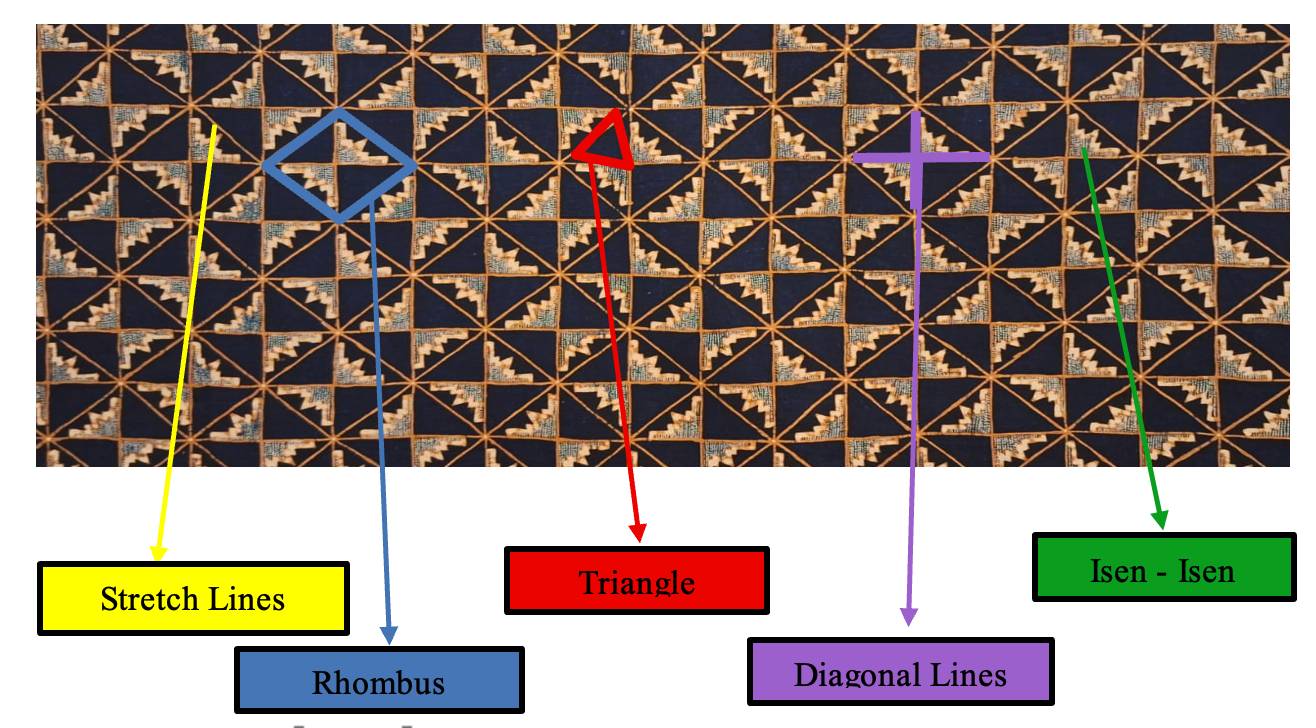
Previous ethnomathematics studies on Indonesian batik have largely concentrated on widely recognized motifs, resulting in limited scholarly attention to several classical motifs that possess distinctive visual and philosophical characteristics. Batik Slobog Solo is one such motif that remains underexplored from a mathematical perspective. This study aims to investigate and describe the mathematical concepts embedded within the Batik Slobog Solo motif as a foundation for developing culturally contextualized mathematics learning. The research adopts a qualitative design employing an ethnographic approach, with data collected through observation, semi-structured interviews, and documentation at the Danar Hadi Batik Museum in Surakarta. The exploration process follows four guiding questions: “Where do I start looking?”, “How do I find it?”, “How do I know that I have found something significant?”, and “How to understand it?”. The findings indicate that Batik Slobog Solo embodies various mathematical concepts, including plane geometry and transformational geometry, arithmetic patterns represented through square numbers and arithmetic sequences, as well as discrete mathematics concepts involving tiling and graph theory. These concepts are reflected in the repetition, regularity, spatial relationships, and systematic arrangement of motif elements. The results demonstrate that Batik Slobog Solo has substantial potential as a culturally grounded instructional resource that supports meaningful mathematics learning. This study contributes to ethnomathematics literature by expanding the scope of mathematical analysis on less-explored batik motifs and emphasizes the importance of integrating local cultural heritage into mathematics education to enhance conceptual understanding while promoting cultural preservation.
Downloads
References
Adams, C. (2023). The Tiling Book: An Introduction to the Mathematical Theory of Tilings. American Mathematical Society. https://books.google.co.id/books?id=E9zeEAAAQBAJ
Afifah, D. S. N., Putri, I. M., & Listiawan, T. (2020). Eksplorasi Etnomatematika pada Batik Gajah Mada Motif Sekar Jagad Tulungagung. BAREKENG: Jurnal Ilmu Matematika Dan Terapan, 14(1), 101–112. https://doi.org/10.30598/barekengvol14iss1pp101-112
Aggarwal, M., & Murty, M. N. (2020). Machine Learning in Social Networks: Embedding Nodes, Edges, Communities, and Graphs. Springer Nature Singapore. https://books.google.co.id/books?id=fWgLEAAAQBAJ
Akmal, Munir, R., & Santoso, J. (2021). Graph Extraction of Batik Image Using Region Adjacency Graph Representation. IOP Conference Series: Materials Science and Engineering, 1077(1). https://doi.org/10.1088/1757-899X/1077/1/012006
Aliantari, A. N., & Sumardi. (2024). Ethnomathematics Of Surakarta Batik Based On Mathematical Aspects According To Bishop In Batik Laweyan. AIP Conference Proceedings, 2926(1). https://doi.org/10.1063/5.0184063
Ari Wulandari. (2022). Batik Nusantara: Makna Filosofis, Cara Pembuatan, dan Industri Batik. Andi. https://books.google.co.id/books?id=mm13EAAAQBAJ
Atabay, Z. E., Macedonio, A., & Teba, T. (2024). Destruction, heritage and memory: post-conflict memorialisation for recovery and reconciliation. Journal of Cultural Heritage Management and Sustainable Development, 14(4), 477–496. https://doi.org/10.1108/JCHMSD-06-2021-0103
Aurora, N., & Chrysoberyl, T. (2024). The Uniqueness Of Sichuan Brocade And Batik Solo Artwork. Journal of Language, Literature, and Arts, 4(10). https://doi.org/10.17977/um064v4i102024p1074-1083
Covarrubia, P. (2022). Transboundary Heritage and Intellectual Property Law: Safeguarding Intangible Cultural Heritage. https://books.google.co.id/books?id=W9yREAAAQBAJ
D’Ambrosio, U. (1985). Ethnomathematics and Its Place in the History and Pedagogy of Mathematics. In For the Learning of Mathematics (pp. 44–48). FLM Publishing Association. https://www.jstor.org/stable/40248110
D’Ambrosio, U. (1994). Cultural Framing of Mathematics Teaching and Learning. In R. Biehler, R. W. Scholz, R. Sträße, & B. Winkelmann (Eds.), Didactics of Mathematics as a Scientific Discipline (pp. 443–455). Kluwer Academic. https://doi.org/10.1007/0-306-47204-X
Eldiana, N. F., Kusumaningrum, S. R., & Dewi, R. S. I. (2023). Ethnomathematics: Mathematics in Batik Turonggo Yakso from Trenggalek. AKSIOMA: Jurnal Program Studi Pendidikan Matematika, 12(1), 1515. https://doi.org/10.24127/ajpm.v12i1.6240
Erciyes, K. (2021). Discrete Mathematics and Graph Theory (1st ed.). Springer Cham. https://doi.org/10.1007/978-3-030-61115-6
Faiziyah, N., Khoirunnisa, M., Azizah, N. N., Nurrois, M., Prayitno, H. J., Desvian, Rustamaji, & Warsito. (2021). Ethnomathematics: Mathematics in Batik Solo. Journal of Physics: Conference Series, 1720(1). https://doi.org/10.1088/1742-6596/1720/1/012013
Fakhriyah, E. N., Ishartono, N., Setyaningsih, R., Zulkarnaen, Ansyari, R. M., Halili, S. H. B., & Razak, R. B. A. (2025). Ethnomathematics: An Exploration of Geometric Concepts in Sidomukti Solo Batik. AIP Conference Proceedings, 3142(1). https://doi.org/10.1063/5.0262004
Fauziah, N. M., Ishartono, N., Chamsudin, A., Junaedi, A., Razak, R. B. A., & Halili, S. H. B. (2025). Exploring of Geometry Concepts in Batik Kopi Pecah Salem. AIP Conference Proceedings, 3142(1). https://doi.org/10.1063/5.0262006
Febriani, R., Knippenberg, L., & Aarts, N. (2023). The Making of a National Icon: Narratives of Batik in Indonesia. Cogent Arts & Humanities, 10(1). https://doi.org/10.1080/23311983.2023.2254042
Fitri, N. L., & Prahmana, R. C. I. (2020). Designing Learning Trajectory of Circle Using the Context of Ferris Wheel. JRAMathEdu (Journal of Research and Advances in Mathematics Education), 5(3), 247–261. https://doi.org/10.23917/jramathedu.v5i3.10961
Hafiza, G. N., Marzuki, I., & Soliana, W. M. Z. (2021). The Application of Batik Block Motifs and Marbling Technique as Pattern Designs in Contemporary Batik. AIP Conference Proceedings, 2347(1). https://doi.org/10.1063/5.0052330
Hanik, U., Efendy, M., Jannah, A. N., & Fatmawati, I. (2024). Ethnomathematics: Exploration of Mathematical Concepts on the Process of Madurese Salt Production. Mathematics Education Journal, 18(1), 59–78. https://doi.org/10.22342/jpm.v18i1.pp59-78
Ishartono, N., Razak, R. B. A., Kholid, M. N., Arlinwibowo, J., & Afiyah, A. N. (2024). Integrating Steam into Flip Flop Model to Improve Students’ Understanding on Composition of Functions During Online Learning. Infinity Journal, 13(1), 45–60. https://doi.org/10.22460/infinity.v13i1.p45-60
Johnson, R. B., & Christensen, L. B. (2024). Educational Research: Quantitative, Qualitative, and Mixed Approaches. SAGE Publications. https://books.google.co.id/books?id=juYaEQAAQBAJ
Kholid, M. N., & Husodo, H. D. (2025). Ethnomathematics: Arithmetic and Discrete Mathematics Concepts in Batik Sidomukti Solo. Jurnal Pendidikan Matematika, 19(3), 489–508. https://doi.org/10.22342/mej.v19i3.pp489-508
Kusrianto, A. (2021). Motif Batik Klasik Legendaris dan Turunannya. Andi. https://books.google.co.id/books?id=2pxNEAAAQBAJ
Latifah, N., Sulistyowati, E., & Sugiman. (2024). Keraton Ngayogyakarta Hadiningrat: A Plane Geometry Learning Material Sources Based On The Ethnomathematics Approaches. AIP Conference Proceedings, 3046(1). https://doi.org/10.1063/5.0194545
Lidinillah, D. A. M., Rahman, Wahyudin, & Aryanto, S. (2022). Integrating Sundanese Ethnomathematics into Mathematics Curriculum and Teaching: A Systematic Review From 2013 to 2020. Infinity Journal, 11(1), 33–54. https://doi.org/10.22460/infinity.v11i1.p33-54
Machaba, F., & Dhlamini, J. (2021). Ethnomathematics as a Fundamental Teaching Approach. In K. Luneta (Ed.), Mathematics Teaching and Professional Learning in sub-Sahara Africa (pp. 59–76). Springer International Publishing. https://doi.org/10.1007/978-3-030-82723-6_5
Masyudin, N., Kamid, & Yantoro. (2020). The Effectivenes of Student Worksheet Based on Discovery Learning and Learning Sources From Batik Jambi. The International Journal of Science & Technoledge, 8(4), 68–72. https://doi.org/10.24940/theijst/2020/v8/i4/ST2004-023
Murtafiah, W., Anggreni, R. D., Masfingatin, T., Lukitasari, M., Lestari, N. D. S., & Kholid, M. N. (2022). Profile of Student Problem-Solving Ability Based on Ethnomathematics of Ngawi Culture on Geometry Topics. AIP Conference Proceedings, 2479. https://doi.org/10.1063/5.0099604
Nurcahyo, A., Ishartono, N., Pratiwi, A. Y. C., & Waluyo, M. (2024). Exploration of Mathematical Concepts in Batik Truntum Surakarta. Infinity Journal, 13(2), 457–475. https://doi.org/10.22460/infinity.v13i2.p457-476
Pathuddin, H., & Busrah, Z. (2024). Ethnomathematics: Learning Geometric Transformation Through the Formation of Lagosi Motif. Jurnal VARIDIKA, 155–173. https://doi.org/10.23917/varidika.v36i2.5969
Powell, A. B. (2009). Respecting mathematical diversity: An ethnomathematical perspective / Respeitando a diversidade matemática: uma perspectiva etnomatemática. Acta Scientiae, 11(2), 39–52. http://www.periodicos.ulbra.br/index.php/acta/article/view/43/40
Prahmana, R. C. I., & D’Ambrosio, U. D. (2020). Learning Geometry and Values From Patterns: Ethnomathematics on the Batik Patterns of Yogyakarta, Indonesia. Journal on Mathematics Education, 11(3), 439–456. https://doi.org/10.22342/jme.11.3.12949.439-456
Prahmana, R. C. I., Yunianto, W., Rosa, M., & Orey, D. C. (2021). Ethnomathematics: Pranatamangsa System and the Birth-Death Ceremonial in Yogyakarta. Journal on Mathematics Education, 12(1), 93–112. https://doi.org/10.22342/jme.12.1.11745.93-112
Prayitno, T. (2020). Mengenal Produk Nasional Batik dan Tenun. Alprin. https://books.google.co.id/books?id=QWj-DwAAQBAJ
Pullen, L. (2021). Patterned Splendour: Textiles Presented on Javanese Metal and Stone Sculptures; Eighth to Fifteenth Century. ISEAS-Yusof Ishak Institute. https://books.google.co.id/books?id=Op8qEAAAQBAJ
Puryanti, Hermanu, J., & Wahyuni, S. (2022). Study of Javanese philosophical values in Kliwonan batik from Sragen District, Central Java, Indonesia. Asian Journal of Ethnobiology, 2(1). https://doi.org/10.13057/asianjethnobiol/y020105
Repiyan, S. M., Machromah, I. U., Faiziyah, N., & Ishartono, N. (2023). Ethnomathematics: Mathematical Concepts in Yogyakarta’s Typical Hand-Drawn Batik. AIP Conference Proceedings, 2727(1). https://doi.org/10.1063/5.0141606
Sa’dijah, C., Kholid, M. N., Hidayanto, E., & Permadi, H. (2020). Reflective Thinking Characteristics: A Study in the Proficient Mathematics Prospective Teachers. Infinity Journal, 9(2), 159–172. https://doi.org/10.22460/infinity.v9i2.p159-172
Santosa, I., & Noorwatha, I. K. D. (2025). Symbolic and aesthetic fusion in Keraton Surakarta: colonial influence and Javanese cultural resistance through architectural design adaptation. Cogent Arts & Humanities, 12(1). https://doi.org/10.1080/23311983.2025.2482456
Sari, N. W. M. S., Ayu Zenia Widya Risanti, V., Lukitasari, E., & Dwi Kristanto, Y. (2023). Pengembangan Lembar Kerja Peserta Didik (LKPD) Berbasis Etnomatematika Batik Yogyakarta Motif Slobog untuk Materi Bangun Datar Persegi dan Segitiga Kelas VII SMP. Prosiding Seminar Nasional Matematika Dan Pendidikan Matematika 2023. http://repository.usd.ac.id/id/eprint/46914
Sharma, I., Sharma, R., Kaur, R., & Sreenivas, A. (2023). A Text Book On Human Values And Ethics. Academic Guru Publishing House. https://books.google.co.id/books?id=_IHzEAAAQBAJ
Siswanto, D. H. (2025). Mathematical Interpretation of the Geblek Renteng Batik Theme: Exploring Geometric Transformations. Journal of Pedagogy and Education Science, 4(01), 36–50. https://doi.org/10.56741/jpes.v4i01.664
Sugiarto, E., Syarif, M. I., Mulyono, K. B., bin Othman, A. N., & Krisnawati, M. (2025). How is ethnopedagogy-based education implemented? (A case study on the heritage of batik in Indonesia). Cogent Education, 12(1). https://doi.org/10.1080/2331186X.2025.2466245
Tracy, S. J. (2024). Qualitative Research Methods: Collecting Evidence, Crafting Analysis, Communicating Impact. John Wiley & Sons. https://books.google.co.id/books?id=EVwcEQAAQBAJ
Uula, N. R., Ishartono, N., Faiziyah, N., Kholid, M. N., Nurcahyo, A., Machromah, I. U., & Setyaningsih, R. (2024). Ethnomathematics: Geometrical concept in Batik Sidomulyo solo. AIP Conference Proceedings, 2926(1). https://doi.org/10.1063/5.0183039
Wesnina, Prabawati, M., & Noerharyono, M. (2025). Integrating traditional and contemporary in digital techniques: the analysis of Indonesian batik motifs evolution. Cogent Arts & Humanities, 12(1). https://doi.org/10.1080/23311983.2025.2474845
Widiastuti, T., Sulistyati, A. N., Darwoto, Dartono, F. A., & Handayani, S. R. (2022). Development of cilacap batik utilizing natural dyes with main motifs of marine life and Dipterocarpus littoralis (pelahlar). IOP Conference Series: Earth and Environmental Science, 1114(1). https://doi.org/10.1088/1755-1315/1114/1/012031
Wiranata, S. S. (2021). INOVASI PRODUK (Orientasi Pelanggan, Orientasi Pesaing, Koordinasi Lintas Fungsi). Jejak Publisher. https://books.google.co.id/books?id=JIAjEAAAQBAJ
Wu, J., Sigmund, O., & Groen, J. P. (2021). Topology Optimization of Multi-Scale Structures: A Review. Structural and Multidisciplinary Optimization, 63(3), 1455–1480. https://doi.org/10.1007/s00158-021-02881-8
Downloads
Submitted
Accepted
Published
Issue
Section
License
Copyright (c) 2026 Jihan Novani, Adi Nurcahyo, Rini Setyaningsih

This work is licensed under a Creative Commons Attribution 4.0 International License.