Single Subject Research in Mathematics Education: Systematic Literature Review in The Indonesian Context
DOI:
https://doi.org/10.23917/varidika.v38i2.14195Keywords:
Mathematics Learning, Inclusive Education, Technology-Based InterventionAbstract
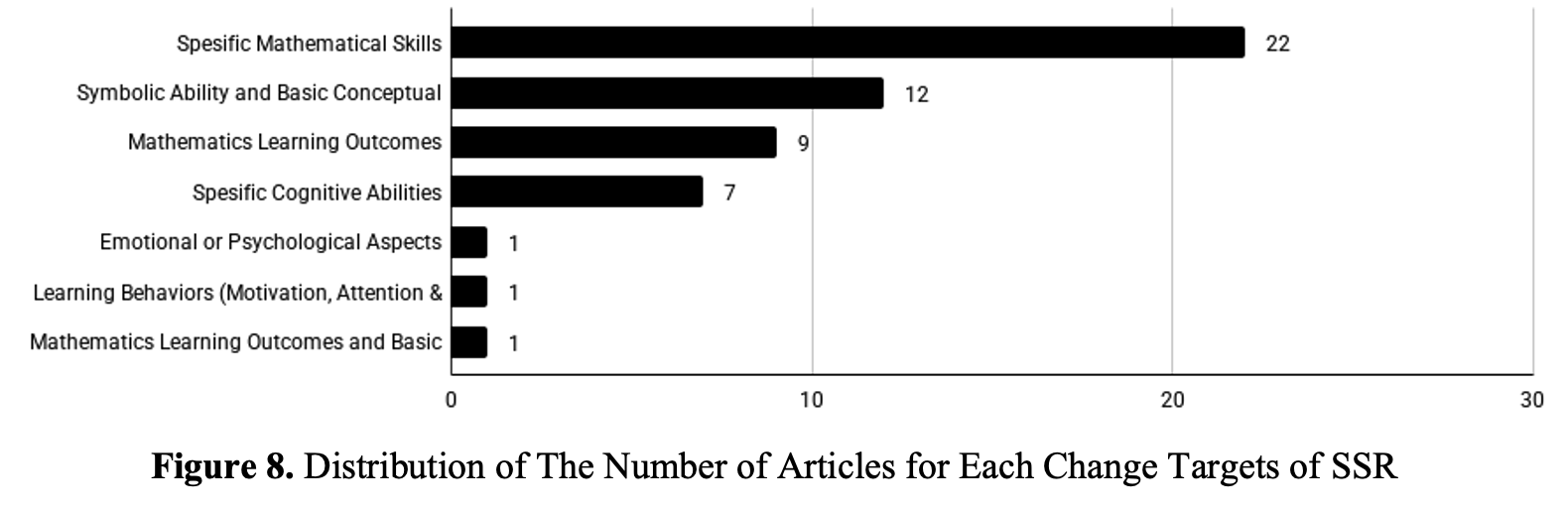
Several literature reviews related to Single Subject Research (SSR) have been reported, but none have re-ported a systematic literature review of SSR in mathematics learning in Indonesia. Therefore, this Systematic Literature Review (SLR) study will report the results of SSR reviews in mathematics learning in Indonesia. There are five research questions to be answered regarding trends, designs, subject characteristics, learning materials, and types of intervention and target changes from SSR. Following the PRISMA flow, 561 articles were identified from three databases (Dimensions, ERIC, and SINTA), then through the screening stage, and finally 53 articles were included for review. The results of the review, in the form of data extraction from each article, were mapped and analyzed using quantitative descriptive methods. The results of the study found that (1) the trend of SSR publications has increased significantly, peaking in 2023, despite fluctuations in some years, (2) the ABA reversal is the most dominant SSR design used, (3) the most dominant characteristics of subjects involved in this SSR are sensory disabilities and special-needs schools, (4) the materials most commonly used in SSR are numbers and operations, and (5) interventions in SSR mostly use learning media or technology, and most target changes in specific mathematical skills. These results recommend expanding the application of SSR to various topics and levels with more complex designs and technology-based interventions in real contexts, in order to support inclusive, adaptive, and sustainable mathematics learning.
Downloads
References
Adigun, O. T., Omobosola, O. ‘W., Lephoto, M. N. R., & Obosu, G. K. (2024). Reducing mathematics anxiety among deaf learners through relaxation and rational emotive behaviour therapies: A randomised-control study. International Journal of Educational Research Open, 7, 100341. https://doi.org/https://doi.org/10.1016/j.ijedro.2024.100341
Adjie, N., Putri, S. U., & Dewi, F. (2021). Improvement of Basic Math Skills Through Realistic Mathematics Education (RME) in Early Childhood. Jurnal Obsesi : Jurnal Pendidikan Anak Usia Dini, 6(3), 1647–1657. https://doi.org/10.31004/obsesi.v6i3.1832
Al-Qadri, A. H., Zhao, W., Li, M., Al-khresheh, M. H., & Boudouaia, A. (2021). The prevalence of the academic learning difficulties: An observation tool. Heliyon, 7(10), e08164. https://doi.org/10.1016/j.heliyon.2021.e08164
Aldousari, A. L. (2024). Overview of Single-Subject Design in Special Education Studies. Evolutionary Studies in Imaginative Culture, 8(2), 1530–1537. https://doi.org/10.70082/esiculture.vi.1478
Ananda, Y., & Damri, D. (2021). Peningkatan Kemampuan Menentukan Nilai Tempat Bilangan Melalui Media Tangga Pintar Bagi Anak Kesulitan Belajar Berhitung Kelas IV di SDN 06 Batang Anai. Jurnal Cendekia : Jurnal Pendidikan Matematika, 5(2), 1138–1146. https://doi.org/10.31004/cendekia.v5i2.561
Ariyani, E. F., & Maharani, A. (2023). Penerapan Realistic Mathematics Education Pada Pembelajaran Matematika Siswa Berkesulitan Membaca. Jurnal Lebesgue : Jurnal Ilmiah Pendidikan Matematika, Matematika Dan Statistika, 4(1), 119–129. https://doi.org/10.46306/lb.v4i1.214
Arvianto, I. R., & Ginting, M. (2021). Single Subject Research: Implementation of Problem Posing Learning on Creative Thinking Ability of Field Dependent Student. Jurnal Mercumatika : Jurnal Penelitian Matematika Dan Pendidikan Matematika, 6(1), 12–17. https://doi.org/10.26486/jm.v6i1.1974
Basudewa, A. H. A., & Suparmi, S. (2025). The Use of Gagne’s Model in Introducing Geometric Shapes to Intellectual Disability Children with Hearing Loss. Psikodimensia, 23(2), 214–221. https://doi.org/10.24167/psidim.v23i2.13046
Brown, H. K., Carty, A., Havercamp, S. M., Parish, S., & Lunsky, Y. (2020). Identifying reproductive-aged women with physical and sensory disabilities in administrative health data: A systematic review. Disability and Health Journal, 13(3), 100909. https://doi.org/https://doi.org/10.1016/j.dhjo.2020.100909
Çay, E., & Bozak, B. (2025). Is video modeling with small group instruction effective? Teaching the skills of using waste materials to individuals with multiple disabilities. Thinking Skills and Creativity, 57, 101854. https://doi.org/https://doi.org/10.1016/j.tsc.2025.101854
Ediyanto, E., Liesdiawati, L., Sunandar, A., & Hastuti, W. D. (2023). Changes in Numeracy Skills of Deaf Students at Malang Special Primary School in Mathematics Learning using Ice Cream Stick Media. Pegem Journal of Education and Instruction, 13(4), 19–24. https://doi.org/10.47750/pegegog.13.04.03
Ewald, H., Klerings, I., Wagner, G., Heise, T. L., Stratil, J. M., Lhachimi, S. K., Hemkens, L. G., Gartlehner, G., Armijo-Olivo, S., & Nussbaumer-Streit, B. (2022). Searching two or more databases decreased the risk of missing relevant studies: a metaresearch study. Journal of Clinical Epidemiology, 149, 154–164. https://doi.org/10.1016/j.jclinepi.2022.05.022
Fatillah, A. L., & Irdamurni, I. (2023). Efektivitas Media Lotto Angka untuk Meningkatkan Kemampuan Mengidentifikasi Bilangan 1-10 bagi Anak Tunarungu. Jurnal Pendidikan Tambusai, 7(3), 26989–26992. https://doi.org/10.31004/jptam.v7i3.10978
Fitriyah, L. A., Wardana, H. K., & Af’idah, N. (2023). Penggunaan Buku Ajar Terintegrasi STEM Terhadap Hasil Belajar Peserta Didik. DWIJA CENDEKIA: Jurnal Riset Pedagogik, 7(2). https://doi.org/10.20961/jdc.v7i2.72113
Gast, D. L., Ledford, J. R., & Severine, K. E. (2018). Withdrawal and Reversal Designs. In Single Case Research Methodology (3rd ed., pp. 333–367). Routledge. https://doi.org/10.4324/9781003294726
Giyanti, G., & Oktaviyanthi, R. (2024). Graphing Quadratics Worksheet Performance in Optimizing Mathematical Visual Thinking: A Single Subject Research. Mosharafa: Jurnal Pendidikan Matematika, 13(2), 371–386. https://doi.org/10.31980/mosharafa.v13i2.1470
Güner, P., & Erbay, H. N. (2021). Prospective mathematics teachers’ thinking styles and problem-solving skills. Thinking Skills and Creativity, 40, 100827. https://doi.org/https://doi.org/10.1016/j.tsc.2021.100827
Haddaway, N. R., Page, M. J., Pritchard, C. C., & McGuinness, L. A. (2022). PRISMA2020: An R package and Shiny app for producing PRISMA 2020-compliant flow diagrams, with interactivity for optimised digital transparency and Open Synthesis. Campbell Systematic Reviews, 18(2), e1230. https://doi.org/https://doi.org/10.1002/cl2.1230
Hadi, P., Syamsuddin, S., Faizal, F., & Sakir, A. (2022). Peningkatan Hasil Belajar Matematika Perkalian Bilangan Asli Dengan Hasil Kali Sampai Dengan 100 Menggunakan Media Kelereng Bagi Siswa Tunanetra. Jurnal Publikasi Pendidikan, 12(3), 225. https://doi.org/10.26858/publikan.v12i3.39174
Hafidah, H., & Rukli, R. (2022). Treatment Slow Learner Learning Repetitive Addition with Realistic Mathematics Learning Approach. Mimbar Sekolah Dasar, 9(3), 396–412. https://doi.org/10.53400/mimbar-sd.v9i3.48586
Hastuti, W. D., Astati, S. M., Sudarjo, S., & Fathoni, A. (2023). The Effect of Mathematical Intelligence Stick Media on the Summation Skills of Students with Intellectual Disability. Pegem Journal of Education and Instruction, 13(3), 203–208. https://doi.org/10.47750/pegegog.13.03.21
Healy, S., Obrusnikova, I., & Getchell, N. (2021). Fundamental Motor Skill Interventions in Children with Autism Spectrum Disorder: A Systematic Review of the Literature Including a Methodological Quality Assessment. Research in Autism Spectrum Disorders, 81(December 2020), 101717. https://doi.org/10.1016/j.rasd.2020.101717
Heideveld-Gerritsen, M., van Vulpen, M., Hollander, M., Oude Maatman, S., Ockhuijsen, H., & van den Hoogen, A. (2021). Maternity care experiences of women with physical disabilities: A systematic review. Midwifery, 96(January). https://doi.org/10.1016/j.midw.2021.102938
Horridge, K. (2019). SEND for the paediatrician: children and young people with special educational needs and disabilities. Paediatrics and Child Health, 29(10), 415–421. https://doi.org/https://doi.org/10.1016/j.paed.2019.07.001
Huda, S., & Agustyaningrum, N. (2019). An Analysis of Sensory Integration Approach on Counting Skills Among Children With Special-Needs. Malikussaleh Journal of Mathematics Learning (MJML), 2(2), 52–55. https://doi.org/10.29103/mjml.v2i2.1406
Husniyyah, S. C., Mulyadi, S., & Elan, E. (2021). Efektivitas Penggunaan Media Geobord Pada Pembelajaran Bangun Datar Peserta Didik Yang Memiliki Hambatan Penglihatan. Jurnal Paud Agapedia, 5(1), 35–42. https://doi.org/10.17509/jpa.v5i1.39661
Hustyi, K. M., Ryan, A. H., & Hall, S. S. (2023). A scoping review of behavioral interventions for promoting social gaze in individuals with autism spectrum disorder and other developmental disabilities. Research in Autism Spectrum Disorders, 100, 102074. https://doi.org/https://doi.org/10.1016/j.rasd.2022.102074
Irfan, M., Mulyani, D. M., Tanujaya, B., Leonard, Maarif, S., & Widodo, S. A. (2023). Single-Subject Research: Mathematical Reasoning Ability of Slow Learners in Straight-Line Equations. The International Journal of Science, Mathematics and Technology Learning, 30(2), 33–47. https://doi.org/10.18848/2327-7971/CGP/v30i02/33-47
Ishartono, N., Razak, R. binti A., Halili, S. H. binti, Ningtyas, Y. D. W. K., Tonra, W. S., Kholid, M. N., Waluyo, M., & Djamilah, S. (2022). The Role of Instructional Design in Improving Pre-Service and In-Service Teacher’s Mathematics Learning Sets Skills: A Systematic Literature Review in Indonesian Context. Indonesian Journal on Learning and Advanced Education (IJOLAE), 5(1), 13–31. https://doi.org/10.23917/ijolae.v5i1.20377
Ismail, S., Bito, N., Oroh, F. A., Yahya, N. I., & Talibo, F. S. (2023). Developing Number Puzzle Learning Media for Elementary School Dyslexic Students: Single Subject Research. Jurnal Didaktik Matematika, 10(2), 170–186. https://doi.org/10.24815/jdm.v10i2.30955
Istiqomah, I., Yuliani, R., Ekawati, R., & Widodo, S. A. (2022). Number recognition development with number card: Single subject research. International Journal of Evaluation and Research in Education, 11(3), 1171–1182. https://doi.org/10.11591/ijere.v11i3.22662
Istomina, A., & Arsalidou, M. (2024). Add, subtract and multiply: Meta-analyses of brain correlates of arithmetic operations in children and adults. Developmental Cognitive Neuroscience, 69(May), 101419. https://doi.org/10.1016/j.dcn.2024.101419
Jannah, A. F., & Prahmana, R. C. I. (2019). Learning fraction using the context of pipettes for seventh-grade deaf-mute student. Journal for the Education of Gifted Young Scientists, 7(2), 299–321. https://doi.org/10.17478/jegys.576234
Kazdin, A. E. (2019). Single-case experimental designs. Evaluating interventions in research and clinical practice. Behaviour Research and Therapy, 117, 3–17. https://doi.org/https://doi.org/10.1016/j.brat.2018.11.015
Kim, D., An, Y., Shin, H. Y. G., Lee, J., & Park, S. (2020). A meta-analysis of single-subject reading intervention studies for struggling readers: using Improvement Rate Difference (IRD). Heliyon, 6(11). https://doi.org/10.1016/j.heliyon.2020.e05024
Kobiliah, F. A., Vernanda, G., & Utami, R. T. (2024). Efektivitas Media Pot Bilangan untuk Meningkatkan Kemampuan Penjumlahan Bilangan Asli 1-10 pada Anak dengan Gangguan Pendengaran. Jurnal Basicedu, 8(3), 1822–1831. https://doi.org/10.31004/basicedu.v8i3.7518
Kratochwill, T. R., Horner, R. H., Levin, J. R., Machalicek, W., Ferron, J., & Johnson, A. (2023). Single-case intervention research design standards: Additional proposed upgrades and future directions. Journal of School Psychology, 97, 192–216. https://doi.org/https://doi.org/10.1016/j.jsp.2022.12.002
Lewis, D. M. G. (2015). Evolved individual differences: Advancing a condition-dependent model of personality. Personality and Individual Differences, 84, 63–72. https://doi.org/https://doi.org/10.1016/j.paid.2014.10.013
Li, T., Higgins, J. P. T., & Deeks, J. J. (2019). Collecting data. In Cochrane Handbook for Systematic Reviews of Interventions (pp. 109–141). https://doi.org/https://doi.org/10.1002/9781119536604.ch5
Lievore, R., Caviola, S., & Mammarella, I. C. (2025). Children with and without dyscalculia: How mathematics anxiety and executive functions may (or may not) affect mental calculation. Learning and Individual Differences, 121, 102693. https://doi.org/https://doi.org/10.1016/j.lindif.2025.102693
Luck, S. A. M., Golijani-Moghaddam, N., & Dawson, D. L. (2024). A Systematic Quality Review of Single-Case Experimental Designs Using Acceptance and Commitment Therapy in Adult Clinical Populations. Behavior Therapy, 55(4), 856–871. https://doi.org/10.1016/j.beth.2024.01.008
Maber-Aleksandrowicz, S., Avent, C., & Hassiotis, A. (2016). A Systematic Review of Animal-Assisted Therapy on Psychosocial Outcomes in People with Intellectual Disability. Research in Developmental Disabilities, 49–50, 322–338. https://doi.org/https://doi.org/10.1016/j.ridd.2015.12.005
Majid, S., Rukli, R., & Sulfansyah, S. (2021). Perbandingan Hasil Belajar Matematika Siswa Sulit Belajar Melalui Pembelajaran Tipe Scramble Media Manipulatif Dengan Media Realistik Menggunakan Single Subjek Research pada Siswa Kelas IV Kecamatan Tanete Rilau. Jurnal Pendidikan Dan Pengajaran Guru Sekolah Dasar (JPPGuseda), 4(2), 143–149.
Malasari, P. N., & Widodo, S. A. (2025). Enhancing introverted students’ algebraic thinking through peer teaching with gusjigang wisdom: single subject research. Al-Jabar : Jurnal Pendidikan Matematika, 16(1), 221–244. https://doi.org/10.24042/ajpm.v16i1.27167
Manikmaya, P., & Prahmana, R. C. I. (2021). Single Subject Research: Pembelajaran Perbandingan Senilai Dan Berbalik Nilai Berpendekatan Contextual Teaching and Learning Untuk Siswa Slow Learner. Journal of Honai Math, 4(1), 35–48. https://doi.org/10.30862/jhm.v4i1.172
McHugh, M. L. (2012). Interrater reliability: The Kappa statistic. Biochemica Medica, 22(3), 276–282. https://hrcak.srce.hr/89395
McMurran, M., Weisbart, D., & Atit, K. (2023). The relationship between students’ gender and their confidence in the correctness of their solutions to complex and difficult mathematics problems. Learning and Individual Differences, 107, 102349. https://doi.org/https://doi.org/10.1016/j.lindif.2023.102349
Nahwah, F., Choiri, A. S., & Sunardi, S. (2017). Single subject research: Increasing mathematics learning outcomes of the additive fractions using fractional block media toward students with visual impairment. European Journal of Special Education Research, 2(2), 89–104. https://doi.org/10.5281/zenodo.247760
Nashiruddin, M., Triyanto, T., & Nurhasanah, F. (2022). Pengembangan Media Pembelajaran Bangun Ruang Sisi Datar Adaptif (BARUSIDA) Untuk Meningkatkan Pemahaman Konsep Siswa Tunanetra di Sekolah Inklusi. Jurnal Penelitian Pendidikan, 21(3), 17–35. https://doi.org/10.17509/jpp.v21i3.39328
National Council of Teachers of Mathematics (NCTM). (2019). Principles and Standards for School Mathematics. In Sustainability (Switzerland) (Vol. 11, Issue 1). http://scioteca.caf.com/bitstream/handle/123456789/1091/RED2017-Eng-8ene.pdf?sequence=12&isAllowed=y%0Ahttp://dx.doi.org/10.1016/j.regsciurbeco.2008.06.005%0Ahttps://www.researchgate.net/publication/305320484_SISTEM_PEMBETUNGAN_TERPUSAT_STRATEGI_MELESTARI
Ogden, K. K., Ozkan, E. D., & Rumbaugh, G. (2016). Prioritizing the development of mouse models for childhood brain disorders. Neuropharmacology, 100, 2–16. https://doi.org/https://doi.org/10.1016/j.neuropharm.2015.07.029
Otero-González, I., Pacheco-Lorenzo, M. R., Fernández-Iglesias, M. J., & Anido-Rifón, L. E. (2024). Conversational agents for depression screening: A systematic review. International Journal of Medical Informatics, 181, 105272. https://doi.org/https://doi.org/10.1016/j.ijmedinf.2023.105272
Öz, T., & Işık, A. (2024). Exploring mathematical reasoning skills of middle school students. Thinking Skills and Creativity, 53, 101612. https://doi.org/https://doi.org/10.1016/j.tsc.2024.101612
Page, M. J., McKenzie, J. E., Bossuyt, P. M., Boutron, I., Hoffmann, T. C., Mulrow, C. D., Shamseer, L., Tetzlaff, J. M., Akl, E. A., Brennan, S. E., Chou, R., Glanville, J., Grimshaw, J. M., Hróbjartsson, A., Lalu, M. M., Li, T., Loder, E. W., Mayo-Wilson, E., McDonald, S., … Moher, D. (2021). The PRISMA 2020 statement: An updated guideline for reporting systematic reviews. BMJ, 372(n71), 1–9. https://doi.org/10.1136/bmj.n71
Prahmana, R. C. I. (2021). Single Subject Research (teori dan implementasinya: suatu pengantar) (1st ed.). UAD Press.
Putri, A. G., & Leonard, L. (2025). Improving Multiplication Performance in Students with Dyscalculia Using GARISMATIKA: A Single-Subject Design. Lentera Pendidikan: Jurnal Ilmu Tarbiyah Dan Keguruan, 28(1), 199–216. https://doi.org/10.24252/lp.2025v28n1i11
Putri, N. A., & Marlina, M. (2024). Efektivitas Strategi Student Teams Achievement Division (STAD) untuk Meningkatkan Kemampuan Penjumlahan bagi Anak Diskalkulia. Edukatif : Jurnal Ilmu Pendidikan, 6(1), 781–787. https://doi.org/10.31004/edukatif.v6i1.6363
Rahayu, N. P., Prastiwi, L., & Setiawan, W. (2024). Improving The Numeracy Skills of Slow Learners with Ice Cream Stick Media: Single Subject Research. EduMatSains : Jurnal Pendidikan, Matematika Dan Sains, 9(1), 235–245. https://doi.org/10.33541/edumatsains.v9i1.5977
Rante, S. V. N., Helaluddin, Wijaya, H., Tulak, H., & Umrati. (2020). Far from expectation: A systematic literature review of inclusive education in indonesia. Universal Journal of Educational Research, 8(11), 6340–6350. https://doi.org/10.13189/ujer.2020.082273
Rustami, S., & Taufan, J. (2022). Meningkatkan Kemampuan Mengenal Lambang Bilangan 1 Sampai 5 Menggunakan Media Balok Cuisenaire Bagi Anak Tunagrahita Ringan. Edukatif : Jurnal Ilmu Pendidikan, 4(3), 3947–3951. https://doi.org/10.31004/edukatif.v4i3.2769
Rusyani, E., Ratnengsih, E., Putra, A. S., Maryanti, R., Al Husaeni, D. F., & Ragadhita, R. (2021). The Drilling Method Application Using Abacus to Arithmetic Operations Skills in Student with Hearing Impairment at Special School. Indonesian Journal of Community and Special Needs Education, 2(1), 1–10. https://doi.org/10.17509/ijcsne.v2i1.37133
Safitri, P. N., Marjohan, M., & Bentri, A. (2023). Play Therapy using Color Paper to Reduce Mathematic Anxiety on Children’s. Journal of ICSAR, 7(2), 241. https://doi.org/10.17977/um005v7i22023p241
Salma, H. H., & Prasetyawati, W. (2023). Studi Subjek Tunggal: Efektivitas Teknik Shaping Dan Token Economy Untuk Meningkatkan Atensi Dan Memori Kerja Anak Lamban Belajar. Journal of Psychological Science and Profession, 7(1), 25–35. https://doi.org/10.24198/jpsp.v7i1.43461
Salsabila, Z., & Permatasari, D. (2024). Single Subject Research: Can a Contextual Approach to Ratio Material Facilitate Understanding of Concepts for Mentally Retarded Students? Single. Jurnal 12 Waiheru, 10(1), 28–41. https://doi.org/10.47655/12waiheru.v10i1.200
Sari, A. I., & Damri, D. (2023). Improving the Ability of Subtraction Count Operations Using Abacus Media for Children with Mild Mental Disability (Single Subject Research in SLB Perwari Padang). Jurnal Edumaspul, 7(1), 786–788.
Sari, Z. P., Sarofah, R., & Fadli, Y. (2022). The Implementation of Inclusive Education in Indonesia: Challenges and Achievements. Jurnal Public Policy, 8(4), 264–269. https://doi.org/10.35308/jpp.v8i4.5420
Sasmita, R. S., & Harjono, N. (2021). Efektivitas Jarimatika untuk Meningkatkan Kemampuan Perkalian pada Siswa dengan Hambatan Penglihatan. Jurnal Basicedu, 5(5), 3472–3481. https://journal.uii.ac.id/ajie/article/view/971
Scheinost, D., Pollatou, A., Dufford, A. J., Jiang, R., Farruggia, M. C., Rosenblatt, M., Peterson, H., Rodriguez, R. X., Dadashkarimi, J., Liang, Q., Dai, W., Foster, M. L., Camp, C. C., Tejavibulya, L., Adkinson, B. D., Sun, H., Ye, J., Cheng, Q., Spann, M. N., … Westwater, M. L. (2023). Machine Learning and Prediction in Fetal, Infant, and Toddler Neuroimaging: A Review and Primer. Biological Psychiatry, 93(10), 893–904. https://doi.org/https://doi.org/10.1016/j.biopsych.2022.10.014
Sholahudin, U., & Oktaviyanthi, R. (2023). The Trigonometric Adaptive Worksheet Performance in Optimizing Trigonometric Thinking of Prospective Mathematics Teacher: Single Subject Research. Jurnal Didaktik Matematika, 10(2), 250–265. https://doi.org/10.24815/jdm.v10i2.33216
Snyder, H. (2019). Literature review as a research methodology: An overview and guidelines. Journal of Business Research, 104(March), 333–339. https://doi.org/10.1016/j.jbusres.2019.07.039
Soeharto, S., Seyda, S. S., & Afriyanti, F. (2024). Associations between attitudes toward inclusive education and teaching for creativity for Indonesian pre-service teachers. Thinking Skills and Creativity, 51, 101469. https://doi.org/10.1016/j.tsc.2024.101469
Sulistyowati, F., Hartanti, S., Widodo, S. A., & Putrianti, F. G. (2022). Critical Thinking Skills in Phlegmatic Students Using Learning Videos. Jurnal Math Educator Nusantara: Wahana Publikasi Karya Tulis Ilmiah Di Bidang Pendidikan Matematika, 8(2), 119–133. https://doi.org/10.29407/jmen.v8i2.18874
Sutisna, N., & Rahmawati, A. (2018). Pengaruh Metode Vakt Terhadap Peningkatan Kemampuan Mengenal Bangun Datar Pada Anak Cerebral Palsy. PEDAGOGIA: Jurnal Ilmu Pendidikan, 16(2), 157–166.
Tasliah, S., Rusdiyani, M.Pd, D. H. I., & Abadi, M.Pd, R. F. (2019). Penggunaan Metode Jarimatika Dalam Meningkatkan Kemampuan Berhitung Perkalian Pada Siswa Tunarungu Kelas Vi Di Skh Samantha Kota Serang (Single Subject Research di Kelas VI SKh Samantha Kota Serang). UNIK (Jurnal Ilmiah Pendidikan Luar Biasa), 3(2). https://doi.org/10.30870/unik.v3i2.5314
Tonra, W. S., Suryadi, D., Kusnandi, K., & Mulyaning, E. C. (2024). Limit of Function Understanding by Student of National Mathematics Olimpiad ON MIPA in University. Sainsmat : Jurnal Ilmiah Ilmu Pengetahuan Alam, 13(2), 178–187. https://doi.org/10.35580/sainsmat132654872024
Ulfah, A. F., & Prahmana, R. C. I. (2018). Single Subject Research: Implementasi Pembelajaran Berbasis Masalah terhadap Pemahaman Matematis Siswa. Jurnal Elemen, 4(1), 105. https://doi.org/10.29408/jel.v4i1.553
Utami, A. Y., & Kasiyati, K. (2020). Permainan Uno Stacko: Upaya Meningkatkan Kemampuan Mengenal Nilai Tempat Bagi Anak Berkesulitan Belajar Kelas III SD N 22 Payakumbuh. Golden Age: Jurnal Ilmiah Tumbuh Kembang Anak Usia Dini, 5(1), 11–16. https://doi.org/10.14421/jga.2020.11-16
Wardani, K. D., & Prahmana, R. C. I. (2021). Learning Direct and Inverse Proportion Using Pen and Money for Slow-Leaners. Indonesian Research Journal in Education |IRJE|, 5(1), 63–84. https://doi.org/10.22437/irje.v5i1.10302
Wardany, O. F., & Ulfa, D. A. (2022). Efektivitas Game Quizziz dalam Meningkatkan Hasil Belajar Matematika Materi Jam pada Siswa Tunarungu. Jurnal ORTOPEDAGOGIA, 8(1), 19. https://doi.org/10.17977/um031v8i12022p19-26
Wati, L. A., Vernanda, G., & Sani, Y. (2024). Efektivitas Media Papan Simbol untuk Meningkatkan Kemampuan Memahami Simbol Matematika pada Anak dengan Gangguan Pendengaran. Jurnal Basicedu, 8(2), 1512–1523. https://doi.org/10.31004/basicedu.v8i2.7452
Widodo, S. A., Cahyani, E. R., & Istiqomah, I. (2020). Single Subject Research: Learning Algebra Operations in Introverted Students. Formatif: Jurnal Ilmiah Pendidikan MIPA, 10(2), 133–142. https://doi.org/http://dx.doi.org/10.30998/formatif.v10i2.6300 p-ISSN:
Widodo, S. A., Kustantini, K., Kuncoro, K. S., & Alghadari, F. (2021). Single Subject Research: Alternatif Penelitian Pendidikan Matematika di Masa New Normal. Journal of Instructional Mathematics, 2(2), 78–89. https://doi.org/10.37640/jim.v2i2.1040
Widodo, S. A., Prihatiningsih, A., & Taufiq, I. (2021). Single subject research: Use of interactive video in children with developmental disabilities with dyscalculia to introduce natural numbers. Participatory Educational Research, 8(2), 94–108. https://doi.org/10.17275/per.21.31.8.2
Widodo, S. A., Sari, D. D., Maarif, S., Setiana, D. S., & Perbowo, K. S. (2022). Learning achievement of extroverted students in algebraic operations by tutorial learning: A single subject research. International Journal of Evaluation and Research in Education, 11(1), 99–107. https://doi.org/10.11591/ijere.v11i1.21747
Wissink, I. B., van Vugt, E., Moonen, X., Stams, G.-J. J. M., & Hendriks, J. (2015). Sexual abuse involving children with an intellectual disability (ID): A narrative review. Research in Developmental Disabilities, 36, 20–35. https://doi.org/https://doi.org/10.1016/j.ridd.2014.09.007
Xiao, Y., & Watson, M. (2019). Guidance on Conducting a Systematic Literature Review. Journal of Planning Education and Research, 39(1), 93–112. https://doi.org/10.1177/0739456X17723971
Yanti, O. F., Prahmana, R. C. I., & Fitriyah, F. (2018). Single subject research: Pembelajaran phytagoras pada siswa introvert kelas VIII. Beta: Jurnal Tadris Matemtika, 11(1), 37–49. https://doi.org/10.20414/betajtm.v11i1.147
Zulfa, F. N., & Andriyani, A. (2023). Computational Thinking in Solving Arithmetic Sequences Problems for Slow Learners: Single Subject Research. Jurnal Pendidikan Matematika (Kudus), 6(1), 95. https://doi.org/10.21043/jpmk.v6i1.20406
Downloads
Submitted
Accepted
Published
Versions
- 02/18/2026 (2)
- 01/31/2026 (1)
Issue
Section
License
Copyright (c) 2026 Ilham Rais Arvianto, Wahyu Nofiansyah, Abi Fadila

This work is licensed under a Creative Commons Attribution 4.0 International License.