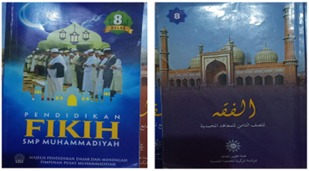
Integrating Sustainable Development Goals in Physical and Mental Health Education: A Study on the 8th Grade Fiqh Textbook
DOI:
https://doi.org/10.23917/profetika.v25i03.8881Keywords:
fiqh, education, text book, physical and spiritual, sustainable development goalsAbstract
Objective: This study aims to analyze the content of Fiqh textbooks used in Muhammadiyah educational institutions, especially to assess the extent to which the material is in line with the ISMUBA curriculum and its relevance to the Sustainable Development Goals (SDGs). Theoretical framework: Based on Islamic education that is integrated with global development goals, especially the values of justice, social responsibility, and environmental conservation. Literature review: Reviewing the Islamic education curriculum of Muhammadiyah, the suitability of textbooks with the curriculum, and the relationship between religious education and global issues in the context of the SDGs. Methods: Using content analysis of Fiqh textbooks from the Dikdasmen Council and the Muhammadiyah Islamic Boarding School Development Institute, with a focus on the structure, content, and relationship with the SDGs. Results: The results of the study show that the Fiqh textbook published by the Muhammadiyah Higher Education Council is by the ISMUBA curriculum, while the version from the Islamic Boarding School Development Institute is still relevant, even though the structure is different. The material covers the pillars of Islam and supports the SDGs: fasting and prayer (Goal 3), zakat and social (Goals 1 & 10), and environmental ethics (Goal 13). Implications: Shows that Islamic education can contribute to the formation of a religious, social, and environmentally caring generation that is ready to face global challenges. Novelty: Offering a new perspective by connecting the Muhammadiyah Fiqh textbook with the SDGs, expanding the function of religious education towards sustainable development.
References
[1] T. Nurrita, “Pengembangan Media Pembelajaran Untuk Meningkatkan Hasil Belajar Siswa,” misykat, vol. 03 No. 01, pp. 171–187, 2018, https://doi.org/10.33511/misykat.v3n1.171.
[2] M. Muthoifin, Elbanna, A. Barry, I. Afiyah, A. Nirwana, and R. Islam, “Islamic Education Management Democracy and Harmony in Promoting Multiculturalism,” J. Manag. World, vol. 1, no. 1, pp. 445–456, 2025, https://doi.org/10.53935/jomw.v2024i4.713.
[3] Muthoifin et al., “Bibliometric Analysis of the Socialization of Islamic Inheritance Law in the Scopus Database and Its Contribution to Sustainable Development Goals (SDGs),” J. Lifestyle SDG Rev.., vol. 5, no. 2, 2025, https://doi.org/10.47172/2965-730X.SDGsReview.v5.n02.pe03057.
[4] A. N. An, F. Q. A. Tamami, Z. Daud, N. M. Salleh, M. H. bin Ishak, and M. Muthoifin, “Understanding the Integration of Deep Learning and Artificial Intelligence in Quranic Education and Research through Bibliometric Analysis,” Educ. Process Int. J., vol. 14, 2025, https://doi.org/10.22521/edupij.2025.14.12.
[5] T. Suharto, “Gagasan Pendidikan Muhammadiyah dan NU sebagai Potret Pendidikan Islam Moderat di Indonesia,” Islam. J. Stud. Keislam, vol. 9, no. 01, pp. 81–109, 2014, https://doi.org/10.15642/islamica.2014.9.1.81-109.
[6] E. J. Ploran, A. A. Overman, J. T. Lee, A. M. Masnick, K. M. Weingartner, and K. D. Finuf, “Learning to Learn: A pilot study on explicit strategy instruction to incoming college students,” Acta Psychol. (Amst), vol. 232, 2023, https://doi.org/10.1016/j.actpsy.2022.103815.
[7] T. Cleminson and N. Cowie, “Using design thinking as an approach to creative and communicative engagement in the English as a foreign language (EFL) classroom,” J. Univ. Teach. Learn. Pract., vol. 18, no. 4, 2021, https://doi.org/10.53761/1.18.4.7.
[8] G. Fatemi and E. Saito, “Unintentional plagiarism and academic integrity: The challenges and needs of postgraduate international students in Australia,” J. Furth. High. Educ., vol. 44, no. 10, pp. 1305–1319, 2020, https://doi.org/10.1080/0309877X.2019.1683521.
[9] F. Mansir, “Analisis Model-Model Pembelajaran Fikih Yang Aktual Dalam Merespons Isu Sosial Di Sekolah Dan Madrasah,” Ta’dibuna, vol. 10 No 1, no. 1, pp. 88–99, 2021, https://doi.org/10.32832/tadibuna.v10i1.
[10] T. Hamami and Z. Nuryana, “A holistic–integrative approach of the Muhammadiyah education system in Indonesia,” HTS Teol. Stud. / Theol. Stud., vol. 78, no. 4, 2022, https://doi.org/10.4102/hts.v78i4.7607.
[11] L. O. Munalim, C. F. Genuino, and B. E. Tuttle, “Question-Declaration Coupling in a University Meeting Talk: Discourse of Social Inequality and Collegiality,” Stud. English Lang. Educ., vol. 9, no. 1, pp. 400–417, 2022, https://doi.org/10.24815/siele.v9i1.21293.
[12] Muthoifin et al., “Islamic Banking: a Comprehensive Review of the Definition, Strategy, Legal Framework, and Practice of Contracts in the Modern Financial System,” J. Lifestyle SDG Rev.., vol. 5, no. 1, 2025, https://doi.org/10.47172/2965-730X.SDGsReview.v5.n01.pe03067.
[13] Muthoifin et al., “Women, Islamic Education, and Socioeconomics for the Sustainable Development Goals (SDGs): a Bibliometric Study of Understanding From 1880 To 2024,” J. Lifestyle SDG Rev.., vol. 5, no. 2, 2025, https://doi.org/10.47172/2965-730X.SDGsReview.v5.n02.pe01737.
[14] T. Muthoifin, Oktatianti, I. Afiyah, A. A. Astuti, A. Nirwana, E. Geraldine, and U. Kingdom, “The Election and the Criteria for Ideal Leaders : A Leadership Management Study Based on the Principles of Justice and Wisdom,” J. Manag. World, vol. 1, no. 1, pp. 341–350, 2025, https://doi.org/10.53935/jomw.v2024i4.673.
[15] A. N. Andri Nirwana, Mahmudulhassan, M. Ali, Muthoifin, Waston, and A. R. B. S. Senathirajah, “The Intersection of Quranic Studies and Modern Technology: A Bibliometric Analysis of Academic Publications from 2000 to 2024,” Qubahan Acad. J., vol. 4, no. 4, pp. 178–190, 2024, https://doi.org/10.48161/qaj.v4n4a981.
[16] A. Nirwana et al., “The Role of Traditional Salt Production in Achieving Halal Standards of the Ulama Consultative Council: Implications for Sustainable Development Goals,” J. Lifestyle SDG Rev.., vol. 4, no. 2, pp. 1–47, 2024, https://doi.org/10.47172/2965-730X.SDGsReview.v4.n02.pe01721.
[17] N. Hamid, Sutama, S. Hidayat, Waston, A. Nirwana, and Muthoifin, “Creative Leadership: an Implementing Study of Transformative Leadership Models in High School for Sustainable Development Goals,” J. Lifestyle SDG Rev.., vol. 5, no. 1, 2024, https://doi.org/10.47172/2965-730X.SDGsReview.v5.n01.pe01686.
[18] A. N. Andri Nirwana, Mahmudulhassan, F. D. Marshal, Muthoifin, and N. Fadli, “Human Rights and Social Justice in Quranic Contexts: A Global Trend,” Leg. J. Ilm. Huk., vol. 32, no. 2, pp. 453–471, 2024, https://doi.org/10.22219/ljih.v32i2.35088.
[19] Y. Yanti, “Analisis buku ajar Fikih kelas VI (Studi komparasi di MI Sultan Agung dan SD IT Ar-Rohmah),” TERAMPIL J. Pendidik. dan Pembelajaran Dasar, vol. 3, no. 1, pp. 179–197, 2016.
[20] M. Rasidin, “Analsis Kelayakan Isi Buku Ajar Mata Pelajaran Fiqih Kelas VII MTs Yayasan Pendidikan Az-Zuhri,” J. Pendidik. Islam al-Ulum, vol. 3, No. 2, pp. 162–174, 2022, https://doi.org/10.56114/al-ulum.v3i2.304.
[21] R. W. and Afrianto, “Analisis Kebutuhan E-Modul Pada Mata Pelajaran Fikih Kelas X Di MA Darul Ulum Palangka Raya,” Edif. J. Pendidik. Agama Islam, vol. 6 no. 2, no. 2, pp. 99–110, 2024, https://doi.org/10.37092/ej.v6i2.656.
[22] R. W. and Afrianto, “Analisis Kebutuhan Media Pada Mata Pelajaran PAI Di Kelas XI TKJ 1 SMK Negeri 1 Cemapaga,” Edu Glob., vol. 4, no. 2, pp. 26–34, 2023, https://doi.org/10.56874/eduglobal.v4i2.1491.
[23] W. D. Astuti, “Analisis Materi Pembelajaran Pendidikan Fiqh Di SMP Muhammadiyah Palangka Raya,” 2020.
[24] S. Anwar, K. G. Permatasari, S. Nur, M. Munawar, and M. N. Shabrina, “History of Muhammadiyah in Blora Mustika City : Development and Challenges,” Pakistan J. Life Soc. Sci., vol. 22, pp. 812–821, 2024, https://doi.org/10.57239/PJLSS-2024-22.2.0059.
[25] Q. Q. Yusran and I. Afiyah, “Optimizing the Potential of Zakat to Alleviate Poverty Problems and Improve Community Economy in Surakarta City,” J. Ecohumanism, vol. 6798, pp. 121–132, 2024, https://doi.org/10.62754/joe.v3i3.3394.
[26] Q. Q. Yusran and A. Nirwana, “The Practice of Changing the Status of Change of Waqf Property in the Islamic Social Economic View,” J. Ecohumanism, vol. 6798, pp. 229–238, 2024, https://doi.org/10.62754/joe.v3i6.3996.
[27] E. Spalding and A. Wilson, “Demystifying reflection: A study of pedagogical strategies that encourage reflective journal writing,” Teach. Coll. Rec., vol. 104, no. 7, pp. 1393–1421, 2002, https://doi.org/10.1111/1467-9620.00208.
[28] A. Widiatsih, R. Wulandari, and S. Muarif, “Pemanfaatan Google Classroom dalam Penilaian Autentik Studi Kasus SD Negeri Sidomulyo 05 Silo Kabupaten Jember,” Rekayasa, vol. 13, no. 2, pp. 187–196, 2020, https://doi.org/10.21107/rekayasa.v13i2.5904.
[29] R. Suharso, D. L. Setyowati, and C. B. Utomo, “Teaching multiculturalism based on Islamic historical relics in Northern Java,” Int. J. Innov. Creat. Chang, vol.. 11, no. 10, pp. 445–463, 2020.
[30] Z. Ardiansyah., Waston., Mahmudulhassan., Daud, and M. Salleh., Norsaleha Mohd., AN, Andri Nirwana., “Tracing Trends in Quran Memorization and Cognitive Learning: A Bibliometric Analysis from the Scopus Database,” Pakistan J. Life Soc. Sci., vol. 22, no. 2, pp. 1493–1509, 2024, https://doi.org/10.57239/PJLSS-2024-22.2.00105.
[31] A. N. AN. M., . M., and W., “Bibliometric Analysis of Islamic Education and Character Development in Religious Education Practices in Indonesia,” Pakistan J. Life Soc. Sci., vol. 22, no. 2, pp. 1231–1245, 2024, https://doi.org/10.57239/PJLSS-2024-22.2.0086.
[32] M. Sri Mega Indah Umi Zulfiani and I. Rosyadi, “Corporate Social Responsibility (CSR) Practices Of Shariaconsumer Cooperatives For Sustainable Development Goals (SDGs) Ethical Perspective,” J. Lifestyle SDGs Rev.., vol. 4, pp. 1–20, 2024, https://doi.org/10.47172/2965-730X.SDGsReview.v4.n00.pe01752.
[33] Muthoifin, N. Yaman, I. Rosyadi, Isman, Masithoh, and I. Afiyah, “Fostering The Ummah’s Economy Through The Stock-investment System : The Views Of The Mui For Sustainable Development Goals ( SDGS ),” J. Lifestyle SDG’S Rev.., vol. 4, no. 1, pp. 1–19, 2024, https://doi.org/10.47172/2965-730X.SDGsReview.v4.n00.pe01685.
[34] A. N. Suwarsono, Bambang Setiadji, Musa Asy’arie, Waston, Muthoifin, “The Future Of The Civilization Of The Ummah Is Reviewed From The Sociology Of Education For The Sustainable Development Goals (SDGS’ S ),” J. Lifestyle SDGs Rev.., vol. 4, pp. 1–19, 2024, https://doi.org/10.47172/2965-730X.SDGsReview.v4.n00.pe01688.
[35] H. Huzaery, B. Sumardjoko, T. Kasturi, and A. Nirwana, “Enhancing Parent-Teacher Collaboration in Tahfidzul Qur'an Learning : Roles, Challenges, and Strategies,” Int. J. Relig., vol. 3538, no. 10, pp. 3850–3874, 2024, https://doi.org/10.61707/jxn48760.
[36] S. Rochanah, A. R. Ridha, and A. Nirwana, “Development of Teachers’ Performance of Construct Reliability and Avarice Variance Extracted Measurement Instruments of Certified Islamic Education Teachers,” Int. J. Relig., vol. 3538, no. 10, pp. 3828–3849, 2024, https://doi.org/10.61707/xzjvmb82.
[37] A. Nurrohim, A. H. Setiawan, and A. A. Sweta, “The Concept of Islamic Moderation in Indonesia : A Comparative Study in Tafsir An-Nur and Tafsir of the Ministry of Religious Affairs ( MORA ),” Int. J. Relig., vol. 3538, no. 10, pp. 2110–2125, 2024, https://doi.org/10.61707/5b1e9h02.
[38] R. P. Ennis and K. Jolivette, “Existing Research and Future Directions for Self-Regulated Strategy Development With Students With and At Risk for Emotional and Behavioral Disorders,” J. Spec. Educ., vol. 48, no. 1, pp. 32–45, 2014, https://doi.org/10.1177/0022466912454682.
[39] R. Imafuku, K. Hayakawa, and T. Saiki, “Text analysis of personal statements written in English by Japanese medical students,” Asia Pacific Sch., vol. 7, no. 2, pp. 51–55, 2022, https://doi.org/10.29060/TAPS.2022-7-2/SC2710.
[40] E. Jones, “Predicting performance in first-semester college basic writers: Revisiting the role of self-beliefs,” Contemp. Educ. Psychol., vol. 33, no. 2, pp. 209–238, 2008, https://doi.org/10.1016/j.cedpsych.2006.11.001.
[41] A. A. Astuti, S. A. Aryani, S. Hidayat, . W., A. N, Andri Nirwana, and M., “Parent Practices of SMPIT Insan Mulia Surakarta in Implementing Sexual Education from An Islamic Perspective to Children in The Digital Era,” Int. J. Relig., vol. 5, no. 10, pp. 2092–2109, Jun. 2024, https://doi.org/10.61707/6msvvh24.
[42] M. Muthoifin, I. Rosyadi, and H. Prasetyo, “The phenomenon of the rise of online transactions: A case study Tokopedia.com and Bukalapak.com sharia perspective,” Multidiscip. Rev.., vol. 7, no. 8, 2024, https://doi.org/10.31893/multirev.2024133.
[43] M. Muthoifin, I. Amelia, and A. B. Eprahim Ali, “Islamic accounting: Ethics and contextualization of recording in Muamalah transactions,” Multidiscip. Rev.., vol. 7, no. 8, 2024, https://doi.org/10.31893/multirev.2024132.
[44] Muthoifin et al., “Profit-Sharing Practices To Increase Profits and Development of Indonesian Sharia Banking,” Rev. Gest. Soc. e Ambient., vol. 18, no. 6, pp. 1–17, 2024, https://doi.org/10.24857/rgsa.v18n6-005.
[45] M. S. Apriantoro, M. Muthoifin, and F. H. N. Athief, “Advancing social impact through Islamic social finance: A comprehensive bibliometric analysis,” Int. J. Adv. Appl. Sci., vol. 10, no. 11, pp. 81–89, 2023, https://doi.org/10.21833/ijaas.2023.11.011.
[46] E. B. G. Suwoko, Waston, Bambang Setiaji, Muthoifin, Huda Kurnia Maulana, “Family Education To Improve The Quality Of Human Resources And Sustainable Development In Samarinda,” Rev. Gestão Soc. e Ambient., vol. 18, no. 6, pp. 1–19, 2024, https://doi.org/10.24857/rgsa.v18n6-011.
[47] Waston, Muthoifin, S. Amini, R. Ismail, S. A. Aryani, and A. Nirwana, “Religiosity To Minimize Violence: a Study of Solo Indonesian Society,” Rev. Gest. Soc. e Ambient., vol. 18, no. 6, 2024, https://doi.org/10.24857/RGSA.V18N6-089.
[48] M. Muthoifin and A. Y. Rhezaldi, “Community economic empowerment through mosque management to improve people’s welfare,” Multidiscip. Rev.., vol. 7, no. 8, 2024, https://doi.org/10.31893/multirev.2024134.
[49] A. A. Seambaga, “Pengaruh Puasa terhadap Sistem Pencernaan Tubuh bagi Umat Muslim,” vol. 1, pp. 895–904, 2023.
[50] C. Town, “Ramadhan fasting for people living with chronic illness : A narrative literature review Physiology of Ramadhan fasting Diabetes mellitus The metabolic link between Ramadhan fasting and diabetes,” pp. 1–6, 2024.
[51] M. N. Hamzah, M. Ashoer, and N. Hamzah, “Impact of Islamic work values on in-role performance: PERSPECTIVE from Muslim employees in Indonesia,” Probl. Perspect. Manag., vol. 19, no. 4, pp. 446–457, 2021, https://doi.org/10.21511/ppm.19(4).2021.36.
[52] D. Auston, “Prayer, Protest, and Police Brutality: Black Muslim Spiritual Resistance in the Ferguson Era,” Transform. Anthropol., vol. 25, no. 1, pp. 11–22, 2017, https://doi.org/10.1111/traa.12095.
[53] M. R. Behdar and R. Sheikh, “Investigating the effect of Salat ( Muslim prayer ) on mental health in the results of clinical studies : A mini review,” pp. 267–274, 2024.
[54] L. J. Olson, “Negotiating meaning through costume and social media in Bulgarian Muslims’ communities of practice,” Natl. Pap., vol. 45, no. 4, pp. 560–580, 2017, https://doi.org/10.1080/00905992.2017.1303470.
[55] A. Zaenurrosyid and G. Shidiq, “Typologies of the Fiqh Conception in the Covid-19 Pandemic Era (Exploration on Religious Views and Attitudes of Kyai-in mosques of North Coast of Java),” Samarah, vol. 5, no. 2, pp. 1069–1097, 2021, https://doi.org/10.22373/sjhk.v5i2.9121.
[56] K. S. Masters and Æ. G. I. Spielmans, “Prayer and Health : Review, Meta-Analysis, and Research Agenda,” pp. 329–338, 2007, https://doi.org/10.1007/s10865-007-9106-7.
[57] S. Rubinelli et al., “WHO competency framework for health authorities and institutions to manage infodemics: its development and features,” Hum. Resour. Health, vol. 20, no. 1, 2022, https://doi.org/10.1186/s12960-022-00733-0.
[58] K. A. Callender, L. Za, and O. Enaya, “Prayers and Mindfulness in Relation to Mental Health among First-Generation Immigrant and Refugee Muslim Women in the USA : An Exploratory Study,” J. Relig. Health, vol. 61, no. 5, pp. 3637–3654, 2022, https://doi.org/10.1007/s10943-022-01600-x.
[59] E. Mohamad, A. L. Ahmad, S. A. Rahim, and L. Pawanteh, “Understanding religion and social expectations in contemporary Muslim society when promoting breastfeeding,” Asian Soc. Sci., vol. 9, no. 10, pp. 264–273, 2013, https://doi.org/10.5539/ass.v9n10p264.
Downloads
Submitted
Accepted
Published
Issue
Section
License
Copyright (c) 2024 Ahmadi Martha Habibi, Chusniatun, Mahasri Shobahiya, Fahmi Ulum Al Mubarok, Lutfi Zaki Al Manfaluthi

This work is licensed under a Creative Commons Attribution 4.0 International License.