The Influence of Islamic Education and Parental Concern on Bullying Prevention Among Twelfth-Grade Students at SMAN 2 Wonogiri
DOI:
https://doi.org/10.23917/profetika.v25i03.8661Keywords:
islamic education, parental concern, prevention of bullying, adolescents, senior high school studentsAbstract
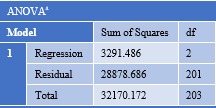
Objectives: This study was to measure the level of students' perception of Islamic education and parental concern, and to analyze the influence of these two variables on bullying prevention efforts in grade XII students of SMA Negeri 2 Wonogiri. Theoretical framework: This research is based on the concept of Islamic education as a shaping of morals and social behavior, as well as the theory of the role of parents that emphasizes the importance of family attention in shaping character and preventing negative behavior in children. Literature review: This study is supported by KPAI data, which shows high cases of bullying in schools, as well as previous research that states that family factors and religious values influence the social behavior of adolescents. Methods: This study used a quantitative approach with a questionnaire to 204 students, then analyzed using the F test to see the simultaneous effect and the determination coefficient (R²) test to determine the magnitude of the contribution of the variable. Results: The study shows that Islamic education and parental care simultaneously have a significant effect on bullying prevention, as evidenced by the calculated F value of 11.455, which is greater than the F of table 3.04. In addition, the determination coefficient value of 0.559 showed that the two variables contributed 55.9% to the prevention of bullying in students. Implications: This study emphasizes the importance of strengthening religious education in schools and parental involvement at home as an effort to prevent bullying in students. Novelty: this study lies in the combination of Islamic education factors and parental concern in one analytical model to explain bullying prevention in high school students.
References
[1] T. Noboru et al., “School-based education to prevent bullying in high schools in Indonesia,” Pediatr. Int., vol. 63, no. 4, pp. 459–468, 2021, https://doi.org/10.1111/ped.14475.
[2] M. Arif, M. K. N. A. Aziz, and Y. A. Abdurakhmonovich, “Trend Strategy To Prevent Bullying in Islamic Boarding Schools (Pesantren),” J. Ilm. Peuradeun, vol. 12, no. 2, pp. 639–670, 2024, https://doi.org/10.26811/peuradeun.v12i2.1087.
[3] I. Suherman, A. Y., Martin, I. Kurniawan, A. T. Qolyubi, R. K. Rusli, and L. Purnamasari, “Bullying Prevention Strategies Through School Capacity Building (Scb) In Integrated Islamic Schools To Support The Sustainable Development Goals,” J. Pendidik. Islam, vol. 11, no. 1, pp. 164–175, 2025, https://doi.org/10.15575/jpi.v11i1.43952.
[4] C. Mahfud, I. Rohani, Z. Nuryana, Baihaqi, and Munawir, “Islamic education for disabilities: new model for developing Islamic parenting in Integrated Blind Orphanage of Aisyiyah,” Indones. J. Islam Muslim Soc., vol. 13, no. 1, pp. 115–142, 2023, https://doi.org/10.18326/ijims.v13i1.115-142.
[5] R. B. Sumarsono, A. Imron, B. B. Wiyono, and I. Arifin, “Strengthening Educational Quality through Parental Engagement in Islamic Primary Education: Evidence from a Madrasahh Context,” Munaddhomah, vol. 6, no. 3, pp. 420–433, 2025, https://doi.org/10.31538/munaddhomah.v6i3.1919.
[6] S. Sukman, Hermanto, and M. R. Bustami, “Empowering Marginalized Indigenous Muslim Communities Through Islamic Education,” J. Pendidik. Islam, vol. 11, no. 1, pp. 204–215, 2025, https://doi.org/10.15575/jpi.v11i1.45277.
[7] H. Ma’ruf, A. Juhaidi, M. R. Hafiz, and S. Fitri, “Uncovering the influence of demographic factors on the emotional regulation of Alpha generation students in Islamic educational institutions in Indonesia: the role of parenting style as a mediator,” Cogent Educ., vol. 12, no. 1, 2025, https://doi.org/10.1080/2331186X.2025.2511448.
[8] E. Suryana, U. Supriadi, M. Fikri, A. Efriani, and S. Langputeh, “Exploring Memorization Patterns in the Tahfidz and Tarjamah Qur’an Programs,” J. Pendidik. Islam, vol. 10, no. 2, pp. 375–386, 2024, https://doi.org/10.15575/jpi.v10i2.29969.
[9] H. Zulkifli, S. M. M. Rashid, S. Mohamed, H. Toran, N. M. Raus, and M. N. Suratman, “Challenges and Elements Needed for Children with Learning Disabilities in Teaching and Learning the Quran,” Children, vol. 9, no. 10, 2022, https://doi.org/10.3390/children9101469.
[10] S. Nurjan, H. K. Tjahjono, and M. N. Yamin, “Meta-analysis on adolescent behavior delinquency,” Humanit. Soc. Sci. Rev., vol. 7, no. 2, pp. 296–306, 2019, https://doi.org/10.18510/hssr.2019.7235.
[11] N. Siddiqui, “Parental education as a determinant of school choice: A comparative study of school types in Pakistan,” Res. Educ., vol. 99, no. 1, pp. 3–18, 2017, https://doi.org/10.1177/0034523717725862.
[12] Y. Zhang et al., “The non-suicidal self-injury behaviour and its influencing factors in adolescents,” BMC Pediatr., vol. 26, no. 1, 2026, https://doi.org/10.1186/s12887-025-06416-8.
[13] M. B. Aziz, Fitriani, R. Nurhasanah, A. A. Abidin, F. Dwiyama, and M. Toha, “Cultural Heritage as a Driver of Educational Choices: Evaluating the Role of Bugis Values in the Selection of Islamic Private Schools in Indonesia,” Nazhruna J. Pendidik. Islam, vol. 7, no. 3, pp. 726–741, 2024, https://doi.org/10.31538/nzh.v7i3.110.
[14] P. Riera-Serra et al., “Evaluation of the effectiveness of SOM-RIU, a multifaceted, school-based, suicide prevention intervention targeted to Spanish adolescents: study protocol for a cluster-randomised controlled trial,” BMC Psychiatry, vol. 26, no. 1, 2026, https://doi.org/10.1186/s12888-025-07570-0.
[15] Paisun, Maskuri, and J. Mistar, “The Kiai’s Leadership in Harmonizing Chinese-Muslim Relations through Multicultural Islamic Education,” Munaddhomah, vol. 6, no. 2, pp. 329–344, 2025, https://doi.org/10.31538/munaddhomah.v6i2.1897.
[16] W. S. Lestari, “Analisis Faktor-Faktor Penyebab Bullying Di Kalangan Peserta Didik,” Sosio-Didaktika Soc. Sci. Educ. J., vol. 3, no. 2, pp. 147–157, 2021, https://doi.org/10.15408/sd.v3i2.4385.
[17] L. A. Dey Putri, E. Yetti, and S. Hartati, “Pengaruh Keterlibatan Orangtua dan Regulasi Diri terhadap Perilaku Bullying Anak Usia Dini,” J. Obs. J. Pendidik. Anak Usia Dini, vol. 4, no. 2, p. 715, 2020, https://doi.org/10.31004/obsesi.v4i2.438.
[18] S. M. Abdullah, “Social Cognitive Theory : A Bandura Thought Review published in 1982-2012,” Psikodimensia, vol. 18, no. 1, p. 85, 2019, https://doi.org/10.24167/psidim.v18i1.1708.
[19] N. Nurida, “Analisis perilaku pelaku Bullying dan upaya penanganannya (studi kasus pada siswa Man 1 Barru),” Indones. J. Educ. Sci., vol. 1, no. 1, pp. 25–31, 2018, https://doi.org/10.31605/ijes.v1i1.128.
[20] Ihsan Harits Rustian and Mugiyono, “Pengaruh Pendidikan Agama Islam terhadap Karakter Peserta Didik,” Al-Ubudiyah J. Pendidik. Dan Stud. Islam, vol. 6, no. 2, pp. 21–30, 2025, https://doi.org/10.55623/au.v6i2.495.
[21] E. Suryana, A. I. Hasdikurniati, A. A. Harmayanti, and K. Harto, “Perkembangan Remaja Awal, Menengah Dan Implikasinya Terhadap Pendidikan,” J. Ilm. Mandala Educ., vol. 8, no. 3, pp. 1917–1928, 2022, https://doi.org/10.58258/jime.v8i3.3494.
[22] A. O. Morsi, A. M. Yehia, A. S. Badran, and N. M. A. Khattab, “‘Challenges and concerns faced by parents of a group of Egyptian children with cleft lip/palate: a qualitative study,’” BMC Oral Health, vol. 23, no. 1, 2023, https://doi.org/10.1186/s12903-023-03747-9.
[23] H. G. Kimball et al., “Parent-Perceived Benefits and Harms Associated with Internet Use by Adolescent Offspring,” JAMA Netw. Open, vol. 6, no. 10, 2023, https://doi.org/10.1001/jamanetworkopen.2023.39851.
[24] J. L. Liu, Y. Cheong, C. Wang, C. S. L. Cheah, R. Ma, and X. Zhang, “The Voices of Chinese American Parents During COVID-19: Recommendations for Addressing Anti-Asian Racism and Supporting Adolescents in School,” Asian Am. J. Psychol., vol. 15, no. 1, pp. 1–11, 2023, https://doi.org/10.1037/aap0000320.
[25] M. Kaur, J. Costello, E. Willis, K. Kelm, M. Z. Reformat, and F. V. Bolduc, “Deciphering the Diversity of Mental Models in Neurodevelopmental Disorders: Knowledge Graph Representation of Public Data Using Natural Language Processing,” J. Med. Internet Res., vol. 24, no. 8, 2022, https://doi.org/10.2196/39888.
[26] F. Appiah et al., “Association between Hunger and Truancy among Students in Liberia: Analysis of 2017 Global School-Based Student Health Survey,” Biomed Res. Int., vol. 2022, 2022, https://doi.org/10.1155/2022/4785238.
[27] M. Muzzolon, S. R. B. Muzzolon, M. Lima, M. Canato, and V. O. Carvalho, “Mental disorders and atopic dermatitis in children and adolescents,” Postep. Dermatologii i Alergol., vol. 38, no. 6, pp. 1099–1104, 2021, https://doi.org/10.5114/ada.2021.112280.
[28] J. Ashburner et al., “How are students on the autism spectrum affected by bullying? Perspectives of students and parents,” J. Res. Spec. Educ. Needs, vol. 19, no. 1, pp. 27–44, 2019, https://doi.org/10.1111/1471-3802.12421.
[29] R. M. Puhl, J. Luedicke, and J. A. DePierre, “Parental concerns about weight-based victimization in youth,” Child. Obes., vol. 9, no. 6, pp. 540–548, 2013, https://doi.org/10.1089/chi.2013.0064.
[30] J. Aklster and K. Johnson, “Parenting issues that may be addressed through a confidential helpline,” Heal. Soc. Care Community, vol. 10, no. 2, pp. 106–111, 2002, https://doi.org/10.1046/j.1365-2524.2002.00349.x.
[31] R. BABAHANOĞLU and Ö. ASLAN, “Investigating Peer Bullying in Children: Teachers’ Situation Assessment,” Milli Egit., vol. 55, no. 249, pp. 97–122, 2026, https://doi.org/10.37669/milliegitim.1633517.
[32] A. M. Vaitses Fontanari, M. Feijó, A. P. Villas-Boas, G. Welter Wendt, and A. Brandelli Costa, “School Climate, Absenteeism and School Transfer Due to Transphobic Bullying in Transgender And Non-Binary Youth,” J. Adolesc., vol. 98, no. 2, pp. 591–601, 2025, https://doi.org/10.1002/jad.70084.
[33] S. Kim, “Beyond the Classroom: How School Bullying and Societal Well-Being Shape Adolescent Life Satisfaction Across OECD Countries,” J. Adolesc., vol. 98, no. 2, pp. 550–569, 2025, https://doi.org/10.1002/jad.70081.
[34] Y. M. Saputra, E. Y. Ali, and M. Y. Saputra, “Physical Education Learning Model in Combating Bullying Among Primary School Students,” Int. Res. J. Multidiscip. Scope, vol. 7, no. 1, pp. 623–633, 2026, https://doi.org/10.47857/irjms.2026.v07i01.08100.
[35] M. G. Abed and T. K. Shackelford, “Adolescents and Transition-Age Youths with Intellectual Disabilities in Saudi Arabia: An Exploration of Parental Perspectives,” Behav. Sci. (Basel), vol. 16, no. 1, p. 66, 2026, https://doi.org/10.3390/bs16010066.
[36] A. Alazmah, “Evaluation of Parents and Child Satisfaction Toward Primary Molar Restoration with Preformed Metal Crowns and Its Impact on Child Bullying,” Healthcare, vol. 14, no. 1, p. 62, 2025, https://doi.org/10.3390/healthcare14010062.
[37] K. Kogachi, C. Simon, and S. Graham, “Developmental Pathways of Victimization From High School to Early Adulthood: The Role of Characterological Self-Blame and School Racial/Ethnic Context,” J. Adolesc. Heal., vol. 78, no. 1, pp. 141–148, 2026, https://doi.org/10.1016/j.jadohealth.2025.09.019.
[38] C. Gao, D. Szlosek, A. Zhong, S. E. Hadland, and S. S. Benes, “Educational Programming to Prevent Violence in Schools in the United States: An Analysis of School Health Profiles,” J. Pediatr., vol. 288, 2026, https://doi.org/10.1016/j.jpeds.2025.114805.
[39] A. Alheggi, R. Bin Shlhoob, R. Alharthi, A. Bukhari, and R. Alkhodair, “Addressing the Unmet Educational Needs of Students with Epidermolysis Bullosa in Saudi Arabia,” Risk Manag. Healthc. Policy, vol. 18, pp. 2565–2573, 2025, https://doi.org/10.2147/RMHP.S512984.
[40] X. Chen, J. Chen, H. Jiang, and H. Zhao, “Bullying victimization and mental health problems of boarding adolescents in rural China: the role of self-esteem and parenting styles,” BMC Public Health, vol. 25, no. 1, 2025, https://doi.org/10.1186/s12889-025-22043-5.
[41] O. Dadras, “Correlates of condom use among school-going Thai adolescents: the critical role of bullying victimizations,” BMC Psychiatry, vol. 25, no. 1, 2025, https://doi.org/10.1186/s12888-024-06423-6.
[42] F. Li, X. Yang, S. Meng, and H. Zhang, “Influencing factors and optimization paths of teachers’ fulfillment of school bullying governance responsibilities in China,” PLoS One, vol. 20, no. 12 December, 2025, https://doi.org/10.1371/journal.pone.0319640.
[43] W. Liu, Y. Xie, Y. Wang, B. Tang, H. Guan, and F. Chang, “Uncovering the prevalence, risk factors and consequences of school bullying in China’s rural primary schools,” BMC Public Health, vol. 25, no. 1, 2025, https://doi.org/10.1186/s12889-025-25101-0.
Downloads
Submitted
Accepted
Published
Issue
Section
License
Copyright (c) 2024 Farah Adibah Sasongko, Muhammad Wildan Shohib, Muh. Nur Rochim Maksum, Hamdan Chehdimae

This work is licensed under a Creative Commons Attribution 4.0 International License.