The Axiological Foundations of Knowledge: A Comparison of Western and Islamic Perspectives and Their Integration in Supporting the Achievement of SDGs
DOI:
https://doi.org/10.23917/profetika.v25i02.8528Keywords:
axiology, epistemology, Islamic perspective, western perspective, SDGsAbstract
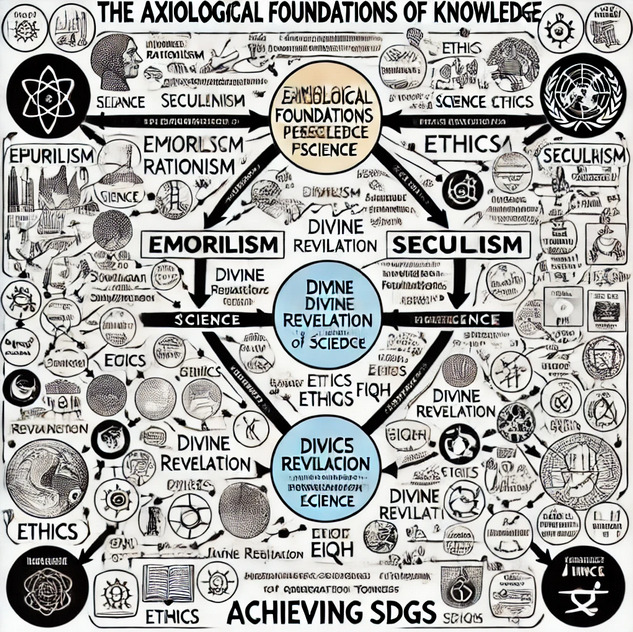
Objective: This study aims to analyze and compare the axiological foundations of knowledge from both Western and Islamic perspectives and explore the potential for their integration in supporting the achievement of Sustainable Development Goals (SDGs). Theoretical Framework: Theoretical Framework focuses on the values underlying the development and utilization of knowledge, including ethical, goal-oriented, and beneficial aspects of human life. The main theories employed are epistemology and axiology from both perspectives, leading to a more holistic understanding of knowledge. Literature Review: Literature Review reveals significant differences between the Western approach, which tends to be more secular and rational, and the Islamic approach, which is more holistic, linking knowledge with spiritual and moral dimensions. Previous studies also emphasize the importance of integrating these perspectives to address the challenges of globalization and pluralism. Methods: This research employs a qualitative method with a comparative analysis approach. Data were collected through a literature review of both primary and secondary sources, including classical and contemporary works from Western philosophers and Islamic thinkers. The analysis compares the fundamental axiological principles of knowledge in both traditions and explores the potential for integration to enrich the understanding of knowledge. Results: Research findings show that despite fundamental differences in their views on the values of knowledge, there is potential for integration between Western rationalism and Islamic spiritual values. This integration provides a more comprehensive and applicable approach to knowledge development. Implications: Implications of this study highlight the importance of an educational framework that combines Western and Islamic perspectives to produce scholars who are not only technically proficient but also ethically and spiritually conscious. Novelty: Novelty of this research lies in its deeper understanding of the axiological foundations of knowledge through an interdisciplinary perspective and the exploration of potential integration between the two traditions to establish a more inclusive and applicable foundation of knowledge, which is highly relevant in supporting the SDGs.
References
N. L. Seitakhmetova, A. Sagikyzy, and Z. Z. Turganbayeva, “Islamic scientific tradition and European thought*,” Vopr. Filos., vol. 2021, no. 7, pp. 72–82, 2021, https://doi.org/10.21146/0042-8744-2021-7-72-82.
T. M. Aminov, N. K. Nurikhanova, and V. A. Akhmadullin, “Al-Khwarizmi is an outstanding representative of oriental pedagogy,” Perspekt. Nauk. i Obraz., vol. 64, no. 4, pp. 559–573, 2023, https://doi.org/10.32744/pse.2023.4.34.
A. Suhaimi, “Sociological Orientation of Islamic Education Perspective of the Quran Ahmad,” J. Qur’Ᾱn HadῙth Stud., vol. 6, no. 2, pp. 91–116, 2017, https://doi.org/10.15408/quhas.v6i2.13413.
M. Sholihin and F. Zein, “Maslahah Reasoning behind Fatwa of the Indonesian Ulema Council : Between Ijtihad ’ s Method and Pragmatism,” Ijtihad, vol. 36, no. 2, pp. 1–10, 2020.
K. Fian and F. Hidayat, “Paradigm of integration-interconnection : M . Amin Abdullah and Mehdi Golshani ’ s perspective,” vol. 11, pp. 281–298, 2023, https://doi.org/10.21043/fikrah.v8i1.
W. Waston, S. Amini, and M. Arifin, “A moral-based curriculum to improve civilization and human resource development in Bangladesh,” Multidiscip. Rev., 2024.
S. Anwar et al., “Development of the concept of Islamic education to build and improve the personality of school-age children,” Multidiscip. Rev., vol. 7, no. 8, p. 2024139, May 2024, https://doi.org/10.31893/multirev.2024139.
S. Dedi, “Ushul Fiqih Menurut Paradigma Filsafat Ilmu (Kajian Ontologi, Epistemologi, dan Aksiologi),” Al-Istinbath J. Huk. Islam, vol. 5, no. 2, pp. 289–310, 2020, https://doi.org/10.29240/jhi.v5i2.1829.
M. Muhamad Subhi Apriantoro, “The Epistemology of Ushul Fiqh Al-Ghazali in His Book Al-Mustashfa Min Ushuf Fiqh,” Profetika J. Stud. Islam, vol. 22, no. 2, pp. 229–236, 2021, https://doi.org/10.23917/profetika.v22i2.16668.
M. M and F. Fahrurozi, “Nilai-Nilai Pendidikan Tauhid Dalam Kisah Ashabul Ukhdud Surat Al-Buruj Perspektif Ibn Katsir Dan Hamka,” Profetika J. Stud. Islam, vol. 19, no. 2, pp. 163–174, 2018, https://doi.org/10.23917/profetika.v19i2.8123.
M. Miftah, “Strategi Komunikasi Efektif Dalam Pembelajaran,” J. Teknodik, vol. 12, no. 2, pp. 084–094, 2019, https://doi.org/10.32550/teknodik.v12i2.473.
A. dan I. N. Nurrohim, “Hikmah dalam Al-Qur’an: Studi Tematik Terhadap Tafsir Al-Mizan,” Profetika J. Stud. Islam, vol. 20, no. 2, pp. 179–189, 2019, https://doi.org/10.23917/profetika.v20i2.9954.
D. Lesmana and E. Mahyudin, “Relevansi Agama Dan Sains Menurut Ian G. Barbour Serta Ide Islamisasi Sains,” J. Pendidik. Islam, vol. 1, no. 1, pp. 21–44, 2018, https://doi.org/10.14421/rejusta.2018.1401-03.
M. Sri Mega Indah Umi Zulfiani and I. Rosyadi, “Corporate Social Responsibility (CSR) Practices Of Shariaconsumer Cooperatives For Sustainable Development Goals (SDGs) Ethical Perspective,” J. Lifestyle SDGs Rev., vol. 4, pp. 1–20, 2024, https://doi.org/10.47172/2965-730X.SDGsReview.v4.n00.pe01752.
N. Y. M, I. R. Isman, and M. Ishmah Afiyah, “Fostering The Ummah ’ S Economy Through The Stock-investment System : The Views Of The Mui For Sustainable Development Goals (SDGs),” J. Lifestyle SDGs Rev., vol. 4, pp. 1–19, 2024, https://doi.org/10.47172/2965-730X.SDGsReview.v4.n00.pe01685.
A. Nurrohim, A. H. Setiawan, and A. A. Sweta, “The Concept of Islamic Moderation in Indonesia : A Comparative Study in Tafsir An-Nur and Tafsir of the Ministry of Religious Affairs ( MORA ),” Int. J. Relig., vol. 3538, no. 10, pp. 2110–2125, 2024, https://doi.org/10.61707/5b1e9h02.
A. H. M, Didin Saefuddin, “Pemikiran Pendidikan Ki Hadjar Dewantara Dalam Perspektif Pendidikan Islam,” Ta’dibuna J. Pendidik. Islam, vol. 2, no. 2, pp. 155–200, 2013, https://doi.org/10.32832/tadibuna.v2i2.562.
S. N. Asia and M. S. Apriantoro, “Analysis of Islamic Economic Law on Fishing Pool Business in Indonesia,” Demak Univers. J. Islam Sharia, vol. 1, no. 1, pp. 1–11, 2023, https://doi.org/10.61455/deujis.v1i01.7.
S. Shobron, M. Nur, and R. Maksum, “Humanist Education the Dayak of Kalimantan Indonesia Islamic Perspective,” Solo Univers. J. Islam. Educ. Multicult., vol. 1, no. 1, pp. 17–25, 2023, https://doi.org/10.61455/sujiem.v1i01.27.
A. N. Suwarsono, Bambang Setiadji, Musa Asy’arie, Waston, M, “The Future Of The Civilization Of The Ummah Is Reviewed From The Sociology Of Education For The Sustainable Development Goals ( Sdg ’ S ),” J. Lifestyle SDGs Rev., vol. 4, pp. 1–19, 2024, https://doi.org/10.47172/2965-730X.SDGsReview.v4.n00.pe01688.
A. N. AN, . M., . M., and . W., “Bibliometric Analysis of Islamic Education and Character Development in Religious Education Practices in Indonesia,” Pakistan J. Life Soc. Sci., vol. 22, no. 2, pp. 1231–1245, 2024, https://doi.org/10.57239/PJLSS-2024-22.2.0086.
Muthoifin et al., “Profit-Sharing Practices To Increase Profits and Development of Indonesian Sharia Banking,” Rev. Gest. Soc. e Ambient., vol. 18, no. 6, pp. 1–17, 2024, https://doi.org/10.24857/rgsa.v18n6-005.
A. dan I. N. Nurrohim, “Hikmah dalam Al-Qur’an: Studi Tematik Terhadap Tafsir Al-Mizan,” Profetika J. Stud. Islam, vol. 20, no. 2, pp. 179–189, 2019.
T. Sulistyono, “Filsafat Manusia Menurut Muhammadiyah,” Profetika J. Stud. Islam, vol. 17, no. 02, pp. 50–58, 2017, https://doi.org/10.23917/profetika.v17i02.5297.
M. M, I. Rosyadi, and H. Prasetyo, “The phenomenon of the rise of online transactions: A case study Tokopedia.com and Bukalapak.com sharia perspective,” Multidiscip. Rev., vol. 7, no. 8, p. 2024133, May 2024, https://doi.org/10.31893/multirev.2024133.
M. S. Apriantoro, M. M, and F. H. N. Athief, “Advancing social impact through Islamic social finance: A comprehensive bibliometric analysis,” Int. J. Adv. Appl. Sci., vol. 10, no. 11, pp. 81–89, 2023, https://doi.org/10.21833/ijaas.2023.11.011.
E. B. G. Suwoko, Waston, Bambang Setiaji, M, Huda Kurnia Maulana, “Family Education To Improve The Quality Of Human Resources And Sustainable Development In Samarinda,” Rev. Gestão Soc. e Ambient., vol. 18, no. 6, pp. 1–19, 2024, https://doi.org/10.24857/rgsa.v18n6-011.
S. Trihariyanto, E. Supriyanto, M. M, and Z. ’Uyun, “Strategi Pembelajaran Inovatif Pendidikan Agama Islam Dengan Media Powerpoint Dalam Meningkatkan Mutu Pendidikan Di Sdit Muhammadiyah Sinar Fajar Cawas Dan Sd Muhammadiyah Pk Bayat,” Profetika J. Stud. Islam, vol. 21, no. 1, pp. 109–120, 2020, https://doi.org/10.23917/profetika.v21i1.11653.
D. Astuti, E. Supriyanto, and M. M, “Model Penjaminan Mutu Ketercapaian Kompetensi Dasar Dalam Sistem Pembelajaran Online Pada Situasi Work From Home (Wfh),” Profetika J. Stud. Islam, vol. 21, no. 1, pp. 129–139, 2020, https://doi.org/10.23917/profetika.v21i1.11655.
M. Adi Haironi, “Implementasi Metode Taḥfīẓul Qur’an ‘Sabaq, Sabqi, Manzil’ Di Marhalah Mutawasithah Dan Tsanawiyah Putri Pondok Pesantren Imam Bukhari Tahun Pelajaran 2010-2014,” Ums, 2016.
Nuha. M, “Kontekstualisasi Makna Zakat: Studi Kritis Kosep Sabilillah Menurut Masdar Farid Mas’udi,” in The 3rd University Research Colloquium 2016, 2016, pp. 185–191.
T. Sanyoto, N. Fadli, R. Irfan Rosyadi, and M. M, “Implementation of Tawhid-Based Integral Education to Improve and Strengthen Hidayatullah Basic Education,” Solo Univers. J. Islam. Educ. Multicult., vol. 1, no. 01, pp. 30–41, 2023, https://doi.org/10.61455/sujiem.v1i01.31.
M. Waston, Mahmudulhassan, Andri Nirwana, & M, “Parenting problems in the digital age and their solution development in the frame of value education,” Multidiscip. Rev., vol. 7, no. 8, pp. 21–91, 2024, https://doi.org/10.31893/multirev.2024163.
Z. Ardiansyah., Waston., Mahmudulhassan., Daud and M. Salleh., Norsaleha Mohd., AN, Andri Nirwana., “Tracing Trends in Quran Memorization and Cognitive Learning: A Bibliometric Analysis from the Scopus Database,” Pakistan J. Life Soc. Sci., vol. 22, no. 2, pp. 1493–1509, 2024, https://doi.org/10.57239/PJLSS-2024-22.2.00105.
G. A. Muttaqien, “Pandangan Syed Muhammad Naquib Al-Attas Tentang Islamisasi Ilmu,” Jaqfi J. Aqidah dan Filsafat Islam, vol. 4, no. 2, pp. 93–130, 2019, https://doi.org/10.15575/jaqfi.v4i2.9458.
Q. Q. Yusran and A. Nirwana, “The Practice of Changing the Status of Change of Waqf Property in the Islamic Social Economic View,” J. Ecohumanism, vol. 6798, pp. 229–238, 2024, https://doi.org/10.62754/joe.v3i6.3996.
Q. Q. Yusran and I. Afiyah, “Optimizing the Potential of Zakat to Alleviate Poverty Problems and Improve Community Economy in Surakarta City,” J. Ecohumanism, vol. 6798, pp. 121–132, 2024, https://doi.org/10.62754/joe.v3i3.3394.
N. Jaafar, J. H. Srifyan, and W. Mahir, “Tracing the Correlation Between Islamic Law and Economics in Indonesia : Theoretical and Practical Perspectives,” Solo Int. Colab. Publ. Soc. Sci. Humanit. Publ. Soc. Sci. Humanit., vol. 2, no. 1, pp. 73–84, 2024.
S. A. F. Lingga, S. Salminawati, A. Mustaqim, and P. Kurniawan, “History of the Development of Philosophy and Science in the Islamic Age,” Solo Int. Collab. Publ. Soc. Sci. Humanit., vol. 1, no. 01, pp. 01–11, 2023, https://doi.org/10.61455/sicopus.v1i01.5.
A. Umi Markhamah Zahra Ayyusufi and A. Anshori, “Evaluation of the Cipp Model on the Tahfidz Program in Islamic Boarding Schools,” J. Pendidik. Islam, vol. 5, no. 2, pp. 466–484, 2022, https://doi.org/10.31538/nzh.v5i2.2230.
A. Amrin, K. Khairusoalihin, and M. M, “Tax Modernization in Indonesia: Study of Abu Yusuf’s Thinking on Taxation in the Book of Al-Kharaj,” Profetika J. Stud. Islam, vol. 23, no. 1, pp. 30–42, 2021, https://doi.org/10.23917/profetika.v23i1.16792.
M. Apriantoro, A. Suryaningsih, and M. M, “Bibliometric Analysis of Research Development of Economic Dispute Settlement,” in EUDL European Union Digital Library, 2023. https://doi.org/10.4108/eai.19-10-2022.2329068.
M. M. N. M, “Outsourcing System in View of Islamic Law : Study on Employees at Universitas Muhammadiyah Surakarta,” in Proceedings of the International Conference on Engineering, Technology and Social Science (ICONETOS 2020), Atlantis Press, 2021, pp. 91–95.
D. W. Wijianto, A. M. U. Nurinnafi’a, and ..., “Implementation of Islamic Ethics in Pharmaceutical Services: A Literature Review Approach,” Solo Int. Collab. Publ. Soc. Sci. Humanit., vol. 1, no. 3, pp. 181–188, 2023, [Online]. Available: https://journal.walideminstitute.com/index.php/sicopus/article/view/64
R. A. Syam, T. A. Hutama, I. Subekti, A. Nareswara, F. Bariyah, and R. Aulia, “The Relationship of Islamic Law and Ethics in Pharmacist Practice : A Literature Review,” Solo Int. Collab. Publ. Soc. Sci. Humanit., vol. 1, no. 3, pp. 173–180, 2023.
Submitted
Accepted
Published
Issue
Section
License
Copyright (c) 2024 Ismaiza Busti, Rusydi, Riki Saputra

This work is licensed under a Creative Commons Attribution 4.0 International License.