Cash Waqf: An Analysis of the Legality of Productive Waqf Management for Sustainable Development (SDGs)
DOI:
https://doi.org/10.23917/profetika.v25i02.7203Keywords:
cash waqf, productive waqf, waqf management, sustainable development goals, indonesiaAbstract
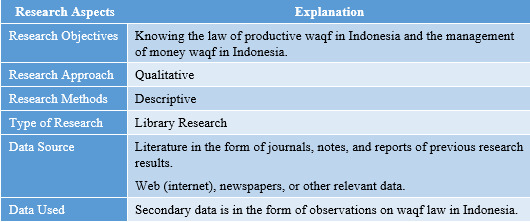
Objective: This study aims to analyze the legality and management of productive cash waqf in Indonesia, emphasizing its alignment with Sustainable Development Goals (SDGs). The practice of waqf in Indonesia remains underutilized, with inefficiencies in the management of waqf assets hindering its potential contribution to societal welfare. Theoretical framework: The theoretical framework integrates Islamic jurisprudence on waqf, particularly focusing on its economic empowerment potential and the regulatory landscape provided by Law No. 41 of 2004 and other relevant legal instruments. Literature Review: A comprehensive literature review highlights best practices in waqf management and identifies challenges in implementation. Methods: This qualitative study employs a descriptive approach, relying on library research to examine secondary data from journals, legal documents, and research reports. Results: The findings reveal that Law No. 41 of 2004 outlines comprehensive guidelines for waqf management, including provisions for movable waqf, such as cash waqf, which is regulated under Article 28. The Indonesian Waqf Agency (BWI) plays a pivotal role in ensuring productive waqf management, focusing on utilizing waqf assets to enhance community living standards. The study identifies cash waqf as a transformative tool for achieving economic empowerment and contributing to the SDGs, particularly in eradicating poverty and promoting sustainable economic growth. However, challenges remain in ensuring professional and transparent management practices. Implications: The implications underscore the need for capacity-building initiatives for waqf managers and regulatory reforms to streamline waqf governance. Novelty: The novelty of this research lies in its exploration of cash waqf as a strategic instrument for sustainable development, offering actionable insights into optimizing its potential. By bridging the gap between Islamic jurisprudence and modern management practices, this study provides a framework for enhancing the economic impact of waqf in Indonesia.
References
Asni, “Pengembangan Hukum Perwakafan Di Indonesia,” J. Al-‘Adl, vol. 1, no. hal 140, p. 43, 2014, http://dx.doi.org/10.31332/aladl.v7i2.216.
A. K. Diharto, “Menggagas Model Pengembangan Manajemen Harta Wakaf Tradisional,” J. Ilm. Ekon. Islam, vol. 5, no. 2, pp. 131–136, 2019, https://doi.org/10.29040/jiei.v5i2.565.
M. Huda and A. Fauzi, “Sistem pengelolaan wakaf masjid produktif perspektif Hukum Islam (studi kasus di masjid Islamiyah Nalumsari Jepara),” J. At-Tamwil, vol. 1, no. 2, pp. 27–46, 2019, https://doi.org/10.33367/at.v1i2.1058.
R. Zahara, “Perkembangan Hukum Wakaf di Indonesia,” J. Legitima, vol. 2, no. 1, pp. 18–39, 2019, https://doi.org/10.33367/at.v1i2.1058.
A. Faisal, “Perkembangan Wakaf Di Indonesia (Postivisasi Hukum Wakaf),” J. Ekon. Syariah, vol. Vol. 2. No, pp. 76–93, 2021, https://doi.org/10.56874/eksya.v3i2.1020.
A. H. Naim, “Pengembangan Objek Wakaf dalam Fiqih Islam dan Hukum Positif di Indonesia,” Αγαη, vol. 8, no. 5, p. 55, 2019, https://doi.org/10.21043/ziswaf.v4i2.3044.
J. Arifin, “Problematika Perwakafan Di Indonesia (Telaah Historis Sosiologis),” Ziswaf, vol. 1, no. 2, pp. 249–272, 2014.
Mahsun, “Hukum dan Manajerial Wakaf di Malaysia,” J. IAIN Ngawi-Al Mabsut, vol. Nol. 2, no. No.1, p. 13, 2011, https://doi.org/10.56997/almabsut.v2i1.47.
D. M. Habibaty, “Kompetensi Nazhir Pada Wakaf Produktif Ditinjau Dari Undang-Undang No 41 Tahun 2004 Tentang Wakaf,” J. Wakaf dan Ekon. Islam, vol. Volume 10, no. 2, pp. 154–161, 2017, https://doi.org/10.47411/al-awqaf.v10i2.77.
N. A. Khafsoh, S. K. N. Aula, and D. A. Rizal, “Problematika Perwakafan Di Indonesia ( Telaah Historis Sosiologis ),” J. Pemberdaya. Masy., vol. 9, no. 2, pp. 152–171, 2021, https://doi.org/10.37064/jpm.v9i2.9456.
D. Satyawan, A. Firdaus, and B. T. Possumah, “Analisis Strategi Pengelolaan Wakaf Produktif Di Indonesia,” Al Kalam J. Komunikasi, Bisnis, dan Manaj., vol. Vol. 05 No, no. 1, pp. 49–64, 2018, https://doi.org/10.31602/al-kalam.v5i2.1712.
A. M. Fahham, “Pengelolaan Wakaf Tunai di Lembaga Pengelola Wakaf dan Pertanahan Pengurus Wilayah Nahdlatul Ulama Daerah Istimewa Yogyakarta,” Aspirasi, vol. 6, no. 1, pp. 27–36, 2015, https://doi.org/10.46807/aspirasi.v6i1.461.
A. H. Muthoifin, Didin Saefuddin, “Pemikiran Pendidikan Ki Hadjar Dewantara Dalam Perspektif Pendidikan Islam,” Ta’dibuna J. Pendidik. Islam, vol. 2, no. 2, pp. 155–200, 2013, https://doi.org/10.32832/tadibuna.v2i2.562.
M. Adi Haironi, “Implementasi Metode Taḥfīẓul Qur’an ‘Sabaq, Sabqi, Manzil’ Di Marhalah Mutawasithah Dan Tsanawiyah Putri Pondok Pesantren Imam Bukhari Tahun Pelajaran 2010-2014,” UMS, 2016.
M. Apriantoro, A. Suryaningsih, and M. Muthoifin, “Bibliometric Analysis of Research Development of Economic Dispute Settlement,” in EUDL European Union Digital Library, 2023. https://doi.org/10.4108/eai.19-10-2022.2329068.
M. M. N. Muthoifin, “Outsourcing System in View of Islamic Law : Study on Employees at Universitas Muhammadiyah Surakarta,” in Proceedings of the International Conference on Engineering, Technology and Social Science (ICONETOS 2020), Atlantis Press, 2021, pp. 91–95, https://doi.org/10.2991/assehr.k.210421.015.
N. Muthoifin, “Kontekstualisasi Makna Zakat: Studi Kritis Kosep Sabilillah Menurut Masdar Farid Mas’udi,” in The 3rd University Research Colloquium 2016, 2016, pp. 185–191.
M. Muthoifin and F. Fahrurozi, “Nilai-Nilai Pendidikan Tauhid Dalam Kisah Ashabul Ukhdud Surat Al-Buruj Perspektif Ibn Katsir Dan Hamka,” Profetika J. Stud. Islam, vol. 19, no. 2, pp. 163–174, 2018, https://doi.org/10.23917/profetika.v19i2.8123.
D. Astuti, E. Supriyanto, and M. Muthoifin, “Model Penjaminan Mutu Ketercapaian Kompetensi Dasar Dalam Sistem Pembelajaran Online Pada Situasi Work From Home (Wfh),” Profetika J. Stud. Islam, vol. 21, no. 1, pp. 129–139, 2020, https://doi.org/10.23917/profetika.v21i1.11655.
A. Umi Markhamah Zahra Ayyusufi and A. Anshori, “Evaluation of the Cipp Model on the Tahfidz Program in Islamic Boarding Schools,” J. Pendidik. Islam, vol. 5, no. 2, pp. 466–484, 2022, https://doi.org/10.31538/nzh.v5i2.2230.
A. Amrin, K. Khairusoalihin, and M. Muthoifin, “Tax Modernization in Indonesia: Study of Abu Yusuf’s Thinking on Taxation in the Book of Al-Kharaj,” Profetika J. Stud. Islam, vol. 23, no. 1, pp. 30–42, 2021, https://doi.org/10.23917/profetika.v23i1.16792.
T. Sanyoto, N. Fadli, R. Irfan Rosyadi, and M. Muthoifin, “Implementation of Tawhid-Based Integral Education to Improve and Strengthen Hidayatullah Basic Education,” Solo Univers. J. Islam. Educ. Multicult., vol. 1, no. 01, pp. 30–41, 2023, https://doi.org/10.61455/sujiem.v1i01.31.
S. N. Asia and M. S. Apriantoro, “Analysis of Islamic Economic Law on Fishing Pool Business in Indonesia,” Demak Univers. J. Islam Sharia, vol. 1, no. 1, pp. 1–11, 2023, https://doi.org/10.61455/deujis.v1i01.7.
S. Shobron, M. Nur, and R. Maksum, “Humanist Education the Dayak of Kalimantan Indonesia Islamic Perspective,” Solo Univers. J. Islam. Educ. Multicult., vol. 1, no. 1, pp. 17–25, 2023, https://doi.org/10.61455/sujiem.v1i01.27.
S. Anwar et al., “Development of the concept of Islamic education to build and improve the personality of school-age children,” Multidiscip. Rev., vol. 7, no. 8, p. 2024139, May 2024, https://doi.org/10.31893/multirev.2024139.
W. Waston, S. Amini, and M. Arifin, “A moral-based curriculum to improve civilization and human resource development in Bangladesh,” Multidiscip. Rev., 2024.
S. Trihariyanto, E. Supriyanto, M. Muthoifin, and Z. ’Uyun, “Strategi Pembelajaran Inovatif Pendidikan Agama Islam Dengan Media Powerpoint Dalam Meningkatkan Mutu Pendidikan Di Sdit Muhammadiyah Sinar Fajar Cawas Dan Sd Muhammadiyah Pk Bayat,” Profetika J. Stud. Islam, vol. 21, no. 1, pp. 109–120, 2020, https://doi.org/10.23917/profetika.v21i1.11653.
M. Muhamad Subhi Apriantoro, “The Epistemology of Ushul Fiqh Al-Ghazali in His Book Al-Mustashfa Min Ushuf Fiqh,” Profetika J. Stud. Islam, vol. 22, no. 2, pp. 229–236, 2021, https://doi.org/10.23917/profetika.v22i2.16668.
V. Rahma and Bustamin, “Pemanfaatan Tanah Wakaf Sebagai Lahan Produktif dalam Tinjauan Fiqh Muamalah,” J-HES J. Huk. Ekon. Syariah, vol. 5, no. 02, pp. 139–156, 2021, https://doi.org/10.26618/j-hes.v5i02.5752.
T. A. Ahmad Mukhlishin and M. Dimyati, “Pengambilan Harta Wakaf Perspektif Hukum Islam dan Undang-Undang No 41 Tahun 2004 (Studi Kasus di Desa Karang Anyar Kec. Jati Agung Kab. Lam-Sel Tahun 2016),” vol. 2, no. 1, pp. 1–20, 2018, https://doi.org/10.30656/ajudikasi.v2i1.620.
Hafsah, “Analisis Filosofis Terhadap Undang-Undang RI No. 41 Tahun 2004 Tentang Wakaf,” MIQOT Vol. XXXIII, vol. XXXIII, no. 1, pp. 84–97, 2009, http://dx.doi.org/10.30821/miqot.v33i1.171.
A. Fauzi, “Problematika Pengelolaan Dan Pendayagunaan Wakaf (Studi Di Badan Wakaf Indonesia Perwakilan Provinsi Lampung,” Fam. J. Huk. Kel., vol. VOL. 3 NO., pp. 129–150, 2022, https://doi.org/10.24239/familia.v3i2.77.
I. Choeri and S. Adhim, “Tinjauan UU Wakaf Terhadap Peran BWI dalam Pelaksanaan Wakaf Uang di Jepara,” Isti`dal J. Stud. Huk. Islam, vol. 7, no. 2, pp. 280–300, 2020, https://doi.org/10.34001/istidal.v7i2.2606.
T. W. Putra and A. Musfira, “Problematika Pengelolaan Dan Pengembangan Potensi Wakaf Uang Di Dusun Tambung Batue, Desa Barombong, Kecamatan Gantarang, Kabupaten Bulukumba,” J. Din. Ekon. Syariah, vol. 8, no. 2, pp. 157–163, 2021, https://doi.org/10.53429/jdes.v8i2.179.
K. Dipayanti and Nufzatutsaniah, “Pengelolaan Wakaf Produktif Terhadap Peningkatan Perekonomian Masyarakat Tangerang Selatan,” J. Ilm. Manaj. Forkamma, vol. 4, no. 1, pp. 14–23, 2020, https://doi.org/10.32493/frkm.v1i3.2550.
N. Hasanah, “Kontekstualitas Ayat-Ayat Hukum Wakaf Di Indonesia,” Asy-Syari’ah, vol. 20, no. 2, pp. 133–144, 2018, https://doi.org/10.15575/as.v20i2.3446.
R. Malasari and I. Iswandi, “Praktik Pengelolaan Wakaf Produktif Ditinjau Dari Hukum Positif Dan Hukum Islam (Studi Kasus Di Yayasan Pundi Amal Bhakti Ummat Bekasi),” SALAM J. Sos. dan Budaya Syar-i, vol. 8, no. 2, pp. 629–648, 2021, https://doi.org/10.15408/sjsbs.v8i2.20187.
M. Luthfi, Y. P. Wardoyo, K. D. Kurniawan, F. Esfandiari, and Y. A. Fajrin, “Institusi Hukum Perwakafan Indonesia: Kajian Kelembagaan Badan Wakaf Indonesia (Sejarah dan Struktur Kelembagaan),” Audit. Comp. Law J., vol. 3, no. 2, pp. 8–17, 2022, https://doi.org/10.22219/aclj.v3i2.22544.
M. Makhrus, “Dinamika Kebijakan Negara dalam Pengelolaan Wakaf di Indonesia,” JSSH (Jurnal Sains Sos. dan Humaniora), vol. 2, no. 2, p. 209, 2019, https://doi.org/10.30595/jssh.v2i2.3137.
A. Kasdi, “Model Pemberdayaan Wakaf Produktif di Indonesia,” ZISWAF, vol. 277, no. 18, pp. 1424–1425, 2014, https://doi.org/10.1001/jama.277.18.1424.
Suid and A. Rahim, “Analisis Pengelolaan Wakaf Produktif Menurut Undang Undang Nomor 41 Tahun 2004 Tentang Wakaf,” J. Penelit. Multidisiplin Ilmu, vol. 1, no. 3, pp. 425–440, 2022, https://doi.org/10.37329/metta.v2i3.
Jodi Eriyanto & Siti Aisyah, “Manajemen Pengelolaan Wakaf Produktif,” IZZI J. Ekon. Islam, vol. 1, no. 2, pp. 25–56, 2021.
M. A. Nawawi, “Pengembangan Wakaf Uang Tunai Sebagai Sistem Pemeberdayaan Umat Dalam Pandangan Ulama Konvensional dan Kontemporer,” Fikri J. Kaji. Agama, Sos. dan Budaya, vol. 1, no. 9, pp. 1689–1699, 2016, https://doi.org/10.25217/jf.v1i1.12.
H. Lubis, “Potensi Dan Kendala Pengembangan Wakaf Uang Di Indonesia,” Islam. Bus. Financ., vol. 1, no. 1, pp. 43–59, 2020, https://doi.org/10.24014/ibf.v1i1.9373.
D. Sulistyani, N. Asikin, S. Soegianto, and B. Sadono, “Pelaksanaan Dan Pengembangan Wakaf Uang Di Indonesia,” J. Usm Law Rev., vol. 3, no. 2, p. 328, 2020, https://doi.org/10.26623/julr.v3i2.2874.
N. Suryadi and A. Yusnelly, “Pengelolaan Wakaf Uang di Indonesia,” Syarikat J. Rumpun Ekon. Syariah, vol. 2, no. 1, pp. 27–36, 2019, https://doi.org/10.25299/syarikat.2019.vol2(1).3698.
Submitted
Accepted
Published
Issue
Section
License
Copyright (c) 2024 Saprida Saprida, Meriyati Meriyati, Choiriyah Choiriyah, Zuul Fitriani Umari, Imamul Arifin

This work is licensed under a Creative Commons Attribution 4.0 International License.