Correlation Between Islamic Religiosity and Mental Well-Being in Students in the Perspective of Achieving Sustainable Development Goals (SDGs)
DOI:
https://doi.org/10.23917/profetika.v25i02.4363Keywords:
Islamic religiosity, mental well-being, college students, sustainable development goals (SDGs), mental healthAbstract
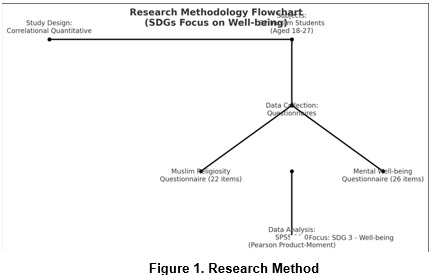
Objective: This study aims to analyze the correlation between Islamic religiosity and mental well-being among college students and to identify the potential of religiosity in predicting mental well-being. This research contributes to the achievement of the Sustainable Development Goals (SDGs), particularly Goal 3 on good health and well-being, by providing insights into the importance of religiosity in supporting mental well-being. Theoretical framework: The theoretical framework highlights the relationship between religious beliefs and mental health, where religiosity functions as an effective coping mechanism. Literature Review: Relevant literature indicates that religiosity is often associated with improved psychological well-being through stress reduction and enhanced life meaning. Methods: The study employed a correlational research design involving 32 college students as participants. The research instruments included the Islamic Religiosity Questionnaire and the Mental Well-Being Questionnaire, analyzed using SPSS software. Results: The linearity test confirmed that the data were linear, with a sig. Deviation from linearity value of 0.467 (> 0.05). The Pearson Product Moment correlation test results showed a p-value of 0.019 (< 0.05) and a correlation coefficient of 0.413, indicating a moderate positive correlation between religiosity and mental well-being. This suggests that higher levels of religiosity are associated with better mental well-being among college students. Implications: The implications of this study include recommendations for higher education institutions to integrate religious values into mental health support programs to advance the SDGs. These findings also provide a new perspective on a holistic approach to student mental health by considering spirituality as a significant predictor. Novelty: The novelty of this research lies in linking Islamic religiosity with mental well-being within the framework of SDGs, a topic rarely explored in previous studies.
References
Y. H. Yoshida, J. B. Rachman, and W. B. Darmawan, “Upaya Indonesia Dalam Mengatasi Pernikahan Anak Sebagai Implementasi Sustainable Development Goals (Sdgs) Tujuan 5 (5.3),” Aliansi J. Polit. Keamanan Dan Hub. Int., vol. 1, no. 3, p. 153, 2023, https://doi.org/10.24198/aliansi.v1i3.44202.
P. Najera, F. Moyano, and J. Lopez, “Secure integration of RFID technology in personal documentation for seamless identity validation,” Adv. Soft Comput., vol. 51, no. 2, pp. 134–138, 2009, https://doi.org/10.1007/978-3-540-85867-6_16.
A. Candra Ningluthfi and Y. Arif Nurohman, “Peran Islamic Green Banking terhadap Sustainable Development Goals di Indonesia,” Al-Kharaj J. Ekon. Keuang. Bisnis Syariah, vol. 6, no. 5, pp. 3689–3703, 2024, https://doi.org/10.47467/alkharaj.v6i5.1182.
Z. K. Firdaus and P. S. Syariah, “Pengaruh Religiusitas Terhadap Kesehatan Mental , Studi Mengenai Kesehatan Mental Mahasiswi Mahad Aisyah Binti Abu Bakar , Bogor,” Aisyah J. Intellect. Islam. Stud., vol. 1, no. 2, pp. 93–98, 2023, [Online]. Available: https://journal.mahadaisyah.id/index.php/aisyah/article/view/13
Dwiki Faiz Sarvianto, “Sisi Masalah Kemiskinan dari Sustainable Development Goals Melalui Perspektif Ekologi Manusia,” J. Ekol. Masy. dan Sains, vol. 1, no. 2, pp. 12–21, 2020, https://doi.org/10.55448/ems.v1i2.11.
N. Nur Furqani, “Peranan religiusitas dan kecerdasan spiritual terhadap peningkatan kesejahteraan psikologis,” Psychol. J. Sci. Pract., vol. 1, no. 1, pp. 9–15, 2021, https://doi.org/10.22219/pjsp.v1i1.16491.
S. A. Musa and B. Ali, “Muslim Women, Counselling and Rights: An Islamic Overview,” Demak Univers. J. Islam Sharia, vol. 2, no. 1, pp. 36–45, 2024.
A. F. Sayyidah, R. N. Mardhotillah, N. A. Sabila, and S. Rejeki, “Peran Religiusitas Islam dalam Meningkatkan Kesejahteraan Psikologis,” Al-Qalb J. Psikol. Islam, vol. 13, no. 2, pp. 103–115, 2022, https://doi.org/10.15548/alqalb.v13i2.4274.
R. Mayasari, “Religiusitas Islam dan Kebahagiaan (Sebuah Telaah dengan Perspektif Psikologi),” Al-Munzir, vol. 7, no. 2, pp. 81–100, 2014, [Online]. Available: https://scholar.google.co.id/citations?view_op=view_citation&hl=en&user=iRu258MAAAAJ&citation_for_view=iRu258MAAAAJ:zYLM7Y9cAGgC
D. Sinta, M. Rahmat, S. Anwar, and A. Nurhuda, “Religiusitas Dan Kematangan Beragama Dalam Membantu Menghadapi Quarter-Life Crisis Bagi Kalangan Generasi Milenial,” Al-Hikmah J. Agama dan Ilmu Pengetah., vol. 21, no. 2, pp. 214–227, 2024, https://doi.org/10.25299/al-hikmah:jaip.2024.vol21(2).16940.
A. Fitriani, “Peran Religiusitas dalam Meningkatkan Psychological Well Being,” Al-Adyan J. Stud. Lintas Agama, vol. 11, no. 1, pp. 57–80, 2017, [Online]. Available: https://dx.doi.org/10.24042/ajsla.v11i1.1437
Suci cahya ningsih et al., “Efek Positif Berdoa Bagi Kesehatan Mental Manusia,” Proceeding Conf. Da’wah Commun. Stud., vol. 1, no. 1, pp. 53–56, 2022, https://doi.org/10.61994/cdcs.v1i1.21.
M. A. Ningtyas, T. Oktarina, Q. Butlam, A. Ibrahim, M. Hamma, and A. Ahmad, “Illness and Treatment in Theological and Normative Viewpoints,” vol. 1, no. 3, pp. 163–172, 2023.
N. I. Damayanti, Nasichah, P. I. Qoblia, and A. Supriyono, “Kontribusi Spiritualitas Kesehatan Mental pada Remaja,” J. Komun., vol. 1, no. 5, pp. 269–276, 2023, [Online]. Available: https://jkm.my.id/index.php/komunikasi/article/view/29
S. Winurini, “Hubungan Religiositas dan Kesehatan Mental pada Remaja Pesantren di Tabanan,” Aspir. J. Masal. Sos., vol. 10, no. 2, pp. 139–153, 2019, https://doi.org/10.46807/aspirasi.v10i2.1428.
M. Nazmi et al., “Agama Dan Matlamat Pembangunan Lestari ( Sdg ): Peranan Rumah Ibadat Dalam Kebajikan Masyarakat,” Afkar J. Akidah Pemikir. Islam, vol. 26, no. 2, pp. 413–458, 2024, https://doi.org/10.22452/afkar.vol26no2.13.
Z. Arifin and I. R. Tri, “Hubungan antara orientasi religius, locus of control dan psychological well-being mahasiswa fakultas psikologi universitas Islam Negeri Maulana Malik IbrahiM Malang,” El-QUDWAH, 2011.
L. Azalia, L. N. Muna, and A. Rusdi, “Kesejahteraan Psikologis Pada Jemaah Pengajian Ditinjau Dari Religiusitas Dan Hubbud Dunya,” Psikis J. Psikol. Islam., vol. 4, no. 1, pp. 35–44, 1970, https://doi.org/10.19109/psikis.v4i1.2159.
M. Housen and A. Dariyo, “The Relationship of Religious and Psychological Well-Being in Adults Hubungan Religiusitas Dengan Psychological Well-Being Pada Dewasa,” J. Soc. Econ. Res., vol. 5, no. 2, pp. 1404–1414, 2023, https://doi.org/10.54783/jser.v5i2.232.
A. Muala and N. Nugraheni, “Peningkatan Pendidikan Berkualitas Dalam Mewujudkan Sustainable Development Goals (SDGs),” J. Ilm. Multidisipline, vol. 2, no. 3, pp. 40–46, 2024, [Online]. Available: https://doi.org/10.5281/zenodo.10936448
H. Pratama and Z. Fikri, “Pengaruh Religiusitas terhadap Psychological Well Being pada Mahasiswa yang Mengerjakan Skripsi di Universitas Negeri Padang,” J. Pendidik. Tambusai, vol. 7, no. 2, pp. 3774–3781, 2023, [Online]. Available: https://jptam.org/index.php/jptam/article/view/6725
M. G. I. E. Irham Maulana, Nourelhuda S. B. Elmanaya, and N. Ubed Abdilah Syarif, “Application of Hadith on Accounts Receivable and Its Implementation in Sharia Bank Guarantees,” Demak Univers. J. Islam Sharia, vol. 1, no. 2, pp. 121–130, 2023.
S. Gustiani, “Research and Development (R&D) Method as a Model Design in Educational Research and its Alternatives,” Holistics J., vol. 11, no. 2, pp. 12–22, 2019.
M. Mulyadi, “Penelitian Kuantitatif Dan Kualitatif Serta Pemikiran Dasar Menggabungkannya [Quantitative and Qualitative Research and Basic Rationale to Combine Them],” J. Stud. Komun. dan Media, vol. 15, no. 1, pp. 128–138, 2019, https://doi.org/10.31445/jskm.2011.150106.
H. Hikmatul, “Industri Halal Sebagai System Pendukung Sustainable Development Goals di Era Society 5.0,” Tabur, L A N Syari, J. Ekon., vol. 4, no. 1, pp. 43–59, 2022, [Online]. Available: http://ejournal.kopertais4.or.id/tapalkuda/index.php/lantabur/article/view/4768/3392
Melvita, Asyari, and E. Youanda, “Pengaruh Religiusitas Terhadap Kinerja Dengan Work Life Balance Dan Beban Kerja Sebagai Variabel Moderasi (Studi Kasus: Profesi Guru Madrasah di Kota Bukittinggi),” J. Ris. Ekon. Dan Manaj. PENGARUH, vol. 1, pp. 95–106, 2021, [Online]. Available: https://jurnalhost.com/index.php/jrem/article/view/244
D. Vita and L. Soehardi, “Sustainable Development Berbasis Green Economy,” Pros. Semin. Sos. Polit. Bisnis, Akuntasi dan Tek., pp. 31–39, 2022, https://doi.org/10.32897/sobat.2022.4.0.1908.
R. W. Abiba and E. Suprayitno, “Optimalisiasi Wakaf Produktif dalam Mendukung Upaya Pencapaian SDGs Melalui Pemberdayaan Peternakan,” Al-Intaj J. Ekon. dan Perbank. Syariah, vol. 9, no. 1, p. 109, 2023, https://doi.org/10.29300/aij.v9i1.9073.
S. Faidzin, “Peran Dan Fungsi Keluarga Dalam Membangun Kepribadian Remaja Yang Baik Dan Berkelanjutan Di Indonesia: Suatu Tinjauan Literatur,” J. Sustain. Dev. Issues, vol. 1, no. 1, pp. 1–13, 2022, https://doi.org/10.56282/jsdi.v1i1.99.
Agustari, and Toni Kurniawan, “Strategi Kebijakan Pembangunan Sosial Melalui Gerakan Filantropi Islam Di Kabupaten Belitung,” Fikri J. Kaji. Agama, Sos. dan Budaya, vol. 7, no. 2, pp. 116–133, 2022, https://doi.org/10.25217/jf.v7i2.2534.
M. Nikmatul, “Dinamika Identitas dan Religiusitas pada Branding Halal Di Indonesia,” Islam. J. Stud. Keislam., vol. 14, no. 2, pp. 317–338, 2020, [Online]. Available: https://www.researchgate.net/publication/275307096
A. Ratna Puspita et al., “Memahami Dampak Literasi Digital Terhadap Kesehatan, Ekonomi, dan Pendidikan Untuk Mencapai Sustainable Development Goals 2030,” J. Ilm. Multidisiplin, vol. 1, no. 4, pp. 216–223, 2024, [Online]. Available: https://doi.org/10.62017/merdeka
C. Bahrudin et al., “Peran Kuliah Kerja Nyata (Kkn) Dalam Mewujudkan Sustainable Development Goals (Sdgs) Di Desa Wanaherang,” Servirisma, vol. 4, no. 1, pp. 59–68, 2024, https://doi.org/10.21460/servirisma.2024.41.65.
Khoirunnisa Ghefira Yusrani, Nurul Aini, Shifa Aulia Maghfiroh, and Novita Dwi Istanti, “Tinjauan Kebijakan Kesehatan Mental di Indonesia: Menuju Pencapaian Sustainable Development Goals dan Universal Health Coverage,” J. Med. Nusant., vol. 1, no. 2, pp. 89–107, 2023, https://doi.org/10.59680/medika.v1i2.281.
F. Irhamsyah, “Sustainable Development Goals (SDGs) dan Dampaknya Bagi Ketahanan Nasional,” J. Lemhannas RI, vol. 7, no. 2, pp. 45–54, 2020, https://doi.org/10.55960/jlri.v7i2.71.
Usman, Wartoyo, N. Haida, and N. Wahyuningsih, “Implementasi Sustainable Development Goals (Sdgs) Di Indonesia Perspektif Ekonomi Islam,” Al-Masharif J. Ilmu Ekon. dan Keislam., vol. 11, no. 1, pp. 108–126, 2024, https://doi.org/10.24952/masharif.v12i1.12446.
I. Makherta Sutadji, T. Agus Setiyaningsih, B. Shofiatul Jannah, A. Gunawan, M. Trawally Sawo, and N. Indriastuty, “Studi Komparasi Pengungkapan Sustainability Report Dan Kontribusinya Terhadap Sustainable Development Goals (Study Pada Sektor Perbankan Di Indonesia),” J. KRISNA Kumpul. Ris. Akunt., vol. 16, no. 1, pp. 2024–86, 2024, https://doi.org/10.22225/kr.16.1.2024.87-101
S. Wulan Dari and K. Nur Fitriana, “Analisis Stakeholder Dalam Pencapaian Sustainable Development Goals (SDGs) Di Kabupaten Sleman Stakeholder Analysis in Achieving Sustainable Development Goals (SDGs) in Sleman District,” J. PUBLIC POLICY Adm. Res., vol. 09, 2024, https://doi.org/10.21831/joppar.v9i1.20786.
N. Humaida, M. Aula Sa’adah, H. Huriyah, and N. Hasanatun Nida, “Pembangunan Berkelanjutan Berwawasan Lingkungan (Sustainable Development Goals) Dalam Perspektif Islam,” Khazanah J. Stud. Islam dan Hum., vol. 18, no. 1, p. 131, 2020, https://doi.org/10.18592/khazanah.v18i1.3483.
M. Ridlwan, I. Naila, and L. Nurdianah, “Achieving Sustainable Development Goal : Quality,” J. Pendidik. Bhs. dan Sastra, vol. 15, no. 2, pp. 249–262, 2022, https://doi.org/10.30651/st.v15i2.13390.
Submitted
Accepted
Published
Issue
Section
License
Copyright (c) 2024 Pauline Hapsari, Darodjat

This work is licensed under a Creative Commons Attribution 4.0 International License.