Religious Multicultural Education as a Middle Path: Beyond Liberal Multiculturalism and Its Contribution to the SDGs in the Indonesian Muslim Majority Context
DOI:
https://doi.org/10.23917/profetika.v27i01.15752Keywords:
religious, multicultural education, liberal, sdgs, muslim majorityAbstract
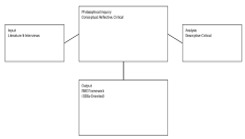
Objective: Assess the limitations of the liberal and theological multicultural education paradigm and formulate an alternative framework that is able to bridge the two in the context of a majority Muslim society such as Indonesia. Theoretical framework: Integrating critical multicultural education with Religious Studies as a non-confessional, phenomenological, and dialogical approach that serves as a bridge between secular relativism and theological absolutism. Literature review: Based on an interdisciplinary literature review in multicultural education, religious education, and educational philosophy that highlights criticism of liberal and theological paradigms. Method: Using a qualitative approach with philosophical and conceptual design through literature studies and expert interviews to strengthen theoretical analysis. Results: The liberal paradigm tends to marginalize religion to the private sphere, while the theological paradigm is exclusive and less dialogical. Alternatively, Religious Multicultural Education is proposed as a middle ground approach that emphasizes epistemic plurality and interreligious dialogue. Implications: Contribute to the development of more inclusive education policies and curricula in a religiously plural society that faces tensions between secular and confessional models. Novelty: It lies in the synthesis between multicultural education and Religious Studies that produces a new model that is contextual, dialogical, and transcends the existing paradigm dichotomy.
References
[1] A. Platica, “Processes of assimilation and cultural identity in migration,” In, pp. 246–256, 2025, https://doi.org/10.54481/pcss2025.25.
[2] M. M. Umar, H. Bin Ishak, M. N. Bin Abdul Kadir, and M. I. Bin Md Yusof, “Peranan Pendidikan Islam dalam Persoalan LGBT (Lesbian,Gay, Biseksual, Transgender) di Kota Jambi,” J. Ilm. Univ. Batanghari Jambi, vol. 19, no. 3, p. 539, 2019, https://doi.org/10.33087/jiubj.v19i3.740.
[3] M. M. Idriss, “Laïcité and the banning of the ‘hijab’ in France,” Leg. Stud., vol. 25, no. 2, pp. 260–295, 2005, https://doi.org/10.1111/j.1748-121X.2005.tb00615.x.
[4] N. L. Cabrera, J. F. Milem, O. Jaquette, and R. W. Marx, “Missing the (Student Achievement) Forest for All the (Political) Trees: Empiricism and the Mexican American Studies Controversy in Tucson,” Am. Educ. Res. J., vol. 51, no. 6, pp. 1084–1118, 2014, https://doi.org/10.3102/0002831214553705.
[5] K. Kaerwer and M. Pritchett, “Critical Race Theory in Education: How Banning its Tenets Undermines our Best Hope for Equity in Education,” Behav. Soc. Issues, vol. 32, no. 1, pp. 300–313, 2023, https://doi.org/10.1007/s42822-023-00130-9.
[6] V. Miller, F. Fernandez, and N. Hutchens, “The Race to Ban Race: Legal and Critical Arguments Against State Legislation to Ban Critical Race Theory in Higher Education,” SSRN Electron. J., vol. 88, no. 61, 2022, https://doi.org/10.2139/ssrn.4227952.
[7] H. Morgan, “Resisting the Movement to Ban Critical Race Theory from Schools,” Clear. House A J. Educ. Strateg. Issues Ideas, vol. 95, no. 1, pp. 35–41, 2022, https://doi.org/10.1080/00098655.2021.2025023.
[8] J. Culp, “Multicultural education for transnational democratic citizenship,” J. Philos. Educ., vol. 59, no. 3–4, pp. 413–433, 2025, https://doi.org/10.1093/jopedu/qhaf011.
[9] U. D. Rostandi, B. Busro, and A. Wasik, “From tradition to tolerance: Menyama Braya as a model for multicultural education in Islamic boarding schools,” Acta Sci. - Educ., vol. 48, 2026, https://doi.org/10.4025/actascieduc.v48i1.75776.
[10] Marzuki, Miftahuddin, and M. Murdiono, “Multicultural education in salaf pesantren and prevention of religious radicalism in Indonesia,” Cakrawala Pendidik., vol. 39, no. 1, pp. 12–25, 2020, https://doi.org/10.21831/cp.v39i1.22900.
[11] M. Idris, “Azyumardi Azra’S Thought on Multicultural Education,” Miqot J. Ilmu-ilmu Keislam, vol. 44, no. 1, pp. 52–70, 2020, https://doi.org/10.30821/miqot.v44i1.739.
[12] J. Rawls, “Political Liberalism, In The New Social Theory Reader. Routledge, 2020, https://doi.org/10.4324/9781003060963-18.
[13] C. Taylor, “The politics of recognition,” Campus Wars Multicult. Polit. Differ., pp. 249–263, 2021, https://doi.org/10.4324/9780429038556-26.
[14] J. Habermas, “Religion in the public sphere,” Relig. Public Sp. Vol. III, vol. 14, no. 1, pp. 3–27, 2016, https://doi.org/10.15448/0103-314x.2021.1.41617.
[15] J. Spinner-Halev and B. Parekh, “Rethinking Multiculturalism: Cultural Diversity and Political Theory,” Contemp. Sociol., vol. 31, no. 2, p. 192, 2002, https://doi.org/10.2307/3089515.
[16] P. Prihanto, “Problem Teologis Pendidikan Multikultural,” At-Ta’dib, vol. 8, no. 2. 2013. https://doi.org/10.21111/at-tadib.v8i2.509.
[17] A. S. Hadi, “Problem Multikulturalisme Dalam Pendidikan Agama Islam,” At-Ta’dib, vol. 9, no. 2. 2016. https://doi.org/10.21111/at-tadib.v9i2.322.
[18] A. Wardana, “Minority, Local Tradition and Islam: Contextualizing Multicultural Education in Indonesian Schools,” Kasetsart J. Soc. Sci., vol. 46, no. 3, 2025, https://doi.org/10.34044/j.kjss.2025.46.3.07.
[19] A. Qodir, D. Dakir, and U. Umiarso, “The Concept of Human Unity and Islamic Inclusive Education: A Study of KH. Imam Zarkasyi’s Thought in Social Change,” J. Islam. Stud. Cult., vol. 5, no. 2, pp. 47–56, 2017, https://doi.org/10.15640/jisc.v5n2a6.
[20] H. Baharun and F. N. Badriyah, “Pendidikan Multikultural Dalam Bingkai Islam Nusantara Perspektif Kh. Said Aqil Siroj,” Tafáqquh J. Penelit. Dan Kaji. Keislam., vol. 8, no. 1, pp. 37–51, 2020, https://doi.org/10.52431/tafaqquh.v8i1.240.
[21] A. Rois, “Pendidikan Islam Multikultural: Telaah Pemikiran Muhammad Amin Abdullah,” Epistemé J. Pengemb. Ilmu Keislam., vol. 8, no. 2, pp. 301–22, 2013, https://doi.org/10.21274/epis.2013.8.2.301-322.
[22] T. Modood and T. Sealy, “Freedom of religion and the accommodation of religious diversity: Multiculturalising secularism,” Religions, vol. 12, no. 10, 2021, https://doi.org/10.3390/rel12100868.
[23] B. Efendi, Happy Susanto, Nuraini, Mokmin Bin Basri, and Muh Samsuri, “Integrating Islamic Religious Education for SDGs: A Systematic Literature Review and Bibliometric Study,” Profetika J. Stud. Islam, vol. 26, no. 02, pp. 407–420, 2025, https://doi.org/10.23917/profetika.v26i02.11522.
[24] K. K. Mason, Multicultural Education: Issues and Perspectives (Book), vol. 8, no. 1. New York: London Routledge, 2006. https://doi.org/10.1207/s15327892mcp0801_10.
[25] M. Šuvaković, The Return of the Political, vol. 8. London: Verso, 2018. https://doi.org/10.2307/j.ctv6jmbng.6.
[26] A. Hassanpour, N. Azizi, A. Ahmadi, I. Gholizadeh, and S. G. Ramezani, “Diversity in Iranian upstream educational documents,” J. Multicult. Educ., vol. 17, no. 3, pp. 278–290, 2023, https://doi.org/10.1108/JME-06-2022-0079.
[27] H. Aydin, “Educational reform in Nigeria: The case of multicultural education for peace, love, and tolerance,” South African J. Educ., vol. 33, no. 1, pp. 1–19, 2013, https://doi.org/10.15700/saje.v33n1a611.
[28] M. N. I. Saleh, “Perceptions of pesantren leaders towards Islamic moderation approaches in combating radicalism and terrorism,” Cogent Arts Humanit., vol. 12, no. 1, 2025, https://doi.org/10.1080/23311983.2025.2474826.
[29] A. L. N. Queiroz et al., “A multilevel analysis of LGBT-relevant laws and sexual and gender minority mental health: evidence for the protective role of inclusive policies,” BMC Public Health, vol. 26, no. 1, 2026, https://doi.org/10.1186/s12889-026-26309-4.
[30] C. Grov et al., “Sexual and Gender Minorities’ Vaccine Uptake and Behavioral Change in Response to the Mpox Outbreak in the United States: August 2022 Through November 2022,” Clin. Infect. Dis., vol. 81, no. 6, pp. 1184–1193, 2024, https://doi.org/10.1093/cid/ciad793.
[31] D. Pagliaccio, D. M. Grijseels, and E. Schechtman, “Social, institutional, and political climates shape the experiences and careers of LGBTQIA+ neuroscientists worldwide,” Neuroscience, vol. 600, pp. 243–250, 2026, https://doi.org/10.1016/j.neuroscience.2026.01.027.
[32] T. Ramsay-Patel et al., “Nonsuicidal self-injury (NSSI) amongst LGBT+ young adults: The role of psychological distress,” J. Affect. Disord., vol. 399, 2026, https://doi.org/10.1016/j.jad.2025.121027.
[33] W. E. Rosa et al., “Feasibility, acceptability, and preliminary efficacy of an LGBTQ+ inclusive communication skills training for multidisciplinary oncology healthcare providers,” PEC Innov., vol. 8, 2026, https://doi.org/10.1016/j.pecinn.2026.100457.
[34] J. S. Sukardi, F. Hanum, and A. Efianingrum, “Multicultural education patterns in promoting tolerance among high school students,” Cakrawala Pendidik., vol. 44, no. 3, pp. 701–713, 2025, https://doi.org/10.21831/cp.v44i3.84362.
[35] Mukhlis, M. Iqbal, M. Safitri, and Hasniyati, “Challenges in Implementing Sharia-Based Education: Balancing Regional Autonomy and Children’s Rights in Aceh,” Khazanah Huk., vol. 7, no. 1, pp. 105–120, 2025, https://doi.org/10.15575/kh.v7i1.41012.
[36] M. Muhajir, U. Kultsum, M. M. Choiri, S. Mustonah, H. Kulkarni, and A. Karim, “Integrating Multicultural Values To Foster Tolerance and Inclusivity in Islamic Religious Education,” J. Pendidik. Islam, vol. 11, no. 1, pp. 17–32, 2025, https://doi.org/10.15575/jpi.v11i1.44607.
[37] C. Chotimah, S. Z. Qudsy, and M. Yusuf, “Superficial implementation of religious moderation in Islamic educational management,” Cogent Educ., vol. 12, no. 1, 2025, https://doi.org/10.1080/2331186X.2024.2442235.
[38] M. Asrori et al., “Islamic educational and cultural values in Indonesian puppetry art: a systematic literature review,” Cogent Educ., vol. 12, no. 1, 2025, https://doi.org/10.1080/2331186X.2025.2490445.
[39] M. Saihu, N. Umar, A. T. Raya, and A. Shunhaji, “Multicultural Education Based on Religiosity to Enhance Social Harmonization within Students: A Study in Public Senior High School,” Pegem Egit. ve Ogr. Derg., vol. 12, no. 3, pp. 265–274, 2022, https://doi.org/10.47750/pegegog.12.03.28.
[40] A. Rohman, M. Mudis Taruna, Wahab, Mustolehudin, and Mintarti, “Islamic boarding school policy in response to the transmission of transnational religious ideologies in Klaten, Indonesia,” Cogent Educ., vol. 12, no. 1, 2025, https://doi.org/10.1080/2331186X.2024.2436291.
[41] M. A. Abdullah, “From Dialogue to Engagement: Experiences of Civil Society Organizations in Religious Literacy Programs for Multicultural Education Curriculum in Indonesia,” J. Pendidik. Agama Islam, vol. 21, no. 2, pp. 264–274, 2024, https://doi.org/10.14421/jpai.v21i2.10234.
[42] A. S. Anggaira, A. Madkur, L. Setiyana, Y. A. Sari, and N. Aryanti, “Development of Hybrid English Learning Materials Integrated with the Values of Religious Moderation,” Forum Linguist. Stud., vol. 7, no. 7, pp. 980–991, 2025, https://doi.org/10.30564/fls.v7i7.9440.
[43] A. Sopian, M. Abdurahman, M. ‘Ali, Y. A. Tantowi, A. N. Aeni, and H. Maulani, “Arabic Language Learning in a Multicultural Context At Pesantren,” J. Pendidik. Islam, vol. 11, no. 1, pp. 77–89, 2025, https://doi.org/10.15575/jpi.v11i1.44104.
[44] M. Fahmi et al., “Multicultural Islamic Education as a Strategy for Strengthening Social Cohesion in Islamic Schools,” Nazhruna J. Pendidik. Islam, vol. 8, no. 1, pp. 154–175, 2025, https://doi.org/10.31538/nzh.v8i1.67.
[45] L. Safitri, F. M. Manshur, and H. Thoyyar, “Nurcholish Madjid on Indonesian Islamic Education: a Hermeneutical Study,” J. Ilm. Islam Futur., vol. 22, no. 2, pp. 244–259, 2022, https://doi.org/10.22373/jiif.v22i2.5749.
[46] I. Ma’rifah and Sibawaihi, “Institutionalization of Multicultural Values in Religious Education in Inclusive Schools, Indonesia,” J. Pendidik. Agama Islam, vol. 20, no. 2, pp. 247–260, 2023, https://doi.org/10.14421/jpai.v20i2.8336.
[47] M. A. Burga and M. Damopolii, “Reinforcing Religious Moderation Through Local Culture-Based Pesantren,” J. Pendidik. Islam, vol. 8, no. 2, pp. 145–162, 2022, https://doi.org/10.15575/jpi.v8i2.19879.
Downloads
Submitted
Accepted
Published
Issue
Section
License
Copyright (c) 2026 Erham Budi Wiranto, Waston, Mohamad Ali, Andri Nirwana, Wachidi, Saif Uddin Ahmed Khondoker, Siswanto Masruri

This work is licensed under a Creative Commons Attribution 4.0 International License.