Empowering MSMEs in Indonesia through Sustainable Cash Waqf: Strategic Solutions Aligned with the SDGs
DOI:
https://doi.org/10.23917/profetika.v27i01.14997Keywords:
cash waqf, msme empowerment, islamic social finance, strategy optimization, sdgsAbstract
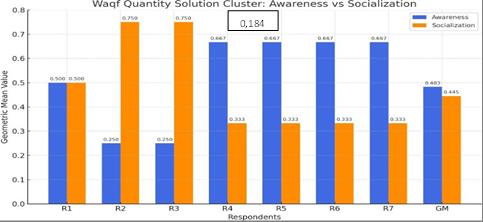
Objective: This study investigates the strategic optimization of cash waqf as an alternative Islamic social finance instrument to empower micro, small, and medium enterprises (MSMEs) in Indonesia within the framework of SDGs-oriented sustainable economic development. Theoretical framework: The study is framed within Islamic social finance theory, particularly cash waqf as a productive and sustainable instrument, combined with principles of institutional performance, trust-based governance, and MSME empowerment in a digital economy context supporting SDGs achievement. Literature review: The literature review discusses cash waqf as an Islamic social finance instrument for MSME empowerment, human capital development, and motivation in cash waqf management associated with SDGs implementation and inclusive economic growth. Methods: This research employs the Analytic Network Process (ANP) methodology to analyze interdependencies among strategic factors. Data were obtained from Kedai Wakaf MUI North Sumatra and Dompet Dhuafa Indonesia, supported by expert judgments from seven respondents representing practitioners and scholars in waqf and Islamic economics. Results: The results indicate that human resource development particularly motivation outweighs technical skills as the most critical internal solution. Marketing capabilities, especially product creativity and digital engagement, are also essential. Total sales are prioritized over profit margins as performance indicators. In increasing waqf collection, public awareness raising is slightly more influential than socialization. Externally, trust driven by transparency and accountability emerges as the primary concern, followed by economic factors and government policy support with sustainable funding aligned with SDGs priorities. Implications: These findings suggest that optimizing cash waqf for MSME empowerment requires an integrated, data-driven strategy that strengthens internal capacity, enhances digital marketing, ensures transparent governance, and aligns with supportive public policies for SDGs sustainability. Novelty: This study contributes novelty by empirically applying the ANP approach to prioritize internal and external strategic factors in cash waqf-based MSME empowerment, offering a structured decision-making perspective that integrates human resources, digital marketing, trust, policy dimensions, and SDGs-oriented Islamic social finance development.
References
[1] Y. Hidayat, A. Machmud, S. Zulhuda, and S. Suartini, “Legal aspects and government policy in increasing the role of MSMEs in the Halal ecosystem.,” F1000Research, vol. 13, p. 722, 2024, doi: https://doi.org/10.12688/f1000research.148322.4.
[2] B. Santoso, “The Role of Micro, Small, and Medium Enterprises Toward Sustainable Development Goals Through Islamic Financial Institutions,” vol. 409, no. SoRes 2019, pp. 585–595, 2020, doi: https://doi.org/10.2991/assehr.k.200225.127.
[3] A. Rizaldi and R. Tambunan, “Analysis Of Empowerment Strategies For Micro, Small And Medium Enterprises (Msmes) In Facing Global Challenges,” … Humanit. Soc. …, pp. 885–897, 2022, [Online]. Available: http://www.programdoktorpbiuns.org/index.php/proceedings/article/view/237%0Ahttp://www.programdoktorpbiuns.org/index.php/proceedings/article/download/237/254
[4] N. A. Zauro, R. A. J. Saad, A. Ahmi, and M. Y. Mohd Hussin, “Integration of Waqf towards enhancing financial inclusion and socio-economic justice in Nigeria,” Int. J. Ethics Syst., vol. 36, no. 4, pp. 491–505, 2020, doi: https://doi.org/10.1108/IJOES-04-2020-0054.
[5] A. Jafar, H. Ibrahim, and R. Malik, “Waqf: from classical charitable system to modern financial tool,” Int. J. Ethics Syst., 2025, doi: https://doi.org/10.1108/IJOES-10-2024-0354.
[6] R. A. Setiawan, “Avoidance of Riba-Based Loans and Enhancement of Quality of Life: An Indonesian Context Analysis,” Religions, vol. 14, no. 11. p. 1376, 2023. doi: https://doi.org/10.3390/rel14111376.
[7] B. Altay and M. Bulut, “Determinants of cash waqf finance capital in the Ottoman Empire: an empirical investigation,” Int. J. Islam. Middle East. Financ. Manag., vol. 18, no. 5, pp. 1198–1218, 2025, doi: https://doi.org/10.1108/IMEFM-05-2024-0241.
[8] A. S. Hasan and Herianingrum, “Micro Business Empowerment Model Through Cash Waqf,” AFEBI Islam. Financ. Econ. Rev., vol. 4, no. 1, pp. 27–41, 2020, doi: https://doi.org/10.47312/aifer.v4i01.376.
[9] H. H. Adinugraha, M. Shulthoni, and Z. H. Sain, “Transformation of cash waqf management in Indonesia: Insights into the development of digitalization,” Rev. Islam. Soc. Financ. Entrep., vol. 3, no. 1, pp. 50–66, Mar. 2024, doi: https://doi.org/10.20885/RISFE.vol3.iss1.art4.
[10] A. Gilmore, “Entrepreneurial and SME marketing,” J. Res. Mark. Entrep., vol. 13, no. 2, pp. 137–145, 2011, doi: https://doi.org/10.1108/14715201111176426.
[11] M. Hendijani Fard and N. Seyyed Amiri, “The effect of entrepreneurial marketing on halal food SMEs performance,” J. Islam. Mark., vol. 9, no. 3, pp. 598–620, 2018, doi: https://doi.org/10.1108/JIMA-12-2016-0097.
[12] M. R. Mohd Yunus, N. S. Rosli, R. Mahmood, and H. Md Som, “Effects of knowledge management, market orientation, technological innovation, and strategic orientation on halal SMEs in Singapore,” J. Islam. Mark., pp. 1–25, 2025, doi: https://doi.org/10.1108/JIMA-08-2024-0385.
[13] M. I. N. Susiang, I. Siswanti, D. Permana, and M. W. Wibowo, “Effects of competitive intelligence and halal integrity on Halalan Tayyiban implementation strategy in Indonesian MSMEs: the mediating role of halal orientation strategy,” J. Islam. Mark., 2024, doi: https://doi.org/10.1108/JIMA-10-2023-0344.
[14] K. Nour Aldeen, I. S. Ratih, and R. Sari Pertiwi, “Cash waqf from the millennials’ perspective: a case of Indonesia,” ISRA Int. J. Islam. Financ., vol. 14, no. 1, pp. 20–37, 2021, doi: https://doi.org/10.1108/IJIF-10-2020-0223.
[15] R. Yaya, I. M. Saud, M. K. Hassan, and M. Rashid, “Governance of profit and loss sharing financing in achieving socio-economic justice,” J. Islam. Account. Bus. Res., vol. 12, no. 6, pp. 814–830, 2021, doi: https://doi.org/10.1108/JIABR-11-2017-0161.
[16] A. Abdul-Rahman, R. Abdul Latif, R. Muda, and M. A. Abdullah, “Failure and potential of profit-loss sharing contracts: A perspective of New Institutional, Economic (NIE) Theory,” Pacific-Basin Financ. J., vol. 28, pp. 136–151, 2014, doi: https://doi.org/10.1016/j.pacfin.2014.01.004.
[17] L. O. Alimusa, R. Sukmana, R. T. Ratnasari, S. Machfud, and S. D. H. Latif, “Determinants of online cash waqf behavioural intentions for micro enterprises financing: the case of Indonesian Muslim youth,” J. Islam. Mark., vol. 16, no. 6, pp. 1623–1649, 2024, doi: https://doi.org/10.1108/JIMA-06-2023-0166.
[18] T. Widiastuti et al., “Determinant factors for online cash waqf intention among Muslim millennial generation,” J. Islam. Mark., vol. 16, no. 1, pp. 258–289, 2024, doi: https://doi.org/10.1108/JIMA-12-2023-0408.
[19] A. Ascarya, “An investigation of waqf-based Islamic micro financial institution models to identify the most effective model for Indonesia,” J. Islam. Account. Bus. Res., 2024, doi: https://doi.org/10.1108/JIABR-12-2022-0325.
[20] R. A. Kasri and S. R. Chaerunnisa, “The role of knowledge, trust, and religiosity in explaining the online cash waqf amongst Muslim millennials,” J. Islam. Mark., vol. 13, no. 6, pp. 1334–1350, 2021, doi: https://doi.org/10.1108/JIMA-04-2020-0101.
[21] K. N. Aldeen, I. S. Ratih, and S. Herianingrum, “Contemporary Issues on Cash Waqf : A Review of the Literature,” Int. J. Islam. Econ. Financ., vol. 3, no. 2, pp. 119–144, 2020.
[22] M. A. Mohd Thas Thaker, M. F. Amin, H. Mohd Thas Thaker, A. Khaliq, and A. Allah Pitchay, “Cash waqf model for micro enterprises’ human capital development,” ISRA Int. J. Islam. Financ., vol. 13, no. 1, pp. 66–83, Dec. 2020, doi: https://doi.org/10.1108/IJIF-08-2018-0091.
[23] D. Bonang, S. Ismail, and Raditya Sukmana, “Empowering the Future of Cash Waqf through Digitalisation: An Insight into the Philanthropic Intention of the Indonesian Muslim Community,” ISRA Int. J. Islam. Financ., vol. 16, no. S1, pp. 94–117, 2024, doi: https://doi.org/10.55188/ijif.v16iS1.586.
[24] N. M. Sapuan, “The determinants of waqf sustainability in Malaysia: A PLS-SEM analysis,” Int. J. Bus. Soc., vol. 22, no. 1, pp. 102–118, 2021, doi: https://doi.org/10.33736/ijbs.3164.2021s.
[25] A. Asyari et al., “Online cash waqf behavioral intention: the role of knowledge of cash waqf and trust,” J. Islam. Mark., vol. 15, no. 11, pp. 2864–2890, 2024, doi: https://doi.org/10.1108/JIMA-07-2023-0224.
[26] H. Amin, N. S. Jam, and P. J. Ring, “Examining cash waqf giving decisions in Malaysia,” Int. J. Soc. Econ., vol. 52, no. 11, pp. 1584–1597, 2025, doi: https://doi.org/10.1108/IJSE-12-2023-0964.
[27] M. Ayub, K. Khan, M. Khan, and M. Ismail, “Management and governance of Awqāf as social finance institutions,” Qual. Res. Financ. Mark., 2025, doi: https://doi.org/10.1108/QRFM-01-2025-0013.
[28] N. Y. Abu Talib, R. Abdul Latiff, and A. Aman, “An institutional perspective for research in waqf accounting and reporting: A case study of Terengganu state Islamic Religious Council in Malaysia,” J. Islam. Account. Bus. Res., vol. 11, no. 2, pp. 400–427, 2020, doi: https://doi.org/10.1108/JIABR-11-2016-0132.
[29] A. Mohamed and A. E. Akande, “Waqf-led buildings and green infrastructure role in environmental sustainability: understanding critical gaps in current research landscape,” Manag. Sustain. An Arab Rev., 2025, doi: https://doi.org/10.1108/MSAR-09-2024-0152.
[30] A. Ascarya, M. N. Hosen, and S. Rahmawati, “Designing simple productive waqf models for Indonesia,” Int. J. Ethics Syst., vol. 38, no. 3, pp. 380–401, 2022, doi: https://doi.org/10.1108/IJOES-07-2020-0101.
[31] A. H. Azrai Azaimi Ambrose, M. A. Gulam Hassan, and H. Hanafi, “A proposed model for waqf financing public goods and mixed public goods in Malaysia,” Int. J. Islam. Middle East. Financ. Manag., vol. 11, no. 3, pp. 395–415, 2018, doi: https://doi.org/10.1108/IMEFM-01-2017-0001.
[32] M. B. Zafar and A. Jafar, “Waqf over a century: innovation and tradition in shaping social equity and sustainable development,” Int. J. Sociol. Soc. Policy, pp. 1–25, 2025, doi: https://doi.org/10.1108/IJSSP-12-2024-0625.
[33] M. G. Nabi, M. A. Islam, R. Bakar, and M. Masuduzzaman, “Using Waqf for Socio-Economic Development in Bangladesh: Potentials, Challenges, and Policy Directions,” in Revitalization of Waqf for Socio-Economic Development, Volume I, K. M. Ali, M. K. Hassan, and A. elrahman E. S. Ali, Eds., Cham: Springer International Publishing, 2019, pp. 107–133. doi: https://doi.org/10.1007/978-3-030-18445-2_7.
[34] J. Corbin and A. Strauss, Fundamentals of qualitative research: Techniques and procedures for developing grounded theory. Thousand Oaks: CA: Sage, 2015.
[35] R. M. Q. Fauzi, M. I. Hapsari, S. Herianingrum, S. Fanani, and T. Kurnia, “The challenges of empowering waqf land in Indonesia: an analytical network process analysis,” Int. J. Ethics Syst., vol. 38, no. 3, pp. 426–442, Jan. 2022, doi: https://doi.org/10.1108/IJOES-03-2021-0061.
[36] Sugiyono, Metode Penelitian Kombinasi (Mixed Methods), Cetakan ke. bandung: Penerbit Alfabeta, 2017.
[37] L. J. Moleong, Metode Penelitian Kualitatif. Edisi Revisi. Bandung: Bandung: PT. Remaja Rosdakarya, 2014.
[38] Sugiyono, Metode Penelitian Kuantitatif, Kualitatif dan R&D. Bandung: CV. Alfabeta, 2018.
[39] C. R. Boddy, “Sample size for qualitative research,” Qual. Mark. Res. An Int. J., vol. 19, no. 4, pp. 426–432, 2016, doi: https://doi.org/10.1108/QMR-06-2016-0053.
[40] M. A. Bin Mohd Thas Thaker, M. O. Mohammed, J. Duasa, and M. A. Abdullah, “Developing cash waqf model as an alternative source of financing for micro enterprises in Malaysia,” J. Islam. Account. Bus. Res., vol. 7, no. 4, pp. 254–267, Sep. 2016, doi: https://doi.org/10.1108/JIABR-09-2014-0029.
[41] M. A. Bin Mohd Thas Thaker, “A qualitative inquiry into cash waqf model as a source of financing for micro enterprises,” ISRA Int. J. Islam. Financ., vol. 10, no. 1, pp. 19–35, 2018, doi: https://doi.org/10.1108/IJIF-07-2017-0013.
[42] C. Ansell and A. Gash, “Collaborative governance in theory and practice,” J. Public Adm. Res. Theory, vol. 18, no. 4, pp. 543–571, 2008, doi: https://doi.org/10.1093/jopart/mum032.
[43] S. Abdullah, “Ibn Khaldun’s Theory of Good Governance in Achieving Civilization Excellence,” Int. J. Acad. Res. Bus. Soc. Sci., vol. 8, no. 9, pp. 1321–1333, 2018, doi: https://doi.org/10.6007/ijarbss/v8-i9/4699.
[44] S. K. Rizqi, “Solidarty Theory In The Modern Government Development Plan (A Study of The Thought of Ibn Khaldun),” in Proceedings of the International Conference on Democracy, Accountability and Governance (ICODAG ), Atlantis Press, Nov. 2017, pp. 273–277. doi: https://doi.org/10.2991/icodag-17.2017.53.
Downloads
Submitted
Accepted
Published
Issue
Section
License
Copyright (c) 2026 Rizal Agus, Enny Segarahati Barus, Amrin, Mukhtasar, Muhamad Noor Baihaqi bin Mokhtar

This work is licensed under a Creative Commons Attribution 4.0 International License.