Revitalizing Islamic Education Through STEAM to Achieve the SDGS: A Pathway to Higher-Order Thinking and Academic Excellence
DOI:
https://doi.org/10.23917/profetika.v26i03.14902Keywords:
steam education, innovation, cognitive, sustainable development goals, interdisciplinary learningAbstract
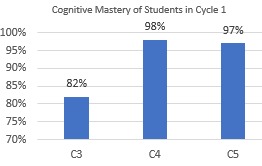
Objective: This study aims to examine the effectiveness of integrating the STEAM (Science, Technology, Engineering, Arts, and Mathematics) approach into Islamic Religious Education (IRE) to enhance students’ higher-order thinking skills (HOTS) and academic performance, while promoting value-based character development. Theoretical framework: The study is grounded in Bloom’s Taxonomy, focusing on cognitive levels C3 (application), C4 (analysis), and C5 (evaluation), combined with Islamic epistemology and constructivist learning theory, which emphasize holistic and contextual knowledge. Literature review: Existing literature highlights the success of STEAM in scientific disciplines, but its application in religious education remains limited. Classical Islamic scholars advocated the integration of rational, empirical, and spiritual knowledge. Embedding STEAM in IRE aligns with this legacy and supports Sustainable Development Goal 4.7, promoting inclusive, ethical, and future-ready education. Methods: Using a quasi-experimental pretest-posttest control group design, this study involved eighth-grade students at SMP Negeri 13 Surakarta. The experimental group received STEAM-based instruction on muamalah (Islamic economic ethics), while the control group followed traditional methods. Quantitative data were analyzed using t-tests; qualitative insights were drawn from student journals and reflections. Results: Students in the STEAM group showed significant improvements in HOTS, with mastery levels reaching 96%, alongside notable academic gains and deeper engagement. Implications: Integrating STEAM into IRE fosters critical, creative, and ethically grounded learners. It offers a transformative model for modern Islamic education that bridges tradition and innovation. Novelty: This study pioneers an interdisciplinary framework merging STEAM with Islamic values, providing empirical support for its relevance in 21st-century education.
References
[1] J. Á. Ariza and C. Hernández Hernández, “A Systematic Literature Review of Research-based Interventions and Strategies for Students with Disabilities in STEM and STEAM Education,” Int. J. Sci. Math. Educ., 2025, https://doi.org/10.1007/s10763-025-10544-z.
[2] K. Mun, “Aesthetics and STEAM education: the case of Korean STEAM curricula at the art high school,” Int. J. Sci. Educ., vol. 44, no. 5, pp. 854–872, 2022, https://doi.org/10.1080/09500693.2021.2011467.
[3] J. Junaidi, K. B. Dinata, and D. Darwanto, “Evaluation and Analysis of Baitul Arqam on the Morals and Performance of Lecturers and Employees of the University of Muhammadiyah Kotabumi,” Halaqa Islam. Educ. J., vol. 4, no. 2, pp. 133–153, 2020, https://doi.org/10.21070/halaqa.v4i2.1015.
[4] J.-M. Diego-Mantecon, T. Prodromou, Z. Lavicza, T. F. Blanco, and Z. Ortiz-Laso, “An attempt to evaluate STEAM project-based instruction from a school mathematics perspective,” ZDM - Math. Educ., vol. 53, no. 5, pp. 1137–1148, 2021, https://doi.org/10.1007/s11858-021-01303-9.
[5] Y. Park, “Analysis of Teachers’ Questions in the STEAM Class for Students with Intellectual Disabilities,” J. Curric. Teach., vol. 11, no. 5, pp. 205–214, 2022, https://doi.org/10.5430/jct.v11n5p205.
[6] D. Herro, C. Quigley, and O. Abimbade, “Assessing elementary students’ collaborative problem-solving in makerspace activities,” Inf. Learn. Sci., vol. 122, no. 11–12, pp. 774–794, 2021, https://doi.org/10.1108/ILS-08-2020-0176.
[7] Y. Sun, C.-C. Ni, and Y.-Y. Kang, “Comparison of Four Universities on Both Sides of the Taiwan Strait Regarding the Cognitive Differences in the Transition from STEM to STEAM in Design Education,” Educ. Sci., vol. 13, no. 3, 2023, https://doi.org/10.3390/educsci13030241.
[8] E. Arce, A. Suárez-García, J. A. López-Vázquez, and M. I. Fernández-Ibáñez, “Design Sprint: Enhancing STEAM and engineering education through agile prototyping and testing ideas,” Think. Ski. Creat., vol. 44, no. April 2022, https://doi.org/10.1016/j.tsc.2022.101039.
[9] C. Aguayo, R. Videla, F. López-Cortés, S. Rossel, and C. Ibacache, “Ethical enactivism for smart and inclusive STEAM learning design,” Heliyon, vol. 9, no. 9, 2023, https://doi.org/10.1016/j.heliyon.2023.e19205.
[10] R. Videla, C. Aguayo, and T. Veloz, “From STEM to STEAM: An Enactive and Ecological Continuum,” Front. Educ., vol. 6, 2021, https://doi.org/10.3389/feduc.2021.709560.
[11] I. K. Namukasa, Z. Gecu-Parmaksiz, J. Hughes, and R. Scucuglia, “Technology maker practices in mathematics learning in STEM contexts: a case in Brazil and two cases in Canada,” ZDM - Math. Educ., vol. 55, no. 7, pp. 1331–1350, 2023, https://doi.org/10.1007/s11858-023-01534-y.
[12] V. Bevz and O. Dmytriienko, “Students’ Perceptions Of The History Of Science And Technology Course At Teacher Training University 10,” Adv. Educ., vol. 2020, no. 15, pp. 74–80, 2020, https://doi.org/10.20535/2410-8286.160202.
[13] E. Yilmaz Ince and M. Koc, “The consequences of robotics programming education on computational thinking skills: An intervention of the Young Engineers’ Workshop (YEW),” Comput. Appl. Eng. Educ., vol. 29, no. 1, pp. 191–208, 2021, https://doi.org/10.1002/cae.22321.
[14] N. Dahal, B. C. Luitel, B. P. Pant, and R. Rajbanshi, “Enhancing Student-Teachers Assessment Skills: A Self-And Peer-Assessment Tool In Higher Education,” Int. J. Educ. Pract., vol. 10, no. 4, pp. 313–321, 2022, https://doi.org/10.18488/61.v10i4.3173.
[15] I. Lavy, “Leveraging the Pied Piper Effect – The Case of Teaching Programming to Sixth-grade Students Via Music,” Informatics Educ., vol. 22, no. 1, pp. 45–69, 2023, https://doi.org/10.15388/infedu.2023.06.
[16] B. Rahim et al., “Effectiveness of Project-Based Learning in Metal Welding Technology Course with STEAM Approach in Vocational Education,” TEM J., vol. 13, no. 2, pp. 1481–1492, 2024, https://doi.org/10.18421/TEM132-62.
[17] J. Ortiz-Revilla, Á. Ruiz-Martín, and I. M. Greca, “Conceptions and Attitudes of Pre-School and Primary School Teachers towards STEAM Education in Spain,” Educ. Sci., vol. 13, no. 4, 2023, https://doi.org/10.3390/educsci13040377.
[18] S. Tenhovirta, T. Korhonen, P. Seitamaa-Hakkarainen, and K. Hakkarainen, “Cross-age peer tutoring in a technology-enhanced STEAM project at a lower secondary school,” Int. J. Technol. Des. Educ., vol. 32, no. 3, pp. 1701–1723, 2022, https://doi.org/10.1007/s10798-021-09674-6.
[19] B. E. Avendano-Uribe et al., “Engaging Scientific Diasporas in STEAM Education: The Case of Science Clubs Colombia,” Front. Res. Metrics Anal., vol. 7, 2022, https://doi.org/10.3389/frma.2022.898167.
[20] X. Huang and C. Qiao, “Enhancing Computational Thinking Skills Through Artificial Intelligence Education at a STEAM High School,” Sci. Educ., vol. 33, no. 2, pp. 383–403, 2024, https://doi.org/10.1007/s11191-022-00392-6.
[21] I. S. Milara, K. Pitkänen, J. Laru, M. Iwata, M. C. Orduña, and J. Riekki, “STEAM in Oulu: Scaffolding the development of a Community of Practice for local educators around STEAM and digital fabrication,” Int. J. Child-Computer Interact., vol. 26, p. 100197, 2020, https://doi.org/10.1016/j.ijcci.2020.100197.
[22] S. El Bedewy and Z. Lavicza, “STEAM + X - Extending the transdisciplinary of STEAM-based educational approaches: A theoretical contribution,” Think. Ski. Creat., vol. 48, no. January 2023, https://doi.org/10.1016/j.tsc.2023.101299.
[23] M. E. Madden et al., “Rethinking STEM education: An interdisciplinary STEAM curriculum,” Procedia Comput. Sci., vol. 20, pp. 541–546, 2013, https://doi.org/10.1016/j.procs.2013.09.316.
[24] J.-C. Hong, M.-L. Chen, C.-M. Wang, J.-N. Ye, and J.-H. Ye, “Relationship among the urban and rural students’ cooperative attitude, creative task engagements and competition value in participating a steam co-creation contest,” Int. J. Inf. Educ. Technol., vol. 10, no. 12, pp. 873–881, 2020, https://doi.org/10.18178/ijiet.2020.10.12.1473.
[25] I. Opriş, D. E. Gogoașe Nistoran, S. Costinaş, and C. S. Ionescu, “Rethinking power engineering education for Generation Z,” Comput. Appl. Eng. Educ., vol. 29, no. 1, pp. 287–305, 2021, https://doi.org/10.1002/cae.22372.
[26] C. Conradty, S. A. Sotiriou, and F. X. Bogner, “How creativity in STEAM modules intervenes with self-efficacy and motivation,” Educ. Sci., vol. 10, no. 3, 2020, https://doi.org/10.3390/educsci10030070.
[27] D. W. Jackson et al., “Inventors emerging in-school and out-of-school: six iterations of educational design to promote equitable student engagement,” Front. Educ., vol. 9, 2024, https://doi.org/10.3389/feduc.2024.1287521.
[28] H. S. Salmi, H. Thuneberg, and F. X. Bogner, “Is there deep learning on Mars? STEAM education in an inquiry-based out-of-school setting,” Interact. Learn. Environ., vol. 31, no. 2, pp. 1173–1185, 2023, https://doi.org/10.1080/10494820.2020.1823856.
[29] S. Aghasafari, T. Needles, and M. Malloy, “Multimedia arts learning: connecting STEAM among special education students,” Discov. Educ., vol. 4, no. 1, 2025, https://doi.org/10.1007/s44217-025-00440-7.
[30] L. Yeomans et al., “Practice or Praxis? A Theoretical Classification System for STEAM Education,” Educ. Sci., vol. 15, no. 2, 2025, https://doi.org/10.3390/educsci15020164.
[31] D. L. Webb and K. P. LoFaro, “Sources of engineering teaching self-efficacy in a STEAM methods course for elementary preservice teachers,” Sch. Sci. Math., vol. 120, no. 4, pp. 209–219, 2020, https://doi.org/10.1111/ssm.12403.
[32] M. D. López Carrillo, A. Calonge García, and J. A. Lebrón Moreno, “Self-Regulation of Student Learning in a STEAM Project,” Educ. Sci., vol. 14, no. 6, 2024, https://doi.org/10.3390/educsci14060579.
[33] C. Conradty and F. X. Bogner, “STEAM teaching professional development works: effects on students’ creativity and motivation,” Smart Learn. Environ., vol. 7, no. 1, 2020, https://doi.org/10.1186/s40561-020-00132-9.
[34] L. V. Shukshina, L. A. Gegel, M. A. Erofeeva, I. D. Levina, U. Y. Chugaeva, and O. D. Nikitin, “STEM and STEAM Education in Russian Education: Conceptual Framework,” Eurasia J. Math. Sci. Technol. Educ., vol. 17, no. 10, pp. 1–14, 2021, https://doi.org/10.29333/ejmste/11184.
[35] A. N. Alexopoulos et al., “The colours of the Higgs boson: a study in creativity and science motivation among high-school students in Italy,” Smart Learn. Environ., vol. 8, no. 1, 2021, https://doi.org/10.1186/s40561-021-00169-4.
[36] M. A. Graham, “The disciplinary borderlands of education: art and STEAM education (Los límites disciplinares de la educación: arte y educación STEAM),” Infanc. y Aprendiz., vol. 44, no. 4, pp. 769–800, 2021, https://doi.org/10.1080/02103702.2021.1926163.
[37] C.-C. Chen and P.-H. Huang, “The effects of STEAM-based mobile learning on learning achievement and cognitive load,” Interact. Learn. Environ., vol. 31, no. 1, pp. 100–116, 2023, https://doi.org/10.1080/10494820.2020.1761838.
[38] C.-H. Wu, C.-H. Liu, and Y.-M. Huang, “The exploration of continuous learning intention in STEAM education through attitude, motivation, and cognitive load,” Int. J. STEM Educ., vol. 9, no. 1, 2022, https://doi.org/10.1186/s40594-022-00346-y.
[39] N. A. Trina, M. Monsur, N. Cosco, S. Shine, L. Loon, and A. Mastergeorge, “Tools for Assessing the STEAM Learning Affordances and Quality of Outdoor Learning Environments of Childcare Centers: A Systematic Review,” Early Child. Educ. J., 2025, https://doi.org/10.1007/s10643-025-01911-0.
[40] A. Valdés-Zorrilla, D. Díaz-Roja, L. Jiménez, and J. Soto-Andrade, “Random Walks as a Royal Road to E-STEAM in Math Education,” Constr. Found., vol. 18, no. 2, pp. 259–276, 2023, https://www.scopus.com/inward/record.uri?eid=2-s2.0-85165675282&partnerID=40&md5=d63649bb873f75c2b448c86e2083f304.
[41] D. Suliyanthini, “Integrated STEAM Education And Creative Skills: Exploring Colour Physics In Tie-Dye Shibori Textiles,” Procedia Environ. Sci. Eng. Manag., vol. 10, no. 4, pp. 527–544, 2023, https://www.scopus.com/inward/record.uri?eid=2-s2.0-85204983512&partnerID=40&md5=2881893ed56b5923a14b0b5b3151927b.
Downloads
Submitted
Accepted
Published
Issue
Section
License
Copyright (c) 2026 Annas Fajar Rohmani, Wachidi, Waston, Abdunrorma Samaalee, Camila Garcia

This work is licensed under a Creative Commons Attribution 4.0 International License.