Integrating Culturally Responsive Islamic Madrasah Education (CRIMED) for Curriculum Reform: An SDGs-Based Inclusive Learning Framework in Indonesia
DOI:
https://doi.org/10.23917/profetika.v26i02.14538Keywords:
culturally responsive education, madrasah, curriculum reform, sdgs, inclusive learningAbstract
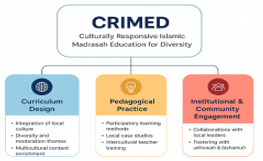
Objectives: This study aims to examine the implementation of Culturally Responsive Islamic Madrasah Education for Diversity (CRIMED) as an SDGs-based framework for curriculum reform that promotes inclusive and contextual learning in Indonesia. Theoretical framework: Grounded in the theoretical framework of culturally responsive pedagogy and Islamic educational philosophy, the study integrates principles of rahmatan lil ‘alamin, ta‘awun, and social justice with the global agenda of the Sustainable Development Goals (SDGs), particularly SDG 4 (Quality Education), SDG 10 (Reduced Inequalities), and SDG 16 (Peace, Justice, and Strong Institutions). Literature review: The literature review highlights gaps in existing Islamic education models that often emphasize normative content while underutilizing local cultural capital and inclusivity as drivers of sustainable development. Method: Employing a descriptive qualitative approach, data were collected through document analysis, curriculum review, and in-depth interviews with madrasah teachers and institutional leaders. Result: The findings reveal that CRIMED operates through three interrelated domains. First, curriculum design integrates Islamic teachings with local cultural wisdom, enabling learning content to resonate with students’ lived experiences and diverse social contexts. Second, pedagogical practices emphasize participatory approaches, including project-based learning and contextual learning, which empower students to express cultural, religious, and social identities while developing critical thinking and collaboration skills aligned with SDG competencies. Third, institutional–community engagement strengthens the role of madrasahs as centers of social harmony, intercultural dialogue, and interfaith cooperation, contributing to peaceful and inclusive societies. The study demonstrates that CRIMED not only aligns Islamic education with national initiatives such as Religious Moderation but also situates madrasahs within the broader sustainable development discourse. Implications: The practical implications suggest that policymakers, curriculum developers, and educators can adopt CRIMED to enhance inclusivity, equity, and relevance in Islamic education. Novelty: The novelty of this research lies in positioning culturally responsive Islamic madrasah education as an explicit SDGs-based curriculum reform framework, offering a contextual yet globally relevant model for transforming Islamic education in multicultural societies.
References
[1] N. Kurnia Putra, A. Amrin, M. M. Abu Zinah, M. Masuwd, and S. Subhan, “Consumption from an Islamic Economic Perspective: Study of Quranic Verses on Consumption,” Demak Univers. J. Islam Sharia, vol. 1, no. 01, pp. 37–45, 2023, https://doi.org/10.61455/deujis.v1i01.21.
[2] N. S. Handayani, S. Sya’roni, S. Ab Rahman, and M. A. Maisu, “General Property Rights from Sharia Perspective: Strategy for the Implementation of Ummah’s Economic Welfare and Justice,” Demak Univers. J. Islam Sharia, vol. 1, no. 01, pp. 46–56, 2023, https://doi.org/10.61455/deujis.v1i01.18.
[3] M. R. Kurniawan, Abdurrahman, S. T. Anggraeni, U. Hasanah, and Marwiyah, “The Problem of Akad Murabahah in Sharia Banks: Between Profit-Oriented and Sharia Compliance,” Demak Univers. J. Islam Sharia, vol. 2, no. 01, pp. 55–66, 2024, https://doi.org/10.61455/deujis.v2i01.97.
[4] S. A. Musa and B. Ali, “Muslim Women, Counselling and Rights: An Islamic Overview,” Demak Univers. J. Islam Sharia, vol. 2, no. 01, pp. 37–46, 2024, https://doi.org/10.61455/deujis.v2i01.96.
[5] M. B. Alauddin et al., “The Concept of Ta ’ awun and Sharia Mutual Cooperation in Prosperity and the Establishment of Darus Salam Mosque,” Demak Univers. J. Islam Sharia, vol. 1, no. 3, pp. 241–254, 2024, https://doi.org/10.61455/deujis.v1i03.75.
[6] M. Hanafi and Y. H. Jibril, “Economic Rights of Women Under Sokoto Caliphate: A Lesson for Contemporary Women in Nigeria,” Demak Univers. J. Islam Sharia, vol. 2, no. 01, pp. 01–14, 2024, https://doi.org/10.61455/deujis.v2i01.81.
[7] S. Ridha, I. Rosyadi, M. A. Maisu, A. E. Conti Morales, and Muthoifin, “Management of Zakat Funds for Education Sharia Economic Law Perspective,” Demak Univers. J. Islam Sharia, vol. 2, no. 01, pp. 27–36, 2024, https://doi.org/10.61455/deujis.v2i01.85.
[8] D. Sartono, M. Mahmudulhassan, I. Najmi, S. Amin, and M. Bensar, “Silver as Nishab Zakat to Improve Community Welfare in the Modern Era,” Demak Univers. J. Islam Sharia, vol. 1, no. 02, pp. 83–91, 2023, https://doi.org/10.61455/deujis.v1i02.24.
[9] R. Susanto, Qoree Butlam, Mohamed Akhiruddin Ibrahim, and Muthoifin, “Implementation of Concepts and Thoughts on Sharia in DSKS (Dewan Syariah Kota Surakarta),” Demak Univers. J. Islam Sharia, vol. 1, no. 03, pp. 179–187, 2023, https://doi.org/10.61455/deujis.v1i03.49.
[10] S. Z, “The Practice of Buying and Selling Fish with a Tariff System in Fishing Islamic Law Perspective,” Demak Univers. J. Islam Sharia, vol. 1, no. 2, pp. 143–153, 2023, https://doi.org/10.61455/deujis.v1i02.62.
[11] M. Rusli and I. Khullatil Mardliyah, “The Urgency and Revitalization of the Development of the Economic System in Indonesia Through the Management of the Scientific Approach of Fiqh Pesantren,” Profetika J. Stud. Islam, vol. 24, no. 02, pp. 244–258, 2023, https://doi.org/10.23917/profetika.v24i02.2160.
[12] T. Rahayu, J. Subando, M. Fatimah, A. F. Haq Rumaf, and A. K. Hussain Solihu, “Optimization of Teaching Strategies of Tahfidz Teachers To Improve the Quality and Quantity of Students’ Memorization of the Qur’an,” Profetika J. Stud. Islam, vol. 24, no. 02, pp. 259–268, 2023, https://doi.org/10.23917/profetika.v24i02.1976.
[13] M. Fatimah, A. Husaen Sastra Negara, W. Waston, S. Hidayat, A. Abdul Adzim, and M. Zakir Husain, “Teacher Communication Patterns To Improve Students’ Religious Character Values At Vocational Schools,” Profetika J. Stud. Islam, vol. 24, no. 02, pp. 217–225, 2023, https://doi.org/10.23917/profetika.v24i02.2063.
[14] Choiriyah, Saprida, D. Noviani, I. Arifin, and M. S. Mubarak Bin Humaid, “Implementation of Ushul Fiqh As a Legal Basis for Solving Sharia-Based Economic Problems,” Profetika J. Stud. Islam, vol. 25, no. 01, pp. 67–82, 2024, https://doi.org/10.23917/profetika.v25i01.4127.
[15] M. Meriyati, M. N. Agus Saputra, I. Arifin, M. Panorama, and M. S. Mubarak Bin Humaid, “Maqasid Sharia’S View on the Scarcity of Subsidized Fertilizers on the Welfare of Farmers in East Oku Indonesia,” Profetika J. Stud. Islam, vol. 24, no. 02, pp. 187–195, 2023, https://doi.org/10.23917/profetika.v24i02.1954.
[16] M. Dwi Fajri, D. Saepudin, Bahrudin, and Ibdalsyah, “The Concept of Tauhid Education in the Family Environment: Study of Hamka’S Perspective,” Profetika J. Stud. Islam, vol. 24, no. 01, pp. 33–45, 2023, https://doi.org/10.23917/profetika.v24i01.1672.
[17] A. Diana and M. Z. Azani, “The Concept and Context of Islamic Education Learning in the Digital Era : Relevance and Integrative Studies,” Profetika J. Stud. Islam, vol. 25, no. 1, pp. 33–44, 2024, https://doi.org/10.23917/profetika.v25i01.4239.
[18] B. Nugraha, M. Sa’diyah, and A. R. Rosyadi, “Module Development of Gender Harmony in Islamic Education Perspective,” Profetika J. Stud. Islam, vol. 25, no. 01, pp. 45–54, 2024, https://doi.org/10.23917/profetika.v25i01.3846.
[19] D. Susanto, Risnita, and M. S. Jailani, “Teknik Pemeriksaan Keabsahan Data Dalam Penelitian Ilmiah,” J. QOSIM J. Pendidikan, Sos. Hum., vol. 1, no. 1, pp. 53–61, 2023, https://doi.org/10.61104/jq.v1i1.60.
[20] H. Zukriadi, Sulaiman, U., “Aneka Macam Penelitian,” SAMBARA J. Pengabdi. Kpd. Masy., vol. 1, no. 1, pp. 36–46, 2023, https://doi.org/10.58540/sambarapkm.v1i1.157.
[21] M. Mulyadi, “Penelitian Kuantitatif Dan Kualitatif Serta Pemikiran Dasar Menggabungkannya,” J. Stud. Komun. dan Media, vol. 15, no. 1, p. 128, 2013, https://doi.org/10.31445/jskm.2011.150106.
[22] S. Effendi and M. Arifi, “Islamic Study: Cultural Aspects (Historic Mosques),” Profetika J. Stud. Islam, vol. 24, no. 01, pp. 131–136, 2023, https://doi.org/10.23917/profetika.v24i01.1688.
[23] M. Khadafie, “Construction of Islamic Religious Education in the Era of the Covid-19 Pandemic,” Profetika J. Stud. Islam, vol. 24, no. 01, pp. 94–102, 2023, https://doi.org/10.23917/profetika.v24i01.1690.
[24] M. R. Sofa Izurrohman, M. Zakki Azani, and H. Salim, “The Concept of Prophetic Education According to Imam Tirmidzi in the Book of Syamail Muhammadiyah,” Solo Int. Collab. Publ. Soc. Sci. Humanit., vol. 1, no. 01, pp. 52–61, 2023, https://doi.org/10.61455/sicopus.v1i01.33.
[25] I. Ismail, H. Hasanuddin, and A. Chandra, “The Influence of Thinking Styles and Learning Styles on Student Learning Achievement,” AL-ISHLAH J. Pendidik., vol. 15, no. 1, pp. 193–202, 2023, https://doi.org/10.35445/alishlah.v15i1.2896.
[26] Dede Rizal Munir and A. Aquil, “The Influence of the Qiyas Method on the Students’ Ability to Understand the Book of Alfiyah Ibnu Malik at Islamic Boarding School,” Solo Univers. J. Islam. Educ. Multicult., vol. 1, no. 02, pp. 96–103, 2023, https://doi.org/10.61455/sujiem.v1i02.45.
[27] Agus Maryanto, “Principal Performance and Leadership in Facing the Covid-19 Pandemic at SMK Muhammadiyah 1 Surakarta,” Solo Univers. J. Islam. Educ. Multicult., vol. 1, no. 02, pp. 118–126, 2023, https://doi.org/10.61455/sujiem.v1i02.65.
[28] A. Nurzannah, D. R. Munir, A. Fajar, and T. Luthfi, “The Influence of the Internet to Improve Students’ Understanding of Arabic Vocabulary: A Semi-Experimental Study at Al-Mutahar Falyurid Islamic High School,” Solo Univers. J. Islam. Educ. Multicult., vol. 1, no. 01, pp. 58–83, 2023, https://doi.org/10.61455/sujiem.v1i01.40.
[29] Muthoifin, A. E. Conti Morales, M. A. Maisu, I. S. Windiarti, and E. I. Osman Musa, “Competent Teacher Ideal Professional Certified Character and Progressive Perspective of Kitab Al-Rasul Al-Muallim,” Solo Univers. J. Islam. Educ. Multicult., vol. 1, no. 02, pp. 84–95, 2023, https://doi.org/10.61455/sujiem.v1i02.41.
[30] R. F. Irmi, M. Al Farabi, and A. Darlis, “Technology Education in the Quran,” Solo Univers. J. Islam. Educ. Multicult., vol. 1, no. 01, pp. 01–09, 2023, https://doi.org/10.61455/sujiem.v1i01.4.
[31] A. Mahmud, “Multicultural Democratic and Tolerant: Qur’anic Perspectives and Islamic Education at the Universitas Muhammadiyah Surakarta,” Solo Univers. J. Islam. Educ. Multicult., vol. 1, no. 03, pp. 205–220, 2024, https://doi.org/10.61455/sujiem.v1i03.82.
[32] Sigit Raharja, “Boarding Model Education Concept to Improve the Quality of Pesantren Education,” Solo Univers. J. Islam. Educ. Multicult., vol. 1, no. 03, pp. 161–171, 2024, https://doi.org/10.61455/sujiem.v1i03.70.
[33] S. Shobron, T. Trisno, M. Muthoifin, M. Mahmudulhassan, and M. N. Rochim Maksum, “Humanist Education the Dayak of Kalimantan Indonesia Islamic Perspective,” Solo Univers. J. Islam. Educ. Multicult., vol. 1, no. 01, pp. 20–29, 2023, https://doi.org/10.61455/sujiem.v1i01.27.
[34] J. Wang and R. S. Austria, “Construction of an effectiveness evaluation model for furniture design curriculum reform under the new engineering education paradigm,” Environ. Soc. Psychol., vol. 10, no. 2, 2025, https://doi.org/10.59429/esp.v10i2.3427.
[35] S. A. F. Lingga, A. Mustaqim, M. Al Farabi, and A. Darlis, “Tauhid Education in the Qur’an,” Solo Univers. J. Islam. Educ. Multicult., vol. 1, no. 01, pp. 10–19, 2023, https://doi.org/10.61455/sujiem.v1i01.3.
[36] T. Sanyoto, N. Fadli, R. Irfan Rosyadi, and M. Muthoifin, “Implementation of Tawhid-Based Integral Education to Improve and Strengthen Hidayatullah Basic Education,” Solo Univers. J. Islam. Educ. Multicult., vol. 1, no. 01, pp. 30–41, 2023, https://doi.org/10.61455/sujiem.v1i01.31.
[37] H. Haerul, I. Iqra, B. M. A. Muhammad Hamad Al-Nil, and R. Mahmoud ELSakhawy, “The Role of the Teacher in Instilling Tauhid-Based Education in Students in the Perspective of the Qur’an,” Solo Univers. J. Islam. Educ. Multicult., vol. 1, no. 01, pp. 50–57, 2023, https://doi.org/10.61455/sujiem.v1i01.35.
[38] Salahudin, Syamsul Hidayat, Muthoifin, and Ismail Abdul Ghani al-Jalal, “Values of Progressive Islamic Education and Multicultural Education in Alaq: 1-5,” Solo Univers. J. Islam. Educ. Multicult., vol. 1, no. 02, pp. 147–160, 2024, https://doi.org/10.61455/sujiem.v1i02.69.
[39] S. Quirke, L. Espinoza, and G. Sensevy, “Teacher Professional Identity and Curriculum Reform,” in New ICMI Study Series, vol. Part F776, Institute of Education, Dublin City University, Dublin, Ireland: Springer Science and Business Media B.V., 2023, pp. 455–468. https://doi.org/10.1007/978-3-031-13548-4_29.
[40] L. Wilkerson, “Curriculum Reform for Christian Education (Part 2): Designing and Implementing an Inquiry Design Method (IDMCE),” Christ. Educ. J., vol. 20, no. 1, pp. 12–32, 2023, https://doi.org/10.1177/07398913231152506.
[41] F. Tusa, I. Aguaded, and S. Tejedor, “Values and Ethics as Education Policy: Media Framing of Ecuador’s 2024 Curriculum Reform,” Educ. Sci., vol. 15, no. 10, 2025, https://doi.org/10.3390/educsci15101328.
[42] C. S. M. Ho, W. K. S. Chiu, and L. C. K. Liu, “Middle leaders as catalysts for faux comprehension and pseudo-understanding: Teacher sensemaking challenges in curriculum reform,” Int. J. Educ. Res., vol. 131, 2025, https://doi.org/10.1016/j.ijer.2025.102580.
[43] K. E. Wolff, T. S. Hattingh, and L. Smith, “Global challenges, local responses: Exploring curriculum reform in South African engineering education,” J. Eng. Educ., vol. 114, no. 3, 2025, https://doi.org/10.1002/jee.70006.
[44] Z. Hu et al., “Competence-based curriculum reform of Principles of Genetic Engineering in biomedical education for promoting the construction of first-class majors and disciplines: a qualitative study,” Cogent Educ., vol. 12, no. 1, 2025, https://doi.org/10.1080/2331186X.2025.2466306.
Downloads
Submitted
Accepted
Published
Issue
Section
License
Copyright (c) 2025 Arif Rahman, Maya Novita Sari, Universitas Muhammadiyah Surakarta, Imran

This work is licensed under a Creative Commons Attribution 4.0 International License.