Psychopedagogical Study of Self-Efficacy and Problem-Solving in Aqidah Akhlak Learning for Sdg 4
DOI:
https://doi.org/10.23917/profetika.v26i02.13960Keywords:
self-efficacy, problem-solving ability, aqidah akhlak learning, psychopedagogical study, sdg 4Abstract
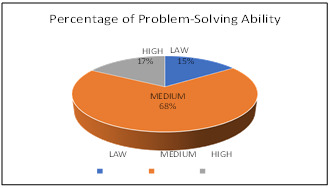
Objectives: This study aims to assess the self-efficacy levels and problem-solving abilities of ninth-grade students at MTs Muhammadiyah Gemolong in Aqidah Akhlak learning. It also seeks to examine the correlation between self-efficacy and problem-solving abilities, contributing to the achievement of Sustainable Development Goal 4 (Quality Education). Theoretical framework: The research is based on Bandura’s self-efficacy theory and problem-solving theory, applied to the context of Quality Education in Sustainable Development Goal 4. Literature review: Previous studies indicate a positive relationship between self-efficacy and problem-solving skills. However, research specifically examining this in Aqidah Akhlak learning is limited. Method: A quantitative correlational design was used in this study, which involved 87 ninth-grade students at MTs Muhammadiyah Gemolong. A simple random sampling technique selected 71 students as participants. Data were collected using validated self-efficacy questionnaires and problem-solving tests. The data were analyzed using the Kolmogorov-Smirnov normality test and Pearson’s Product-Moment correlation, conducted with SPSS version 26.0. Result: The study found that 66.20% of students had moderate self-efficacy, and 67.61% exhibited moderate problem-solving ability. A significant positive correlation (r = 0.247, p = 0.038) was found between self-efficacy and problem-solving ability, indicating a low but positive relationship between the two variables. Implications: Enhancing self-efficacy can improve problem-solving skills in Aqidah Akhlak learning, supporting the goals of Sustainable Development Goal 4. Novelty: This study provides new insights into the relationship between self-efficacy and problem-solving abilities in Aqidah Akhlak learning, an area with limited research.
References
[1] D. Widiani and J. Jiyanto, “Improving Student Learning Outcomes In Lessons Of History Of Islamic Civilization Through The Application Of Bingo Strategies,” J-PAI J. Pendidik. Agama Islam, vol. 6, no. 1, 2020, https://doi.org/10.18860/jpai.v6i1.6716.
[2] F. Faridah, M. H. Rumatiga, H. Hawirah, K. Kusnadi, and S. Sadali, Konsep Pendidikan Dalam Perspektif Al-Qur’an, vol. 9, no. 1. Murabby: Jurnal Pendidikan Islam, 2024. https://doi.org/10.47435/al-mubarak.v9i1.3029.
[3] A. H. Wahid and R. A. Karimah, Integrasi Higher Order Thinking Skill (HOTS) Dengan Model Creative Problem Solving, vol. 5, no. 1. Modeling: Jurnal Program Studi PGMI, 2018.
[4] F. Defitrika and F. N. Mahmudah, “Development of Life Skills Education As Character Building,” Int. J. Educ. Manag. Innov., vol. 2, no. 1, p. 116, 2021, https://doi.org/10.12928/ijemi.v2i1.3195.
[5] F. Y. Haryani, M. F. Hidayatullah, M. Yusuf, and Asrowi, “Problem-based learning for teaching Fiqh: An overview of its impact on critical thinking skill,” in AIP Conference Proceedings, 2019. https://doi.org/10.1063/1.5139770.
[6] I. Grasmane and A. Pipere, “The psychopedagogical intervention for the development of children’s spiritual intelligence: the quest for the theoretical framework,” Acta Paedagog. Vilnensia, vol. 44, pp. 81–98, 2020, https://doi.org/10.15388/ActPaed.44.6.
[7] M. R. Rosselló, B. De la Iglesia, B. Paz-Lourido, and S. Verger, “Needs of psychopedagogical training for the care of children with chronic disease: Perceptions of hospital nursing,” Rev. da Esc. Enferm., vol. 49, no. 1, pp. 37–43, 2015, https://doi.org/10.1590/S0080-623420150000100005.
[8] D. K. King et al., “Self-efficacy, problem solving, and social-environmental support are associated with diabetes self-management behaviors,” Diabetes Care, vol. 33, no. 4, pp. 751–753, 2010, https://doi.org/10.2337/dc09-1746.
[9] C. R. A. Hernández, J. V. Jalabert, G. F. Vilugrón, P. del Val Martín, and Ó. O. C. Pérez, “Inclusive Practices Using Theater Pedagogy as an Alternative for Access to Learning,” Int. J. Membr. Sci. Technol., vol. 10, no. 2, pp. 349–360, 2023, https://doi.org/10.15379/ijmst.v10i2.1204.
[10] D. Madrid-Vivar, N. Sánchez-Álvarez, and M. R. Pascual-Lacal, “Levels of acquisition of the performances in reading: Comparative study between the Degrees of Early Childhood and Primary Education,” Publicaciones la Fac. Educ. y Humanidades del Campus Melilla, vol. 53, no. 3, pp. 279–296, 2023, https://doi.org/10.30827/publicaciones.v53i3.27342.
[11] A. Fitriani, S. Zubaidah, H. Susilo, and M. H. I. Al Muhdhar, “The effects of integrated problem-based learning, predict, observe, explain on problem-solving skills and self-efficacy,” Eurasian J. Educ. Res., vol. 2020, no. 85, pp. 45–64, 2020, https://doi.org/10.14689/ejer.2020.85.3.
[12] F. B. Tende and A. Deme, “Cognition, Self-Efficacy, and Problem-Solving Strategies: A Harmonistic Framework for Sustainable Competitive Advantage,” J. Bus. Strateg. Financ. Manag., vol. 04, no. 02, pp. 229–241, 2023, https://doi.org/10.12944/jbsfm.04.02.05.
[13] Sugiyono, “Metode Penelitian Pendidikan Pendekatan Kualitatif,” Alfabeta, p. 319, 2006, [Online]. Available: https://digilib.unigres.ac.id/index.php?p=show_detail%5C&id=43
[14] J. M. Lexy, Metodologi Penelitian Kualitatif. In Metodologi Penelitian Kualitatif, no. Maret. Moleong, M.A: PT Remaja Rosdakarya, 2022. [Online]. Available: https://scholar.google.com/citations?user=O-B3eJYAAAAJ&hl=en
[15] R. A. Purnomo, “Metode Penelitian Kuantitatif untuk Bisnis: Pendekatan Filosofi, Teori, dan Praktik.,” J. Artic., 2016.
[16] J. C. Cano, L. Lomibao, and L. S. Lomibao, “A Mixed Methods Study of the Influence of Phenomenon-based Learning Videos on Students’ Mathematics Self-efficacy, Problem-solving and Reasoning Skills, and Mathematics Achievement,” Am. J. Educ. Res., vol. 11, no. 3, pp. 97–115, 2023, http://pubs.sciepub.com/education/11/3/2
[17] E. Díaz-Ocampo and E. L. Díaz Sandoya, “Psychopedagogical self-efficacy, emotional intelligence and their impact on SDG achievement in university professors; Autoeficacia psicopedagógica, inteligencia emocional y su impacto en el logro de los ODS en docentes universitarios,” Rev. Ciencias Soc., vol. 31, no. 1, pp. 250–264, 2025, https://doi.org/10.31876/rcs.v31i1.43505.
[18] A. A. Lourenço, J. S. Navarro-Loli, and S. A. Dominguez-Lara, “Technological Innovation in Engineering Education: A Psychopedagogical Approach for Sustainable Development,” Sustain., vol. 17, no. 14, 2025, https://doi.org/10.3390/su17146429.
[19] A. Bandura, “Efikasi Diri: Tinjauan Teori Albert Bandura,” Bul. Psikol., vol. 20, no. 1–2, pp. 18–25, 2016.
[20] A. Purnaningtyas and E. Fauziati, “Penerapan Teori Sosial Albert Bandura pada Pembiasaan Pengelolaan Sampah Siswa Sekolah Dasar,” Edukatif J. Ilmu Pendidik., vol. 4, no. 2, pp. 2418–2425, 2022, https://doi.org/10.31004/edukatif.v4i2.2275.
[21] A. Liguori, P. Rappoport, A. Poce, and M. Rabagliati, “Editorial: Towards 2030: sustainable development goal 4: quality education. A communication perspective,” Frontiers in Communication, vol. 8. in Frontiers in Communication, vol. 8. 2023. https://doi.org/10.3389/fcomm.2023.1328002.
[22] R. McGreal, “Special report on the role of open educational resources in supporting the Sustainable Development Goal 4: Quality education challenges and opportunities,” Int. Rev. Res. Open Distrib. Learn., vol. 18, no. 7, pp. 292–305, 2017, https://doi.org/10.19173/irrodl.v18i7.3541.
[23] A. Popandopulo, A. Kudysheva, N. Kudarova, B. Matayev, and S. Antikeyeva, “Effectiveness of an author’s program for psychopedagogical support in the development of metacognitive abilities,” Int. J. Eval. Res. Educ., vol. 14, no. 2, pp. 1183–1195, 2025, https://doi.org/10.11591/ijere.v14i2.30526.
[24] F. D. S. Lumertz and L. M. de Oliveira-Menegotto, “Psychopedagogical intervention with children with atypical development: symbolic play, letramento and introduction to the alphabetic system,” Educ. e Pesqui., vol. 51, 2025, https://doi.org/10.1590/s1678-4634202551283920en.
[25] J. R. Rodriguez-Barboza, W. García-Vásquez, G. H. Ayulo-Paihua, C. P. Sánchez-Llontop, and P. B. B. D. la Cruz, “English Teacher Collaboration: A Key Strategy for Overcoming Psychopedagogical Challenges and Promoting Educational Well-Being,” Pakistan J. Life Soc. Sci., vol. 22, no. 1, pp. 538–553, 2024, https://doi.org/10.57239/PJLSS-2024-22.1.0039.
[26] M. Berlibayeva, G. Abitova, R. Bekmagambetova, and S. Nurzhanova, “Psychopedagogical conditions for forming emotional intelligence in preschool children through role-playing games,” Sci. Her. Uzhhorod Univ. Ser. Phys., no. 55, pp. 1196–1204, 2024, https://doi.org/10.54919/physics/55.2024.119kl6.
[27] S. Lamounier and P. F. Lopes, “The Body and Sound As Stimulators of Interactive Processes in Young People With Special Educational Needs,” Millennium J. Educ. Technol. Heal., vol. 2019, no. 10, pp. 61–67, 2019, https://doi.org/10.29352/mill0210.06.00252.
[28] P. E. Raluca and G. Luminița, “Implementation of complex combined programs: Learning-therapeutic physical exercise – dynamic play so that pupils within special facilities of inclusive education may diminish their scoliotic attitude,” J. Phys. Educ. Sport, vol. 19, pp. 2241–2245, 2019, https://doi.org/10.7752/jpes.2019.s6337.
[29] I. Grasmane and A. Pipere, “The psychopedagogical intervention for the development of children’s spiritual intelligence: the quest for the theoretical framework,” Acta Paedagog. Vilnensia, vol. 44, pp. 81–98, 2020, https://doi.org/10.15388/ActPaed.44.6.
[30] G. B. M. Borges, I. Eidt, L. N. Zilli, A. M. M. P. Michels, and A. P. Diaz, “Defense mechanisms and quality of life of medical students according to graduation phase,” Trends Psychiatry Psychother., vol. 42, no. 1, pp. 74–81, 2020, https://doi.org/10.1590/2237-6089-2019-0022.
[31] D. Widiani and L. Istiqomah, “The Influence of Learning Motivation and Intellectual Intelligence on Learning Achievement in Islamic Religious Education,” J. Pendidik. Islam, vol. 7, no. 2, pp. 149–164, 2021, https://doi.org/10.15575/jpi.v7i2.15273.
[32] C. M. López, D. M. Saborido, J. C. T. Seijo, and J. M. F. Batanero, “Explanatory variables of educational innovation: A model based on personality traits,” Electron. J. Res. Educ. Psychol., vol. 21, no. 60, pp. 349–372, 2023, https://doi.org/10.25115/ejrep.v21i60.5538.
[33] C. Duarte-Gan, R. Martos-Montes, and M. C. García-Linares, “Visual Processing of the Faces of Humans and Dogs by Children with Autism Spectrum Disorder: An Eye-Tracking Study,” Anthrozoos, vol. 36, no. 4, pp. 605–623, 2023, https://doi.org/10.1080/08927936.2023.2187136.
[34] X. Liu, J. Gu, and J. Xu, “The impact of the design thinking model on pre-service teachers’ creativity self-efficacy, inventive problem-solving skills, and technology-related motivation,” Int. J. Technol. Des. Educ., vol. 34, no. 1, pp. 167–190, 2024, https://doi.org/10.1007/s10798-023-09809-x.
[35] N. Vera-Gajardo, P. Müller-Ferrés, K. Arratia, T. Curihual, T. Rivera, and C. Yévenes, “Strategies for Psychopedagogical Intervention and Contributions to Multidisciplinary Work in Programs of Assisted Freedom and Temporary Precautionary Measures of the City of Temuco,” Int. J. Learn. Divers. Identities, vol. 27, no. 2, pp. 1–11, 2020, https://doi.org/10.18848/2327-0128/CGP/v27i02/1-14.
[36] S. Veto and N. Beyer, “Psychological Practices Before Academic Psychology: Santiago’s House of Minors, 1929-1942,” Hist. 396, vol. 10, no. Special Issue, pp. 129–158, 2020, https://www.scopus.com/inward/record.uri?eid=2-s2.0-85104788944&partnerID=40&md5=3a06c711c1a6b6da81dfe311a30679f0
[37] L. Elouafi, L. Said, and M. Talbi, “Progress report in neuroscience and education: Experiment of four neuropedagogical methods,” Educ. Sci., vol. 11, no. 8, 2021, https://doi.org/10.3390/educsci11080373.
[38] I. Navarro-Soria et al., “Detection of Executive Performance Profiles Using the ENFEN Battery in Children Diagnosed With Attention-Deficit Hyperactivity Disorder,” Front. Psychol., vol. 11, 2020, https://doi.org/10.3389/fpsyg.2020.552322.
[39] E. L. Scariot, A. da S. Lockmann, and C. Buss, “Nutrition Knowledge of Elderly Women: Effect of Two Food and Nutrition Education Programs,” J. Am. Nutr. Assoc., vol. 42, no. 8, pp. 798–806, 2023, https://doi.org/10.1080/27697061.2023.2182384.
[40] I. Balart, M. Pérez-Burriel, and M. S. Brugué, “Giving voice to education professionals of primary and secondary school students with emotional and behavioural disorders: a qualitative study,” Eur. J. Spec. Needs Educ., vol. 38, no. 5, pp. 673–687, 2023, https://doi.org/10.1080/08856257.2022.2159275.
[41] J. Collet-Sabé, M. Garcia-Molsosa, M. Clarke, and C. H. Lyon, “Fiscal Cuts in Education and Their Effects: Politicising Learned Helplessness as a Disciplinary Technology in Education Leaders in Catalonia. An Exploratory Research Study,” Educ. Policy Anal. Arch., vol. 30, 2022, https://doi.org/10.14507/EPAA.30.7210.
Downloads
Submitted
Accepted
Published
Issue
Section
License
Copyright (c) 2025 Jiyanto Mariam Elbanna, Desti Widiani, Lilik Istiqomah

This work is licensed under a Creative Commons Attribution 4.0 International License.