Global Trends and Controversies in Multicultural Islamic Education within the SDGs Framework
DOI:
https://doi.org/10.23917/profetika.v26i03.13502Keywords:
multicultural islamic education, bibliometric analysis, sdgs, educational policy, global research trendsAbstract
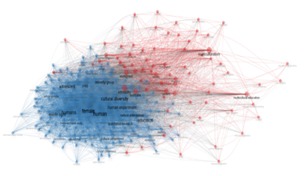
Objective: This study aims to map the global development of research on multicultural Islamic education and its alignment with the Sustainable Development Goals (SDGs). It also seeks to identify trends in publication volume, key disciplines, leading countries, and emerging themes. Theoretical framework: The study uses bibliometric analysis to map the growth and trends in multicultural Islamic education research. It draws on theories of education and multiculturalism to explore how this field can help build inclusive, tolerant societies in line with the SDGs. Literature review: The literature review focuses on research in multicultural education, Islamic education, and their links to the SDGs. It highlights themes like minority groups, gender, curriculum, and pedagogy, which are central to multicultural Islamic education. It also examines prior bibliometric studies in these areas. Method: The study uses bibliometric analysis of data from the Scopus database (2000–2024). VOSviewer and Biblioshiny tools are used to analyze publication trends, disciplines, countries, and research themes, with a focus on keyword mapping and cluster analysis. Results: The research shows a significant rise in publications since 2017, peaking in 2024. The main contributions come from social sciences, humanities, and psychology. The top publishing countries are the US, UK, and Indonesia. Two main research clusters were identified: socio-demographic issues (minorities, gender) and educational policy (curriculum, pedagogy). Implications: This study highlights the potential of multicultural Islamic education as a tool for fostering inclusive, tolerant societies. It also provides a comprehensive map for future research and encourages interdisciplinary collaboration. The findings emphasize the importance of aligning this education with the global sustainable development agenda. Novelty: The novelty of this study lies in using bibliometric analysis for a topic that is typically studied qualitatively. It provides a unique, data-driven perspective and offers a global map of the field, helping to guide future research.
References
[1] R. Wahid, S. Purhasanah, R. Z. Munawaroh, M. Indiarsih, and D. Kurniadin, “Bibliometric Analysis of Islamic Multicultural Education and Trends in Religious Moderation in 21st Century Education,” Int. J. Educ. Qual. Quant. Res., vol. 2, no. 2, pp. 19–25, Dec. 2023, https://doi.org/10.58418/ijeqqr.v2i2.99.
[2] A. Mahmud, Zamroni, and H. Ilyas, “Islam and Tolerance Education for the Sustainable Development Goals (SDGs),” Profetika J. Stud. Islam, vol. 25, no. 02, pp. 387–404, Jan. 2025, https://doi.org/10.23917/profetika.v25i02.8510.
[3] Muhammad Abdur Rozaq et al., “Development Trends of Multicultural Education for the Sustainable Development Goals (SDGs): Bibliometric Analysis of the Scopus Database (2010-2024),” Profetika J. Stud. Islam, vol. 25, no. 02, pp. 517–532, Mar. 2025, https://doi.org/10.23917/profetika.v25i02.7326.
[4] L. Judijanto and M. Rusdi, “Bibliometric Study of Multicultural-based Islamic Education Learning Models in Public Schools,” West Sci. Interdiscip. Stud., vol. 2, no. 11, pp. 2261–2270, Nov. 2024, https://doi.org/10.58812/wsis.v2i11.1468.
[5] Muthoifin et al., “Women, Islamic Education, and Socioeconomics for the Sustainable Development Goals (SDGs): A Bibliometric Study of Understanding from 1880 to 2024,” J. Lifestyle SDGs Rev., vol. 5, no. 2, p. e01737, Dec. 2024, https://doi.org/10.47172/2965-730X.SDGsReview.v5.n02.pe01737.
[6] M. Elbanna and Muthoifin, “Islamic Education Models: A Bibliometric Analysis of Challenges and Prospects,” Solo Univers. J. Islam. Educ. Multicult., vol. 3, no. 01, pp. 11–26, Dec. 2024, https://doi.org/10.61455/sujiem.v3i01.231.
[7] M. Jannah, Hakiman, and S. Ramadhan, “Bibliometric Analysis of Islamic Education Research Development in Scopus International Database Publications 2018-2022,” SHAHIH J. Islam. Multidiscip., vol. 7, no. 2, pp. 151–168, Dec. 2022, https://doi.org/10.22515/shahih.v7i2.6006.
[8] S. D. Ramachandaran, S. E. Krauss, A. Hamzah, and K. Idris, “Effectiveness of the use of spiritual intelligence in women academic leadership practice,” Int. J. Educ. Manag., vol. 31, no. 2, pp. 160–178, 2017, https://doi.org/10.1108/IJEM-09-2015-0123.
[9] E. Jumiati, “The Role of Islamic Economics in Achieving Sustainable Development Goals (SDGS): A Bibliometric Perspective,” AL-FALAH J. Islam. Econ., vol. 9, no. 2, Dec. 2024, https://doi.org/10.29240/alfalah.v9i2.11831.
[10] O. S. Miranda Ester Nababan, “Pengaruh Guru Pak Terhadap Kecerdasan Emosional Siswa Di Sekolah,” Angew. Chemie Int. Ed. 6(11), 951–952., vol. 4, no. 1, pp. 2254–2265, 2025.
[11] B. Baharuddin, S. W. H. Das, and E. Elihami, “Cultural Islamic Education Form the Character of Multicultural Elementary School Students,” Edumaspul J. Pendidik., vol. 8, no. 2, pp. 5043–5048, Oct. 2024, https://doi.org/10.33487/edumaspul.v8i2.8729.
[12] G. Huiping, T. Seng Teck, and S. Nellikunnel, “Navigating the Complexities of ESG Integration: Challenges, Opportunities and Path to Sustainable Corporate Development,” J. Bus. Soc. Sci., vol. 2024, no. 1, Dec. 2024, https://doi.org/10.61453/jobss.v2024no27.
[13] A. Wibowo, M. Roqib, S. Subur, and S. Aulia Kumala, “Construction of Education Based on Religious Moderation: Role of Islamic Education Leadership in Promoting Tolerance and Social Harmony,” Int. J. Multidiscip. Approach Res. Sci., vol. 2, no. 03, pp. 1311–1316, Jul. 2024, https://doi.org/10.59653/ijmars.v2i03.995.
[14] A. Kurniasih et al., “Islamic Education Policy Priorities in Achieving Sustainable Development Goals (SDGs) in Higher Education,” J. Lifestyle SDGs Rev., vol. 5, no. 3, p. e05280, Mar. 2025, https://doi.org/10.47172/2965-730X.SDGsReview.v5.n03.pe05280.
[15] W. Hanim and H. K. Marjo, “Students’ Moral Apprehension: Implementation of Character Education in the University Curriculum,” Int. J. Learn. High. Educ., vol. 32, no. 1, pp. 21–37, 2025, https://doi.org/10.18848/2327-7955/CGP/v32i01/21-37.
[16] D. Puspitarini, I. N. Sudana Degeng, H. Praherdhiono, and N. Suryati, “Humanistic Pesantren: Systematic Literature Review and Bibliometric Visualization Analysis on Character, Moral, and Ethical Values,” Pertanika J. Soc. Sci. Humanit., vol. 31, no. 2, pp. 465–490, Apr. 2023, https://doi.org/10.47836/pjssh.31.2.01.
[17] M. Pasaribu, F. Khairifa, R. Ali, A. A. Muis, and M. Ritonga, “Youth Character Building through Quality Education in Realizing Golden Indonesia 2045,” J. Ecohumanism, vol. 3, no. 4, pp. 180–192, 2024, https://doi.org/10.62754/joe.v3i4.3473.
[18] C. Tzanakou, C. Infanger, L. Oliveira, and F. Staniscuaski, “A critical reflection on internationalizing gender equality certification: the case of Brazilian academia,” Equal. Divers. Incl., vol. 44, no. 3, pp. 325–347, 2025, https://doi.org/10.1108/EDI-02-2024-0056.
[19] S. Sulaiman, A. Imran, B. A. Hidayat, S. Mashuri, R. Reslawati, and F. Fakhrurrazi, “Moderation of religion in the era of society 5.0 and multicultural society,” Linguist. Cult. Rev., vol. 6, pp. 180–193, Jan. 2022, https://doi.org/10.21744/lingcure.v6nS5.2106.
[20] H. Collins, R. Evans, and L. Reyes-Galindo, “Virtual diversity: Resolving the tension between the wider culture and the institution of science,” Soc. Stud. Sci., vol. 55, no. 2, pp. 262–287, 2025, https://doi.org/10.1177/03063127241263609.
[21] C. De Vincenzo, A. Garolla, S. Delinna, L. Pizzolato, and I. Testoni, “Experiences and narratives of mandatory psychological assessment in Trans and Nonbinary people: An Italian qualitative analysis,” BMC Psychol., vol. 13, no. 1, 2025, https://doi.org/10.1186/s40359-025-02675-3.
[22] A. Abisoye and J. I. Akerele, “A High-Impact Data-Driven Decision-Making Model for Integrating Cutting-Edge Cybersecurity Strategies into Public Policy, Governance, and Organizational Frameworks,” Int. J. Multidiscip. Res. Growth Eval., vol. 2, no. 1, pp. 623–637, 2021, https://doi.org/10.54660/.IJMRGE.2021.2.1.623-637.
[23] Burhan Djamaluddin, S. Bahri, Abdul Halim, Nurlailah, and M. Chabibi, “Deradicalization Through Multicultural Islamic Religious Education at The Islamic University,” Nazhruna J. Pendidik. Islam, vol. 7, no. 3, pp. 646–663, Nov. 2024, https://doi.org/10.31538/nzh.v7i3.34.
[24] B. D. Jaffe et al., “Missing the biodiversity for the bee: Natural land management strategies impact functional invertebrate diversity in commercial cranberry production,” Agric. For. Entomol., vol. 27, no. 2, pp. 265–279, 2025, https://doi.org/10.1111/afe.12661.
[25] M. Rodliyatun, P. Nugroho, and Z. Baidhawy, “Model for Developing a Multicultural Islamic Religious Education Curriculum in Islamic Higher Education,” Edukasia J. Penelit. Pendidik. Islam, vol. 17, no. 2, p. 319, Aug. 2022, https://doi.org/10.21043/edukasia.v17i2.14043.
[26] G. Agac, F. Sevim, O. Celik, S. Bostan, R. Erdem, and Y. I. Yalcin, “Research hotspots, trends and opportunities on the metaverse in health education: a bibliometric analysis,” Libr. Hi Tech, vol. 43, no. 1, pp. 1–35, 2025, https://doi.org/10.1108/LHT-04-2023-0168.
[27] N. Huu Phu, “Influence Of Technological Innovations On ESG Investing: Trends And Future Directions,” Zb. MES, vol. 1, no. 10, Oct. 2024, https://doi.org/10.7251/BLCZR0723203H.
[28] A. M. Irsyaad, M. Mashudi, D. Nawangsari, and A. Aniaty, “Strategies Of Islamic Education Teachers In Instilling Multicultural Values In Students,” Islam. Manag. J. Manaj. Pendidik. Islam, vol. 8, no. 01, pp. 25–38, Feb. 2025, https://doi.org/10.30868/im.v8i01.7724.
[29] A. Mahmud, “Multicultural Democratic and Tolerant: Qur’anic Perspectives and Islamic Education at the Universitas Muhammadiyah Surakarta,” Solo Univers. J. Islam. Educ. Multicult., vol. 1, no. 03, pp. 205–220, Jan. 2024, https://doi.org/10.61455/sujiem.v1i03.82.
[30] A. Suradi, “The Development of Oriented on Multicultural Islamic Religious Education in School,” J. Educ. Learn., vol. 12, no. 3, pp. 493–500, Aug. 2018, https://doi.org/10.11591/edulearn.v12i3.8679.
[31] E. Dieppa-Colón, C. Martin, J. C. Kosmopoulos, and K. Anantharaman, “Prophage-DB: a comprehensive database to explore diversity, distribution, and ecology of prophages,” Environ. Microbiome, vol. 20, no. 1, 2025, https://doi.org/10.1186/s40793-024-00659-1.
[32] T. Kemechian et al., “Towards the SDGs for gender equality and decent work: investigating major challenges faced by Brazilian women in STEM careers with international experience,” Discov. Sustain., vol. 4, no. 1, 2023, https://doi.org/10.1007/s43621-023-00125-x.
[33] M. G. Wheatly, J. Dewey, L. Willingham-Mclain, and J. S. Mwayaona, “Using a STEM Course on Inclusion, Diversity, Equity, and Accessibility to Explore Student Reflections on their Socialization into STEM and their Observations of the Figured World of Higher Education STEM Contexts,” CBE Life Sci. Educ., vol. 24, no. 1, 2025, https://doi.org/10.1187/cbe.24-02-0071.
[34] G. Rabbani, L. Afiq-Rosli, J. N. Lee, Z. Waheed, and B. J. Wainwright, “Effects of life history strategy on the diversity and composition of the coral holobiont communities of Sabah, Malaysia,” Sci. Rep., vol. 15, no. 1, 2025, https://doi.org/10.1038/s41598-025-88231-w.
[35] S. I. Strong, Transforming religious liberties: A new theory of religious rights for national and international legal systems. Cambridge University Press, 2017. https://doi.org/10.1017/9781316832097.
[36] S. Tentiasih and M. Rizal Rifa’i, “Integrasi Nilai-Nilai Multikultural Dalam Kurikulum Pendidikan Agama Islam Untuk Membangun Toleransi Di Sekolah,” AL-MUADDIB J. Kaji. Ilmu Kependidikan, vol. 4, no. 2, pp. 341–357, 2022, https://doi.org/10.46773/muaddib.v4i2.1334.
[37] D. Lee, “Backlash, white privilege and anger: Resistance to the equality, diversity and inclusion agenda in the British television industry,” Eur. J. Cult. Stud., vol. 28, no. 3, pp. 661–679, 2025, https://doi.org/10.1177/13675494241261812.
[38] R. Takunas, S. Mashuri, J. H. T. Basire, G. B. Dulumina, Syahril, and S. M. Mohi, “Multicultural Islamic Religious Education Learning to Build Religious Harmony,” Nazhruna J. Pendidik. Islam, vol. 7, no. 3, pp. 590–607, Oct. 2024, https://doi.org/10.31538/nzh.v7i3.18.
[39] M. Shahzad, B. Jamil, M. Bushra, U. Mahboob, and F. Elmigdadi, “Gender-based differences in the representation and experiences of academic leaders in medicine and dentistry: a mixed method study from Pakistan,” BMC Med. Educ., vol. 24, no. 1, 2024, https://doi.org/10.1186/s12909-024-05811-6.
[40] S. Sarbaini, M. Kustati, and N. Sepriyanti, “Islamic Religious Education in Building Insight Multicultural,” J. Int. Inspire Educ. Technol., vol. 3, no. 2, pp. 162–171, Jul. 2024, https://doi.org/10.55849/jiiet.v3i1.582.
[41] M. Klenner, R. Mariño, P. Pineda, G. Espinoza, and C. Zaror, “Cultural Competence in the nursing, dentistry, and medicine professional curricula: a qualitative review,” BMC Med. Educ., vol. 22, no. 1, pp. 1–11, 2022, https://doi.org/10.1186/s12909-022-03743-7.
Downloads
Submitted
Accepted
Published
Issue
Section
License
Copyright (c) 2026 Cholisa Rosanti, Waston, Gigih Setianto, Yogi Muhammad Saputro, Mahnoor Fatima, Muhammad Rehan Sabi

This work is licensed under a Creative Commons Attribution 4.0 International License.