Readiness of Islamic Religious Education Teachers in Utilizing Artificial Intelligence at SMPN 1 Salatiga to Support SDGs in Education
DOI:
https://doi.org/10.23917/profetika.v27i01.13483Keywords:
teacher readiness, artificial intelligence, islamic religious education teachers, sustainable development in education, digital transformationAbstract
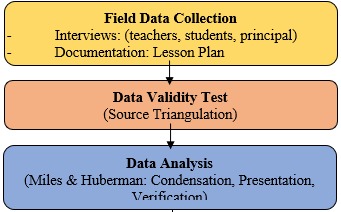
Purpose: The purpose of this research is to examine the level of readiness among Islamic Religious Education (IRE) teachers in employing Artificial Intelligence (AI) within the instructional process and to explore the challenges associated with integrating AI into IRE teaching at SMPN 1 Salatiga. This study is conducted in alignment with the pursuit of quality education as outlined in the Sustainable Development Goals (SDGs). Theoretical Framework: The research is based on Maddox’s (2000) theory of teacher readiness, which includes three main dimensions. This framework was employed to assess the extent to which IRE teachers are prepared to utilize AI technology in the learning process and to relate it to Islamic values. Literature Review: This study reviews previous findings concerning AI utilization in education, teacher readiness theory, and the incorporation of AI within Islamic educational contexts. However, studies that specifically examine teachers’ readiness for AI in the context of Islamic educational institutions remain limited. Method: This study employed a qualitative descriptive design, with data collected through on-site school observations, semi-structured interviews involving the principal, IRE teachers, and two students, as well as document analysis of pertinent IRE teaching materials. To enhance the credibility and depth of the results, a triangulation method was implemented to obtain a comprehensive perspective on the phenomenon under investigation. Results: The results indicate that IRE teachers demonstrate a high level of readiness in utilizing AI technology, encompassing cognitive, emotional–attitudinal, and behavioral aspects. Nevertheless, several challenges remain, including limited facilities, low digital literacy, unequal access to technology, information bias, and AI-generated content inconsistencies with Islamic values. Implications: This study provides valuable implications for educators and policymakers by emphasizing the importance of readiness in implementing AI-based learning, particularly in IRE instruction. Novelty: The novelty of this research lies in its focus on analyzing the readiness of IRE teachers in utilizing AI, emphasizing Islamic values and the goals of sustainable education. It highlights the ethical and spiritual dimensions of IRE teachers in responding to digital transformation and offers a new perspective on balancing technological competence with moral–spiritual responsibility in AI-based learning.
References
[1] M. Barni, “Tantangan Pendidik di Era Millennial,” Transformatif, vol. 3, no. 1, pp. 99–116, April. 2019, https://doi.org/10.23971/tf.v3i1.1251.
[2] T. P. Muslimin and A. A. B. Fatimah, “Kompetensi dan Kesiapan Guru Sekolah Dasar Terhadap Tantangan Pendidikan di Era Society 5.0,” Cokroaminoto Journal of Primary Education, vol. 7, no. 1, pp. 55–72, April. 2024, https://doi.org/10.30605/cjpe.712024.3589.
[3] M. H. Ashshiddiqi, N. Mayesti, and I. Irawati, “Pemanfaatan AI dalam Era Kurikulum Merdeka : Perspektif Siswa dan Guru Sekolah Menengah,” Jurnal Dimensi Pendidikan Dan Pembelajaran, vol. 12, no. 1, pp. 255–266, 2024,http://dx.doi.org/10.24269/dpp.v12i1.9852.
[4] Sari Hernawati, M. Hafizh, and Muhammad Nur Faizi Arya, “Adjusting the Ideal Islamic Religious Education Curriculum to the Development of AI-Based Technology,” Progresiva: Jurnal Pemikiran Dan Pendidikan Islam, vol. 13, no. 01, pp. 129–144, April. 2024,https://doi.org/10.22219/progresiva.v13i01.32931.
[5] S. Sugiati, A. T. Sri, and U. H. R. Fadilla, “Artificial Intelegence sebagai Asisten Guru Pendidikan Agama Islam dalam Pembelajaran,” Ainara Jurnal: Jurnal Penelitian Dan PKM Bidang Ilmu Pendidikan, vol. 6, no. 1, pp. 93–99, March. 2025, https://doi.org/10.54371/ainj.v6i1.775.
[6] A. Luthfi, W. Poespitohadi, I. M. A. W. W. Putra, and D. I. Mawarni, “Quality Education in Achieving the SDGs in Indonesia,” Jurnal Mediasosian: Jurnal Ilmu Sosial Dan Administrasi Negara, vol. 9, no. 1, pp. 175–190, 2025, https://doi.org/10.30737/mediasosian.v9i1.6396.
[7] M. F. A. Ramadhani, Y. D. Lestari, U. Khoiroh, and U. Hani’, “Artificial Intelligence as a Catalyst of Change: Implications for Inclusive Education,” Proceeding of International Conference Education Society Humanity, vol. 2, no. 2, pp. 1069–1074, December. 2024.
[8] Humas SMP Negeri 1 Salatiga, “Workshop Pendekatan Deep Learning Dengan Memanfaatkan AI Tahun 2025,” SMP Negeri 1 Salatiga. Accessed: May 27, 2025. [Online].http://smpn1salatiga.sch.id/home/detailpost/workshop-pendekatan-deep-learning-dengan-memanfaatkan-ai-tahun-2025.
[9] P. H. Putra, “Tantangan Pendidikan Islam dalam Menghadapi Society 5.0,” Islam. J. Ilmu-Ilmu Keislam., vol. 19, no. 02, pp. 99–110, December. 2019,https://doi.org/10.32939/islamika.v19i02.458.
[10] V. Nurviyani, J. Helmie, N. Kurniawati, Halimah, E. H. Maolida, A. Saepuloh, V. A. Salsabila, A. Sofarini, R. Rahman, M. H. Azhar, G. N. Utama, and M. L. Nasrullah, “Pelatihan Pemanfaatan Media Pembelajaran Digital Berbasis Game Dan Artificial Intelegence Bagi Guru-Guru Sekolah Dasar di Kecamatan Cugenang,” Jurnal Warta Desa JWD, vol. 6, no. 2, pp. 53–63, Jully. 2024,https://doi.org/10.29303/jwd.v6i2.298.
[11] Yayasan Asia-Eropa (ASEF), “ASEFClassNet17 Survey Report on Teachers’ Views towards AI and Education,” Asia-Europe Foundation (ASEF). Accessed: April. 28, 2025. [Online]. https://asef.org/publications/ai-and-education-the-views-of-teachers-from-asia-and-europe/.
[12] M. Melisa, “Analisis Kesiapan Guru dalam Menggunakan Teknologi Informasi dan Komunikasi untuk Pembelajaran Kurikulum Merdeka,” Al-Miskawaih: Journal of Science Education, vol. 3, no. 1, pp. 443–462, 2024,https://doi.org/10.56436/mijose.v3i1.304.
[13] N. P. N. Jayanti, “Kesiapan Guru dalam Melaksanakan Pembelajaran New Normal pada Anak Usia Dini,” Jurnal Pendidikan Anak Usia Dini, vol. 10, no. 3, pp. 397–407, 2022,https://doi.org/10.23887/paud.v10i3.53381.
[14] L. Klarisa, A. A. Setiyanti, H. D. Purnomo, and A. J. Gundo, “Analisis Kesiapan Pembelajaran Artificial Intelligence di Tingkat Pendidikan Dasar (Studi Kasus di SMP Negeri 1 Salatiga),” Edukatif: Jurnal Ilmu Pendidikan, vol. 5, no. 3, pp. 1543–1552, Jully. 2023,https://doi.org/10.31004/edukatif.v5i3.5271.
[15] A. P. Putra, S. Akbar, P. Setyosari, and H. Praherdhiono, “Analisis Pemanfaatan Artificial Intelligence (AI) dalam Pendidikan terhadap Kualitas Pembelajaran di Sekolah Dasar,” Ilmu Pendidikan: Jurnal. Kajian Teori Dan Praktik Kependidikan, vol. 9, no. 2, Art. no. 2, 2024,https://doi.org/10.17977/um027v9i22024p99-105.
[16] C. N. Aziz and D. Nurdin, “Kesiapan Guru Di Abad 21 Dengan Pendekatan Empat Dimensi Kepemimpinan Situasional Kepala Sekolah,” JAMP Jurnal Administrasi Dan Manajamen Pendidikan, vol. 6, no. 3, pp. 198–213, 2023,https://doi.org/10.17977/um027v6i32023p198.
[17] J. Garzón, E. Patiño, and C. Marulanda, “Systematic Review of Artificial Intelligence in Education: Trends, Benefits, and Challenges,” Multimodal Technol. Interact., vol. 9, no. 8, pp. 84–103, 2025,https://doi.org/10.3390/mti9080084.
[18] M. R. Purnama, I. P. I. K. Adnyana, A. T. L. Sogen, G. Indrawan, and M. H. Santosa, “Teacher’s Readiness Toward Artificial Intelligence in The School of North Bali,” Jurnal Paedagogy, vol. 12, no. 1, pp. 23–32, 2025,https://doi.org/10.33394/jp.v12i1.13707.
[19] A. Hakim and P. Anggraini, “Artificial Intelligence in Teaching Islamic Studies: Challenges and Opportunities,” Molang: Journal of Islamic Education, vol. 1, no. 02, pp. 57–69, 2023, https://doi.org/10.32806/6ynvg541.
[20] S. Hanyfah, G. R. Fernandes, and I. Budiarso, “Penerapan Metode Kualitatif Deskriptif Untuk Aplikasi Pengolahan Data Pelanggan Pada Car Wash,” Semnas Ristek Seminar Nasional Riset Dan Inovasi Teknologi, vol. 6, no. 1, January. 2022,https://doi.org/10.30998/semnasristek.v6i1.5697.
[21] U. Sulung and M. Muspawi, “Memahami Sumber Data Penelitian: Primer, Sekunder, dan Tersier,” Jurnal Edu Research Indonesian Institute Corporate Learning Studies IICLS, vol. 5, no. 3, pp. 110–116, 2024,https://doi.org/10.47827/jer.v5i3.238.
[22] F. Malahati, A. U. B, P. Jannati, Q. Qathrunnada, and S. Shaleh, “Kualitatif: Memahami Karakteristik Penelitian Sebagai Metodologi,” Jurnal Pendidikan Dasar, vol. 11, no. 2, pp. 341–348, December. 2023, https://doi.org/10.46368/jpd.v11i2.902.
[23] M. Husnullail, Risnita, M. S. Jailani, and Asbui “Teknik Pemeriksaan Keabsahan Data Dalam Riset Ilmiah,” Jurnal Genta Mulia, vol. 15, no. 2, pp. 70–78, 2024,https://doi.org/10.61290/gm.v11i2.
[24] M. B. Miles, A. M. Huberman, and J. Saldaña, Qualitative data analysis: a methods sourcebook, Edition 3. Los Angeles London New Delhi Singapore Washington DC: Sage, 2014.
[25] M. F. Fanani, N. E. Nuzula, and A. F. Gunawan, “Analysis of the Readiness of Islamic Religious Education Teachers in Implementing the Independent Curriculum in Middle Schools,” JISIP Jurnal Ilmu Sosial Dan Pendidikan, vol. 8, no. 3, p. 1854, Jully. 2024,https://doi.org/10.58258/jisip.v8i3.7170.
[26] C. A. Kamila, H. N. Taufiq, and Z. Yusuf, “Analisis Kesiapan Guru PAI dalam Implementasi Pembelajaran Berdiferensiasi di SMK Muhammadiyah 2 Malang,” Jurnal PAI Raden Fatah, vol. 6, no. 1, pp. 219–232, 2024,https://doi.org/10.19109/pairf.v6i1.
[27] S. Kurnia, “Kesiapan Guru Dalam Mengimplementasikan Kurikulum Merdeka di Sekolah Dasar Islam (SDI) Surya Buana Kota Malang,” UIN Maulana Malik Ibrahim Malang, Malang, 2023. Accessed: May 31, 2025. [Online].http://urj.uin-malang.ac.id/index.php/ijpgmi/article/view/3264.
[28] A. D. Fitriani, “Implementasi Teknologi AI (Artificial Intelligence) Pada Pembelajaran Pendidikan Agama Islam,” Wildan Jurnal Pendidik. Dan Pengajaran - STAI Bani Saleh, vol. 3, no. 2, pp. 70–84, August. 2023,https://doi.org/10.54125/wildan.v3i2.47.
[29] E. N. Maddox, M. Forte, and R. W. Boozer, “Learning Readiness: An Underappreciated yet Vital Dimension in Experiential Learning,” vol. 27, 2000.
[30] W. Zainia, “Analisis Kesiapan Guru PAI Terhadap Kebijakan Merdeka Belajar di SMP Negeri 2 Patebon Kendal,” UIN Walisongo Semarang, Semarang, 2023. [Online]. Available: https://eprints.walisongo.ac.id/id/eprint/21627.
[31] U. S. N. Darojat, A. Hamid, and Moh.Hafiyusholeh, “Transformasi Pembelajaran Agama Islam: Meningkatkan Kompetensi Pedagogik Guru PAI dengan Dukungan Artificial Intelligence (AI),” Tadbir Muwahhid, vol. 8, no. 2, pp. 305–322, October. 2024,https://doi.org/10.30997/jtm.v8i2.15804.
[32] N. P. N. J. Nila and L. A. Tirtayani, “Kesiapan Guru dalam Melaksanakan Pembelajaran New Normal pada Anak Usia Dini,” Jurnal Pendidikan Anak Usia Dini Undiksha, vol. 10, no. 3, pp. 397–407, 2022, https://doi.org/10.23887/paud.v10i3.53381.
[33] Y. Afista, A. Priyono, and S. A. A. Huda, “Analisis Kesiapan Guru PAI Dalam Menyongsong Kebijakan Merdeka Belajar (studi Kasus di Mtsn 9 Madiun),” Journal Education and Management Studies, vol. 3, no. 6, pp. 53–60, 2020,https://ojs.unwaha.ac.id/index.php/joems/article/view/338.
[34] T. Saumantri, “Kesiapan Guru Dalam Pembelajaran Jarak Jauh Di Era New NormaL,” JPTJJ, vol. 23, no. 1, pp. 1–11, 2022, https://doi.org/10/33830/ptjj.v23.
[35] H. A. Suryaningsih and H. Purnomo, “Kesiapan Guru Terhadap Literasi Digital Pada Implementasi Kurikulum Merdeka di SD Negeri Sembungan,” Renjana Pendidikan Dasar, vol. 3, no. 4, pp. 247–253, 2023,https://prospek.unram.ac.id/index.php/renjana/article/view/546.
[36] M. P. Anandita and E. C. Mauilidiyah, “Kesiapan Guru Dalam Melaksanakan Pembelajaran Daring Pada Kemampuan Motorik Kasar Anak Usia Dini Tahun 202,” Jurnal Golden Age Universitas Hamzanwadi, vol. 5, no. 02, pp. 205–220, 2021,https://doi.org/10.29408/jga.v5i01.3574.
[37] V. Iswantiningtyas, D. Yulianto, and H. B. Utomo, “Implementasi Pembelajaran Tatap Muka Terbatas dan Daring Masa Kenormalan Baru Pada Anak Usia Dini di Kabupaten Kediri,” Equilibrium: Jurnal Pendidikan, vol. 10, no. 1, pp. 30–38, January. 2022, https://doi.org/10.26618/equilibrium.v10i1.6372.
[38] R. Sholihah, “Penggunaan Artificial Intelligence (AI) Dalam Peningkatan Kualitas Pembelajaran Pendidikan Agama Islam,” Jurnal Jaringan Penelitian Pengembangan Penerapan Inovasi Pendidikan Jarlitbang, vol. 10, no. 2, pp. 207–218, 2024,https://doi.org/0.59344/jarlitbang.v10i2.164.
[39] H. S. AlSagri and S. S. Sohail, “Evaluating the role of Artificial Intelligence in sustainable development goals with an emphasis on ‘quality education,’” Discover Sustainability, vol. 5, no. 1, pp. 458–484, 2024,https://doi.org/10.1007/s43621-024-00682-9.
[40] A. E. D. Wahyuni, M. Yaumi, A. Arsyad, and S. Husain, “Integrasi Artificial Intelligence dalam Pembelajaran Pendidikan Agama Islam,” Indo-MathEdu Intellectuals Journal, vol. 6, no. 1, pp. 1271–1280, February. 2025,https://doi.org/10.54373/imeij.v6i1.2625.
[41] A. Hafiz, A. Mu’ti, and A. Amirrachman, “Pengembangan Media Pembelajaran Agama Islam Berbasis Kecerdasan Buatan: Perspektif Pendidikan Agama Islam,” Mauriduna: Journal of Islamic Studies, vol. 5, no. 1, pp. 56–63, May 2024,https://doi.org/10.37274/mauriduna.v5i1.1070.
[42] S. Sugiati, A. T. Sri, and U. H. R. Fadilla, “Artificial Intelegence sebagai Asisten Guru Pendidikan Agama Islam dalam Pembelajaran,” Ainara Jurnal: Jurnal Penelitian Dan PKM Bidang Ilmu Pendidikan, vol. 6, no. 1, pp. 93–99, March. 2025,https://doi.org/10.54371/ainj.v6i1.775.
[43] L. Judijanto, “Analisis Pengaruh Tingkat Literasi Digital Guru dan Siswa terhadap Kualitas Pembelajaran di Era Digital di Indonesia,” Sanskara Pendidik. Dan Pengajaran, vol. 2, no. 02, pp. 50–60, May 2024,https://doi.org/10.58812/spp.v2i02.391.
[44] A. Gunawan, “Implementasi Dan Kesiapan Guru IPS Terhadap Kurikulum Merdeka Belajar,” KOMPLEKSITAS: Jurnal Ilmu Manajemen Organisasi Dan Bisnis, vol. 11, no. 2, pp. 20–24, October. 2022, https://doi.org/10.56486/kompleksitas.vol11no2.246.
[45] A. Julianti, O. S. Pratama, and I. F. Rachman, “Analisis Tantangan Dan Dampak Ai Terhadap Kemampuan Berpikir Kritis Siswa Sekolah Menengah Pertama,” Jurnal Ilmu Multidisiplin, vol. 2, no. 5, 2025,https://doi.org/10.62017/merdeka.
[46] B. W. Wirtz, “Digital Government Outlook,” in Digital Government, in Springer Texts in Business and Economics. , Springer International Publishing, 2022, pp. 509–512.https://doi.org/10.1007/978-3-031-13086-1_16.
[47] M. Alfiannur, Saifullah, D. Qutni, A. Supiani, and A. Cahyadi, “Problematika Pembelajaran Pendidikan Agama Islam Berbasis Artificial Intelligence (AI),” Fikruna: Jurnal Ilmu Kependidikan Dan Kemasyarakatan, vol. 7, no. 2, pp. 661–674, 2025, https://doi.org/10.56489/fik.v4i2.
[48] N. Amelia, M. N. Khasanah, N. Hidayah, H. Nizzah, and G. Indra, “Pemanfaatan Teknologi Artificial Intelligence (AI) dalam Media Pembelajaran IPA untuk Meningkatkan Keterampilan Berpikir Kritis Siswa SD,” J-CEKI: Jurnal Cendekia Ilm., vol. 4, no. 1, pp. 303–312, 2024,https://doi.org/10.56799/jceki.v4i1.6166.
[49] C. Y. Prakoso and N. Nugraheni, “Tantangan dan Prospek Pendidikan Berkelanjutan di Era Global: Menuju Masa Depan yang Berkelanjutan,” Madani: Jurnal Ilmu Multidisiplin, vol. 2, no. 4, pp. 515–519, 2024,https://doi.org/10.5281/zenodo.11255909.
[50] T. Liu, X. Zhu, and M. Cao, “Impacts of Reduced Inequalities on Quality Education: Examining the Relationship between Regional Sustainability and Higher Education,” Sustainability, vol. 14, no. 21, pp. 14112–14127, 2022,https://doi.org/10.3390/su142114112.
Downloads
Submitted
Accepted
Published
Issue
Section
License
Copyright (c) 2026 Hamzah Yusuf Rifa'i, Mudzakaroh Nur Hasanah, Purnomo, Syukri Hidayah

This work is licensed under a Creative Commons Attribution 4.0 International License.