Islamic Ecotheology, Green Radicalism, and SDGs: Ecological Ideology in the Political Islam Movement in Indonesia
DOI:
https://doi.org/10.23917/profetika.v26i02.11893Keywords:
islamic ecotheology, green radicalism, islamic politics, ideology, sdgsAbstract
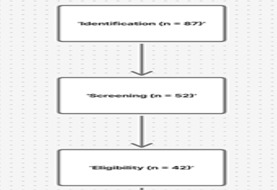
Objectives: This study aims to examine how Islamic ecotheology is constructed within political Islamic movements in Indonesia, particularly focusing on the rise of green radicalism. It explores how Qur’anic ecological verses are politicized by radical groups to criticize democracy and promote the caliphate system. Theoretical framework: The study uses Althusser’s ideology theory and Fairclough’s critical discourse analysis to analyze how ecological narratives are politicized. It also introduces the Radical Ideological Ecotheological (EIR) Model, combining maqāṣid al-sharī‘ah and SDGs frameworks. Literature review: A systematic review of 42 articles highlights the politicization of Qur’anic ecological verses by political groups and the intersection of Islamic ecotheology with global sustainability discussions. Method: The study employs a systematic literature review (SLR) of 42 articles, using Althusser’s ideology theory and Fairclough’s critical discourse analysis to analyze how radical movements utilize ecological narratives. Result: Radical groups selectively use Qur’anic ecological verses to criticize democracy and advocate for a caliphate. The study introduces the Radical Ideological Ecotheological (EIR) Model, which integrates Islamic law objectives (maqāṣid al-sharī‘ah) with the SDGs framework. Implications: The study suggests practical ways to strengthen ecological literacy in Islamic education, promoting an understanding of Islamic teachings on ecology within the global sustainability discourse. Novelty: The introduction of the Radical Ideological Ecotheological (EIR) Model and the integration of Islamic ecotheology with the SDGs framework offer a new perspective on how radical movements politicize Islamic teachings on ecology.
References
[1] H. Herdiansyah, H. Sukmana, and R. Lestarini, “Eco-Pesantren as A Basic Forming of Environmental Moral and Theology,” Kalam, vol. 12, no. 2, pp. 303–326, 2019, https://doi.org/10.24042/klm.v12i2.2834.
[2] A. I. Almujaddidy, “Progressive Muslim Environmentalism: The Eco-Theology and Ethics Of The Nahdliyyin Front For Sovereignty Over Natural Resources (FNKSDA),” Varieties of Religion and Ecology: Dispatches from Indonesia. pp. 9–31, 2022. [Online]. Available: https://books.google.com/books?hl=en&lr=&id=cljfEAAAQBAJ&oi=fnd&pg=PA9&dq=islamic+ecotheology&ots=5v4xqNstR8&sig=T8QM7rXejMjg7j5A2yKmUzOUHrs
[3] B. Takahashi and S. Rosenthal, “Environmental communication among minority populations,” Environ. Commun. Among Minor. Popul., pp. 1–120, 2018, https://doi.org/10.4324/9781351127080.
[4] F. A. Zapata Muriel and M. L. M. Trujillo, “Ecoteology: Contributions of theology and religion around the ecological problem that the current world is experiencing,” Produccion y Limpia, vol. 13, no. 1, pp. 92–105, 2018. https://doi.org/10.22507/pml.v13n1a11.
[5] J. Lim and K. K. Moon, “Political Ideology and Trust in Government to Ensure Vaccine Safety: Using a U.S. Survey to Explore the Role of Political Trust,” Int. J. Environ. Res. Public Health, vol. 20, no. 5, 2023, https://doi.org/10.3390/ijerph20054459.
[6] K. Basyir, Ideologi Gerakan Politik Islam Di Indonesia, vol. 16, no. 2. UINSA Repository, 2016. https://doi.org/10.21154/al-tahrir.v16i2.423.
[7] J. Fahnestock and R. A. Harris, “the Routledge Handbook of Language and Persuasion,” The Routledge Handbook of Language and Persuasion. pp. 1–567, 2022. https://doi.org/10.4324/9780367823658.
[8] M. Khan, Animals in Islamic Tradition and Muslim Cultures, vol. 24, no. 2. Oneworld Publications, 2007. https://doi.org/10.35632/ajis.v24i2.1556.
[9] C. Willms, “A cultural analysis of eco-islam: How young German muslims live religion through environmental activism,” HTS Teologiese Studies / Theological Studies, vol. 77, no. 2. In Hts Teologiese Studies Theological Studies, vol. 77. 2021. https://doi.org/10.4102/hts.v77i2.6734.
[10] N. S. Koh, G. Y. Wong, and T. Hahn, “Radical incrementalism: hydropolitics and environmental discourses in Laos,” Env. Polit., vol. 34, no. 3, pp. 421–443, 2025, https://doi.org/10.1080/09644016.2024.2372236.
[11] L. J. DePalma, “The Passion Paradigm: Professional Adherence to and Consequences of the Ideology of ‘Do What You Love,’” Sociol. Forum, vol. 36, no. 1, pp. 134–158, 2021, https://doi.org/10.1111/socf.12665.
[12] H. Zarkasyi, “Maqasid Syariah in digital Islamism: Critical perspectives,” J Contemp Islam Thought, vol. 11, no. 3, pp. 145–63, 2023.
[13] B. Bargu and R. Marasco, “The Political Encounter with Louis Althusser: Introduction,” Rethink. Marx, vol. 31, no. 3, pp. 239–241, 2019, https://doi.org/10.1080/08935696.2019.1629199.
[14] M. D. Richardson, J. D. Clinton, and D. E. Lewis, “Elite perceptions of agency ideology and workforce skill,” J. Polit., vol. 80, no. 1, pp. 303–308, 2018, https://doi.org/10.1086/694846.
[15] I. S. Mevorach, “The Divine Environment (al-Muhit) and the Body of God: Seyyed Hossein Nasr and Sallie McFague Resacralize Nature,” Wiley Blackwell Companion to Relig. Ecol., pp. 315–330, 2017, https://doi.org/10.1002/9781118465523.ch23.
[16] J. B. Vuillerod, “A Genealogical Perspective on the Problematic: From Jacques Martin to Louis Althusser,” Think. Probl. General. Explor. between Philos. Sci., pp. 93–108, 2020, https://doi.org/10.1515/9783839446409-005.
[17] C. Keller and P. Jandrić, “Process Theology Against Global Capitalism: Towards an Ecological Civilization,” Postdigital Sci. Educ., vol. Part F3829, pp. 21–37, 2022, https://doi.org/10.1007/978-3-031-09405-7_2.
[18] S. Karim, “Islam Ideologis Dan Gerakan Politik Islam Kontemporer,” J. Polit. Profetik, vol. Volume 04, no. 2, pp. 137–151, 2016, https://doi.org/10.24252/profetik.v4i2a2.
[19] Saefuddin, “Sharia Banking In State Economic Policy (Study on Politics and Sociology of Islamic Law towards the Enforcement of Law Number 21 of 2008 on Sharia Banking),” Millah J. Relig. Stud., vol. 19, no. 1, pp. 1–22, 2019, https://doi.org/10.20885/millah.vol19.iss1.art1.
[20] M. Berdet, “The concept of ‘phantasmagorical interpellation’: A theoretical proposal inspired by Walter Benjamin and Louis Althusser,” Isegoria, no. 61, pp. 505–524, 2019, https://doi.org/10.3989/isegoria.2019.061.05.
[21] H. Sihombing, “Capitalism and the Ecological Crisis: The Spirituality of Voluntary Sacrifice,” Int. J. Public Theol., vol. 15, no. 3, pp. 329–348, 2021, https://doi.org/10.1163/15697320-01530003.
[22] A. G. Fernández, “Entrenchment and structures. Gramsci, Althusser and the issue of civil society,” Daimon, no. 77, pp. 183–196, 2019, https://doi.org/10.6018/daimon/300291.
[23] T. Hidayatulloh, A. S. Long, Irawan, and T. Saumantri, “Eco-Theology in Islamic Thought: Religious Moderation and Organizational Roles in Mining Management in Indonesia,” Progresiva : Jurnal Pemikiran dan Pendidikan Islam, vol. 13, no. 03. pp. 379–392, 2024. https://doi.org/10.22219/progresiva.v13i03.37102.
[24] M. Jan, “The second theoreticism of Louis Althusser,” Phainomena, vol. 28, no. 108–109. pp. 329–353, 2019. https://doi.org/10.32022/PHI28.2019.108-109.14.
[25] D. Athanazio, G. Gotto, M. Shea-Budgell, A. Yilmaz, and K. Trpkov, “Global Gleason grade groups in prostate cancer: concordance of biopsy and radical prostatectomy grades and predictors of upgrade and downgrade,” Histopathology, vol. 70, no. 7, pp. 1098–1106, 2017. https://doi.org/10.1111/his.13179.
[26] S. I. Ahmed, “Can Islamists be secularized? Religion and politics in urban Bangladesh,” Asian J. Polit. Sci., vol. 26, no. 2, pp. 238–256, 2018, https://doi.org/10.1080/02185377.2018.1478739.
[27] S. Sukti, T. Warsito, Z. Qodir, and H. Jubba, “Political Dynamics of Islamic Law in the Reform Era: A Study of the Response of Muhammadiyah Cadres in Central Kalimantan,” Samarah, vol. 6, no. 2. pp. 1022–1045, 2022. https://doi.org/10.22373/sjhk.v6i2.12415.
[28] G. Argenti, “Ideologisasi Partai Islam Masyumi di Indonesia,” J. Polit. Indones., vol. 5, no. 1, pp. 37–57, 2020, https://doi.org/10.35706/jpi.v5i1.3731.
[29] H. Jubba, T. Baharuddin, Z. Qodir, and S. Iribaram, “Sentiment Analysis: Predicting the Position of Islamic Political Parties in Indonesia in the Next Election,” Lecture Notes in Networks and Systems, vol. 694 LNNS. in Lecture Notes in Networks and Systems, vol. 694 LNNS. pp. 1027–1034, 2023. https://doi.org/10.1007/978-981-99-3091-3_84.
[30] J. Coakley, “‘Primordialism’ in nationalism studies: theory or ideology?” Nations Natl., vol. 24, no. 2, pp. 327–347, 2018, https://doi.org/10.1111/nana.12349.
[31] H. P. Koster, Ecological theology as a public theology. T T Clark Handbook of Public Theology, 2022. https://doi.org/10.5040/9780567692184.0031.
[32] G. M. Robles, “On the ideological constitution of the subject. Theodor Adorno and Louis Althusser,” Rev. Filos., vol. 43, no. 1, pp. 85–102, 2018, https://doi.org/10.5209/RESF.60201.
[33] M. Yardlo, M. Muktafi, F. Mahzumi, A. Arifka, and M. A. Sudarman, “Pesantren and Ecotheology: Mainstreaming Ecological Consciousness in Pesantren Langitan, East Java, Indonesia,” J. Educ. Relig. Stud., vol. 4, no. 02, pp. 75–87, 2024, https://doi.org/10.57060/jers-mm1fwd90.
[34] T. Böhmelt, Environmental-agreement design and political ideology in democracies, vol. 22, no. 3. International Environmental Agreements Politics Law and Economics, 2022. https://doi.org/10.1007/s10784-022-09562-x.
[35] M. Sirry, Muslim Student Radicalism and Self-Deradicalization in Indonesia, vol. 31, no. 2. Islam and Christian Muslim Relations, 2020. https://doi.org/10.1080/09596410.2020.1770665.
[36] M. Mulyadi, “Penelitian Kuantitatif Dan Kualitatif Serta Pemikiran Dasar Menggabungkannya,” J. Stud. Komun. dan Media, vol. 15, no. 1, p. 128, 2013, https://doi.org/10.31445/jskm.2011.150106.
[37] E. Hysing, J. Olsson, and V. Dahl, “A radical public administration? Green radicalism and policy influence among local environmental officials in Sweden,” Env. Polit., vol. 25, no. 3, pp. 535–552, 2016, https://doi.org/10.1080/09644016.2015.1116679.
[38] H. Amin, M. Djawas, A. Nurdin, and R. Akbar, “Environmental Paradigm Transformation through Integrative Interpretation: Perspective of Quranic Ecological Hermeneutics,” Int. J. Islam. Thought, vol. 28, pp. 52–63, 2025, https://doi.org/10.24035/ijit.28.2025.334.
[39] M. L. Mustofa, M. F. Zenrif, and A. Barizi, “Towards an Islamic Ecotheology: Indonesian Muslim Organizations in Climate Mitigation and Adaptation Efforts,” Probl. Ekorozwoju, vol. 20, no. 2, pp. 21–31, 2025, https://doi.org/10.35784/preko.7089.
[40] M. Fazlhashemi, “Islamic Ecotheology,” Intersect. Relig. Educ. a Sustain. World, pp. 25–40, 2025, https://doi.org/10.1007/978-3-031-81809-7_3.
[41] R. Lohlker, “Islamic Ecotheology: Transcending Anthropocentrism through Wahdat al-Wujūd,” Ascarya J. Islam. Sci. Cult. Soc. Stud., vol. 4, no. 2, pp. 82–89, 2024, https://doi.org/10.53754/iscs.v4i2.705.
Downloads
Submitted
Accepted
Published
Issue
Section
License
Copyright (c) 2025 Saeful Anwar, Suttrisno, Muhammad Hanif bin Ali

This work is licensed under a Creative Commons Attribution 4.0 International License.