
Developing PISA-like task using climate change contexts to enhance students’ statistical literacy
Article Sidebar
- Climate change, Design research , PISA-like tasks , Statistical literacy , Uncertainty and data
Abstract
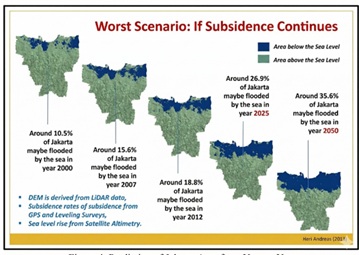
This study developed PISA-like tasks in the Uncertainty and Data domain using climate change contexts and examined their potential to elicit junior high school students' statistical literacy. The study employed a design research methodology of the development studies type, in which Tessmer's formative evaluation model was applied specifically to the formative evaluation stage, encompassing self-evaluation, expert review, one-to-one, small group, and field test, alongside a preliminary phase and an assessment phase. A total of 49 Grade IX students from a state junior high school in Jambi, Indonesia, participated across the evaluation stages: three in one-to-one, nine in small group, and 37 in the field test. Twenty-two climate change–related tasks were developed. However, this article specifically focuses on one scenario concerning “Jakarta is Singking” due to climate change impacts. Data were collected through expert validation, student practicality questionnaires, written task responses, and interviews, and were analyzed qualitatively and descriptively. The developed tasks were valid in terms of content, construct, and language, and practical based on students' practicality scores. The assessment phase revealed a positive potential effect: Problem Understanding reached 76.06%, Data Processing 69.26%, and Data Interpretation 68.69%, all in the moderate category, with interpretation being the least developed due to students' limited prior exposure to context-rich tasks. The climate change context supported engagement with trends, variability, and uncertainty. These findings suggest that future studies should integrate climate-based PISA-like tasks within structured instructional phases to support the written expression of students' statistical reasoning, which in this study emerged more clearly through interviews than written responses.
Full text article
References
Aini, I. N., Zulkardi, Putri, R. I. I., & Yaniawati, P. (2022). Developing PISA-like math problems in the content of space and shape through the context of historical buildings. Journal on Mathematics Education, 13(4), 723–738. https://doi.org/10.22342/jme.v13i4.pp723-738
Bakker, A. (2018). Design Research in Education: A Practical Guide for Early Career Researchers (1st ed.). Routledge. https://doi.org/10.4324/9780203701010
Britton, M. K., & Anderson, B. A. (2020). Specificity and persistence of statistical learning in distractor suppression. Journal of Experimental Psychology: Human Perception and Performance, 46(3), 324–334. https://doi.org/10.1037/xhp0000718
Büscher, C. (2022). Design principles for developing statistical literacy in middle schools. Statistics Education Research Journal, 21(1), 1–8. https://doi.org/10.52041/serj.v21i1.80
Callaman, R. A., & Itaas, E. C. (2020). Students’ mathematics achievement in Mindanao context: A meta-analysis. JRAMathEdu (Journal of Research and Advances in Mathematics Education), 5(2), 148–159. https://doi.org/10.23917/jramathedu.v5i2.10282
Chick, H. L., & Pierce, R. (2012). Teaching for statistical literacy: Utilising affordances in real-world data. International Journal of Science and Mathematics Education, 10(2), 339–362. https://doi.org/10.1007/s10763-011-9303-2
Deda, Y. N., & Maifa, T. (2021). Development of Student Worksheets Using the Context of Local Wisdom on Integers and Fractions. Jurnal Pendidikan Matematika, 15(1), 71–82. https://doi.org/10.22342/jpm.v.i.12824.71-82
Delport, D. H. (2023). The development of statistical literacy among students: Analyzing messages in media articles with Gal’s worry questions. Teaching Statistics, 45(2), 61–68. https://doi.org/10.1111/test.12308
Gal, I. (2002). Statistical Literacy: Conceptual and Instructional Issues. In Perspectives on Adults Learning Mathematics (pp. 135–150). Springer. https://doi.org/10.1007/0-306-47221-x_8
Gonda, D., Pavlovičová, G., Ďuriš, V., & Tirpáková, A. (2022). Implementation of pedagogical research into statistical courses to develop students’ statistical literacy. Mathematics, 10(11), 1793. https://doi.org/10.3390/math10111793
Gould, R. (2017). Data literacy is statistical literacy. Statistics Education Research Journal, 16(1), 22–25. https://doi.org/10.52041/serj.v16i1.209
Gustiningsi, T., Putri, R. I. I., Zulkardi, & Hapizah. (2023). Developing a PISA-Like mathematical problem: Using traditional food context. IJECA International Journal of Education & Curriculum Application, 6(3), 324–338. https://doi.org/10.31764/ijeca.v6i3.20200
IPCC. (2023). Climate Change 2021 – The Physical Science Basis. Cambridge University Press. https://doi.org/10.1017/9781009157896
Islamirta, K. A., Putri, R. I. I., Hapizah, & Mawarni, I. (2022). Development of PISA-Like Math Tasks for Uncertainty and Data Using the Context of COVID-19. Jurnal Pendidikan Matematika, 16(3), 269–288. https://doi.org/10.22342/jpm.16.3.17086.269-288
Johannssen, A., Nataliya, C., Friederike, S., & Stabenow, K. (2021). Statistical literacy—misuse of statistics and its consequences. Journal of Statistics and Data Science Education, 29(1), 54–62. https://doi.org/10.1080/10691898.2020.1860727
Kurnia, A. B., Lowrie, T., & Patahuddin, S. M. (2023). The development of high school students’ statistical literacy across grade level. Mathematics Education Research Journal, 36(Suppl 1), S7–S35. https://doi.org/10.1007/s13394-023-00449-x
Kurniadi, E., Zulkardi, Putri, R. I. I., & Darmawijoyo. (2026). Local Instruction Theory: Supporting Derivative Concept Learning Through Climate Change Context. Mathematics Education Journal, 20(1), 27–50. https://doi.org/10.22342/mej.v20i1.pp27-50
Maphutha, K., Maoto, S., & Kibirige, I. (2022). The effect of the activity-based approach on grade 11 learners’ performance in solving two-dimensional trigonometric problems. Eurasia Journal of Mathematics, Science and Technology Education, 18(10). https://doi.org/10.29333/ejmste/12405
Maphutha, K., Maoto, S., & Mutodi, P. (2023). Exploring grade 11 learners’ mathematical connections when solving two-dimensional trigonometric problems in an activity-based learning environment. Journal on Mathematics Education, 14(2), 293–310. https://doi.org/10.22342/jme.v14i2.pp293-310
Masfingatin, T., Murtafiah, W., & Maharani, S. (2020). Exploration of Creative Mathematical Reasoning in Solving Geometric Problems. Jurnal Pendidikan Matematika, 14(2), 155–168. https://doi.org/10.22342/jpm.14.2.7654.155-168
Monteiro, C. E. F., & Carvalho, R. N. (2023). Toward statistical literacy to critically approach big data in mathematics education BT - Research on reasoning with data and statistical thinking: International perspectives. In G. F. Burrill, L. de Oliveria Souza, & E. Reston (Eds.), Research on reasoning with data and statistical thinking: International perspectives (pp. 227–242). Springer. https://doi.org/10.1007/978-3-031-29459-4_18
Murdaningsih, S., & Murtiyasa, B. (2016). An analysis on eight grade mathematics textbook of new Indonesian curriculum (K-13) based on PISA’s framework. Journal of Research and Advances in Mathematics Education, 1(1). https://doi.org/10.23917/jramathedu.v1i1.1780
Nugroho, A. A., Dwijayanti, I., & Setyawati, R. D. (2024). Development of interactive e-books to increase learning independence in statistics. JRAMathEdu (Journal of Research and Advances in Mathematics Education), 8(3), 180–189. https://doi.org/10.23917/jramathedu.v8i3.5120
Nusantara, D. S., Zulkardi, & Putri, R. I. I. (2021). Designing PISA-like mathematics problem using a COVID-19 transmission map context. AIP Conference Proceedings, 2438. https://doi.org/10.1063/5.0071596
Nusantara, D. S., Zulkardi, & Putri, R. I. I. (2024a). How to design PISA-like digital mathematics problems: a preliminary study. AIP Conference Proceedings, 3046(1). https://doi.org/10.1063/5.0194756
Nusantara, D. S., Zulkardi, & Putri, R. I. I. (2024b). Students’ strategies in solving PISA-like mathematics problems on change and relationship content. AIP Conference Proceedings, 3052(1). https://doi.org/10.1063/5.0201003
Nusantara, D. S., Zulkardi, Z., & Putri, R. I. I. (2025). Investigating Students’ Mathematical Argumentation Ability in Solving PISA-like Mathematics Tasks on Change and Relationships. Jurnal Pendidikan Matematika, 19(4), 807–826. https://doi.org/10.22342/mej.v19i4.pp807-826
OECD. (2016). PISA 2015 Results (Volume I): Excellence and Equity in Education (Vol. 1). OECD Publishing. https://doi.org/10.1787/9789264266490-en
OECD. (2023). PISA 2022 Results (Volume I): The State of Learning and Equity in Education (PISA) (Vol. 1). OECD Publishing. https://doi.org/10.1787/53f23881-en
Pathuddin, H., Kamariah, & Nawawi, M. I. (2021). Buginese Ethnomathematics: Barongko Cake Explorations as Mathematics Learning Resources. Journal on Mathematics Education, 12(2), 295–312. https://doi.org/10.22342/jme.12.2.12695.295-312
Plomp, T., & Nieveen, N. (2013). Educational Design Research: Part A – An Introduction. SLO (Netherlands Institute for Curriculum Development). https://www.slo.nl/@4315/educational-design/
Prahmana, R. C. I., & D’Ambrosio, U. (2020). Learning Geometry and Values from Patterns: Ethnomathematics on the Batik Patterns of Yogyakarta, Indonesia. Journal on Mathematics Education, 11(3), 439–456. https://doi.org/10.22342/jme.11.3.12949.439-456
Rahman, F., Juniati, D., & Siswono, T. Y. E. (2024). Covariational reasoning of field dependent prospective mathematics teacher in solving covariance problem. JRAMathEdu (Journal of Research and Advances in Mathematics Education), 8(3), 140–151. https://doi.org/10.23917/jramathedu.v8i3.4740
Ramli, M., Susanti, B. H., & Yohana, M. P. (2022). Indonesian students’ scientific literacy in Islamic Junior High School. International Journal of STEM Education for Sustainability, 2(1), 53–65. https://doi.org/10.53889/ijses.v2i1.33
Rodriguez-Martinez, L. Y., Hernandez-Martinez, P., & Perez-Martinez, M. G. (2023). Development of a protocol to measure mathematics higher-order thinking skills in Mexican primary schools. Journal on Mathematics Education, 14(4), 781–796. https://doi.org/10.22342/jme.v14i4.pp781-796
Schield, M. (2011). Statistical literacy: A new mission for data producers. Statistical Journal of the IAOS, 27(3–4), 173–183. https://doi.org/10.3233/SJI-2011-0732
Sihlangu, S., Maphutha, K., & Mokwana, L. (2025). A commognitive analysis of learners’ mathematical thinking on mathematics vocabulary used during classroom discourse. Journal on Mathematics Education, 16(4), 1389–1406. https://doi.org/10.22342/jme.v16i4.pp1389-1406
Stacey, K. (2023). Mathematical competencies in the digital era. JRAMathEdu (Journal of Research and Advances in Mathematics Education), 8(4), 225–232. https://doi.org/10.23917/jramathedu.v8i4.3096
Sujadi, I., Budiyono, Kurniawati, I., Wulandari, A. N., Andriatna, R., & Puteri, H. A. (2023). The Abilities of Junior High School Students in Solving PISA-Like Mathematical Problems on Uncertainty and Data Contents. Jurnal Penelitian Dan Pengembangan Pendidikan, 7(1), 102–109. https://doi.org/10.23887/jppp.v7i1.51931
Tanujaya, B., Prahmana, R. C. I., & Mumu, J. (2023). Lesson study with sharing and jumping tasks in online mathematics classrooms for rural area students. Journal on Mathematics Education, 14(1), 169–188. https://doi.org/10.22342/jme.v14i1.pp169-188
Tessmer, M. (1993). Planning and Conducting Formative Evaluations. Routledge. https://doi.org/10.4324/9780203061978
Ulia, N., Akhsani, L., & Untarti, R. (2023). Statistical literacy process of prospective mathematics teachers: A case study of PISA model problems. Journal of Higher Education Theory & Practice, 23(7), 45–58. https://doi.org/10.33423/jhetp.v23i7.6011
Ünal, D., Çiğşar, B., Alam, D., Atalar, Ş. E., Gümüş, S. İ., & Çakitli, A. (2023). Reading the world with statistical literacy: Results of an emprical study. Bilge International Journal of Science and Technology Research, 7(2), 198–203. https://doi.org/10.30516/bilgesci.1251429
Utari, R. S., Putri, R. I. I., & Zulkardi. (2024). Designing a Hypothetical Learning Trajectory using the Local Wisdom of South Sumatera as a Context through Hybrid Learning. Jurnal Pendidikan Matematika, 18(1), 79–96. https://doi.org/10.22342/jpm.v18i1.pp79-96
Utari, R. S., Putri, R. I. I., Zulkardi, & Hapizah. (2025a). Advancing statistical literacy for prospective teachers: A systematic review of contemporary approaches and best practices. Jurnal Elemen, 11(2), 390–407. https://doi.org/10.29408/jel.v11i2.28044
Utari, R. S., Putri, R. I. I., Zulkardi, & Hapizah. (2025b). Supporting statistical literacy skills for prospective teachers: A learning trajectory used South Sumatra local wisdom context through hybrid learning. Infinity Journal, 14(3), 711–732. https://doi.org/10.22460/infinity.v14i3.p711-732
van Dijke-Droogers, M., Drijvers, P., & Bakker, A. (2022). Introducing statistical inference: Design of a theoretically and empirically based learning trajectory. International Journal of Science and Mathematics Education, 20(8), 1743–1766. https://doi.org/10.1007/s10763-021-10208-8
Weiland, T. (2017). Problematizing statistical literacy: An intersection of critical and statistical literacies. Educational Studies in Mathematics, 96(1), 33–47. https://doi.org/10.1007/s10649-017-9764-5
Zulkardi. (2002). Developing a learning environment on realistic mathematics education for Indonesian student teachers [University of Twente]. https://doi.org/10.3990/1.9789036518451
Authors
Copyright (c) 2026 Duano Sapta Nusantara, Satria Bayu Herlambang, Feri Tiona Pasaribu, Kgaladi Maphutha

This work is licensed under a Creative Commons Attribution-NonCommercial 4.0 International License.