Revealing Employee Experience in Surviving during the COVID-19 Pandemic: Story from Indonesia
DOI:
https://doi.org/10.23917/indigenous.v9i3.4898Keywords:
Employee experience, COVID-19 pandemic, Physical environment, Technological environment, Cultural environmentAbstract
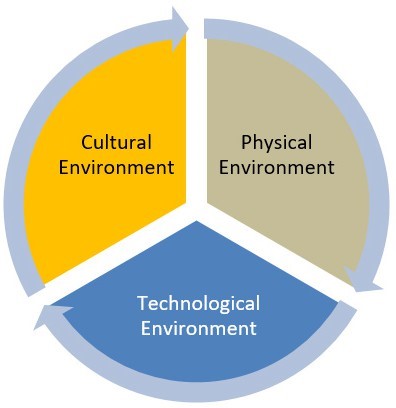
The covid-19 pandemic has brought diverse experiences to every employee in the company. Several types of research have sought to uncover how the fate of employees in the pandemic is related to company policies. However, no one has explained the concept of employee experience that can explain all components of the experience comprehensively, detailed, and empathize with its employees, especially during this pandemic. This study is field research by distributing questionnaires in google form to twenty employees in various companies in Indonesia. Data analyzed by the triangulation method. During the covid-19 pandemic, almost companies care about the fate of employees, rarely who break their employment or lower compensation. Most pay more attention to employees' positive experiences of the physical environment, technology environment, and cultural environment. The novelty is for Indonesians, employee experience is a positive experience of employees towards the company's internal environment and can be shared with the external community of the company. Employees feel positive experience in the physical, technology, and cultural environment during the COVID-19 pandemic. The research limitation is that it only involves management-level employees, not yet applying all levels of employees who are likely to get more comprehensive information. Nonetheless, the available information is sufficient to enforce the adequate conclusion.
References
Altuntas, F., & Gok, M. S. (2021). The effect of COVID-19 pandemic on domestic tourism: A DEMATEL method analysis on quarantine decisions. International Journal of Hospitality Management, 92, 102719. https://doi.org/10.1016/j.ijhm.2020.102719 DOI: https://doi.org/10.1016/j.ijhm.2020.102719
Billings, M. E., Hale, L., & Johnson, D. A. (2020). Physical and social environment relationship with sleep health and disorders. Chest, 157(5), 1304–1312. https://doi.org/10.1016/j.chest.2019.12.002 DOI: https://doi.org/10.1016/j.chest.2019.12.002
Buys, N. J., Selander, J., & Sun, J. (2019). Employee experience of workplace supervisor contact and support during long-term sickness absence. Disability and Rehabilitation, 41(7), 808–814. https://doi.org/10.1080/09638288.2017.1410584 DOI: https://doi.org/10.1080/09638288.2017.1410584
Caljouw, S. R., de Haan, E. H., Mollee, N., & Withagen, R. (2019). The end of sitting: How middle-aged employees use and experience a new activity-inducing office over time. Journal of Environmental Psychology, 61, 138–141. https://doi.org/10.1016/j.jenvp.2019.01.001 DOI: https://doi.org/10.1016/j.jenvp.2019.01.001
Carnevale, J. B., & Hatak, I. (2020). Employee adjustment and well-being in the era of COVID-19: Implications for human resource management. Journal of Business Research, 116, 183–187. https://doi.org/10.1016/j.jbusres.2020.05.037 DOI: https://doi.org/10.1016/j.jbusres.2020.05.037
Dachner, A. M., Ellingson, J. E., Noe, R. A., & Saxton, B. M. (2019). The future of employee development. Human Resource Management Review, 29(2), 100732. https://doi.org/10.1016/j.hrmr.2019.100732 DOI: https://doi.org/10.1016/j.hrmr.2019.100732
Din, M. ud, Zia-ud-Din, M., & Shafique, M. Z. (2018). Effects of employees' experience on employees' performance in the textile sector. International Journal of Academic Research in Business and Social Sciences, 8(7), 257–268. https://doi.org/10.6007/ijarbss/v8-i7/4337 DOI: https://doi.org/10.6007/IJARBSS/v8-i7/4337
Ding, R., Dardas, A., Wang, L., & Williams, A. (2020). Improving the workplace experience of caregiver-employees: A time-series analysis of a workplace intervention. Safety and Health at Work. https://doi.org/10.1016/j.shaw.2020.12.003 DOI: https://doi.org/10.1016/j.shaw.2020.12.003
Donthu, N., & Gustafsson, A. (2020). Effects of COVID-19 on business and research. Journal of Business Research, 117, 284–289. https://doi.org/10.1016/j.jbusres.2020.06.008 DOI: https://doi.org/10.1016/j.jbusres.2020.06.008
Gebel, K., Bauman, A. E., & Petticrew, M. (2007). The physical environment and physical activity: A critical appraisal of review articles. American Journal of Preventive Medicine, 32(5), 361–369. https://doi.org/10.1016/j.amepre.2007.01.020 DOI: https://doi.org/10.1016/j.amepre.2007.01.020
Henson, R. M., Ortigoza, A., Martinez-Folgar, K., Baeza, F., Caiaffa, W., Vives Vergara, A., Diez Roux, A. V., & Lovasi, G. (2020). Evaluating the health effects of place-based slum upgrading physical environment interventions: A systematic review (2012–2018). Social Science & Medicine, 261, 113102. https://doi.org/10.1016/j.socscimed.2020.113102 DOI: https://doi.org/10.1016/j.socscimed.2020.113102
Itam, U., & Ghosh, N. (2020). Employee experience management. International Journal of Human Capital and Information Technology Professionals, 11(2), 39–49. https://doi.org/10.4018/ijhcitp.2020040103 DOI: https://doi.org/10.4018/IJHCITP.2020040103
Jacobs, J. V., Hettinger, L. J., Huang, Y. H., Jeffries, S., Lesch, M. F., Simmons, L. A., Verma, S. K., & Willetts, J. L. (2019). Employee acceptance of wearable technology in the workplace. Applied Ergonomics, 78, 148–156. https://doi.org/10.1016/j.apergo.2019.03.003 DOI: https://doi.org/10.1016/j.apergo.2019.03.003
Jung, H. S., Jung, Y. S., & Yoon, H. H. (2021). COVID-19: The effects of job insecurity on the job engagement and turnover intent of deluxe hotel employees and the moderating role of generational characteristics. International Journal of Hospitality Management, 92, 102703. https://doi.org/10.1016/j.ijhm.2020.102703 DOI: https://doi.org/10.1016/j.ijhm.2020.102703
Kaslow, N. J., Friis-Healy, E. A., Cattie, J. E., Cook, S. C., Crowell, A. L., Cullum, K. A., del Rio, C., Marshall-Lee, E. D., LoPilato, A. M., VanderBroek-Stice, L., Ward, M. C., White, D. J. T., & Farber, E. W. (2020). Flattening the emotional distress curve: A behavioral health pandemic response strategy for COVID-19. American Psychologist, 75(7), 875–886. https://doi.org/10.1037/amp0000694 DOI: https://doi.org/10.1037/amp0000694
Natow, R. S. (2020). The use of triangulation in qualitative studies employing elite interviews. Qualitative Research, 20(2), 160–173. https://doi.org/10.1177/1468794119830077 DOI: https://doi.org/10.1177/1468794119830077
Nicola, M., Alsafi, Z., Sohrabi, C., Kerwan, A., Al-Jabir, A., Iosifidis, C., Agha, M., & Agha, R. (2020). The socio-economic implications of the coronavirus pandemic (COVID-19): A review. International Journal of Surgery, 78, 185–193. https://doi.org/10.1016/j.ijsu.2020.04.018 DOI: https://doi.org/10.1016/j.ijsu.2020.04.018
Örün, Ö., & Akbulut, Y. (2019). Effect of multitasking, physical environment, and electroencephalography use on cognitive load and retention. Computers in Human Behavior, 92, 216–229. https://doi.org/10.1016/j.chb.2018.11.027 DOI: https://doi.org/10.1016/j.chb.2018.11.027
Rispler, C., & Luria, G. (2021). Employee experience and perceptions of an organizational road-safety intervention – A mixed-methods study. Safety Science, 134, 105089. https://doi.org/10.1016/j.ssci.2020.105089 DOI: https://doi.org/10.1016/j.ssci.2020.105089
Sibley, C. G., Greaves, L. M., Satherley, N., et al. (2020). Effects of the COVID-19 pandemic and nationwide lockdown on trust, attitudes toward government, and well-being. American Psychologist, 75(5), 618–630. https://doi.org/10.1037/amp0000662 DOI: https://doi.org/10.1037/amp0000662
Zhang, Z., & Zhang, J. (2017). Perceived residential environment of neighborhood and subjective well-being among the elderly in China: A mediating role of sense of community. Journal of Environmental Psychology, 51, 82–94. https://doi.org/10.1016/j.jenvp.2017.03.004 DOI: https://doi.org/10.1016/j.jenvp.2017.03.004
Submitted
Accepted
Published
How to Cite
Issue
Section
License
Copyright (c) 2025 Nurus Sa'adah, Ratna Sesotya Wedadjati, Chusminah SM

This work is licensed under a Creative Commons Attribution 4.0 International License.