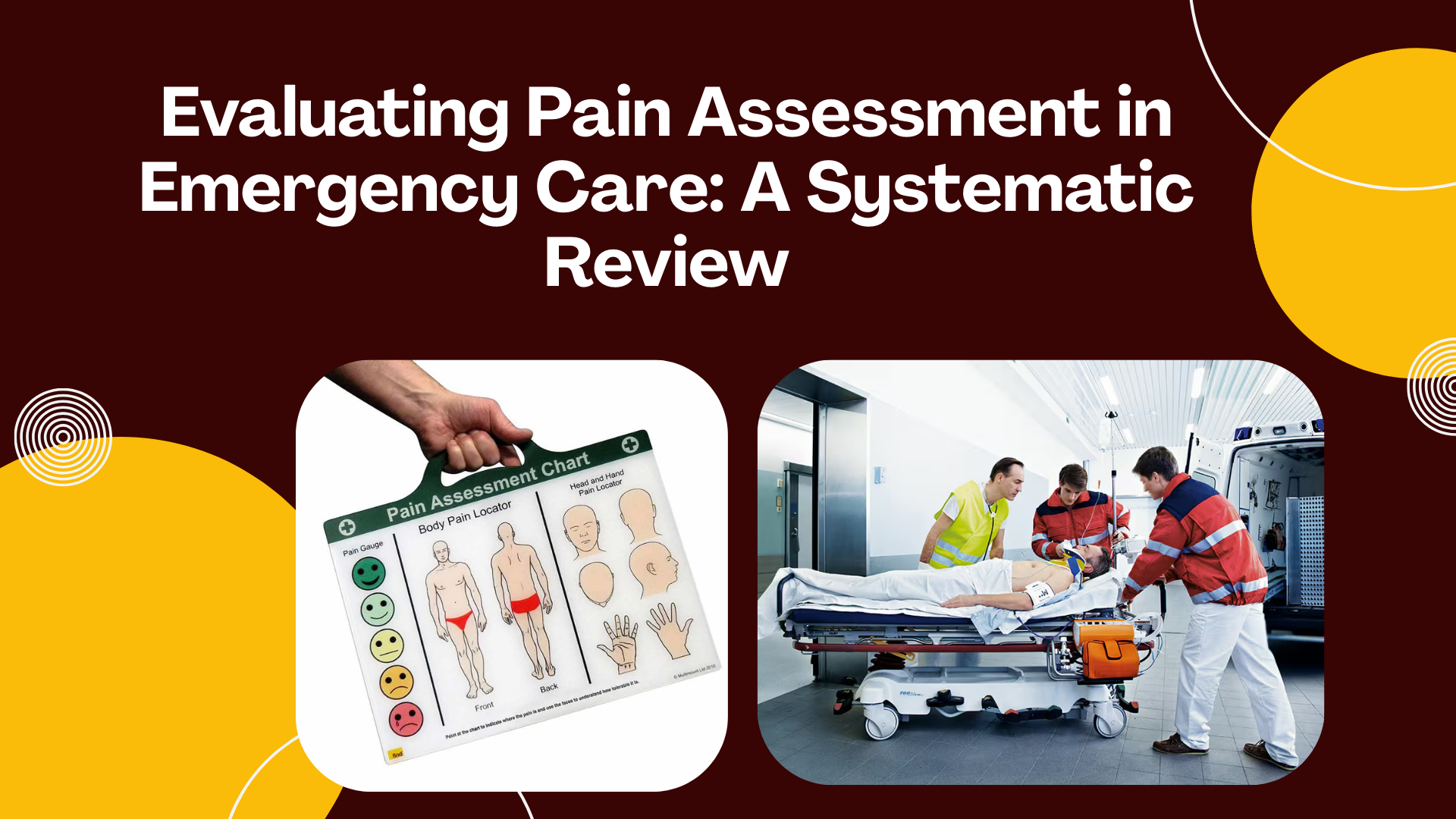
Evaluating Pain Assessment in Emergency Care: A Systematic Review
DOI:
https://doi.org/10.23917/bik.v19i1.10826Keywords:
emergency service, pain measurement, treatment outcomeAbstract
Effective pain assessment in emergency departments (EDs) is essential to optimizing patient care and improving outcomes such as satisfaction, reduced hospitalization, and lower re-admission rates. This evidence-based critical review aims to explore the relationship between pain assessment practices in EDs and resulting patient outcomes. A systematic search was conducted across three electronic databases—PubMed, Google Scholar, and Web of Science—using the keywords "Emergency department AND Pain assessment AND Patient outcomes” using a structured PICO approach: Population (P) – ED patients, Intervention (I) – pain assessment, Control (C) – none, Outcome (O) – positive clinical and satisfaction-related outcomes. Inclusion criteria comprised original research articles published in English between 2005 and 2025 that focused on pain assessment in emergency settings and reported outcomes such as patient satisfaction, readmission rates, or clinical improvements. Exclusion criteria included non-English publications, studies outside the ED context, and non-original research. Article selection involved initial identification, duplicate removal, title/abstract screening, and full-text eligibility assessment. Out of 21,317 retrieved articles, 6,957 unique records remained after duplicate removal. The studies involving a total of 54,511 patients. Findings demonstrated that structured pain assessment and timely analgesic intervention led to significantly improved patient satisfaction, reduced emotional distress, better adherence to medical instructions, decreased rates of hospitalization, a higher likelihood of administration potent pain medication, ED Length of Stay, ED charges, and ED revisits. This review reinforces the vital role of effective pain assessment in emergency care settings. Evidence indicates that structured and timely pain management not only enhances patient comfort but also contributes to better clinical outcomes, higher satisfaction, and reduced healthcare utilization.
Downloads
References
Alotaibi, M., Aljahany, M., Alhamdan, Z., Alsaffar, M., Almojally, A., & Alassaf, W. (2022). Differences in acute pain perception between patients and physicians in the emergency department. Heliyon, 8(11), e11462. https://doi.org/10.1016/j.heliyon.2022.e11462 DOI: https://doi.org/10.1016/j.heliyon.2022.e11462
Batko, K., & Ślęzak, A. (2022). The use of Big Data Analytics in healthcare. Journal of Big Data, 9(1), 3. https://doi.org/10.1186/s40537-021-00553-4 DOI: https://doi.org/10.1186/s40537-021-00553-4
Berardinis, B. De. (2013). Emergency Department Pain Management and Its Impact On Patients’ Short Term Outcome. The Open Emergency Medicine Journal, 5(1), 1–7. https://doi.org/10.2174/1876542420130729001 DOI: https://doi.org/10.2174/1876542420130729001
Bhakta, H. C., & Marco, C. A. (2014). Pain Management: Association with Patient Satisfaction among Emergency Department Patients. The Journal of Emergency Medicine, 46(4), 456–464. https://doi.org/10.1016/j.jemermed.2013.04.018 DOI: https://doi.org/10.1016/j.jemermed.2013.04.018
Bhati, D., Deogade, M. S., & Kanyal, D. (2023). Improving Patient Outcomes Through Effective Hospital Administration: A Comprehensive Review. Cureus. https://doi.org/10.7759/cureus.47731 DOI: https://doi.org/10.7759/cureus.47731
Brennan, F., Lohman, D., & Gwyther, L. (2019). Access to Pain Management as a Human Right. American Journal of Public Health, 109(1), 61–65. https://doi.org/10.2105/AJPH.2018.304743 DOI: https://doi.org/10.2105/AJPH.2018.304743
Brown, T., Shetty, A., Zhao, D. F., Harvey, N., Yu, T., & Murphy, M. (2018). Association between pain control and patient satisfaction outcomes in the emergency department setting. Emergency Medicine Australasia, 30(4), 523–529. https://doi.org/10.1111/1742-6723.12945 DOI: https://doi.org/10.1111/1742-6723.12945
Chioma Anthonia Okolo, Tolulope Olorunsogo, & Oloruntoba Babawarun. (2024). Cultural variability in pain perception: A review of cross-cultural studies. International Journal of Science and Research Archive, 11(1), 2550–2556. https://doi.org/10.30574/ijsra.2024.11.1.0339 DOI: https://doi.org/10.30574/ijsra.2024.11.1.0339
Dale, J., & Bjørnsen, L. P. (2015). Assessment of pain in a Norwegian Emergency Department. Scandinavian Journal of Trauma, Resuscitation and Emergency Medicine, 23(1), 86. https://doi.org/10.1186/s13049-015-0166-3 DOI: https://doi.org/10.1186/s13049-015-0166-3
Dijkstra, B. M., Berben, S. A. A., van Dongen, R. T. M., & Schoonhoven, L. (2014). Review on pharmacological pain management in trauma patients in (pre‐hospital) emergency medicine in the N etherlands. European Journal of Pain, 18(1), 3–19. https://doi.org/10.1002/j.1532-2149.2013.00337.x DOI: https://doi.org/10.1002/j.1532-2149.2013.00337.x
Downey, L. V., & Zun, L. (2010). Pain management in the emergency department and its relationship to patient satisfaction. Journal of Emergencies, Trauma, and Shock, 3(4), 326. https://doi.org/10.4103/0974-2700.70749 DOI: https://doi.org/10.4103/0974-2700.70749
Gleichgerrcht, E., & Decety, J. (2014). The relationship between different facets of empathy, pain perception and compassion fatigue among physicians. Frontiers in Behavioral Neuroscience, 8. https://doi.org/10.3389/fnbeh.2014.00243 DOI: https://doi.org/10.3389/fnbeh.2014.00243
Haddaway, N. R., Page, M. J., Pritchard, C. C., & McGuinness, L. A. (2022). PRISMA2020 : An R package and Shiny app for producing PRISMA 2020‐compliant flow diagrams, with interactivity for optimised digital transparency and Open Synthesis. Campbell Systematic Reviews, 18(2). https://doi.org/10.1002/cl2.1230 DOI: https://doi.org/10.1002/cl2.1230
Kone, V., Lecomte, F., Randriamanana, D., Pourriat, J.-L., Claessens, Y.-E., & Vidal-Trecan, G. (2016). Impact of a pilot team on patients’ pain reduction and satisfaction in an emergency department: A before-and-after observational study. Revue d’Épidémiologie et de Santé Publique, 64(2), 59–66. https://doi.org/10.1016/j.respe.2015.11.010 DOI: https://doi.org/10.1016/j.respe.2015.11.010
Ku, N.-W., Cheng, M.-T., Liew, C. Q., Chen, Y. C., Sung, C.-W., Ko, C.-H., Lu, T.-C., Huang, C.-H., & Tsai, C.-L. (2023). Prospective study of pain and patient outcomes in the emergency department: a tale of two pain assessment methods. Scandinavian Journal of Trauma, Resuscitation and Emergency Medicine, 31(1), 56. https://doi.org/10.1186/s13049-023-01130-9 DOI: https://doi.org/10.1186/s13049-023-01130-9
Lidauer, S. M., Hoppu, S., Kaartinen, K., Lidauer, M. H., & Kalliomäki, M. (2025a). Pain Assessment and Its Effect on Pain Management During Emergency Medical Services—A Descriptive Study in the Tampere University Hospital Area of Finland. Acta Anaesthesiologica Scandinavica, 69(6). https://doi.org/10.1111/aas.70047
Lidauer, S. M., Hoppu, S., Kaartinen, K., Lidauer, M. H., & Kalliomäki, M.-L. (2025b). Pain Assessment and Its Effect on Pain Management During Emergency Medical Services-A Descriptive Study in the Tampere University Hospital Area of Finland. Acta Anaesthesiologica Scandinavica, 69(6), e70047. https://doi.org/10.1111/aas.70047 DOI: https://doi.org/10.1111/aas.70047
Prasad, N., Penm, J., Watson, D. E., Tran, B. N. H., Dai, Z., & Tan, E. C. K. (2025). Association between self‐reported pain experiences in hospital and ratings of care, readmission and emergency department visits: a population‐based study from New South Wales, Australia. Anaesthesia, 80(3), 269–277. https://doi.org/10.1111/anae.16474 DOI: https://doi.org/10.1111/anae.16474
Ruben, M. A., Blanch-Hartigan, D., & Shipherd, J. C. (2018). To Know Another’s Pain: A Meta-analysis of Caregivers’ and Healthcare Providers’ Pain Assessment Accuracy. Annals of Behavioral Medicine, 52(8), 662–685. https://doi.org/10.1093/abm/kax036 DOI: https://doi.org/10.1093/abm/kax036
Scholten, A. C., Berben, S. A. A., Westmaas, A. H., van Grunsven, P. M., de Vaal, E. T., Rood, P. P. M., Hoogerwerf, N., Doggen, C. J. M., & Schoonhoven, L. (2015). Pain management in trauma patients in (pre)hospital based emergency care: Current practice versus new guideline. Injury, 46(5), 798–806. https://doi.org/10.1016/j.injury.2014.10.045 DOI: https://doi.org/10.1016/j.injury.2014.10.045
Shih-Chieh, Y., Hui-Mei, H., Te-Feng, Y., Ching-Hui, S., Chieh-Liang, W., Yun-Jui, H., Chih-Cheng, W., & Chih-Jen, H. (2023). Differences in Pain Assessments Between Inpatients and Nurses Leads to Considerable Misestimated Pain. Pain Physician, 26, 61–68. DOI: https://doi.org/10.36076/ppj.2023.26.61
Uzun, D. D., Stock, J.-P., Steffen, R., Knapp, J., Lefering, R., Schmitt, F. C. F., Weigand, M. A., Münzberg, M., Woelfl, C. G., & Häske, D. (2025). Trends in analgesia in prehospital trauma care: an analysis of 105.908 patients from the multicenter database TraumaRegister DGU®. BMC Emergency Medicine, 25(1), 36. https://doi.org/10.1186/s12873-025-01186-z DOI: https://doi.org/10.1186/s12873-025-01186-z
van Zanden, J. E., Wagenaar, S., ter Maaten, J. M., ter Maaten, J. C., & Ligtenberg, J. J. M. (2018). Pain score, desire for pain treatment and effect on pain satisfaction in the emergency department: a prospective, observational study. BMC Emergency Medicine, 18(1), 40. https://doi.org/10.1186/s12873-018-0189-y DOI: https://doi.org/10.1186/s12873-018-0189-y
Wu, M.-C., Lu, T.-C., Cheng, M.-T., Chen, Y.-C., Liao, E. C.-W., Sung, C.-W., Tay, J., Ko, C.-H., Fang, C.-C., Huang, C.-H., & Tsai, C.-L. (2022). Pain trajectories in the emergency department: Patient characteristics and clinical outcomes. The American Journal of Emergency Medicine, 55, 111–116. https://doi.org/10.1016/j.ajem.2021.09.087 DOI: https://doi.org/10.1016/j.ajem.2021.09.087
Downloads
Submitted
Accepted
Published
How to Cite
Issue
Section
License
Copyright (c) 2026 Arief Wahyudi Jadmiko, Debby Syahru Romadlon

This work is licensed under a Creative Commons Attribution 4.0 International License.