Learning Innovations after the COVID-19 Pandemic; Educators Creativity in Conducting Teaching in Indonesia
DOI:
https://doi.org/10.23917/varidika.v38i1.13798Keywords:
Learning, Innovation, After Covid-19 Pandemic, TeachingAbstract
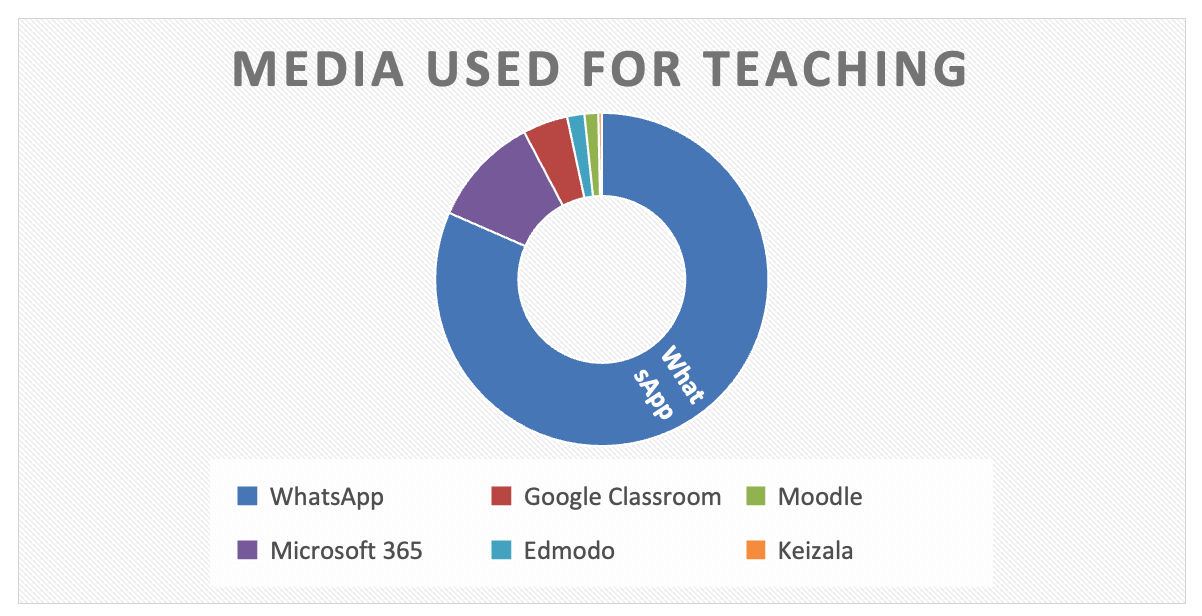
This study is intended to describe the learning innovations that teachers make during and after the emergency remote teaching in Indonesia. Distance learning that was suddenly implemented due to the Covid-19 pandemic had a broad impact on all aspects of education. It is qualitative research with steps of collecting data through observation and interviews, whether structured or unstructured, documentation, and visual materials. The data were analyzed using grounded theory. The results showed that there were innovations in methods, development of teaching materials, and teachers-parents communication. Before the pandemic, communication between teachers and parents was mostly done only once a semester, but now teachers communicate with parents more often. Learning methods also vary by integrating various media. Media is no longer just using whiteboards or projectors, but more variations of media are used by teachers. Teaching materials are no longer only from one learning source but are obtained from more varied learning sources.
Downloads
References
Bermpohl, F., Schäfer, S. F., Neumann, O., Reihlen, E., Dickopf, T., Gebel, T., Neuhäuser, T., & Daub, R. (2025). Industrial study on holistic digital factory models. Production Engineering. Scopus. https://doi.org/10.1007/s11740-025-01344-z
Beeli-Zimmermann, S., Burri, M., Ewald, A.-S., & Wannack, E. (2024). The Complexity of Managing Diverse Communication Channels in Family-School Relations in Switzerland as Seen by Parents and Schools. Australian and International Journal of Rural Education, 34(2), 1 – 2. https://doi.org/10.47381/aijre.v34i2.714
Dube, B. (2020). Rural Online Learning in the Context of COVID-19 in South Africa: Evoking an Inclusive Education Approach. Multidisciplinary Journal of Educational Research, 10(2), 135–157. https://doi.org/10.4471/remie.2020.5607
Fatma, F., Prayitno, H. J., Jamaludin, N., Jha, G. K., & Badri, T. I. (2020). Directive Speech Acts in Academic Discourse: Ethnography of Communication from Gender Perspective in Higher Education. Indonesian Journal on Learning and Advanced Education (IJOLAE), 27–46. https://doi.org/10.23917/ijolae.v2i1.8829
Hadayani, T., Utami, N., & Abdullah, K. (2021). Implementation of Religious Character Education in Online Learning for Elementary School.
Haiyudi, H., & Art-In, S. (2021). Challenges, Strategies, and Solutions of Teaching Bahasa Indonesia in Covid-19 Crises: Case in Khon Kaen University. Indonesian Journal on Learning and Advanced Education (IJOLAE), 3(2), 142–152. https://doi.org/10.23917/ijolae.v3i2.12369
Harpeni Dewantara, A. (2020). KREATIVITAS GURU DALAM MEMANFAATKAN MEDIA BERBASIS IT DITINJAU DARI GAYA BELAJAR SISWA. Journal of Primary Education, 1(1), 15–28. https://jurnal.iain-bone.ac.id/index.php/algurfah/indexindonesia-education-statistics-in-brief-2024-2025-2025-indonesia. (n.d.).
Le Nghi Tran, T., Thanh Luan, N., Van Thinh, L., Thi Mai Le Huyen, N., Thi Thu Thao, N., & Ho Hai Yen, P. (2025). Parents’ navigation through remote learning in Vietnam. Technology, Pedagogy and Education. https://doi.org/10.1080/1475939X.2025.2490116
Marah, K., Fute, A., & Kangwa, D. (2025). Beyond the classroom: Examining the varied impact of family dynamics on students’ academic success. Acta Psychologica, 255. https://doi.org/10.1016/j.actpsy.2025.104895
Montenegro, S., Mendoza, K., Chancay, C., Posligua, K., & Meza, J. (2023). Teacher digital’ skills for online education in preschool and schools education careers. Proceedings of the International Multi-Conference on Society, Cybernetics and Informatics, IMSCI, 2023-September, 45 – 50. https://doi.org/10.54808/IMSCI2023.01.45
Onojah, A. A., Onojah, A. O., Olumorin, C. O., & Omosewo, E. O. (2021). Secondary School Teachers’ Accessibility to Internet Facilities for Advanced Instruction in Nigeria. https://api.semanticscholar.org/CorpusID:234250883
Parkar, N. (2020). IMPACT OF COVID-19 ON EDUCATION IN INDIA. Samvakti Journal of Research in Information Technology. https://api.semanticscholar.org/CorpusID:236692362
Rattanawan, P., & Pakdee, S. (2024). Perspectives of teachers and students on the impact of online classrooms during the COVID-19 pandemic. . Frontiers in Education.
Rodriguez, M., & Liu, L. (2023). A Case Study of the Caregiver Digital Literacy Self-Efficacy During Distance Learning. Journal of School Administration Research and Development. https://api.semanticscholar.org/CorpusID:264540154
Rodriguez-Oramas, A., Morla-Folch, T., Vieites Casado, M., & Ruiz-Eugenio, L. (2022). Improving students’ academic performance and reducing conflicts through family involvement in primary school learning activities: a Mexican case study. Cambridge Journal of Education, 52(2), 235 – 254. https://doi.org/10.1080/0305764X.2021.1973374
Saputri, A., Sukirno, S., Kurniawan, H., & Probowasito, T. (2020). Developing Android Game-Based Learning Media “Go Accounting” in Accounting Learning. https://api.semanticscholar.org/CorpusID:214291738
Tadesse, S., & Muluye, W. (2020). The Impact of COVID-19 Pandemic on Education System in Developing Countries: A Review. Open Journal of Social Sciences, 08(10), 159–170. https://doi.org/10.4236/jss.2020.810011
Torrato, J. B., Aguja, S. E., & Prudente, M. S. (2023). Educators’ Digital Literacy Competence in a Hybrid Learning Environment. ACM International Conference Proceeding Series, 19 – 24. https://doi.org/10.1145/3588243.3588250
Tulenbayev, Z., Kozhageldi, B., Baizhanova, S., Dairabay, D., & Nametbayev, G. (2025). Innovative learning technologies in higher education. E-Learning and Digital Media, 22(5), 430–440. https://doi.org/10.1177/20427530241239432
Vogel, S. N. T., Stang-Rabrig, J., & McElvany, N. (2023). The importance of parents for key outcomes among socio-economically disadvantaged students: Parents’ role in emergency remote education. Social Psychology of Education, 26(6), 1565 – 1591. https://doi.org/10.1007/s11218-023-09801-2
Wu, W.-C., Liu, M.-Y., & Kang, Y.-C. (2023). The Effect of Elementary School Parent-Teacher Communication Involved by Chatbot Technology. 2023 International Conference on Consumer Electronics - Taiwan (ICCE-Taiwan), 753–754. https://api.semanticscholar.org/CorpusID:261433694
Downloads
Submitted
Accepted
Published
Issue
Section
License
Copyright (c) 2025 Nurhidayat Nurhidayat, Harun Joko Prayitno, Koesoemo Ratih, Muhammad Fahmi Johansyah, Habib Al Fattah, Puspa Dewi

This work is licensed under a Creative Commons Attribution 4.0 International License.