Power Representation and Public Resistance in the Hashtag Discourse #BubarkanDPR: A Critical Discourse Analysis
DOI:
https://doi.org/10.23917/sosial.v7i1.13069Keywords:
Power Representation, Public Resistance, Hashtag DiscourseAbstract
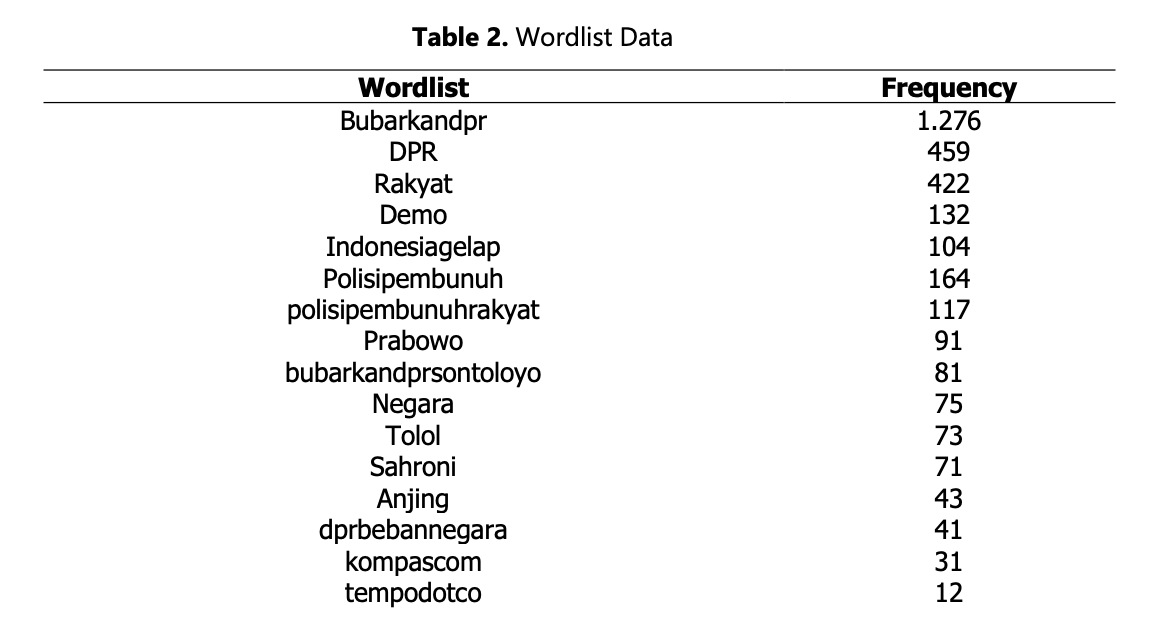
The development of social media in Indonesia has created a digital public space that enables people to express aspirations, criticism, and protest. One prominent phenomenon is hashtag activism, such as #BubarkanDPR. This study aimed to analyze the representation of power and public resistance in the digital discourse of #BubarkanDPR. The research combined qualitative and quantitative methods, employing descriptive and interpretative approaches to understand language patterns, symbolism, and public resistance strategies, as well as frequency analysis of words, hashtags, and lexicons to identify dominant patterns and the intensity of public expression. The data consisted of 1,237 posts on the X platform using the hashtag #BubarkanDPR from August 20 to September 1, 2025, collected through crawling using Python and tweet-harvest Node.js, and then manually cleaned. The analysis was conducted using Norman Fairclough’s AWK model of Critical Discourse Analysis (CDA), covering text analysis, discourse practice, and socio-cultural practice, with the assistance of AntConc 4.3.1 to map wordlists, word frequencies, collocations, and KWIC. The findings revealed that the DPR was represented as a symbol of corruption, betrayal, and democratic failure, while the public expressed resistance through delegitimization, collective calls, and emotional and vulgar language. These results underscore an ideological shift toward anti-establishment sentiments and highlight the role of digital democracy as a battleground for power.
Downloads
References
Aisyah, I., & Hasfi, N. (2022). Opini Publik Dalam Gerakan Tagar# percumalaporpolisi Di Media Sosial Twitter. Interaksi Online, 10(3), 605–618.
Andung, P. A., & Swan, M. V. D. P. (2021). The Dynamics of Public Sphere in Social Media: Cybermedia Analysis. Jurnal ASPIKOM, 6(1), 42–60.
Bersch, K., & Lotta, G. (2024). Political control and bureaucratic resistance: The case of environmental agencies in Brazil. Latin American Politics and Society, 66(1), 27–50.
Castañeda, E. (2012). The indignados of Spain: A precedent to occupy Wall Street. Social Movement Studies, 11(3–4), 309–319.
Castells, M. (2015). Networks of outrage and hope: Social movements in the Internet age. John Wiley & Sons.
Dadas, C. (2017). Hashtag activism: The promise and risk of “attention.” Social Writing/Social Media: Publics, Presentations, Pedagogies, 17–36.
Dharma, F. A., Hariyanto, D., & Muharram, F. (2023). Construction of Political Identity on Instagram: Unveiling the Kadrun Hashtag Movement in Indonesia’s 2024 Presidential Election. Academia Open, 8(2), 10–21070.
Fadillah, D., & Chang, J. (2021). The Song# 2019GantiPresiden and Political Communication in Simulacra Analysis. Jurnal ASPIKOM, 6(2), 292–302.
Fairclough, N. (2013). Language and Power. Routledge.
Gerbaudo, P. (2023). From Occupy Wall Street to the Gilets Jaunes: On the populist turn in the protest movements of the 2010s. Capital & Class, 47(1), 107–124.
Goswami, M. P. (2018). Social media and hashtag activism. Liberty Dignity and Change in Journalism, 1, 252–262.
Harmoko, D. D., & Purwaningrum, P. W. (2022). Dimensi Sosiokultural Terhadap Tagar di Twitter Indonesia. Jurnal Ilmiah Telaah, 7(2), 192–201.
Highfield, T., & Miltner, K. M. (2023). Platformed solidarity: Examining the performative politics of Twitter hashflags. Convergence, 29(6), 1641–1667.
Latief, R., & Bahar, N. (2022). Cyberactivism sebagai Budaya Populer: Analisis Wacana Hashtag #PercumaLaporPolisi di Twitter. Jurnal Dakwah Tabligh, 23(1), 39–65.
Neu, D., & Saxton, G. D. (2025). Twitter bots, democratic deliberation and social accountability: the case of# OccupyWallStreet. Accounting, Auditing & Accountability Journal, 38(3), 934–964.
Östin, E., & Lindgren, S. (2024). Bridging Activism and Party Politics: Mapping Frame Alignment Processes in Politicians’ Use of Hashtags. Social Media+ Society, 10(2), 20563051241245668.
Pangestu, A., Rahmat, A., & Anoegrajekti, N. (2024). Analisis Wacana Kritis Tagar Foodporn dan Halalfood pada Instagram. Prosiding Seminar Nasional Indonesia, 411–424.
Penney, J., & Dadas, C. (2014). (Re) Tweeting in the service of protest: Digital composition and circulation in the Occupy Wall Street movement. New Media & Society, 16(1), 74–90.
Rahmawatim, S. A., & Mulyani, W. (2025). Analisis Wacana Kritis pada Tagar “Peringatan Darurat” di Media Sosial X. Etnolingual, 9(1), 89–93.
Rosida, S. (2021). Hashtag# Ghosting Sebagai Representasi Konten Tiktok: Analisis Wacana Kritis Teun A. Van Dijk. Prosiding Seminar Nasional Linguistik Dan Sastra (SEMANTIKS), 3, 218–230.
Rumaf, N., Anshori, D. S., Damaianti, V. S., Sastromiharjo, A., & Al Jumroh, S. F. (2025). Representasi Kekuasaan dalam Teks Pidato Presiden Prabowo Subianto: Tinjauan AWK Norman Fairclough. Jurnal Onoma: Pendidikan, Bahasa, Dan Sastra, 11(2), 2111–2124.
Salamon, E., & Saunders, R. (2024). Domination and the arts of digital resistance in social media creator labor. Social Media+ Society, 10(3), 20563051241269320.
Tripalupi, M. F., Aini, H. N., & Ayodya, B. P. (2024). Kajian Resistensi Sosial Pengguna Media Sosial X Dalam Tagar# Netizenselalubenar Melalui Analisis Jaringan Komunikasi. KOMUNIKATIF: Jurnal Ilmiah Komunikasi, 13(2), 139–152.
Uluwiah, A. R. (2025). Representasi Generasi Muda Dalam Fenomena# KaburAjaDulu: Analisis Wacana Kritis Theo Van Leeuwen Terhadap Teks Berita Media Daring. Jurnal Dinamika Pendidikan Nusantara, 6(2), 463–485.
Van Dijk, T. A. (2012). Structures of discourse and structures of power. In Communication yearbook 12 (pp. 18–59). Routledge.
Velkova, J., & Kaun, A. (2021). Algorithmic resistance: Media practices and the politics of repair. Information, Communication & Society, 24(4), 523–540.
Zulli, D. (2020). Evaluating hashtag activism: Examining the theoretical challenges and opportunities of# BlackLivesMatter. Participations, 17(1), 197–215.
Downloads
Submitted
Accepted
Published
How to Cite
Issue
Section
License
Copyright (c) 2026 Muhamad Saiful Mukminin, Ahmad Abdul Muhhit, Libra Dui Putra, Jefri Zolila, Md. Kamruzzaman Khandoker, Aqeel Ahmed

This work is licensed under a Creative Commons Attribution-NonCommercial 4.0 International License.