The Long Journey of a Language: From Malay to Bahasa Indonesia
DOI:
https://doi.org/10.23917/sosial.v7i1.12763Keywords:
Bahasa Indonesia, Indonesian, Malay, nationalism, official languageAbstract
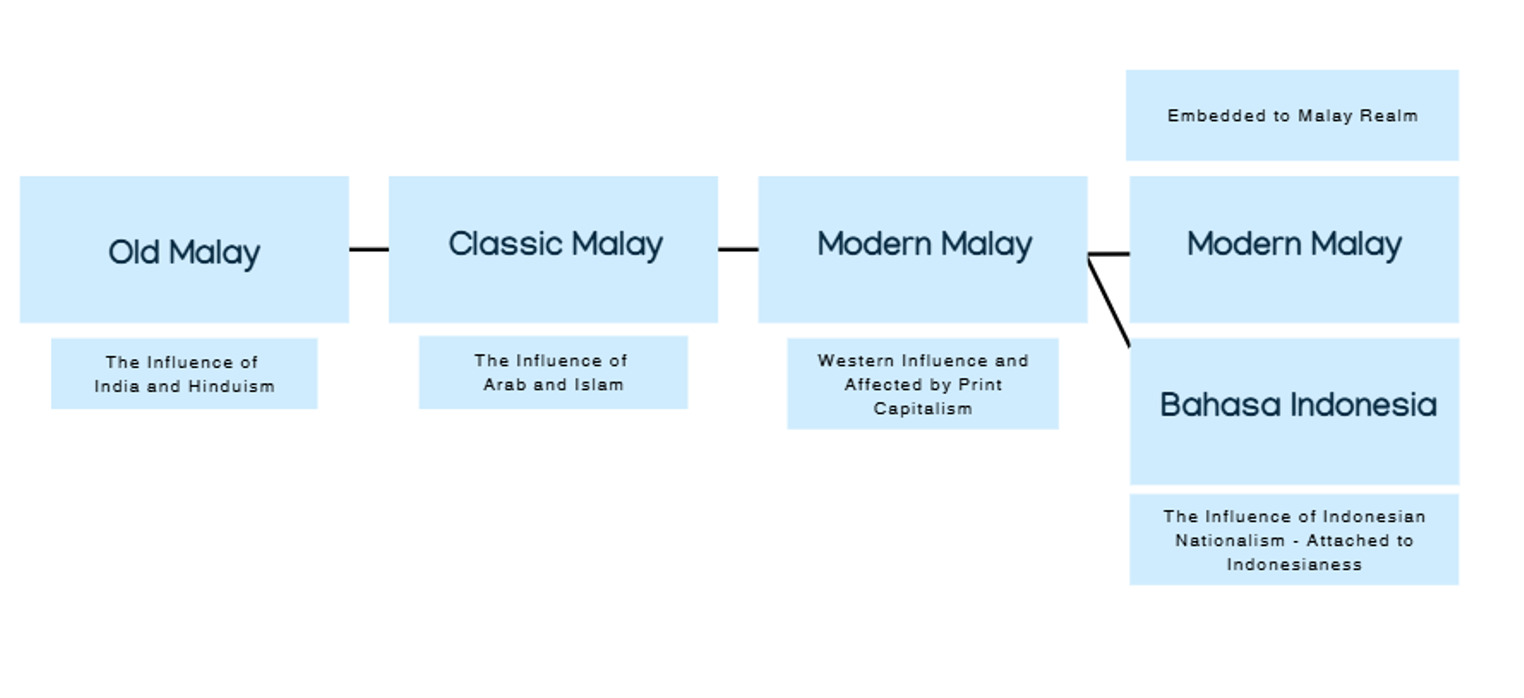
The historical narrative of Bahasa Indonesia in the books used in Indonesian universities and academic articles usually highlights three things only: the Malay language as lingua franca in Nusantara archipelago, the establishment of Balai Pustaka, and the Youth Pledge of 1928. Some important milestones may have been overlooked. This article offers a revised narrative of the history of Indonesian through its journey from a lingua franca in the Indonesian archipelago in the past to the formation of the modern Indonesian state, from Malay to Indonesian. Literature review is used in this article by involving various relevant data sources, both printed and digital, regarding the history of Bahasa Indonesia. Literature review produces several findings from the historical phase of Bahasa Indonesia. In addition, this literature review also reveals that Bahasa Indonesia finally became the national language of Indonesia after winning the competition with other languages in the Dutch East Indies. In the process, this involves the construction of identity and the struggle for power in the name of Indonesian nationalism.Downloads
References
Aaron, L. (2008). Writing a literature review article. Radiologic Technology, 80(2), 185–186.
Abas, H. (1987). Indonesian as a unifying language of wider communication: a historical and sociolinguistic perspective. Department of Linguistics, Research School of Pacific Studies, the Australian National University.
Abdullah, F., Rahman, A. H. A., Ali, A. M., Khairi, F. A. K., & Adam, F. (2020). Jawi script and the Malay society: Historical background and development. International Journal of Management (IJM), 11(7), 68–78.
Adam, A. (1995). The vernacular press and the emergence of modern Indonesian consciousness (1855-1913). Southeast Asia Program, Cornell University.
Adelaar, K. A. (2004). Where does Malay come from? Twenty years of discussions about homeland, migrations and classifications. Bijdragen Tot de Taal-, Land- En Volkenkunde, 160(1), 1–30.
Ahmad, S., Othman, H., Afkari, R., Rusdi, M., & Rahim, M. H. A. (2012). Cabaran semasa tulisan Jawi sebagai warisan masyarakat peradaban bangsa Melayu. Journal of Techno-Social, 4(2), 81–88.
Ali, M. (2010). Religion, imperialism, and resistance in nineteenth century’s Netherlands Indies and Spanish Philippines. Jurnal Kajian Wilayah, 1(1), 119–140.
Alisjahbana, S. T. (1979). Amir Hamzah: Penyair Besar antara Dua Zaman dan Uraian Nyanyi Sunyi. Dian Rakyat.
Alisjahbana, S. T. (1991). Sejarah bahasa Indonesia. In Masa lampau bahasa Indonesia: Sebuah bunga rampai (pp. 95–109). Penerbit Kanisius.
Anderson, B. R. O. (1990). Language and Power: Exploring Political Cultures in Indonesia. Cornell University Press.
Avé, J. B. (1989). “Indonesia”,’Insulinde’and’Nusantara’: Dotting the I’s and Crossing the T. Bijdragen Tot de Taal-, Land-En Volkenkunde, 2/3de Afl, 220–234.
B. Djamaloedin bin Mohamad Rasad. (1910). Boeah-Pikiran. H. Luyendijk.
Bhabha, H. K. (1984). Of Mimicry and Man: The Ambivalence of Colonial Discourse. October - Discipleship: A Special Issue on Psychoanalysis (Spring 1984), 28, 125–133.
Bolderston, A. (2008). Writing an effective literature review. Journal of Medical Imaging and Radiation Sciences, 39(2), 86–92.
Brandstetter, R. (1916). An introduction to Indonesian linguistics: Being four essays by Renward Brandstetter (Trans. by Charles Otto Blagden). The Royal Asiatic Society.
Chee, T. S. (1992). Defining “Malay.” Department of Malay Studies - Seminar and Occasional Papers Series, 6, 1–18.
Curaming, R. A. (2011). Filipinos as Malay: Historicising an identity. Melayu: Politics, Poetics and Paradoxes of Race, 241–274.
Damono, S. D. (2014, August 24). Yamin, Bahasa, Bangsa. Tempo, 118.
Darmansyah, & Misman. (2010). Aktivis Persatuan Pemuda RM. Joesoepadi Danoehadiningrat (A. Nugroho (ed.)). Museum Sumpah Pemuda, Kementerian Pendidikan dan Kebudayaan.
DeStephano, M. (2011). José Rizal, the Quest for Filipino Independence, and the Search for Ultimate Reality and Meaning. Ultimate Reality and Meaning, 34, 113–129. https://doi.org/10.3138/uram.34.1-2.113
Dhakidae, D. (2003). Cendekiawan dan Kekuasaan dalam Negara Orde Baru. Gramedia Pustaka Utama.
Dungcik, M. (2017). Jawi’s Writing as a Malay Islamic Intellectual Tradition. Journal of Malay Islamic Studies, 1(2), 113–120.
Embong, A. M., Jusoh, J. S., Hussein, J., & Mohammad, R. (2016). Tracing the Malays in the Malay land. Procedia-Social and Behavioral Sciences, 219, 235–240.
Enre, F. A. (1963). Perkembangan puisi Indonesia dalam masa duapuluhan. Gunung Agung.
Etek, A., A.M., M., & B.R., A. (2008). Kelah Sang Demang: Jahja Datoek Kajo; Pidato Otokritik di Volksraad 1927-1939. LKiS Pelangi Aksara.
Formichi, C. (2012). Islam and the Making of the Nation: Kartosuwiryo and Political Islam in 20th Century Indonesia. KITLV Press.
Foulcher, K. (1977). Perceptions of Modernity and the Sense of the Past: Indonesian Poetry in the 1920s. Indonesia, 23, 39–58.
Foulcher, K. (2000). Sumpah Pemuda: the making and meaning of a symbol of Indonesian nationhood. Asian Studies Review, 24(3), 377–410.
Gomez, J. E. A. (2020). Locating the Filipino as Malay: A Reassertion of Historical Identity from the Regional Periphery. TRaNS: Trans -Regional and -National Studies of Southeast Asia, 1–23. https://doi.org/DOI: 10.1017/trn.2019.17
Gramsci, A. (1985). Selections from Cultural Writings (trans. William Boelhower) (D. Forgasand & G. Nowell-Smith (eds.)). Lawrence and Wishart.
Groeneboer, K. (1999). Politik Bahasa pada Masa Hindia Belanda. Wacana, 1(1), 32–48.
Hafiz, M., Olivia, O., Utami, A. D., Ramadhan, R., Julita, H., Yansyah, F., & Asni, M. A. (2025). Sejarah Bahasa Indonesia. Jurnal Intelek Insan Cendikia, 2(2), 2598–2606.
Hajek, J. (2000). Towards a language history of East Timor. In Quaderni del Dipartimento di Linguistica (pp. 213–227). Università di Firenze.
Hardjito. (1952). Risalah Gerakan Pemuda. Pustaka Antara.
Hasrianti, A. (2014). Bahasa Indonesia: Sejarah dan Pengembangan (M. Ridwan (ed.)). Alauddin University Press.
Hatta, M. (1986). Sumpah Pemuda. In Bunga Rampai Soempah Pemoeda (disusun oleh Yayasan Gedung-gedung Bersejarah Jakarta) (pp. 305–308). Balai Pustaka.
Hijjas, M. (2021, July 20). Jawi: identity and controversy. New Mandala. https://www.newmandala.org/jawi-identity-and-controversy/
Hoogervorst, T. G. (2024). Seventeenth-century Malay wordlists and their potential for etymological scholarship. Wacana, Journal of the Humanities of Indonesia, 25(3), 531–575.
Hooykaas, C. (1951). Perintis Sastera (terj. Raihoel Amar gl. Datoek Besar). J.B. Wolters.
Hummel, J. H. (1913). Voordracht over De bediening der Paketvaart inden Nederl. Indischen Archipel. J.H. De Bussy.
Ibrahim, N. (2015). Jawi Script in Hadith Literatures in Malaysia: Issues and Challenges. International Proceedings of Economics Development and Research, 83, 94–98.
Indonesia-Moeda. (1931). Soemangat Baroe Menoedjoe Indonésia-Raja. Aboean Goeroe-Goeroe: Orgaan Oentoek Pemadjoekan Onderwijs, Bahasa Dan Bangsa, XI(6), 106–109.
Jedamski, D. (1992). Balai Pustaka: A Colonial Wolf in Sheep’s Clothing. Archipel, 44(1), 23–46.
Jedamski, D. (1997). De taalpolitiek van de Balai Poestaka. In K. Groeneboer (Ed.), Koloniale taalpolitiek in Oost en West: Nederlands-Indië, Suriname, Nederlandse Antillen en Aruba (pp. 159–185). Amsterdam University Press.
Johns, A. (1959). The novel as a guide to Indonesian social history. Bijdragen Tot de Taal-, Land-En Volkenkunde, 3de Afl, 232–248.
Johns, A. H. (1959). Indonesian literature and the social upheaval. Australian Journal of International Affairs, 13(4), 293–303.
Jones, R. (1973). Earl, Logan and “Indonesia.” Archipel, 6, 93–118.
Jones, R. (1975). George Windson Earl and ‘Indonesia’—I. Indonesia Circle. School of Oriental & African Studies. Newsletter, 3(7), 12–14.
Jones, T. (2013). Culture, Power, and Authoritarianism in the Indonesian State: Cultural Policy across the Twentieth Century to the Reform Era. Brill.
Junus, U. (1960). Istilah dan Masa Waktu ‘Sastera Melayu’ dan ‘Sastera Indonesia.’ Medan Ilmu Pengetahuan, I(3), 245–260.
Kartodikromo, M. M. (2018). Controleur Walter hendak verlof ke Eropa. In Student Hidjo (pp. 151–164). Penerbit Narasi.
Kemmerer, E. W. (1908). The Progress of the Filipino People toward Self-Government. Political Science Quarterly, 23(1), 47–74.
Khuzaemah, E., & Nurpadillah, V. (2022). Sejarah, Kedudukan, dan Fungsi Bahasa Indonesia untuk Perguruan Tinggi (A. W. Wilsa (ed.)). CV Brimedia Global.
Kratz, E. U. (2002). Jawi spelling and orthography: a brief review. Indonesia and the Malay World, 30(86), 21–26.
Kridalaksana, H. (2010). Masa-masa awal bahasa Indonesia. Laboratoium Leksikologi dan Leksikografi Fakultas Ilmu Pengetahuan Budaya Universitas Indonesia.
Kuitert, L. (2021). Balai Pustaka and the Politics of Knowledge. Lembaran Sejarah, 17(1), 2–17.
Labrousse, P. (1976). Histoire des dictionnaires du malais et de l’indonésien. Archipel, 12(1), 9–45.
Laffan, M. F. (2003). Islamic nationhood and colonial Indonesia: The umma below the winds. RoutledgeCurzon.
Lim, B. S., & Poedjosoedarmo, G. R. (2016). Bahasa Indonesia and Bahasa Melayu: convergence and divergence of the official languages in contemporary Southeast Asia. In A. Hashim, G. Leitner, & H.-G. Wolf (Eds.), Communicating with Asia: The Future of English as a Global Language (pp. 170–187). Cambridge University Press. https://doi.org/DOI: 10.1017/CBO9781107477186.012
Locher-Scholten, E. (1994). Dutch expansion in the Indonesian archipelago around 1900 and the imperialism debate. Journal of Southeast Asian Studies, 25(1), 91–111.
Lowenberg, P. (1985). Malay in Indonesia, Malaysia, and Singapore: Three Faces of a National Language. In F. Coulmas (Ed.), What Are National Languages Good For? Karoma Publishers.
Mackie, J. A. C. (1980). Integrating and centrifugal factors in Indonesian politics since 1945. In J. A. C. Mackie (Ed.), Indonesia the making of a nation; Australian perspectives (Vol. II) (pp. 669–684). Research School of Pacific Studies, Australian National University.
Mahayana, M. S. (2009). Perkembangan Bahasa Indonesia—Melayu di Indonesia dalam Konteks Sistem Pendidikan. INSANIA: Jurnal Pemikiran Alternatif Kependidikan, 14(3), 395–424.
Manuaba, I. B. P. (2019). Wacana Bahasa dan Sastra. Airlangga University Press.
Marsudi. (2008). Eksistensi Bahasa Indonesia sebagai Bahasa Persatuan. Jurnal Sosial Humaniora, 1(2), 172–184.
Masyhur. (2018). Tulisan Jawi sebagai warisan intelektual Islam Melayu dan peranannya dalam kajian keagamaan di Nusantara. Tamaddun: Jurnal Kebudayaan Dan Sastra Islam, XVIII(2), 91–103.
McLuhan, M. (1964). Understanding Media: The Extensions of Man. McGraw-Hill.
Moriyama, M. (2005). Sundanese print culture and modernity in nineteenth-century West Java. NUS Press.
Moriyama, M. (2021). Colonial Print Culture: Sundanese Book Publishing in the Dutch East Indies in the Early Twentieth Century. Lembaran Sejarah, 17(1), 18–35.
Munzir, M. (2015). Pengajaran Pribahasa Bahasa Indonesia Menggunakan Model Pasangan Makna. LINGUA : Jurnal Bahasa, Sastra, Dan Pengajarannya, 12(2 SE-Articles), 271–278.
Nagazumi, A. (1978). The word “Indonesia”: The growth of its political connotation. Indonesia Circle, 6(17), 28–34.
Nagazumi, A. (1986). Masa Awal Pembentukan “Perhimpunan Indonesia”: Kegiatan Mahasiswa Indonesia di Negeri Belanda, 1916-1917. In A. Nagazumi (Ed.), Indonesia dalam Kajian Sarjana Jepang: Perubahan Sosial Ekonomi Abad XIX-XX dan Berbagai Aspek Nasionalisme Indonesia (pp. 133 – 158). Yayasan Obor Indonesia.
Nasucha, Y., Rohmadi, M., & Budi Wahyudi, A. (2018). Bahasa Indonesia untuk penulisan karya tulis ilmiah (Edisi revisi). Media Perkasa.
Niemann, G. K. (1879). Een Nieuw Tijdschrift voor den Indischen Archipel. Bijdragen Tot de Taal-, Land-En Volkenkunde van Nederlandsch-Indië, 27(2de Afl), 232–235.
Oemarjati, B. S., Sumardi, Suyatno, S., Rustapa, A. K., Zaidan, A. R., Tasai, A., & Pradopo, R. D. (1993). Citra Manusia dalam Puisi Indonesia Modern 1920-1960 (N. Hasjim (ed.)). Pusat Pembinaan dan Pengembangan Bahasa.
Ozay, M. (2011). A brief overview of relations between Malay language and national awareness. International Conference on Social Science and Humanity, 473–477.
Paauw, S. (2009). One land, one nation, one language: An analysis of Indonesia’s national language policy (No. 1; Working Papers in the Language Sciences). Citeseer.
Paterson, H. S. (1924). An early Malay Inscription from Trengganu. Journal of the Malayan Branch of the Royal Asiatic Society, 2(3 (92)), 252–258.
Poeze, H. A. (1989). Early Indonesian emancipation Abdul Rivai, Van Heutsz and the Bintang Hindia. Bijdragen Tot de Taal-, Land-En Volkenkunde, 1ste Afl, 87–106.
Pourpouras, H. (2010). Language. In P. Post, W. H. Frederick, I. Heidebrink, S. Sato, W. B. Horton, & D. Kwartanada (Eds.), The Encyclopedia of Indonesia in the Pacific War: In cooperation with the Netherlands Institute for War Documentation (pp. 378–385). Brill.
Pusposari, D. (2017). Kajian linguistik historis komparatif dalam sejarah perkembangan bahasa Indonesia. Jurnal Inovasi Pendidikan, 1(1), 75–85.
Rahman, M. A., Darmansyah, D., Suswadi, S., Wiyadi, S. S., & Misman, M. (2008). Sumpah Pemuda: Latar sejarah dan pengaruhnya bagi pergerakan nasional (Cetakan Ketiga). Museum Sumpah Pemuda.
Ranuwihardjo, A. D. (1986). Kami bukan inlanders. In Bunga Rampai Soempah Pemoeda (disusun oleh Yayasan Gedung-gedung Bersejarah Jakarta) (pp. 107–110). Balai Pustaka.
Reid, A. (2014). The Blood of the People: Revolution and the End of Traditional Rule in Northern Sumatra. NUS Press.
Reid, Anthony, Marr, D., & Kartodirdjo, S. (1983). Dari Raja Ali Haji hingga Hamka: Indonesia dan Masa Lalunya. Grafiti Pers.
Repelita, T. (2018). Sejarah Perkembangan Bahasa Indonesia (Ditinjau dari Perspektif Sejarah Bangsa Indonesia). Jurnal Artefak, 5(1), 45–48.
Ricklefs, M. C. (2001). A History of Modern Indonesia since c.1200. Palgrave.
Rinkes, D. A. (1923). Volkslectuur. In L. F. van Gent, W. A. Penard, & D. A. Rinkes (Eds.), Gedenkboek voor Nederlandsch-Indië, ter gelegenheid van het Regeeringsjubileum van H.M. de Koningin 1898-1923 (pp. 183–188). G. Kolff & Co.
Rusli, M. (2013). Sitti Nurbaja: Kasih tak Sampai (cetakan ke-50). Balai Pustaka.
Sa-Orang Jang Bangsjawan. (1857). Boek Saier oetawa Terseboet Pantoen. Lange & Co.
Samekto. (1991). Politik bahasa yang bersangkutan dengan hubungan antara bahasa Belanda dan bahasa Melayu antara tahun 1900 dan 1940. In Masa lampau bahasa Indonesia: Sebuah bunga rampai (pp. 219–231). Penerbit Kanisius.
Sarkar, H. B. (1969). South-India in Old-Javanese and Sanskrit Inscriptions. Bijdragen Tot de Taal-, Land- En Volkenkunde, 125(2), 193–206.
Schrieke, B. J. O. (1929). Native Society in the Transformation Period. In B. J. O. Schrieke (Ed.), The effect of western influence on native civilisations in the Malay Archipelago (pp. 237–247). G. Kolff & Co.
Silaen, P., & Smark, C. J. (2006). The “Culture System” in Dutch Indonesia 1830–1870: How Rawls’s original position ethics were violated.
Siregar, B. (1964). Sedjarah Sastera Indonesia Modern. Akademi Sastera dan Bahasa Multatuli.
Sneddon, J. (2003). The Indonesian Language: its history and role in modern society. University of New South Wales Press.
Snyder, H. (2024). Designing the literature review for a strong contribution. Journal of Decision Systems, 33(4), 551–558.
Stutje, K. (2016). Behind the Banner of Unity: Nationalism and anticolonialism among Indonesian students in Europe, 1917-1931. Universiteit van Amsterdam.
Sudaryanto. (2018). Tiga fase perkembangan bahasa indonesia (1928-2009): Kajian linguistik historis. Aksis: Jurnal Pendidikan Bahasa Dan Sastra Indonesia, 2(1), 1–16.
Sudaryanto. (2019). Dari Sumpah Pemuda (1928) sampai Kongres Bahasa Indonesia I (1938): Kajian Linguistik Historis Sekitar Masa-Masa Prakemerdekaan. Kajian Linguistik Dan Sastra, 3(2), 100–108.
Sugiharta, B. A. (2015). “Unknown, Unloved”: The Developing Ideas Regarding Language Policy in the Dutch East Indies, 1890s-1928. Leiden: Colonial and Global History Programme, The Institute for History, Leiden University.
Suhartono, S., Parmin, J., & Wibowo, Y. N. A. (2015). Pengembangan Modul Membaca dan Menulis Berbasis Uji Diagnostik untuk Meningkatkan Pemahaman Siswa SMP Terhadap Materi Pokok Bahasa Indonesia. LINGUA : Jurnal Bahasa, Sastra, Dan Pengajarannya, 12(1 SE-Articles), 25–38.
Sularto, B. (1986). Dari Kongres Pemuda Indonesia Pertama ke Sumpah Pemuda. Balai Pustaka.
Sungkowati, Y. (2019). Nasionalisme dalam cerpen-cerpen majalah Panjebar Semangat sebelum kemerdekaan. Aksara, 31(2), 189–206.
Supardi, N. (2003). Kongres kebudayaan sebelum dan sesudah Indonesia merdeka. Kementerian Kebudayaan dan Pariwisata.
Tasai, S. A., Jayawati, M. T., & Subardini, N. N. (2002). Semangat nasionalisme dalam puisi sebelum kemerdekaan. Pusat Bahasa, Departemen Pendidikan Nasional.
Teeuw, A. (1950). Voltooid voorspel : Indonesische literatuur tussen twee wereldoorlogen. Jajasan Pembangunan.
Teeuw, A. (1972). The impact of Balai Pustaka on modern Indonesian literature. Bulletin of the School of Oriental and African Studies, 35(1), 111–127.
Tichelman, F. (1980). The Social Evolution of Indonesia: The Asiatic Mode of Production and Its Legacy. Martinus Nijhoff.
Tirtosudarmo, R. (2005). The’Orang Melayu’and’Orang Jawa’in the’Lands Below the Winds’. Centre for Research on Inequality, Human Security and Ethnicity - Queen Elizabeth House, University of Oxford.
Toer, P. A. (1985). Jejak Langkah. Hasta Mitra.
Van der Kroef, J. M. (1951). The term Indonesia: Its origin and usage. Journal of the American Oriental Society, 71(3), 166–171.
van Niel, R. (1960). The Emergence of the Modern Indonesian Elite. W. van Hoeve Ltd.
Wardaya, B. T. (2006). Bung Karno Menggugat. Galang Press.
Wee, B. Van, & Banister, D. (2016). How to write a literature review paper? Transport Reviews, 36(2), 278–288.
Wiggers, F. (1898). Albrecht’s Almanak Prijai dari Taon 1899 - Kaloewaran Taon jang Katiga - Djilid jang Pertama. Albrecht & Co.
Yamamoto, N. (2011). Print power and censorship in colonial Indonesia, 1914-1942. Cornell University.
Downloads
Submitted
Accepted
Published
How to Cite
Issue
Section
License
Copyright (c) 2026 Dipa Nugraha

This work is licensed under a Creative Commons Attribution-NonCommercial 4.0 International License.