Social Capital of Hafidzpreneur Students in Sustainable Sharia Economic Governance: A Maqāṣid Al-Sharīʻah Approach to SDG 8 In Indonesia
DOI:
https://doi.org/10.23917/profetika.v27i03.18753Keywords:
hafidzpreneur, islamic social capital, maqāṣid al-sharīʻah, sustainable sharia economic governance, sdg 8Abstract
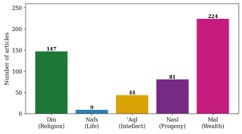
Objective: This study aims to analyse the contribution of social capital of hafidzpreneur students to sustainable sharia economic governance through the perspective of Maqāṣid al-Sharīʻah to support the achievement of SDG 8. Theoretical framework: The theoretical framework integrates social capital theory (beliefs, networks, and norms) with Maqāṣid al-Sharīʻah as the foundation of sustainable and SDG-oriented sharia economic governance 8. Literature review: Literature review was conducted through an integrative literature review of reputable national and international publications was conducted, including six articles from Profetika: Journal of Islamic Studies, on Islamic social capital, hafidzpreneur, Maqāṣid al-Sharīʻah, and SDG 8. Methods: The research uses a qualitative approach through integrative literature review, conceptual analysis, and content analysis of 324 Indonesian media news articles analysed by thematic synthesis. Results: The results of the study show that hafidzpreneur students form a distinctive Islamic social capital, where the spiritual discipline of tahfidz becomes the foundation for beliefs, socio-religious networks, and ethical norms in entrepreneurial activities. The social capital functions as a governance mechanism that reduces transaction costs, strengthens sharia compliance, and encourages ethical economic behaviour. Content analysis also showed that ḥifẓ al-māl was the most dominant goal of maqāṣid (69%), while 31% of the data simultaneously associated maqāṣid with SDG 8 indicators. Implications: The research findings serve as the basis for the development of tahfidz-based entrepreneurship policies and programs to strengthen sustainable sharia economic governance and support the implementation of SDG 8. Novelty: The novelty of the research lies in the integration of the concept of hafidzpreneur, social capital theory, and Maqāṣid al-Sharīʻah in building a sustainable sharia economic governance model oriented towards SDG 8.
References
[1] R. Alfi, “The Effectiveness of Sharia Fintech Securities Crowdfunding (SCF Syariah) for Business Capital for Santripreneurs in Indonesia,” Southeast Asia J. Islam. Bus. Econ. Grad., vol. 5, no. 1, pp. 43–58, 2026, https://doi.org/10.37567/sajgibe.v5i1.5190.
[2] A. Rahmati, Salman, Januddin, D. Mulyadi, and F. Mubarak, “Santripreneurship: Increasing Economic Independence Through Entrepreneurship Character Education at the Ummul Ayman Islamic Boarding School Samalanga,” J. As-Salam, vol. 7, no. 2, pp. 300–320, 2023, https://doi.org/10.37249/assalam.v7i2.665.
[3] A. S. Rusydiana, N. N. Izza, M. Sari, A. K. Octavia, S. Maysyaroh, and S. Salmah, “Assessing Social and Economic Impact: A Case Study of the Hafidzpreneur Scholarship Program,” Econ. Rev. Pesantren, vol. 2, no. 1, pp. 1–14, 2023, https://doi.org/10.58968/erp.v2i1.240.
[4] K. Scrivens and C. Smith, “Four Interpretations of Social Capital: An Agenda for Measurement,” OECD Publishing, Paris, 2013. https://doi.org/10.1787/5jzbcx010wmt-en.
[5] T. Claridge, “Introduction to Social Capital Theory (SOCAP101 Version 1.0),” Social Capital Research, 2018.
[6] J. Auda, Maqasid al-Shariah as Philosophy of Islamic Law: A Systems Approach. London and Washington: The International Institute of Islamic Thought, 2008, https://doi.org/10.2307/j.ctvkc67tg.
[7] D. R. Anwar, A. Wahab, and Waris, “Maqasid Syariah and Sustainable Development: Integrating Islamic Objectives into Economic Planning,” Formosa J. Multidiscip. Res., vol. 4, no. 6, pp. 2601–2618, 2025, https://doi.org/10.55927/fjmr.v4i6.269.
[8] I. L. Putri, A. B. Sulistiyo, N. W. Widiyanti, and M. Miqdad, “Systematic Literature Review on the Integration of Maqashid al-Shariah and ESG Principles in Islamic Financial Institutions,” Int. J. Res. Rev., vol. 12, no. 8, pp. 514–528, 2025, https://doi.org/10.52403/ijrr.20250861.
[9] M. A. Fauzi, S. Aisah, A. Halid, N. Ulum, and M. Z. Alfarisi, “Maqāṣid al-Sharīʻah and the Sustainable Development Goals (SDGs): Reconstructing Islamic Education for Social Justice and Environmental Balance,” Profetika J. Stud. Islam, vol. 27, no. 2, pp. 679–690, 2026, https://doi.org/10.23917/profetika.v27i02.17155.
[10] S. Rogošić and B. Baranović, “Social Capital and Educational Achievements: Coleman vs. Bourdieu,” Cent. Educ. Policy Stud. J., vol. 6, no. 2, pp. 81–100, 2016, https://doi.org/10.26529/cepsj.89.
[11] S. Grusendorf, “Bourdieu’s Field, Capital, and Habitus in Religion,” J. Sociol. Integr. Relig. Soc., vol. 6, no. 1, pp. 1–13, 2016.
[12] R. Yusfiarto, G. T. Pambekti, A. Setiawan, A. N. Khoirunnisa, and S. S. Nugraha, “Does Islamic Social Capital Enhance SMEs Sustainable Performance?,” J. Islam. Monet. Econ. Financ., vol. 8, no. 1, pp. 113–132, 2022, https://doi.org/10.21098/jimf.v8i1.1398.
[13] Afdawaiza, R. Yusfiarto, G. T. Pambekti, H. Al Ghunaimi, and A. Febriyanto, “From Social Trust to Halal Industry Dynamic: The Synergy of Islamic Social Capital and Financial Capability in Small Enterprises Sectors,” Maz. J. Pemikir. Huk. Islam, vol. 24, no. 2, pp. 248–281, 2025, https://doi.org/10.21093/mj.v24i2.11318.
[14] I. Silviana, “Religiusitas sebagai Modal Sosial Mahasiswa E-preneur Prodi Sosiologi Agama IAIN Kediri,” J. Sosiol. Reflektif, vol. 15, no. 2, pp. 379–398, 2021, https://doi.org/10.14421/jsr.v15i2.2130.
[15] M. A. Ma’arif, S. Sebgag, M. Syamsi, and A. Alai, “Religious Families as Sources of Islamic Cultural Capital: Social Analysis in Islamic Religious Education, Analysis of Bourdieu’s Social Theory,” Dirasah Int. J. Islam. Stud., vol. 3, no. 2, pp. 101–114, 2025, https://doi.org/10.59373/drs.v3i2.65.
[16] M. Andani and A. Agustina, “Integrasi Spiritual Digital Marketing, Modal Sosial, dan Tata Kelola Platform dalam Penguatan Ketahanan Wirausaha Muslim pada Ekosistem Islamic E-Business,” Indo-Fintech Intellectuals J. Econ. Bus., vol. 5, no. 4, pp. 1–18, 2025, https://doi.org/10.54373/ifijeb.v5i4.4623.
[17] R. I. Beekun, Islamic Business Ethics. Herndon, VA: The International Institute of Islamic Thought, 1996, https://doi.org/10.2307/j.ctvk8w1zv.
[18] M. F. Md. Sawari, M. Mat Jubri @ Shamsuddin, and A. A. Mahmad Robbi, “Integrating Maqāṣid al-Sharīʻah and Governance Principles: A Framework for SME Shariah Financial Compliance,” Int. J. Fiqh Usul al-Fiqh Stud., vol. 9, no. 3, pp. 97–116, 2025, https://doi.org/10.31436/ijfus.v9i3.408.
[19] B. T. Cahya, V. H. Ulya, N. A. M. Ali, I. S. Lubis, and D. P. Restuti, “Islamic Corporate Governance, Maqashid Syariah Index, Capital Structure, Firm Size, and Firm Value: An Empirical Analysis,” Talaa J. Islam. Financ., vol. 4, no. 1, pp. 28–45, 2024, https://doi.org/10.54045/talaa.v4i1.755.
[20] G. Baharuddin, D. Riskarini, S. Widyastuti, and F. Azzahra, “The Effect of Maqasid al-Shariah Towards Youth Motivation to Become an Entrepreneur in Indonesia,” Int. J. Financ. Accounting, Manag., vol. 6, no. 4, pp. 525–537, 2025, https://doi.org/10.35912/ijfam.v6i4.2598.
[21] M. I. Sholehudin, Taryono, and M. Nurman, “The Role of Santri Entrepreneurship and Santri Business Activities in Economic Independence (Case Study at Manahijul Huda Islamic Boarding School),” Indones. Interdiscip. J. Sharia Econ., vol. 8, no. 3, pp. 9592–9607, 2025.
[22] D. Purwana et al., “Membangun Kemandirian Ekonomi Santri: Pelatihan Pencatatan dan Pelaporan Keuangan untuk Bisnis Pesantren yang Berdaya Saing dan Berkelanjutan,” J. Pemberdaya. Masy. Univ. Al Azhar Indones., vol. 8, no. 1, pp. 13–24, 2025, https://doi.org/10.36722/jpm.v8i1.4629.
[23] Hotman and M. Luthfi, “The Influence of Maqasid al-Shariah on Sustainable Investment Decisions in Islamic Finance,” Econ. Stud. Bank. J., vol. 2, no. 1, pp. 295–309, 2025.
[24] S. Zuhdi, K. Dimyati, K. Wardiono, R. Shofia, and A. Hakim, “The Confiscation of Husbands’ Wealth as A Collateral for Post-Divorce Child Support: Perspective of Maqāsid Al-Sharī’ah,” Samarah, vol. 8, no. 2, pp. 912–933, 2024, https://doi.org/10.22373/sjhk.v8i2.17326.
[25] N. Mera, Marzuki, M. Taufan, B. Sapruddin, and A. I. Cahyani, “Child Custody Rights for Mothers of Different Religions: Maqāṣid al-Sharī’ah Perspective on Islamic Family Law in Indonesia,” Samarah, vol. 8, no. 3, pp. 1644–1668, 2024, https://doi.org/10.22373/sjhk.v8i3.23809.
[26] S. Hadi et al., “ESG Integration in Sharia Investment: A Maqāṣid Al-Sharī’ah Perspective on Sharia Mutual Fund Portfolios in Indonesia,” J. Ilm. Mizani, vol. 13, no. 1, pp. 267–282, 2026, https://doi.org/10.29300/mzn.v13i1.8995.
[27] W. P. Sari, A. Maghfiroh, Firiyanto, Ruslaini, M. Sirozi, and M. Astuti, “PKBM–PKPPS Dualism in Pesantren: Challenges of Collaborative Governance and IRE Innovation Toward SDG 4,” Profetika J. Stud. Islam, vol. 27, no. 2, pp. 399–410, 2026, https://doi.org/10.23917/profetika.v27i02.17650.
[28] F. Mu’in, Miswanto, R. N. Edy, R. Santoso, and A. Fikri, “Childfree in Modern Muslim Communities of Lampung and West Java Provinces: A Maqāṣid al-sharī’ah Perspective,” El-Usrah, vol. 7, no. 2, pp. 860–877, 2024, https://doi.org/10.22373/ujhk.v7i2.22400.
[29] F. ‘Alia Zahri, M. ‘Adli Zahri, A. Ambak, F. H. Ismail, and Z. Hamat, “Zakat on Non-Cash Employment Benefits: A Maqasid al-Shariah Framework,” Millah J. Relig. Stud., vol. 24, no. 2, pp. 983–1020, 2025, https://doi.org/10.20885/millah.vol24.iss2.ar13.
[30] M. Ilham, M. Darwis, A. Munir, Sudirman, and M. I. Hasanuddin, “Between Ḥifẓ al-ʿIrḍ (the Protection of Dignity) and Algorithmic Visibility: A Maqāṣid al-Sharīʿah Approach to Digital Modesty in the Age of Self-Commodification,” Maz. J. Perbandingan Maz., vol. 8, no. 1, pp. 75–91, 2026, https://doi.org/10.24252/mazahibuna.vi.64536.
[31] Sanuri, N. Mubarok, S. Musafa’ah, and Y. Irama, “Epistemological Transformation of ʿUrf in the DSN-MUI Fatwa on E-Commerce: A Maqāṣid al-Sharīʿah Based Analysis,” Al-Manahij J. Kaji. Huk. Islam, vol. 19, no. 2, pp. 167–190, 2025, https://doi.org/10.24090/mnh.v19i2.13145.
[32] M. Sya’roni, M. N. Ichwan, D. Ming, and M. Y. Pratama, “Reconstructing Ḥadith Interpretation through a Maqāṣid al-Sharīʿah Framework: A Methodological Reassessment of Normative–Contextual Readings,” Pharos J. Theol., vol. 107, no. 3, 2026, https://doi.org/10.46222/pharosjot.107.303.
[33] I. D. Yusuf, F. T. Bindawa, and D. Zuhroh, “Balancing the Protection of Life and the Prevention of Harm: A Maqāṣid al-Sharīʿah Framework for Pregnancies Resulting from Boko Haram-Induced Rape and Forced Marriage in Nigeria,” Al-Ahkam J. Ilmu Syari’ah dan Huk., vol. 11, no. 1, pp. 177–200, 2026, https://doi.org/10.22515/alahkam.v11i1.11694.
[34] T. Andiko, Z. Nurdin, and Efrinaldi, “Implementation of Restorative Justice in a Customary Court in Rejang Lebong District, Bengkulu, Indonesia: A Maqāṣid Al-Sharī‘ah Review,” Juris J. Ilm. Syariah, vol. 23, no. 1, pp. 93–106, 2024, https://doi.org/10.31958/juris.v23i1.12008.
[35] E. Fahmy, M. N. Hosen, T. D. Warninda, A. Rama, and Q. Aimar, “Measuring Contemporary Islamic Banking Sustainability: Integrating ESG and Maqashid al-Syarī‘ah in Indonesia,” MILRev Metro Islam. Law Rev., vol. 5, no. 1, pp. 351–378, 2026, https://doi.org/10.32332/milrev.v5i1.12880.
[36] I. N. Hidayat, S. U. Taqwa, M. Ghozali, M. A. M. Saleh, and Meriyati, “Reconstructing Islamic Banking Financing Practices: A Muamalah Law and SDGs Perspective on Sharia Compliance,” Profetika J. Stud. Islam, vol. 27, no. 2, pp. 663–678, 2026, https://doi.org/10.23917/profetika.v27i02.17656.
[37] Murini, F. Napu, I. S. Syaranamual, M. Yusuf, and S. Sondeng, “Sharia-Based Finance and Institutional Resilience in Islamic Banking: Evidence from Bank Muamalat and Its Contribution to the SDGs,” Profetika J. Stud. Islam, vol. 27, no. 2, pp. 481–496, 2026, https://doi.org/10.23917/profetika.v27i02.13114.
[38] M. I. S. Zulkepli, M. Safwan Harun, M. Ikhlas Rosele, S. H. Norazelan, and M. H. Mohd Azhar, “Artificial Intelligence in Islamic Finance: an Outlook Based on Maqasid Al-Shariah,” J. Fatwa Manag. Res., vol. 31, no. 2, pp. 304–335, 2026, https://doi.org/10.33102/jfatwa.vol31no2.780.
[39] H. Syahputra, S. Kamal, A. Alfarisi, A. Ibrahim, M. Rusdi, and Lailissa’adah, “Climate Resilience and Coffee Farmers’ Welfare in Central Aceh, Indonesia: Adaptation Strategies From the Maqāṣid Al-Sharīʿah Perspective,” Int. J. Islam. Financ. Sustain. Dev., vol. 17, no. 4, pp. 20–37, 2025, https://doi.org/10.55188/ijifsd.v17i4.1090.
[40] S. Syam, C. Permata, R. M. Haris, and M. M. Matondang, “Reevaluating the Legal Status of Monosodium Glutamate Consumption: The Indonesian Ulema Council’s Fatwas and Maqāṣid al-Sharī’ah,” Al-Manahij J. Kaji. Huk. Islam, vol. 18, no. 2, pp. 289–302, 2024, https://doi.org/10.24090/mnh.v18i2.11121.
[41] Y. A. Rasyid, F. Aziz, Djamaludin, and P. R. Tyas, “Reconstructing the Concept of Uang Panai in South Sulawesi: A Maqāṣid al-Sharī‘ah Approach for Revitalizing Women-Friendly Islamic Values,” Al-Ahkam J. Ilmu Syari’ah dan Huk., vol. 9, no. 1, pp. 1–13, 2024, https://doi.org/10.22515/alahkam.v9i1.8706.
[42] M. D. Pilhandoko, Wachidi, T. A. Mustofa, and L. Istiqomah, “Integrating SDGs into the Independent Curriculum in IRE and Ethics: Evidence from North Jakarta High Schools,” Profetika J. Stud. Islam, vol. 27, no. 2, pp. 497–512, 2026, https://doi.org/10.23917/profetika.v27i02.18447.
[43] Dahlifah, Lapipi, U. Sunarsih, Hasddin, and Munir, “Regional Economic Dimensions and Gender-Inclusive Islamic Finance: Advancing Maqāṣid al-Sharīʻah and the SDGs Through a Cross-Country Comparative Analysis,” Profetika J. Stud. Islam, vol. 27, no. 2, pp. 463–480, 2026, https://doi.org/10.23917/profetika.v27i02.12939.
[44] A. A. Rahman, M. A. Al-Bohari, S. M. N. Syed Omar, and H. ‘Azeemi A. Thaidi, “a Comparative Analysis of Zakat Distribution Schemes in Selected Higher Education Institutions in Selangor: a Maqasid Al-Shariah and Legal Perspective,” IIUM Law J., vol. 34, no. 1, pp. 507–558, 2026, https://doi.org/10.31436/iiumlj.v34i1.1261.
[45] Djumadi, Hamida, Kamiruddin, A. Syah, and Mujahidin, “Critical Review of Murābaḥah Financing in Contemporary Islamic Banking: A Maqāṣid al-Sharī‘ah Perspective,” MILRev Metro Islam. Law Rev., vol. 4, no. 2, pp. 1152–1188, 2025, https://doi.org/10.32332/milrev.v4i2.11087.
Downloads
Submitted
Accepted
Published
Issue
Section
License
Copyright (c) 2026 Unang Fauzi, Dimas Muhammad Hanief Arkaan -, Zikra Juninawan, Fahmi Alhadi

This work is licensed under a Creative Commons Attribution 4.0 International License.