From Remembering to Creating: Cognitive Maturity of Islamic Religious Education Postgraduate Students and Its Implications for the SDGs
DOI:
https://doi.org/10.23917/profetika.v27i02.16547Keywords:
higher-order thinking skills, revised bloom’s taxonomy, cognitive maturity, islamic religious education, sdgsAbstract
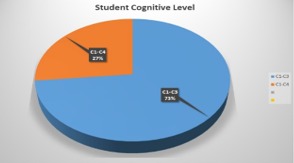
Objective: Higher Order Thinking Skills (HOTS) constitute a fundamental competency in postgraduate education because they enable students to analyze, evaluate, and generate innovative solutions to complex educational problems. Grounded in the Revised Bloom’s Taxonomy, this study aims to examine the cognitive maturity of third-semester Master of Islamic Religious Education students by mapping their cognitive performance across levels C1–C6 in responses to Final Semester Examination questions. Theoretical framework: The study is theoretically grounded in the Revised Bloom’s Taxonomy, which conceptualizes cognitive development as progressing from remembering (C1) and understanding (C2) to applying (C3), analyzing (C4), evaluating (C5), and creating (C6). Literature review: Previous studies have consistently reported that university students tend to demonstrate proficiency at lower cognitive levels while encountering difficulties in higher-order thinking, particularly in analysis, evaluation, and creation. Method: This study employed a document and content analysis approach by examining the examination answer sheets of 15 postgraduate students. Each response was systematically coded according to the cognitive processes of the Revised Bloom’s Taxonomy, while quantitative descriptive analysis was used to determine the percentage distribution of cognitive levels, supported by qualitative interpretation of students’ reasoning, analytical depth, and argument quality. Results: The findings reveal that 73% of students remained within lower-order cognitive levels (C1–C3), demonstrating competencies in remembering, understanding, and applying concepts. Only 27% achieved the analytical level (C4), whereas none demonstrated evaluation (C5) or creation (C6). These findings indicate that postgraduate students’ cognitive maturity remains below expectations and is influenced by instructional practices emphasizing factual knowledge and procedural understanding rather than analytical, evaluative, and creative thinking. Implications: The study implies that postgraduate learning should integrate active learning strategies, authentic assessment, and HOTS-oriented question design to cultivate higher cognitive competencies. Strengthening these dimensions contributes directly to Sustainable Development Goal 4 by improving educational quality and preparing graduates capable of critical reasoning and innovative problem-solving. Novelty: The novelty of this research lies in providing an empirical cognitive maturity profile of Islamic Religious Education postgraduate students through systematic examination analysis, offering evidence-based recommendations for redesigning postgraduate instruction and assessment toward higher-order thinking development.
References
[1] A. Alzahrani and A. A. Albeladi, “Collaborative Leadership and Its Relationship with Students’ Educational Attainment,” J. Educ. Soc. Res., vol. 13, no. 4, pp. 331–340, 2023, doi: 10.36941/jesr-2023-0113.
[2] E. Dewi, “EL-DARISA : Jurnal Pendidikan Islam,” vol. 2, pp. 154–167, 2023.
[3] T. T. Heng, L. Song, and K. Tan, “Understanding the interaction of assessment, learning and context: Insights from Singapore,” Educ. Res., vol. 63, no. 1, pp. 65–79, 2021, doi: 10.1080/00131881.2021.1874248.
[4] P. M. Efendi, S. Iskandar, and D. T. Kurniawan, “Keterampilan Abad 21 Kaitannya dengan Karakteristik Masyarakat di Era Abad 21,” vol. 6, no. 1, pp. 297–307.
[5] M. M. Sohail, A. Ahmad, and A. Büssing, “Transformational Spirituality, Transcendence, and Awe/Gratitude: Examining Their Influence on Prosocial and Pro-Environmental Behavior in Pakistan,” Religions, vol. 16, no. 5, 2025, doi: 10.3390/rel16050595.
[6] A. H. Subarjo et al., “Literasi Berita Hoaxs Di Internet Dan Implikasinya Terhadap Ketahanan Pribadi Mahasiswa ( Studi Tentang Penggunaan Media Sosial Pada Mahasiswa STT Adisutjipto Yogyakarta ),” vol. 26, no. 1, pp. 1–22, 2020.
[7] Z. Z. Malizal, “Islamic Education and Globalization: Curriculum, Identity, and Digital Integration,” Sinergi Int. J. Islam. Stud., vol. 3, no. 2, pp. 70–82, Apr. 2025, doi: 10.61194/ijis.v3i2.711.
[8] T. Cheungsirakulvit and S. Pranee, “Integrative ESG Strategies Transformative Leadership and Stakeholder Engagement in Thailand’s Corporate Landscape,” in ICCMETS Conference Proceedings 2023, EDUCATION STUDIO, Oct. 2023, pp. 391–396. doi: 10.62788/XzNk6Qy.
[9] T. Pini et al., “Towards a kingdom of reproductive life - the core sperm proteome,” Reproduction, vol. 169, no. 6, 2025, doi: 10.1530/REP-25-0105.
[10] A. Nasution, R. S. Tanjung, E. S. Ritonga, and M. P. Ilmiah, “Membangun Pemikiran Ilmiah yang Kritis melalui Logika,” vol. 11, no. 1, pp. 18–22, 2025.
[11] H. Hakiman, B. Sumardjoko, and W. Waston, “Religious Instruction for Students with Autism in an Inclusive Primary School,” Int. J. Learn. Teach. Educ. Res., vol. 20, no. 12, pp. 139–158, 2021, doi: 10.26803/IJLTER.20.12.9.
[12] U. N. Semarang and K. Semarang, “Peningkatan Kemampuan Berpikir Kreatif Mahasiswa Program Magister,” vol. 1, pp. 539–546, 2018.
[13] K. Krasin, “ESG: Integrating sustainability into business organizations,” Edelweiss Appl. Sci. Technol., vol. 9, no. 2, pp. 1794–1802, Feb. 2025, doi: 10.55214/25768484.v9i2.4927.
[14] G. Artawan, “Teaching strategies for improving the vocabulary mastery of Balinese traditional medicinal plants among teenagers in Denpasar, Bali, Indonesia,” Int. J. Innov. Creat. Chang., vol. 9, no. 10, pp. 48–68, 2019.
[15] M. Y. M. Hussin, F. Muhammad, A. A. Razak, and S. A. Awang, “Islamic Religious School as an Alternative Education Institution in the Global Era: A Bibliometric and Thematic Analysis,” Int. J. Learn. Teach. Educ. Res., vol. 23, no. 9, pp. 560–591, 2024, doi: 10.26803/ijlter.23.9.28.
[16] T. Essay, P. Uts, M. Kuliah, F. T. Elektro, and U. Telkom, “Peran Mahasiswa dalam Membangun Budaya Diskusi yang Kritis dan Sopan di dalam Kampus,” 2025.
[17] S. Ghufron, “The Effect of STAD-Type Cooperative Learning Based on a Learning Tool on Critical Thinking Ability in Writing Materials,” Int. J. Instr., vol. 16, no. 1, pp. 61–84, 2023, doi: 10.29333/iji.2023.1614a.
[18] D. A. Gozdecka, Rights, religious pluralism and the recognition of difference: Off the scales of justice. Australian National University College of Law, Australia: Taylor and Francis Inc., 2015. doi: 10.4324/9781315756318.
[19] D. H. Rhoney et al., “Behavioral Foundations for CBPE: Using the BCW to Advance Individual Readiness to Change,” Am. J. Pharm. Educ., vol. 89, no. 9, 2025, doi: 10.1016/j.ajpe.2025.101470.
[20] A. Kunnummal, “Islamic Liberation Theology and Decolonial Studies: The Case of Hindutva Extractivism,” Religions, vol. 14, no. 9, 2023, doi: 10.3390/rel14091080.
[21] D. P. Alkan, S. Gündüz, M. Ozbilgin, and R. Kamasak, “Problematising Sharenting of Supermoms in a Neoliberal Context,” Gender Issues, vol. 42, no. 1, 2025, doi: 10.1007/s12147-024-09348-2.
[22] C. Leslie, “Anderson and Krathwohl Bloom ’ s Taxonomy Revised,” 2016.
[23] Oluwatobi Timothy Soyombo, Olusegun Gbenga Odunaiya, Chinelo Emilia Okoli, Gloria Siwe Usiagu, and Ifeanyi Onyedika Ekemezie, “Sustainability reporting in corporations: A comparative review of practices in the USA and Europe,” GSC Adv. Res. Rev., vol. 18, no. 2, pp. 204–214, Feb. 2024, doi: 10.30574/gscarr.2024.18.2.061.
[24] A. Rohman, G. Meraj, A. Isna, M. M. Taruna, A. Rachmadhani, and N. E. Atmanto, “Challenges in Islamic Education Curriculum Development: A Comparative Study of Indonesia, Pakistan, and India,” Int. J. Learn. Teach. Educ. Res., vol. 23, no. 6, pp. 504–523, 2024, doi: 10.26803/ijlter.23.6.23.
[25] A. Info, “Higher Order Thinking Skills ( HOTS ) dalam pembelajaran social studies di sekolah menengah atas,” vol. 10, no. 1, pp. 50–61, 2023.
[26] A. Rohmad, E. Muawanah, N. Hidayah, and A. Ikhwan, “The Role of Curriculum Implementation and Principal Leadership to Enhance Academic Performance in Islamic Boarding Schools,” J. Soc. Stud. Educ. Res., vol. 15, no. 4, pp. 338–373, 2024.
[27] K. Atiullah, S. W. Fitriati, D. Rukmini, and M. A. N. Temanggung, “Using Revised Bloom ’ s Taxonomy to Evaluate Higher Order Thinking Skills ( Hots ) in Reading Comprehension Questions of English Textbook for Year X of High School,” vol. 9, no. 4, pp. 428–436, 2019.
[28] B. Wijayanto, D. H. Utomo, B. Handoyo, and M. Aliman, “PROBLEM-BASED LEARNING USING E-MODULE: DOES IT EFFECT ON STUDENT’S HIGH ORDER THINKING AND LEARNING INTEREST IN STUDYING GEOGRAPHY?,” J. Technol. Sci. Educ., vol. 13, no. 3, pp. 613–631, 2023, doi: 10.3926/jotse.1965.
[29] R. Gasbarro et al., “Composition and Functional Diversity of Juvenile Groundfish Assemblages in the California Current,” J. Biogeogr., vol. 52, no. 5, 2025, doi: 10.1111/jbi.15108.
[30] D. K. Anayanti, F. S. Dini, S. D. Putri, and L. E. Sari, “Implementasi pembelajaran berbasis High Order Thinking Skills ( HOTS ) Mahasiswa Kelas 4D PGSD Universitas Muhammadiyah Surakarta,” vol. 1, no. 1, pp. 12–21, 2024.
[31] J. H. Penelitian, K. Kepustakaan, and B. Pendidikan, “Jurnal Kependidikan:,” vol. 8, no. 4, pp. 957–971, 2022.
[32] G. Stupurienė, T. Jevsikova, Y. Gülbahar, A. Juškevičienė, A. Gindulytė, and A. Juodagalvytė, “To plug or not to plug: exploring pedagogical differences for teaching informatics in primary schools,” Educ. Inf. Technol., vol. 30, no. 4, pp. 4545–4582, 2025, doi: 10.1007/s10639-024-13000-7.
[33] A. Dyachenko, R. Mukanova, and M. Erkibayeva, “Integration of interdisciplinary connections between chemistry, physics, and biology in the education of secondary school students,” Int. J. Educ. Reform, Nov. 2024, doi: 10.1177/10567879241290180.
[34] H. Nurbayti, S. Suwarto, A. Purwanto, H. Nurbayti, S. Suwarto, and A. Purwanto, “Analisis Soal HOTs Penilaian Akhir Semester Mata Pelajaran Biologi Kelas X SMA Negeri 3 Sukoharjo Tahun Ajaran 2022 / 2023 Analysis of HOTs Questions in the End of Semester Assessment of Biology Subjects Class X SMA Negeri 3 Sukoharjo Academic Year 2022 / 2023,” vol. 32, no. 2, pp. 217–226, 2023.
[35] Waston, Mahmudulhassan, A. Nirwana, and I. Afiyah, “Student-Centered Learning to Prevent Radicalization at Islamic Junior Schools in Surakarta Indonesia,” Solo Univers. J. Islam. Educ. Multicult., vol. 2, no. 3, pp. 249–262, 2024, doi: 10.61455/sujiem.v2i03.207.
[36] M. Bertipe, H. Order, and T. Skills, “*Corresponding author,” vol. 10, no. 2, pp. 872–879, 2021.
[37] N. Asyriah, P. Studi, P. Guru, M. Ibtidaiyah, H. Sungai, and K. Selatan, “Kemampuan mahasiswa pgmi dalam menyelesaikan soal hots materi statistika,” vol. 4, no. 2, pp. 623–632, 2023.
[38] J. E. Nasution, S. Suparman, and B. Nurhayati, “Inclusive Islamic Education: The Role of Religious Moderation in Transformation of Islamic Education Institutions in Riau,” AL-ISHLAH J. Pendidik., vol. 16, no. 2, Jun. 2024, doi: 10.35445/alishlah.v16i2.5188.
[39] B. Baharudin, Y. Suryono, S. Sugito, H. Habibi, and I. Fiteriani, “Islamic elementary school quality improvement in capital theory perspective,” Int. J. Eval. Res. Educ., vol. 11, no. 2, pp. 499–506, 2022, doi: 10.11591/ijere.v11i2.22255.
[40] D. Haswati, D. R. Sulistyo, R. Rhikad, G. Tandi, and S. Raharjo, “Analisis kemampuan berpikir kritis mahasiswa dalam menyelesaikan soal hots ditinjau dari,” vol. 5, no. 1, pp. 83–93, 2024.
Downloads
Submitted
Accepted
Published
Issue
Section
License
Copyright (c) 2026 Asep Abdurrohman, Marzuki, Asrori Mukhtarom

This work is licensed under a Creative Commons Attribution 4.0 International License.