Qur'anic Consumption Ethics and SDGs: Reconstructing the Contextual Interpretation of Qur'an 17:26–27 as a Critique of Modern Consumerism
DOI:
https://doi.org/10.23917/profetika.v27i03.16514Keywords:
ma’na cum maghza, qur’anic consumption ethics, sdgs, tabdhir, modern consumerismAbstract
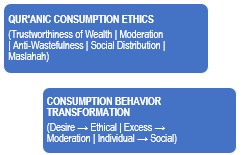
Objective: This study aims to reconstruct the Qur’anic ethics of consumption in QS. Al-Isra’ (17): 26-27 and examine its relevance to contemporary consumerism and the Sustainable Development Goals (SDGs). Theoretical framework: The research is grounded in the theoretical framework of Islamic moral economy and ethical sustainability, using the hermeneutical approach of Ma’na cum Maghza to connect the textual meaning of the Qur’an with its contemporary social significance. Literature review: Previous studies have examined the concept of tabdhir (wastefulness) in Qur’anic interpretation and Islamic economic ethics; however, most remain normative and rarely integrate Qur’anic ethical principles with modern consumer culture or the global sustainability discourse. Methods: This study employs qualitative library research with textual and contextual analysis of QS. Al-Isra’ (17): 26-27 based on classical and contemporary Qur’anic exegesis and interdisciplinary literature. The analysis follows three stages: historical meaning, universal significance, and contextual reinterpretation. Results: The findings reveal that Qur’anic consumption ethics are built upon three core principles: wealth as a social trust, moderation in consumption, and the prohibition of wastefulness (tabdhir). These principles function as a moral framework that critiques modern consumerism while simultaneously supporting responsible consumption and equitable resource distribution. Furthermore, the study demonstrates that these ethical principles align with several SDGs, particularly SDG 12, SDG 1, SDG 10, and SDG 16, by promoting sustainable consumption, social justice, and economic balance. Implications: This study contributes theoretically by integrating contextual Qur’anic interpretation with sustainability discourse, offering a value-based framework for sustainable development grounded in Islamic ethical principles. Novelty: This study integrates the Ma'na cum Maghza approach with sustainability discourse by reconstructing Qur'an 17:26–27, offering a Qur'anic ethical framework for critiquing modern consumerism and promoting responsible consumption aligned with the SDGs.
References
[1] S. Syamsuri, M. Farizi, and H. Khotimah, “Digitalization of the Economy and the Cultural Impact of Consumption in Modern Society: A Review from Al-Syaibanī’s Perspective,” dinar, vol. 9, no. 2, pp. 59–72, Aug. 2022, doi: 10.21107/dinar.v9i2.17918.
[2] Y. B. Pujiniarti, “Integrating Qur’anic Values In Early Childhood Play: A Living Qur’an Approach,” Edukasi Islami: Jurnal Pendidikan Islam, vol. 14, no. 1, pp. 285–304, 2025, doi: 10.30868/ei.v14i001.9484.
[3] G. M. Eckhardt and F. Bardhi, “New Dynamics of Social Status and Distinction,” Marketing Theory, vol. 20, no. 1, pp. 85–102, Mar. 2020, doi: 10.1177/1470593119856650.
[4] L. Yates, “How Everyday Life Matters: Everyday Politics, Everyday Consumption and Social Change,” Consumption and Society, vol. 1, no. 1, pp. 144–169, Aug. 2022, doi: 10.1332/MBPU6295.
[5] N. Yuwita, N. Mauhibatillah, and H. ‘Ulyah, “Dramaturgi: Budaya Flexing Berkedok Penipuan Di Media Sosial (Studi Kasus Indra Kenz Dan Doni Salmanan),” CMD, vol. 7, no. 1, pp. 01–14, Aug. 2022, doi: 10.33884/commed.v7i1.6602.
[6] N. P. Hariram, K. B. Mekha, V. Suganthan, and K. Sudhakar, “Sustainalism: An Integrated Socio-Economic-Environmental Model to Address Sustainable Development and Sustainability,” Sustainability, vol. 15, no. 13, p. 10682, Jul. 2023, doi: 10.3390/su151310682.
[7] N. K. Arora and I. Mishra, “Responsible Consumption and Production: A Roadmap to Sustainable Development,” Environmental Sustainability, vol. 6, no. 1, pp. 1–6, Mar. 2023, doi: 10.1007/s42398-023-00266-9.
[8] D. A. Enghariano, “Pembacaan Wahbah Az-Zuhaili Terhadap Term Mubazir Dalam Kitab al-Tafsir al-Munir,” alfawatih, vol. 3, no. 1, pp. 1–15, Jun. 2022, doi: 10.24952/alfawatih.v3i1.5600.
[9] M. Asutay and I. Yilmaz, “Constituting an Islamic Social Welfare Function: An Exploration Through Islamic Moral Economy,” IMEFM, vol. 14, no. 3, pp. 524–540, Jun. 2021, doi: 10.1108/IMEFM-03-2019-0130.
[10] I. Yilmaz, “Exploring the Foundations of Islamic Moral Economy: A Return to Substantive Morality,” IJOES, Oct. 2024, doi: 10.1108/IJOES-03-2024-0085.
[11] A. Inayah and U. M. Haerudin, “Empowering Pendidikan Saving Habit (Kebiasaan Menabung) Kaitannya dengan Qur’an Surat Al-Isra Ayat 27 dalam Upaya Pencegahan Perilaku Konsumtif pada Anak Usia Dini,” tintaemas, vol. 3, no. 1, pp. 173–186, May 2024, doi: 10.35878/tintaemas.v3i1.1175.
[12] D. D. Afifah, S. Indrayani, M. Albahi, and S. Syahpawi, “Nilai Filosofi Harta dan Kepemilikan dalam Ekonomi Syariah,” AJEI, vol. 9, no. 2, p. 275, Dec. 2024, doi: 10.30829/ajei.v9i2.22539.
[13] A. A. M. bin A. bin A. B. Qurthubi (al), Al-Jami’ Li Ahkam al-Qur’an, vol. 10. Beirut: Muassasah al-Risalah, 2006.
[14] B. F. Izzaturrahim and A. M. Tsaury, “Implikasi Pendidikan Q.S.Al-Isra Ayat 26-27 Tentang Larangan Tabdzir Terhadap Upaya Menghindari Perilaku Mubazir,” Pendidikan Agama Islam, vol. 6, no. 2, p. 39, 2020, doi: 10.29313/.v6i2.22560.
[15] N. Muhtarisah and W. Anam, “Fenomena Hedonisme: Kajian Tafsir Dan Hermeneutika Paul Ricoeur Terhadap QS. Al-Isra’ ayat 27 Bagi Gaya Hidup Mahasiswa Masa Kini,” An-natiq, vol. 4, no. 2, pp. 195–209, Aug. 2024, doi: 10.33474/an-natiq.v4i2.22103.
[16] T. Tauhid, H. Hadari, and S. Sunantri, “Penafsiran Mubazzir dalam Al-Qur’an: Studi Analisis Tafsir Al-Khazin,” sambas, vol. 7, no. 1, pp. 23–36, Sep. 2024, doi: 10.37567/sambas.v7i1.3126.
[17] O. Sandikci, “Religion and Everyday Consumption Ethics: A Moral Economy Approach,” J Bus Ethics, vol. 168, no. 2, pp. 277–293, Jan. 2021, doi: 10.1007/s10551-019-04422-2.
[18] D. Bonang, Muh. Baihaqi, Syukriati, N. Rahmaawati, and N. Suhartini, “Islamic Worldview and the Green Economy: A Philosophical Nexus for Sustainability and Equity,” International Journal of Ethics and Systems, pp. 1–25, Feb. 2026, doi: 10.1108/IJOES-01-2025-0047.
[19] H. A. Said, M. Mukri, J. Anggriani, and A. A. Wakhid, “Maqashid Based Qur’anic Interpretation: An Inclusive Approach for the Millenial Generation,” Samarah: Jurnal Hukum Keluarga dan Hukum Islam, vol. 9, no. 2, pp. 758–777, 2025, doi: 10.22373/pdjqc552.
[20] F. Fuadi, Z. Zulkarnain, B. Boihaqi, and M. S. R. Ibrahim, “Israf and Tabzir in Tafsir Al-Misbah: The Understanding of Pidie Jaya Community Leaders and Its Implications for Consumption in Aceh,” tafse, vol. 9, no. 2, p. 189, Dec. 2024, doi: 10.22373/tafse.v9i2.28851.
[21] S. Bahl, G. R. Milne, and E. G. Miller, “Expanding Consumer Mindfulness for Collective Sustainable Well‐being: Overview of the Special Issue and Future Research Directions,” Journal of Consumer Affairs, vol. 57, no. 2, pp. 699–720, Apr. 2023, doi: 10.1111/joca.12542.
[22] N. Khoerunnisah, F. Maharani, and S. Nuriyah, “Etika Konsumsi dalam Islam: Menjaga Keseimbangan antara Dunia dan Akhirat,” Ekopedia, vol. 1, no. 2, pp. 475–480, Jun. 2025, doi: 10.63822/1g9b9b48.
[23] C. Alawattage, C. Jayathileka, R. Hitibandara, and S. Withanage, “Moral Economy, Performative Materialism, and Political Rhetorics of Sustainability Accounting,” Critical Perspectives on Accounting, vol. 95, p. 102507, Sep. 2023, doi: 10.1016/j.cpa.2022.102507.
[24] A. Sayer, “Rentiership, Improperty and Moral Economy,” Environ Plan A, vol. 55, no. 6, pp. 1471–1484, Sep. 2023, doi: 10.1177/0308518X20908287.
[25] A. Salustri, “Social and Solidarity Economy and Social and Solidarity Commons: Towards the (Re)Discovery of an Ethic of the Common Good?,” Ann Public Coop Econ, vol. 92, no. 1, pp. 13–32, Mar. 2021, doi: 10.1111/apce.12307.
[26] Moh. Hamzah, “The Role and Legal Aspects of Infaq, Sadaqah, and Waqf in Realizing Economic Equality and People’s Welfare,” IQT, vol. 10, no. 1, p. 107, Aug. 2024, doi: 10.31602/iqt.v10i1.14950.
[27] O. Arkadeva, N. Berezina, and M. Arkadev, “Fiscal Policy and Its Impact on Poverty and Inequality:,” in Proceedings of the International Scientific-Practical Conference “Ensuring the Stability and Security of Socio-Economic Systems: Overcoming the Threats of the Crisis Space,” Kirov, Russian Federation: SCITEPRESS - Science and Technology Publications, 2021, pp. 43–48. doi: 10.5220/0010682300003169.
[28] A. Rasche, “The United Nations Global Compact and the Sustainable Development Goals,” in Research Handbook of Responsible Management, O. Laasch, R. Suddaby, R. E. Freeman, and D. Jamali, Eds., Edward Elgar Publishing, 2020. doi: 10.4337/9781788971966.00023.
[29] F.-M. Tsai, A. F. Mohamed, T.-D. Bui, K. Sethanan, and M.-L. Tseng, “Sustainable development goal 12 - responsible consumption and production challenges and opportunities in world regions: a data-driven analysis on circular economy practices,” Journal of Industrial and Production Engineering, vol. 42, no. 7, pp. 772–818, Oct. 2025, doi: 10.1080/21681015.2025.2532419.
[30] W. Shafik, “SDG 12: Responsible Consumption and Production—The Circular Economy,” in Factoring Technology in Global Sustainability, in Approaches to Global Sustainability, Markets, and Governance. , Singapore: Springer Nature Singapore, 2025, pp. 365–390. doi: 10.1007/978-981-96-7299-8_13.
[31] A. Singh and V. Singh, “The Role of Institutions in Peace and Justice for Achieving Sustainable Development Goal 16 and Societal Sustainability,” Revista Amazonia Investiga, vol. 13, no. 80, pp. 9–18, Aug. 2024, doi: 10.34069/AI/2024.80.08.1.
[32] K. R. Hope Sr., “Peace, Justice and Inclusive Institutions: Overcoming Challenges to the Implementation of Sustainable Development Goal 16,” Global Change, Peace & Security, vol. 32, no. 1, pp. 57–77, Jan. 2020, doi: 10.1080/14781158.2019.1667320.
[33] J. Cloarec, “The Personalization–Privacy Paradox in the Attention Economy,” Technological Forecasting and Social Change, vol. 161, p. 120299, Dec. 2020, doi: 10.1016/j.techfore.2020.120299.
[34] A. M. Krisna, “E-Commerce and Digital Economy: An Analysis of Changing Consumption Patterns and Their Impact on Economic Growth,” oikonomia, vol. 2, no. 3, pp. 123–137, May 2025, doi: 10.61942/oikonomia.v2i3.359.
[35] S. Syamsuddin, “Pendekatan Ma’na cum Maghza atas Al-Qur’an: Paradigma, Prinsip dan Metode Penafsiran,” UIN Sunan Kalijaga Yogyakarta, Yogyakarta, 2022.
[36] M. F. ’Abd A. Baqi, Al-Mu’jam Al-Mufahras Li Alfazh Al-Quran. Beirut: Dar Al Kutub Al Mishriyyah, 1364.
[37] A. Rozzaq and K. Mujahid, “Larangan Berperilaku Boros dalam Al-Qur’an dan As-Sunnah,” tsaqofah, vol. 4, no. 1, pp. 895–912, Jan. 2024, doi: 10.58578/tsaqofah.v4i1.2627.
[38] F. Dila, “Makna Tabżīr Dalam QS. Al-Isrā’: 26-27 Dan Relevansinya Terhadap Impulsive Buying Belanja Online (Analisis Semantik Toshihiko Izutsu),” UIN Prof. K. H. Saifuddin Zuhri, 2025.
[39] M. bin J. bin Y. bin K. bin K. A. J. At-Thabari, Tafsir Ath-Thabari, vol. 19. Jakarta: Pustaka Azzam, 2007.
[40] M. Q. Shihab, Tafsir Al-Mishbah: Pesan, Kesan, dan Keserasian Al-Qur’an, vol. 7, 15 vols. Tangerang: Lentera Hati, 2021.
[41] W. Al-Zuhaili, Al-Tafsir al-Munir fi al-’Aqidah wa al-Shari’ah wa al-Manhaj. Depok: Gema Insani Press, 2013.
[42] J. al-Din Suyuthi (al), Lubab al-Nuqul fi Asbab al-Nuzul. Beirut: Dar al-Ma’rifah, 1998.
[43] M. F. al-Din Razi (al), Mafatih al-Ghaib. Beirut: Dar al-Fikr, 1981.
[44] H. S. Arum and M. Mawardi, “Waste and Overconsumption in Modern Finance: an Analysis of Qs Values. Al-Isra: 26-27,” ekis, vol. 7, no. 1, pp. 30–50, Jan. 2025, doi: 10.55352/ekis.v7i1.1375.
[45] E. Sumardianto, “Telaah Harta dalam Perspektif Al-Qur’an: Amanah dan Tanggung Jawab Sosial,” IMTIYAZ: Jurnal Ilmu Keislaman, vol. 9, no. 1, pp. 93–110, 2025, doi: 10.46773/imtiyaz.v9i1.1589.
[46] B. Hamdi, “Prinsip dan Etika Konsumsi Islam (Tinjauan Maqashid Syariah),” ISLAMADINA, vol. 23, no. 1, pp. 1–15, Apr. 2022, doi: 10.30595/islamadina.v23i1.10821.
[47] A. Asriyana, A. M. Paramata, and A. Wijaya, “Tujuan dan Prinsip Konsumsi dalam Islam,” JIMB, vol. 8, no. 1, pp. 517–523, May 2025, doi: 10.37479/jimb.v8i1.33058.
[48] S. Arrosyid, “Tabzīr Dan Isrāf Dalam Al-Qur’an,” UIN Kiai Ageng Muhammad Besari Ponorogo, 2025.
[49] A. P. Awadin, B. M. Yunus, D. Rusmana, and M. J. N. Ikhsan, “Consumerism in the Modern Era: A Study of the Extravagant Verses in the Qur’an,” Arjis, vol. 3, no. 3, pp. 265–278, Oct. 2024, doi: 10.58824/arjis.v3i3.164.
[50] A. L. Hakim and E. Y. Rusadi, “Kritik Globalisasi: Fenomena Fast Fashion Sebagai Budaya Konsumerisme Pada Kalangan Pemuda Kota Surabaya,” almaarief, vol. 4, no. 2, pp. 59–67, Dec. 2022, doi: 10.35905/almaarief.v4i2.2768.
[51] U. Chasanah and M. Mathori, “Impulsive Buying: Kajian Promosi Penjualan, Gaya Hidup, dan Norma Subyektif Pada Marketplace di Yogyakarta,” jrmsi, vol. 12, no. 2, pp. 231–255, Sep. 2021, doi: 10.21009/JRMSI.012.2.03.
[52] E. Syaputra, “Perilaku Konsumsi Masyarakat Modern Perspektif Islam: Telaah Pemikiran Imam Al-Ghazali dalam Ihya’ Ulumuddin,” JES, vol. 2, no. 2, pp. 144–145, Dec. 2017, doi: 10.22219/jes.v2i2.5102.
[53] M. R. Hidayat, I. Ramadhani, and N. Huda, “Konstruksi Teori dan Etika Konsumsi Islami Sebagai Manifestasi Pemikiran Ekonomi Monzer Kahf,” JIEI, vol. 9, no. 2, p. 2461, Jul. 2023, doi: 10.29040/jiei.v9i2.8880.
[54] S. Musfiqoh, “Life Style as Consumer Satisfaction in the Maqāṣid of Islamic Economics: Gaya Hidup sebagai Kepuasan Konsumen dalam Maqāṣid Ekonomi Islam,” el-qist, vol. 13, no. 1, pp. 83–99, Jun. 2023, doi: 10.15642/elqist.2023.13.1.83-99.
[55] A. M. E. Bella, “Development of Monzer Kahf’s Islamic Consumption Theory and Ethics,” Jurnal Hukum Ekonomi Syariah, vol. 7, no. 1, p. 76, Jul. 2024, doi: 10.21043/tawazun.v7i1.25484.
[56] R. Abdelgalil, “A Conceptual and Textual Analysis of Israf (Excessiveness) in The Qur’an and The New Testament,” AFKAR, vol. 26, no. 2, pp. 413–450, Dec. 2024, doi: 10.22452/afkar.vol26no2.12.
[57] M. Kour, “Understanding the Drivers of Green Consumption: A Study on Consumer Behavior, Environmental Ethics, and Sustainable Choices for Achieving SDG 12,” SN Bus Econ, vol. 4, no. 9, p. 97, Aug. 2024, doi: 10.1007/s43546-024-00691-w.
[58] M. Bengtsson, E. Alfredsson, M. Cohen, S. Lorek, and P. Schroeder, “Transforming Systems of Consumption and Production for Achieving the Sustainable Development Goals: Moving Beyond Efficiency,” Sustain Sci, vol. 13, no. 6, pp. 1533–1547, Nov. 2018, doi: 10.1007/s11625-018-0582-1.
[59] F. Khan and M. A. Haneef, “Religious Responses to Sustainable Development Goals: An Islamic Perspective,” JIMF, vol. 8, no. 2, pp. 161–180, May 2022, doi: 10.21098/jimf.v8i2.1453.
[60] N. I. M. Adnan, M. ‘Adli Zahri, M. S. Samsurijan, and Z. Hamat, “Integrating Traditional Wisdom and Modern Strategies: Prophet Yusuf’s Legacy and SDG 2,” IJIT, vol. 26, no. 1, pp. 116–135, Dec. 2024, doi: 10.24035/ijit.26.2024.307.
[61] K. Govindan, “Theory Building Through Corporate Social Responsibility 4.0 for Achieving SDGs: A Practical Step Toward Integration of Digitalization With Practice-Based View and Social Good Theory,” IEEE Trans. Eng. Manage., vol. 71, no. 1, pp. 2103–2120, 2024, doi: 10.1109/TEM.2022.3155247.
Downloads
Submitted
Accepted
Published
Issue
Section
License
Copyright (c) 2026 Ach. Zayyadi, Wildana Dwi Lestari, Salih Abdulrahman Alsounusi

This work is licensed under a Creative Commons Attribution 4.0 International License.