A Digital Eco-Theological Da'wah Model for Raising Ecological Awareness Among Generation Z Toward Achieving the SDGs
DOI:
https://doi.org/10.23917/profetika.v27i02.16336Keywords:
digital da’wah, ecological awareness, ecotheology, generation z, sdgsAbstract
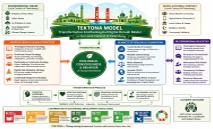
Objective: This study aims to formulate a model of digital eco-theological da’wah to enhance the ecological awareness of Generation Z in Palembang City toward achieving the Sustainable Development Goals (SDGs), particularly regarding environmental sustainability. This study also analyzes the construction of the narrative of tawhid, the concept of khalifah, and environmental responsibility in social media as a contemporary space for da’wah. Theoretical framework: This study is grounded in Islamic eco-theology, environmental communication theory, social learning theory, and the cultural da’wah paradigm to explain the process of internalizing theological values through digital interactions within an urban societal context. Literature review: Previous studies indicate the effectiveness of digital da’wah in enhancing the religiosity of the younger generation as well as the normative contributions of eco-theology to environmental ethics. However, the integration of eco-theology-based digital da’wah models with the formation of ecological awareness among Generation Z in the context of Indonesian cities remains limited. Methods: This study employs a qualitative approach with a case study design in Palembang City. Data were collected through in-depth interviews with da’is, Muslim environmental activists, da’wah content creators, and Generation Z; observation of Instagram, TikTok, and YouTube content; and Focus Group Discussions. Analysis was conducted using thematic reflection. Results: Findings indicate that digital eco-theological da’wah builds ecological awareness through narratives of ecological tawhid, the personalization of messages based on urban experiences, and digital role modeling, thereby fostering a transformation from cognitive awareness toward pro-environmental behavioral commitments aligned with the SDGs. Implications: The findings offer practical insights for developing digital da’wah strategies that foster environmental responsibility and support the SDGs among Muslim youth. Novelty: This study proposes a contextual digital eco-theological da’wah model that integrates Islamic environmental values, digital communication, and ecological awareness among Generation Z.
References
[1] S. H. Wahid, “Exploring the intersection of Islam and digital technology: A bibliometric analysis,” Soc. Sci. Humanit. Open, vol. 10, p. 101085, Jan. 2024, https://doi.org/10.1016/j.ssaho.2024.101085
[2] D. A. Gede Agung, A. M. Nasih, Sumarmi, Idris, and B. Kurniawan, “Local wisdom as a model of interfaith communication in creating religious harmony in Indonesia,” Soc. Sci. Humanit. Open, vol. 9, p. 100827, Jan. 2024, https://doi.org/10.1016/j.ssaho.2024.100827.
[3] T. Pangalila, K. Sobon, and J. M. Sumilat, “Development of a Culture-Based Civics Learning Model,” presented at the Unima International Conference on Social Sciences and Humanities (UNICSSH 2022), Atlantis Press, Jan. 2023, pp. 1747–1756. https://doi.org/10.2991/978-2-494069-35-0_207.
[4] S. Odak, “Theoretical Perspectives on Religion, Conflicts, and Peace,” in Religion, Conflict, and Peacebuilding: The Role of Religious Leaders in Bosnia and Herzegovina, S. Odak, Ed., Cham: Springer International Publishing, 2021, pp. 327–397. https://doi.org/10.1007/978-3-030-55111-7_11.
[5] I. Frydenlund, “Theorizing Buddhist anti-Muslim nationalism as global Islamophobia,” Ethn. Racial Stud., vol. 47, no. 5, pp. 1034–1056, Apr. 2024, https://doi.org/10.1080/01419870.2023.2268209.
[6] R. Ardi, D. H. Tobing, G. N. Agustina, A. F. Iswahyudi, and D. Budiarti, “Religious schema and tolerance toward marginalized groups in Indonesia,” Heliyon, vol. 7, no. 7, p. e07603, July 2021, https://doi.org/10.1016/j.heliyon.2021.e07603.
[7] S. Le Borgne, “Coping with urban shrinkage: the role of informal social capital in French medium-sized shrinking cities,” Eur. Plan. Stud., vol. 32, no. 3, pp. 569–585, Mar. 2024, https://doi.org/10.1080/09654313.2023.2221293.
[8] M. Hidayat, “Islamic Eco-Theology: Religious Narratives in the Climate Crisis in Indonesia,” Bull. Indones. Islam. Stud., vol. 2, no. 2, pp. 197–212, Dec. 2023, https://doi.org/10.51214/biis.v2i2.678.
[9] K. Aridah, H. Dahri, and B. Hakiki, “Contemporary Da’wah and Response to the Ecological Crisis: Integrating Islamic Values and Environmental Awareness,” TASAMUH J. of Community Communication and Development Islam, vol. 23, no. 1, pp. 105–124, Jun. 2025, https://doi.org/10.20414/tasamuh.v23i1.12750.
[10] W. Uriawan, M. S. Ijazi, N. R. Arraudy, O. S. P. Wibowo, and R. D. Santoso, “A Comparative Analysis of Instagram and TikTok as Islamic Da’wah Media in the Digital Era,” Jan. 3, 2026, arXiv: arXiv:2512.17646. https://doi.org/10.48550/arXiv.2512.17646.
[11] N. Aini, “The Use of Digital Platforms for Da’wah in the Generation Z Era,” CBJIS Cross-Bord. J. Islam. Stud., vol. 5, no. 2, pp. 109–116, Dec. 2023, https://doi.org/10.37567/cbjis.v5i2.3184.
[12] D. S. Maulana, “The Influence of Ustadz’s Da’wah Content via Digital Platforms on Generation Z’s Understanding of Religiosity,” Al-Ilmiya J. Islamic Educ., vol. 1, no. 4, pp. 1209–1214, Jan. 2026.
[13] A. Sarjito, “Challenges and Opportunities for Green Da’wah in the Digital Age: A Qualitative Study of Muslim Communities,” Himmah J. of Contemporary Islamic Studies, vol. 9, no. 1, pp. 1037–1055, Aug. 2025, doi: 10.47313/jk Contemporary Islam, vol. 9, no. 1, pp. 1037–1055, Aug. 2025, https://doi.org/10.47313/jkik.v9i1.4198.
[14] A. I. Jumhadi, A. S. Geun, M. Muhibuddin, F. K. Nisa, and N. A. Hijjiriyah, “Digital Media-Based Da’wah Strategies To Enhance Religious Understanding Among Generation Z In Indonesia,” Spektra J. Social Sciences, vol. 6, no. 3, pp. 343–350, Dec. 2024, https://doi.org/10.34005/spektra.v6i3.5255.
[15] Ika, J. Az-Zahra, A. Razzaq, and M. Y. Nugraha, “Spreading Islamic Values Among Gen-Z: (A Case Study of Digital Da’wah Communication Strategies on the Kadam Sidik TikTok Account),” NAAFI J. Sci. Students, vol. 1, no. 4, pp. 421–433, Apr. 2025, https://doi.org/10.62387/naafijurnalilmiahmahasiswa.v2i3.175.
[16] M. Maslani, “Eco-Theology: Islamic Ethics and Environmental Transformation in Islamic Boarding Schools,” Edukasi Islami J. Pendidik. Islam, vol. 12, no. 04, Nov. 2023, https://doi.org/10.30868/ei.v12i04.5132.
[17] A. Quddus, “Islamic Ecotheology: Constructive Theology to Address the Environmental Crisis,” Ulumuna, vol. 16, no. 2, pp. 311–346, 2012, https://doi.org/10.20414/ujis.v16i2.181.
[18] A. Halim, M. Rafii, and E. Kusnadi, “Ecotheology in Promoting Environmental Sustainability: Preserving the Eco-Friendly Islamic Doctrine in Jambi Province,” J. Ilm. of Islamic Theology, vol. 22, no. 2, pp. 183–190, Dec. 2023, https://doi.org/10.18592/jiiu.v22i2.10069.
[19] N. T. H. Azhar, M. H. I. Ramadhan, M. F. Fathurrahman, and N. Budiyanti, “Islam And Da’wah In Cyberspace: Opportunities And Risks In The Digital Age,” Indones. Gend. Soc. J., vol. 5, no. 1, pp. 1–7, Apr. 2024, https://doi.org/10.23887/igsj.v5i1.90254.
[20] S. Uswatun Khasanah, “Dakwah from an Ecological Media Perspective | KOMUNIKA,” Aug. 2018, Accessed: Feb. 20, 2026. [Online]. Available: https://ejournal.radenintan.ac.id/index.php/komunika/article/view/2751?utm_source=chatgpt.com
[21] M. Taqavi, M. Kafaee, and R. Ravanbakhsh, “Islamic alternatives to the ethical maxims of modern technology from the perspective of Mario Bunge,” Technol. Soc., vol. 66, p. 101681, Aug. 2021, https://doi.org/10.1016/j.techsoc.2021.101681.
[22] G. Wong-Parodi and I. Feygina, “Understanding and countering the motivated roots of climate change denial,” Curr. Opin. Environ. Sustain., vol. 42, pp. 60–64, Feb. 2020, https://doi.org/10.1016/j.cosust.2019.11.008.
[23] A. R. B. Soutter and R. Mõttus, “‘Global warming’ versus ‘climate change’: A replication on the association between political self-identification, question wording, and environmental beliefs,” J. Environ. Psychol., vol. 69, p. 101413, Jun. 2020, https://doi.org/10.1016/j.jenvp.2020.101413.
[24] M. Z. Kamal Basir et al., “Exploring the role of digital da’wah in promoting green initiatives: A mini review,” Sustain. Futur., vol. 10, p. 101099, Dec. 2025, https://doi.org/10.1016/j.sftr.2025.101099.
[25] S. Li, K. Xing, J. Meng, and X. Yang, “How does the innovation of digital and green technology integration promote corporate environmental performance,” Int. Rev. Econ. Finance, vol. 99, p. 104035, Apr. 2025, https://doi.org/10.1016/j.iref.2025.104035.
[26] S. Anwar, Suttrisno, and M. H. bin Ali, “Islamic Ecotheology, Green Radicalism, and SDGs: Ecological Ideology in the Political Islam Movement in Indonesia,” Profetika J. Studi Islam, vol. 26, no. 02, pp. 667–678, 2025, https://doi.org/10.23917/profetika.v26i02.11893.
[27] F. Radlinski and N. Craswell, “A Theoretical Framework for Conversational Search,” in Proceedings of the 2017 Conference on Human Information Interaction and Retrieval (CHIIR ’17). New York, NY, USA: Association for Computing Machinery, Mar. 2017, pp. 117–126. https://doi.org/10.1145/3020165.3020183.
[28] L. A. Palinkas, S. M. Horwitz, C. A. Green, J. P. Wisdom, N. Duan, and K. Hoagwood, “Purposeful Sampling for Qualitative Data Collection and Analysis in Mixed-Methods Implementation Research,” Adm. Policy Ment. Health, Mental Health, and Health Services Research, vol. 42, no. 5, pp. 533–544, Sep. 2015, https://doi.org/10.1007/s10488-013-0528-y.
[29] G. Guest, A. Bunce, and L. Johnson, “How Many Interviews Are Enough?: An Experiment with Data Saturation and Variability,” Field Methods, vol. 18, no. 1, pp. 59–82, Feb. 2006, https://doi.org/10.1177/1525822X05279903.
[30] V. Braun and V. Clarke, “Reflecting on reflexive thematic analysis,” Qual. Res. Sport Exerc. Health, vol. 11, no. 4, pp. 589–597, Aug. 2019, https://doi.org/10.1080/2159676X.2019.1628806.
[31] “The Use of Triangulation in Qualitative Research | Oncology Nursing Society.” Accessed: Feb. 20, 2026. [Online]. Available: https://www.ons.org/publications-research/onf/41/5/use-triangulation-qualitative-research
[32] L. Birt, S. Scott, D. Cavers, C. Campbell, and F. Walter, “Member Checking: A Tool to Enhance Trustworthiness or Merely a Nod to Validation?” Qual. Health Res., vol. 26, no. 13, pp. 1802–1811, Nov. 2016, https://doi.org/10.1177/1049732316654870.
[33] Alfadhli, S. I. Suratin, K. Nadir, M. R. Fadlillah, and G. A. Saputra, “Islamic Ecotheology: Exploring the Spiritual Relationship between Humans, Nature, and God in the Islamic Tradition,” Ta’wiluna J. of Quranic Studies, Exegesis, and Islamic Thought. Islam, vol. 6, no. 1, pp. 300–310, Mar. 2025, https://doi.org/10.58401/takwiluna.v6i1.2024.
[34] A. Abubakar, “The Synergy of Sufism, Da’wah, and Ecotheology as the Basis of Ecological Spirituality in Islam,” J. Al-Qiyam, vol. 6, no. 2, pp. 152–163, Oct. 2025, https://doi.org/10.33648/alqiyam.v6i2.1221.
[35] U. Fikriyati, “Environmental Conservation Orientation in Islamic Ecology,” J. Bimas Islam, vol. 10, no. 2, pp. 197–222, Jun. 2017, https://doi.org/10.37302/jbi.v10i2.19.
[36] M. Muttaqin and M. Alif, “Ecology in the Qur’an: A Thematic Qur’anic Study Using a Grounded Theory Approach,” Sinergi J. Ilm. Multidisiplin, vol. 1, no. 2, pp. 2197–2206, Dec. 2025.
[37] S. Ernas, B. Sarluf, and M. Ipaloat, “Discourse on Islamic Eco-theology in the Experience of Mangrove Forest Conservation with the Muslim Community in East Seram, Maluku,” MANGENTE J. Community Service to Society, vol. 3, no. 1, pp. 24–43, Nov. 2023, https://doi.org/10.33477/mangente.v3i1.5278.
[38] N. Ibtisam, Q. N. Mahmudah, T. Mulyani, and A. N. Huda, “Islamic Ecotheology: The Qur’an’s Response And Solution To The Phenomenon Of Global Warming,” Al Kareem Journal of Quranic Studies and Exegesis, vol. 3, no. 1, March, pp. 61–78, Mar. 2025.
[39] Mohammad ’Ulyan, “Digital Da’wah and Religious Authority: A Narrative Review of Islamic Preaching in the Social Media Era,” Sinergi Int. J. Islam. Stud., vol. 1, no. 3, pp. 110–123, Nov. 2023, https://doi.org/10.61194/ijis.v1i3.591.
[40] M. E. McCOMBS and D. L. Shaw, “The Agenda-Setting Function Of Mass Media*,” Public Opin. Q., vol. 36, no. 2, pp. 176–187, Jan. 1972, https://doi.org/10.1086/267990.
[41] G. D. Suttles, “Urban Ethnography: Situational and Normative Accounts,” Annu. Rev. Sociol., vol. 2, no. 2, 1976, pp. 1–18, Aug. 1976, https://doi.org/10.1146/annurev.so.02.080176.000245.
[42] A. Bandura, “Social Cognitive Theory of Mass Communication,” Media Psychol., vol. 3, no. 3, pp. 265–299, Aug. 2001, https://doi.org/10.1207/S1532785XMEP0303_03.
[43] R. M. Entman, “Framing: Toward Clarification of a Fractured Paradigm,” J. Commun., vol. 43, no. 4, pp. 51–58, Dec. 1993, https://doi.org/10.1111/j.1460-2466.1993.tb01304.x.
[44] M. C. Nisbet, “Communicating Climate Change: Why Frames Matter for Public Engagement,” Environ. Sci. Policy Sustain. Dev., vol. 51, no. 2, pp. 12–23, Mar. 2009, https://doi.org/10.3200/ENVT.51.2.12-23.
[45] J. G. Blumler, “The Role of Theory in Uses and Gratifications Studies,” Commun. Res., vol. 6, no. 1, pp. 9–36, Jan. 1979, https://doi.org/10.1177/009365027900600102.
[46] R. MacDonald, T. Shildrick, C. Webster, and D. Simpson, “Growing Up in Poor Neighborhoods: The Significance of Class and Place in the Extended Transitions of ‘Socially Excluded’ Young Adults,” Sociology, vol. 39, no. 5, pp. 873–891, Dec. 2005, https://doi.org/10.1177/0038038505058370.
[47] T. E. Ruggiero, “Uses and Gratifications Theory in the 21st Century,” Mass Commun. Soc., vol. 3, no. 1, pp. 3–37, Feb. 2000, https://doi.org/10.1207/S15327825MCS0301_02.
[48] A. Bandura, “Social Cognitive Theory of Mass Communication,” Media Psychol., vol. 3, no. 3, pp. 265–299, Aug. 2001, https://doi.org/10.1207/S1532785XMEP0303_03.
[49] D. H. Schunk and M. K. DiBenedetto, “Motivation and social cognitive theory,” Contemporary Educational Psychology, vol. 60, p. 101832, Jan. 2020, https://doi.org/10.1016/j.cedpsych.2019.101832.
[50] S. Boulianne, “Social media use and participation: a meta-analysis of current research,” Inf. Commun. Soc., vol. 18, no. 5, pp. 524–538, May 2015, https://doi.org/10.1080/1369118X.2015.1008542.
[51] Sewell, William H., “A Theory of Structure: Duality, Agency, and Transformation,” Am. J. Sociol., vol. 98, no. 1, pp. 1–29, July 1992, https://doi.org/10.1086/229967.
Downloads
Submitted
Accepted
Published
Issue
Section
License
Copyright (c) 2026 Mirwan Fasta, Munir, Mohammad Syawaludin, Duski Ibrahim

This work is licensed under a Creative Commons Attribution 4.0 International License.