Development of Islamic Smart Schools and Artificial Intelligence-Based Learning to Build a Golden Generation with Asta Cita Values for the SDGs
DOI:
https://doi.org/10.23917/profetika.v27i02.16039Keywords:
islamic smart school, artificial intelligence, golden generation, asta cita, sustainable development goals (sdgs)Abstract
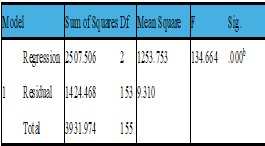
Objective: This study aims to analyze the development of Islamic Smart Schools based on Artificial Intelligence to build a Golden Generation with Asta Cita Insight in Indonesia. Theoretical framework: The theoretical framework of this study integrates the philosophy of Islamic education and the Sustainable Development Goals (SDGs), in particular the Sustainable Development Goals (SDGs), namely SDG 4 on Quality Education, SDG 9 (Industry, Innovation, and Infrastructure), SDG 12 (Responsible Consumption and Production), and SDG 16 (Peace, Justice, and Resilient Institutions). Literature review: A literature review reveals that previous research has identified Smart Schools and Artificial Intelligence in administration, management, and teaching and learning activities to have a positive impact on improving the quality of education. Methods: The research method is the Mixed Methods Model Sequential Exploratory Design, which combines qualitative and quantitative methods. This research was conducted at Muhammadiyah PK Kottabarat Junior High School in Surakarta and Muhammadiyah Al Kautsar PK Junior High School in April - August 2025. The subjects of the study include principals, vice principals, teachers, parents, students, and stakeholders. Data were obtained from in-depth interviews, participant observations, field documentation analyzed by qualitative methods, and questionnaire data results analyzed using quantitative methods using SPSS software. Results: The development of Islamic Smart Schools and AI-based learning has a significant effect on the formation of the Golden Generation with Asta Cita insights, with a contribution of 63.8%. The school integrates digital technology and AI into management, learning, the competence of teachers, staff, and students through various excellent programs such as smart classrooms, digital literacy, international classes, AI training, and strengthening Islamic character through tahfidz, mentoring, and Hizbul Wathon scouting activities. Implications: This study confirms that the development of Islamic Smart Schools makes a significant contribution to the achievement of Asta Cita, especially on the goal of building superior and characterful human resources and the Sustainable Development Goals (SDGs), namely SDG 4 on Quality Education, SDG 9 (Industry, Innovation, and Infrastructure), SDG 12 (Responsible Consumption and Production), and SDG 16 (Peace, Justice, and Resilient Institutions). Novelty: The novelty of this research lies in the educational model that combines school digitalization with Islamic values. This Education Model can be a reference in preparing the golden generation of 2045 through a technological approach based on spirituality and character.
References
[1] I. Nagel, G. B. Guðmundsdóttir, and H. W. Afdal, “Teacher educators’ professional agency in facilitating professional digital competence,” Teach. Teach. Educ., vol. 132, 2023, https://doi.org/10.1016/j.tate.2023.104238.
[2] D. Agustini, B. Lian, and A. P. Sari, “School’S Strategy for Teacher’S Professionalism Through Digital Literacy in the Industrial Revolution 4.0,” Int. J. Educ. Rev., vol. 2, no. 2, pp. 160–173, 2020, https://doi.org/10.33369/ijer.v2i2.10967.
[3] L. Supriyono, “Peran Orang Tua Dalam Menyikapi Gadget Dan Implikasinya Terhadap Penyimpangan Perilaku Seksual Anak,” Profetika J. Stud. Islam, vol. 21, no. 2, pp. 159–166, 2020, https://doi.org/10.23917/profetika.v21i2.13077.
[4] R. Jayanthi and A. Dinaseviani, “Kesenjangan Digital dan Solusi yang Diterapkan di Indonesia selama Pandemi COVID-19,” J. Ilmu Pengetah. Dan Teknol. Komun., vol. 24, no. 2, pp. 187–200, 2022, https://doi.org/10.17933/iptekkom.24.2.2022.187-200.
[5] C. Hastasari, B. Setiawan, and S. Aw, “Students’ communication patterns of Islamic boarding schools: the case of Students in Muallimin Muhammadiyah Yogyakarta,” Heliyon, vol. 8, no. 1, p. 8824, 2022. https://doi.org/10.1016/j.heliyon.2022.e08824.
[6] T. Asmarni and S. Zakir, “Arus Jurnal Pendidikan (AJUP) Persepsi Guru MTsN 1 Lima Puluh Kota Tentang Asesmen Kompetensi Minimum INFO PENULIS,” Arus J. Pendidik., vol. 3, no. 1, pp. 6–14, 2023, https://doi.org/10.57250/ajup.v3i1.184.
[7] O. P. Adelana, M. A. Ayanwale, and I. T. Sanusi, “Exploring pre-service biology teachers’ intention to teach genetics using an AI intelligent tutoring - based system,” Cogent Educ., vol. 11, no. 1, 2024, https://doi.org/10.1080/2331186X.2024.2310976.
[8] H. Pinnock, M. Noble, D. Lo, K. McClatchey, V. Marsh, and C. Y. Hui, “Personalised management and supporting individuals to live with their asthma in a primary care setting,” Expert Rev. Respir. Med., vol. 17, no. 7, pp. 577–596, 2023, https://doi.org/10.1080/17476348.2023.2241357.
[9] T. Consoli and D. Petko, “Which educational approaches predict students’ generative AI confidence and responsibility?” Comput. Educ. Artif. Intell., vol. 9, 2025, https://doi.org/10.1016/j.caeai.2025.100431.
[10] A. D. Herlambang and A. Rachmadi, “Students’ Perception of Technology-Rich Classrooms Usage to Support Conceptual and Procedural Knowledge Delivery in Higher Education Computer Science Course,” Procedia Comput. Sci., vol. 234, pp. 1500–1509, 2024, https://doi.org/10.1016/j.procs.2024.03.151.
[11] D. Mourtzis, J. Angelopoulos, and N. Panopoulos, “Metaverse and Blockchain in Education for collaborative Product-Service System (PSS) Design towards University 5.0,” Procedia CIRP, vol. 119, pp. 456–461, 2023, https://doi.org/10.1016/j.procir.2023.01.008.
[12] K. Stolpe and J. Hallström, “Artificial intelligence literacy for technology education,” Comput. Educ. Open, vol. 6, no. October 2023, p. 100159, 2024, https://doi.org/10.1016/j.caeo.2024.100159.
[13] Q. Zhang, “Technological Advancements in Educational Counselling : Exploring the Role of AI, Data Analytics, and Virtual Guidance Platforms in Student Support Systems,” vol. 15, no. 11, pp. 2441–2454, 2025, https://doi.org/10.18178/ijiet.2025.15.11.2440.
[14] W. A. Toopmongkol, S. B. Jaihuek, and N. C. Saiyee, “Evaluating the Impact of Roblox-Based Interactive Media on English Learning Outcomes and Engagement at Chiang Rai Rajabhat University,” vol. 15, no. 11, pp. 2436–2440, 2025, https://doi.org/10.18178/ijiet.2025.15.11.2439.
[15] T. Soares, R. C. Miranda, A. Dias, and P. Filho, “Usability of Software of Teaching Aid in the Teaching Process of Mathematics Learning,” vol. 9, no. 5, 2019, https://doi.org/10.18178/ijiet.2019.9.5.1232.
[16] F. Nur Ngaini, “Educational Planning Through Sharia Insurance for Gold Generation of Indonesia in 2045,” J. Contemp. Islam. Educ., vol. 2, no. 2, pp. 131–146, 2022, https://doi.org/10.25217/jcie.v2i2.2578.
[17] A. Jamrah, “Shaping Golden Generation Through Character Education Toward 100 Years Indonesia,” Proceedings Int. Semin. Educ. 2016 Fac. Tarb. Teach. Train. , pp. 41–50, 2016.
[18] M. S. Ibrahim, A. Z. A. Razak, and H. B. Kenayathulla, “Smart Principals and Smart Schools,” Procedia - Soc. Behav. Sci., vol. 103, pp. 826–836, 2013, https://doi.org/10.1016/j.sbspro.2013.10.404.
[19] S. Malaklolunthu and N. C. Rengasamy, “School redesign for fostering multiculturalism in Malaysia: Augmenting the ‘Vision School,’” Procedia - Soc. Behav. Sci., vol. 15, pp. 84–88, 2011, https://doi.org/10.1016/j.sbspro.2011.03.056.
[20] R. M. Ellahi, M. U. Ali Khan, and A. Shah, “Redesigning curriculum in line with Industry 4.0,” Procedia Comput. Sci., vol. 151, no. 2018, pp. 699–708, 2019, https://doi.org/10.1016/j.procs.2019.04.093.
[21] M. Abdullah and K. Osman, “21st century inventive thinking skills among primary students in Malaysia and Brunei,” Procedia - Soc. Behav. Sci., vol. 9, pp. 1646–1651, 2010, https://doi.org/10.1016/j.sbspro.2010.12.380.
[22] Sajidan, Stimulasi Ketrampilan berfikir tingkat tinggi (konsep dan implementasi dalam pembelajaran abad 21). 2018.
[23] A. S. C. de Souza and L. Debs, “Concepts, innovative technologies, learning approaches and trend topics in education 4.0: A scoping literature review,” Soc. Sci. Humanit. Open, vol. 9, no. November 2023, p. 100902, 2024, https://doi.org/10.1016/j.ssaho.2024.100902.
[24] O. Tayan, A. Hassan, K. Khankan, and S. Askool, “Considerations for adapting higher education technology courses for AI large language models: A critical review of the impact of ChatGPT,” Mach. Learn. with Appl., vol. 15, no. May 2023, p. 100513, 2024, https://doi.org/10.1016/j.mlwa.2023.100513.
[25] M. M. Roshid and M. Z. Haider, “Teaching 21st-century skills in rural secondary schools: From theory to practice,” Heliyon, vol. 10, no. 9, p. e30769, 2024, https://doi.org/10.1016/j.heliyon.2024.e30769.
[26] A. Haleem, M. Javaid, M. A. Qadri, and R. Suman, “Understanding the role of digital technologies in education: A review,” Sustain. Oper. Comput., vol. 3, no. 1, pp. 275–285, 2022, https://doi.org/10.1016/j.susoc.2022.05.004.
[27] D. E. Myori, R. Hidayat, F. Eliza, and R. Fadli, “Peningkatan Kompetensi Guru dalam Penguasaan Teknologi Informasi dan Komunikasi melalui Pelatihan Pengembangan Media Pembelajaran Berbasis Android,” vol. 5, no. 2, pp. 102–109, 2019, https://doi.org/10.24036/jtev.v5i2.106832.
[28] P. Punithavathi and S. Geetha, “Disruptive smart mobile pedagogies for engineering education,” Procedia Comput. Sci., vol. 172, no. 2019, pp. 784–790, 2020, https://doi.org/10.1016/j.procs.2020.05.112.
[29] N. Made, A. Erna, T. Ria, and I. K. M. Astajaya, “Upaya-Upaya Dalam Meningkatkan Kualitas Pengelolaan Pendidikan Di Indonesia,” vol. 19, pp. 106–123, 2021, https://doi.org/10.24036/pakar.v19i1.216.
[30] S. Arifin, Sutama, S. A. Aryani, H. J. Prayitno, and Waston, “Improving The Professional Teacher Competence Through Clinical Supervision Based on Multicultural Values in Pesantren,” Nazhruna J. Pendidik. Islam, vol. 6, no. 3, pp. 386–402, 2023, https://doi.org/10.31538/nzh.v6i3.4037.
[31] A. Rachman, Sunarno, N. Saputra, L. Judijanto, E. Nurhidin, and M. A. Zamroni, “Enhancing Teacher Performance Through Millennial Teacher Characteristics, Work Culture, and Person-Job Fit Mediated by Employee Engagement,” Nazhruna J. Pendidik. Islam, vol. 7, no. 2, pp. 270–289, 2024, https://doi.org/10.31538/nzh.v7i2.4636.
[32] M. Fatimah, A. Husaen Sastra Negara, W. Waston, S. Hidayat, A. Abdul Adzim, and M. Zakir Husain, “Teacher Communication Patterns To Improve Students’ Religious Character Values At Vocational Schools,” Profetika J. Stud. Islam, vol. 24, no. 02, pp. 217–225, 2023, https://doi.org/10.23917/profetika.v24i02.2063.
[33] S. Anwar et al., “Development of the concept of Islamic education to build and improve the personality of school-age children,” Multidiscip. Rev., vol. 7, no. 8, 2024, https://doi.org/10.31893/multirev.2024139.
[34] Zakariyah, “Improving Madrasah Competitiveness Through Excellent Islamic Education Development Strategies,” Nazhruna J. Pendidik. Islam, vol. 7, no. 1, pp. 140–155, 2024, https://doi.org/10.31538/nzh.v7i1.4541.
[35] S. Saiyed, M. Hasan, R. Chowdhury, K. M. Tousif Bin Parves, E. Hariyadi, and V. Kumar, “Harnessing artificial intelligence to strengthen green innovation capacity in pursuit of sustainable development goals: Evidence from Taiwan’s manufacturing sector,” Equilibrium. Q. J. Econ. Econ. Policy, vol. 20, no. 3, pp. 877–904, 2025, https://doi.org/10.24136/eq.3748.
[36] A. Nawi, N. Y. Khamis, M. F. M. Yaakob, M. A. A. Samuri, and G. A. N. Zakaria, “Exploring opportunities and risks of artificial intelligence research for Islamic ethical guidelines,” Afkar, vol. 25, no. 2, pp. 1–34, 2023, https://doi.org/10.22452/afkar.vol25no2.1.
[37] D. A. Bray, D. C. Girvan, and E. N. Chorcora, “Students’ perceptions of pedagogy for 21st century learning instrument (S-POP-21): Concept, validation, and initial results,” Think. Ski. Creat., vol. 49, no. May, p. 101319, 2023, https://doi.org/10.1016/j.tsc.2023.101319.
[38] A. T. St. Louis, P. Thompson, T. N. Sulak, M. L. Harvill, and M. E. Moore, “Infusing 21st Century Skill Development into the Undergraduate Curriculum: The Formation of the iBEARS Network,” J. Microbiol. Biol. Educ., vol. 22, no. 2, 2021, https://doi.org/10.1128/jmbe.00180-21.
[39] W. N. Nasution, Strategi Pembelajaran. Medan: Perdana Publishing, 2017.
[40] M. Umar, F. Ismail, S. Rahmi, and Z. Arifin, “Transforming Moderate Character Education in Islamic Educational Institutions,” Nazhruna J. Pendidik. Islam, vol. 7, no. 1, pp. 171–188, 2024, https://doi.org/10.31538/nzh.v7i1.4168.
[41] N. A. Salim, M. Zaini, A. Wahib, I. Fauzi, and Asnawan, “Fostering Moderate Character of Santri: Effective Hidden Curriculum Strategy in Islamic Boarding Schools,” Nazhruna J. Pendidik. Islam, vol. 7, no. 2, pp. 357–372, 2024, https://doi.org/10.31538/nzh.v7i2.4676.
Downloads
Submitted
Accepted
Published
Issue
Section
License
Copyright (c) 2026 Muhammad Arif Wicagsono, Waston, Andri Nirwana AN, Muthoifin

This work is licensed under a Creative Commons Attribution 4.0 International License.