Research Landscape of Islamic Feminism and Its Relevance to the SDGs: A Keyword Co-occurrence Analysis of Key Issues and Theoretical Debates
DOI:
https://doi.org/10.23917/profetika.v27i02.14315Keywords:
islamic feminism, bibliometric analysis, keyword co-occurrence, sustainable development goals (sdgs), gender justiceAbstract
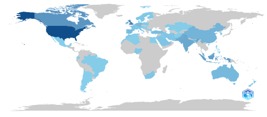
Objective: This study aims to (1) examine the growth and publication trends of Islamic feminism research between 2019 and 2025, (2) identify the principal thematic clusters through keyword co-occurrence analysis, and (3) explore the relationship between emerging research themes and the SDGs, particularly SDG 5 (Gender Equality), SDG 10 (Reduced Inequalities), and SDG 16 (Peace, Justice and Strong Institutions). Islamic feminism has developed from a theological discourse advocating gender justice into a multidisciplinary field engaging with social, legal, political, and cultural issues. Nevertheless, the intellectual landscape of this scholarship remains fragmented, and limited studies have systematically examined its thematic evolution and relevance to the Sustainable Development Goals (SDGs). Theoretical framework: Grounded in feminist hermeneutics, intersectionality theory, and the SDGs framework. Literature review: Previous studies have primarily emphasized conceptual, historical, or qualitative discussions, while comprehensive bibliometric mapping of the field remains scarce. Method: This research employs a quantitative bibliometric approach using VOSviewer to analyze 434 Scopus-indexed publications retrieved through search terms related to Islamic feminism, Muslim feminism, and gender in Islam. Results: The findings demonstrate a consistent increase in scholarly output, reaching its highest level in 2023, reflecting expanding international academic attention. Keyword co-occurrence analysis reveals three dominant thematic clusters comprising theological reinterpretation and Qur'anic hermeneutics, socio-legal activism and gender justice, and decolonial and intersectional perspectives. Emerging topics, including migration, mental health, digital activism, and decoloniality, indicate a shift from foundational theological debates toward broader contemporary social challenges closely aligned with the SDGs agenda. The geographical distribution highlights substantial contributions from both Global South countries, particularly Indonesia, Pakistan, and Turkey, and Western academic institutions, demonstrating increasing international collaboration. Implications: These findings imply that Islamic feminism has become an important intellectual framework for advancing inclusive development, social justice, and gender equality. Novelty: The study's novelty lies in integrating bibliometric keyword co-occurrence analysis with the SDGs framework, providing a comprehensive evidence-based mapping of theoretical debates, research trajectories, and future directions within contemporary Islamic feminism scholarship.
References
[1] A. Wadud, Qur'an and Woman: Rereading the Sacred Text from a Woman's Perspective. New York: Oxford University Press, 1999.
[2] F. Mernissi, The Veil and the Male Elite: A Feminist Interpretation of Women's Rights in Islam. Reading, MA: Addison-Wesley, 1991.
[3] Z. Mir-Hosseini, Islam and Gender: The Religious Debate in Contemporary Iran. Princeton: Princeton University Press, 1999.
[4] S. Mahmood, Politics of Piety: The Islamic Revival and the Feminist Subject. Princeton: Princeton University Press, 2005.
[5] M. Badran, Feminism in Islam: Secular and Religious Convergences. Oxford: Oneworld Publications, 2009.
[6] L. Abu-Lughod, "Do Muslim women really need saving? Anthropological reflections on cultural relativism and its others," American Anthropologist, vol. 104, no. 3, pp. 783-790, 2002.
[7] N. J. van Eck and L. Waltman, "Software survey: VOSviewer, a computer program for bibliometric mapping," Scientometrics, vol. 84, no. 2, pp. 523-538, 2010.
[8] E. Anwar, A Genealogy of Islamic Feminism: Pattern and Change in Indonesia. London: Routledge, 2018.
[9] R. Hassan, "Rights of Women: Muslim Practice versus Qur'anic Text," in Women and Islam, A. Al-Hibri, Ed. Oxford: Pergamon Press, 1982, pp. 57-69.
[10] F. Seedat, "Islam, Feminism, and the Cut of the Real: Blood, Surgery, and the Politics of User," Signs: Journal of Women in Culture and Society, vol. 46, no. 4, pp. 1013-1037, 2021.
[11] A. S. Chaudhry, Domestic Violence and the Islamic Tradition. Oxford: Oxford University Press, 2013.
[12] K. Ali, Sexual Ethics and Islam: Feminist Reflections on Qur'an, Hadith, and Jurisprudence. Oneworld Publications, 2006.
[13] N. Al-Ali, "Sexual violence in the Middle East and North Africa," in The Cambridge Handbook of Social Problems, vol. 2, Cambridge University Press, 2018.
[14] S. M. Mulia, "Muslim Family Law Reform in Indonesia," in Muslim Family Law in Western Society, J. S. Nielsen, Ed. London: Routledge, 2016.
[15] O. Safi, Progressive Muslims: On Justice, Gender and Pluralism. Oneworld Publications, 2003.
[16] A. Bari, H. Muhammad Alfatih, and A. Abdul Muhyi, “Islamic Understanding of Feminism and Gender: Between Tradition and the Pressures of the Age,” Bull. Islam. Res., vol. 2, no. 3, pp. 413–426, Jun. 2024, doi: 10.69526/bir.v2i3.47.
[17] sumayyah hilyatul Afida, F. Masykur, and inti ulfi Sholichah, “Kedudukan Perempuan Dalam Menuntut Ilmu Perspektif Raden Ajeng Kartini Dan Relevansinya Dengan Pendidikan Islam (Kajian Feminisme),” Tarbawi, vol. 6, no. 1, pp. 59–77, 2023, doi: https://doi.org/10.51476/tarbawi.v6i1.463.
[18] M. Mardiani, F. Jati Nugroho, and Y. Rogo Yuono, “Pandangan Paham Feminisme Radikal Terhadap Perkawinan Piti Maranggang Dalam Adat Perkawinan Sumba Timur Di Dameka, Katikutana Selatan, Kabupaten Sumba Tengah,” Sagacity, vol. 1, no. 2, pp. 87–98, 2021.
[19] H. Moghissi, “Islamic feminism revisited,” Comp. Stud. South Asia, Africa Middle East, vol. 31, no. 1, pp. 76–84, 2011, doi: 10.1215/1089201X-2010-054.
[20] Widyatmika Gede Mulawarman, Pengantar Gender dan Feminisme, Pemahaman Awal Kritik Sastra Feminisme. Yogyakarta: Garnadhawacara, 2016.
[21] N. Nurmila, “Indonesian Muslims’ discourse of husband-wife relationship,” Al-Jami’ah, vol. 51, no. 1, pp. 61–80, 2014, doi: 10.14421/ajis.2013.511.61-79.
[22] E. Tanggu, E. E. Kudubun, and A. W. Utomo, “Kawin Tangkap ( studi sosiologi tentang makna dan praktik kawin tangkap di desa mareda kalada , kec . Wewewa timur , kab . Sumba barat daya ),” Equalita, vol. 3, no. 2, 2021.
[23] Sahrudin and Z. M. A. Mh, “Islam Dan Gender,” Bull. Islam. Res., vol. 2, no. 3, pp. 437–460, 2024, doi: 10.69526/bir.v2i3.33.
[24] A. Muid, “Multicultural Education In The Life of Nation, State, and Religion in Islam Perspective,” Ijirr, vol. 05, no. 01, pp. 5020–5028, 2018.
[25] A. H. Azumah, A. Al Abiyyah, A. Khoirunnisa, F. Azzahra, and F. Hidayat, “Changing Perceptions of Women ’ s Honour : A Historical and Sociological Analysis,” Solo Int. Collab. Publ. Soc. Sci. Humanit., vol. 2, no. 3, pp. 244–255, 2024.
[26] M. Hanafi and H. Jibril, “Economic Rights of Women Under Sokoto Caliphate : A Lesson for Contemporary Women in Nigeria,” Demak Univers. J. Islam Sharia, vol. 2, no. 1, pp. 1–14, 2024.
[27] M. Kholifah, Rosiana, “Women ’ s Leadership : A Comparative Study between Fiqh Traditions and Contemporary Fatwa,” Demak Univers. J. Islam Sharia, vol. 3, no. 1, pp. 13–26, 2025.
[28] M. H. F. Alwy Ahmed Mohamed, “The Role of Sheikh Abdallah al-Farsy in Shaping East African Islamic Institutions,” J. World Thinkers, vol. 1, no. 3, pp. 245–262, 2024.
[29] N. H. Wachidah, S. Shobron, I. Afiyah, and J. H. Srifyan, “R.A Kartini’s Thoughts on Women’s Emancipation Progress,” J. World Thinkers, vol. 1, no. 1, pp. 31–42, 2024.
[30] Z. I. Al-rahman, “Offering Justice : Women ’ s Emancipation in an Islamic Perspective for Gender Equality and Human Rights Liberation,” Solo Int. Collab. Publ. Soc. Sci. Humanit., vol. 2, no. 3, pp. 205–214, 2024.
[31] W. Nabila et al., “A Feminist Study of the Childfree Trend in Generation Z : A Normative Review,” Solo Int. Collab. Publ. Soc. Sci. Humanit., vol. 2, no. 2, pp. 143–158, 2024.
[32] J. Khanom and T. Islam, “Women’s Rights in Islamic Culture: A Bibliometric Analysis of Trends, Influential Authors, and Institutional,” Solo Univers. J. Islam. Educ. Multicult., vol. 3, no. 1, pp. 27–42, 2025.
[33] I. N. Waston; Mahmudulhassan; Nirwana, Andri;, Muthoifin; Afiyah, “Student-Centered Learning to Prevent Radicalization at Islamic Junior Schools in Surakarta Indonesia,” Solo Univers. J. Islam. Educ. Multicult., vol. 2, no. 3, pp. 249–262, 2024.
[34] M. Abuzar, S. M. Riazul, and A. E-sor, “Strategies for Forming Student Discipline in Islamic Elementary Schools Malaysia : A Holistic Approach in Character Education,” Solo Univers. J. Islam. Educ. Multicult., vol. 2, no. 3, pp. 207–218, 2024.
[35] F. Zahira, A. S. Hamida, A. S. Tsabit, N. Nasywa, R. Romadhoni, and F. Hidayat, “Islamic Moral Education in Shaping the Character of Muslim Identity in the Millennial Era,” Solo Univers. J. Islam. Educ. Multicult., vol. 2, no. 2, pp. 103–118, 2024.
[36] M. Abuzar, S. Uddin, and A. Khondoker, “Exploring the Dynamics of Student Motivation and Behavior : A Qualitative Analysis of Influencing Factors and Effective Interventions,” Solo Univers. J. Islam. Educ. Multicult., vol. 2, no. 3, pp. 195–206, 2024.
[37] I. Afiyah, L. Yafi, and J. H. Srifyan, “Family Strategies in Educating Children in the 5 . 0 Era : A Multicultural Islamic Education Perspective in Building a Generation of Character,” Solo Univers. J. Islam. Educ. Multicult., vol. 2, no. 3, pp. 263–278, 2024.
[38] M. Abuzar, S. M. Riazul, and A. E-sor, “A Comparative Study on the Competence of Ideal Teachers According to Al-Ghazali and Abdullah Nashih Ulwan : Their Relevance and Application in the Modern Education System,” Solo Univers. J. Islam. Educ. Multicult., vol. 2, no. 3, pp. 219–232, 2024.
[39] A. Barry and M. Elbanna, “The Challenges Confronting Islamic Education in Guinea,” Solo Univers. J. Islam. Educ. Multicult., vol. 3, no. 1, pp. 67–82, 2025.
[40] D. M. Putri, “The Impact of Social Inequality on Educational Quality in Indonesia: Challenges and Policy Recommendations,” Solo Univers. J. Islam. Educ. Multicult., vol. 3, no. 1, pp. 43–56, 2025.
Downloads
Submitted
Accepted
Published
Issue
Section
License
Copyright (c) 2026 Ernanda Khoirotun Nisa' Munawar, Rully Khairul Anwar

This work is licensed under a Creative Commons Attribution 4.0 International License.