Fear of Missing Out and e-WOM as Drivers of Impulsive Buying: Evidence from Muslim Gen Z's Purchase Intentions on TikTok in Support of the SDGs
DOI:
https://doi.org/10.23917/profetika.v27i03.14116Keywords:
fear of missing out (fomo), electronic word of mouth (e-wom), purchase intention, impulsive buying, sdgsAbstract
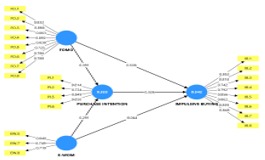
Objective: This study examines the influence of Fear of Missing Out (FOMO) and Electronic Word of Mouth (e-WOM) on Impulsive Buying behavior among Generation Z, with Purchase Intention serving as a mediating variable. It also evaluates the implications of these relationships for sustainable consumption in support of SDG 12 and SDG 8. Theoretical framework: The research is grounded in consumer behavior theory, stimulus–organism–response (S–O–R) theory, and social influence theory, which explain how emotional and informational stimuli shape purchase intentions and impulsive buying decisions in digital commerce. Literature review: Previous studies have established that FOMO and e-WOM significantly influence online purchasing behavior. However, empirical findings remain inconsistent regarding their direct effects on impulsive buying, while the mediating role of Purchase Intention has received limited attention, particularly among Muslim Generation Z consumers in social commerce environments. Methods: A quantitative research design was employed using an online survey involving 212 respondents selected through accidental sampling. The collected data were analyzed using Structural Equation Modeling–Partial Least Squares (SEM-PLS) with SmartPLS to evaluate both direct and indirect relationships among the proposed constructs. Results: The findings indicate that FOMO significantly influences both Purchase Intention and Impulsive Buying. In contrast, e-WOM has a positive and significant effect on Purchase Intention but does not directly affect Impulsive Buying. Purchase Intention positively influences Impulsive Buying and partially mediates the relationships between FOMO, e-WOM, and Impulsive Buying, although the mediation effect is relatively weak. Implications: The findings provide practical insights for e-commerce platforms, digital marketers, and policymakers to develop responsible marketing strategies that reduce emotionally driven purchasing behavior while supporting sustainable consumption and economic development aligned with SDG 12 and SDG 8. Novelty: This study contributes by integrating FOMO, e-WOM, Purchase Intention, and Impulsive Buying into a single SEM-PLS model while highlighting the mediating role of Purchase Intention among Muslim Generation Z consumers within the context of digital commerce and sustainable development.
References
[1] S. Kraus, P. Jones, N. Kailer, A. Weinmann, N. Chaparro-Banegas, and N. Roig-Tierno, “Digital Transformation: An Overview of the Current State of the Art of Research,” SAGE Open, vol. 11, no. 3, 2021, doi: 10.1177/21582440211047576.
[2] Y. Bilan, O. Oliinyk, H. Mishchuk, and M. Skare, “Impact of information and communications technology on the development and use of knowledge,” Technol. Forecast. Soc. Change, vol. 191, no. March, p. 122519, 2023, doi: 10.1016/j.techfore.2023.122519.
[3] R. Prayogi, “Transformasi Perilaku Konsumen di Era Transaksi Digital,” vol. 4, no. 1, pp. 831–835, 2024.
[4] always Mahena, Diah Sofiah, and Isrida Yul Arifiana, “The Relationship of Positive Emotions and Fear of Missing Out with Impulsive Buying Tendency in Gen Z,” MADANI Multidiscip. J., vol. 5, no. 2, pp. 80–87, 2025, doi: 10.55927/mudima.v5i2.44.
[5] J. Ma and S. Yu, “The Future Development of E-commerce in Tiktok,” Proc. 2021 Int. Conf. Public Relations Soc. Sci. (ICPRSS 2021), vol. 586, no. Icprss, pp. 241–246, 2021, doi: 10.2991/assehr.k.211020.160.
[6] W. N. Utami and T. A. Juanda, “The Effect of Price Discount and Electronic Word of Mouth,” J. Bus. Manag. Ina., vol. 01, no. 02, pp. 136–152, 2022, [Online]. Available: https://journals.inaba.ac.id/index.php/jbmi/article/view/122/124
[7] E. Nurmalasari, I. Hartini, R. A. Putri, and P. K. M. Soesilo, “Effect of FOMO and Hedonic Value on Impulsive Buying and Post Purchase Regret for Purchasing Skincare Products at the Online Shop,” AMAR (Andalas Manag. Rev., vol. 8, no. 1, pp. 1–21, 2024, doi: 10.25077/amar.8.1.1-21.2024.
[8] R. Handoyo, Sofie, and nurhastuty K. Wardhani, “Implementasi Sustainable Development Goals (SDGS), Goal 8 Pada Pelaku Usaha Mikro di Desa Padas, Kecamatan Karangnom dan Desa Bonyokan, Kecamatan Jatinom, Kabupaten Klaten,” vol. 0832, pp. 107–116, 2023.
[9] A. K. Przybylski, K. Murayama, C. R. Dehaan, and V. Gladwell, “Motivational, emotional, and behavioral correlates of fear of missing out,” Comput. Human Behav., vol. 29, no. 4, pp. 1841–1848, 2013, doi: 10.1016/j.chb.2013.02.014.
[10] R. R. Saputra, S. H. Darpito, H. Oetomo, and H. Sutanto, “The Effect of Social Media Marketing and E-WOM on Purchase Intention of TikTok Users,” J. Ilm. Manaj. Kesatuan, vol. 12, no. 5, pp. 2097–2108, 2024, doi: 10.37641/jimkes.v12i5.1840.
[11] D. Demba, N. Chiliya, T. Chucu, and T. Ndoro, “How user-generated content advertising influences consumer attitudes, trust and purchase intention of products and services,” Trust Purch. Intent. Prod. Serv., vol. 38, no. 1, pp. 136–150, 2019.
[12] Alfina, S. Hartini, and D. Mardhiyah, “FOMO related consumer behaviour in marketing context: A systematic literature review,” Cogent Bus. Manag., vol. 10, no. 3, 2023, doi: 10.1080/23311975.2023.2250033.
[13] T. T. Cong and D. N. My, “Fomo Marketing and Conspicuous Consumption: the Mediating Role of Brand Trust on Social Media,” pp. 445–458, 2025, doi: 10.15625/vap.2025.0025.
[14] S. Handoyo, “Purchasing in the digital age: A meta-analytical perspective on trust, risk, security, and e-WOM in e-commerce,” Heliyon, vol. 10, no. 8, p. e29714, 2024, doi: 10.1016/j.heliyon.2024.e29714.
[15] Keiza Zeta Lazuardi and Osly Usman, “The Influence of FOMO Marketing and eWOM on Impulsive Buying Behavior of Gen Z through Perceived Value: Insights from TikTok Users in Indonesia,” Int. Student Conf. Business, Educ. Econ. Accounting, Manag., vol. 3, no. 1, pp. 2223–2241, 2025, doi: 10.21009/isc-beam.013.165.
[16] C. E. Charles and D. M. Immanuel, “Shopping behavior : the impact on ( with a gender perspective ),” J. Apl. Manaj., vol. 23, no. 1, pp. 134–157, 2025, [Online]. Available: https://jurnaljam.ub.ac.id/index.php/jam/article/view/8821/2066
[17] N. H. Sabrina and H. S. Utomo, “The Effect of Content Marketing and Fear of Missing Out to Post-Purchase Regret Mediated by Impulsive Buying,” Int. J. Hum. Res. Soc. Sci. Stud., vol. 02, no. 07, pp. 440–450, 2025, doi: 10.55677/ijhrsss/04-2025-vol02i7.
[18] A. S. Aenaya, F. W. Peafut Gunawan, N. Anggraini, S. Nurhasanah, and Y. Suryaningsih, “The Effect of Electronic Word of Mouth (EWOM) and Fear of Missing Out (FOMO) on Impulse Buying in Shopee Moderated Self-Control,” J. Econ. Financ. Manag. Stud., vol. 07, no. 07, pp. 4022–4027, 2024, doi: 10.47191/jefms/v7-i7-19.
[19] M. D. Faturrohman and Widarta, “The Influence of Flash Sales, Viral Marketing and Electronic Word of Mouth (E-WOM) on the Purchase Intention of Z Generation in Online Shopping on Tiktok Shop Marketplace,” Formosa J. Multidiscip. Res., vol. 3, no. 7, pp. 2683–2698, 2024, doi: 10.55927/fjmr.v3i7.10093.
[20] N. Sinulingga, Y. Handoko, and J. Dura, “Trust that Mediates the Effect of Website Quality and the Electronic Word of Mouth (E-WOM) On the Purchase Intention,” Mix J. Ilm. Manaj., vol. 18, no. 1, pp. 31–43, 2024.
[21] M. C. Good and M. R. Hyman, “Direct and indirect effects of fear-of-missing-out appeals on purchase likelihood,” J. Consum. Behav., vol. 20, no. 3, pp. 564–576, 2021, doi: 10.1002/cb.1885.
[22] P. Steinberger and H. Kim, “Social comparison of ability and fear of missing out mediate the relationship between subjective well-being and social network site addiction,” Front. Psychol., vol. 14, no. June, pp. 1–8, 2023, doi: 10.3389/fpsyg.2023.1157489.
[23] A. Febrianti and O. Usman, “The The Impact of UGC and e-WOM in TikTok on Concert Ticket Purchase Intention: The Intervening Role of FOMO,” Int. Student Conf. Business, Educ. Econ. Accounting, Manag., vol. 3, no. 1, pp. 1050–1064, 2025, doi: 10.21009/isc-beam.013.75.
[24] X. Liu and X. Zheng, “The persuasive power of social media influencers in brand credibility and purchase intention,” Humanit. Soc. Sci. Commun., vol. 11, no. 1, pp. 1–12, 2024, doi: 10.1057/s41599-023-02512-1.
[25] F. A. Nugroho and M. Sutisna, “The Influence of TikTok Social Media and Fear of Missing Out on Skintific Purchase Intention among Urban TikTok Users in Bandung,” Golden Ratio Mark. Appl. Psychol. Bus., vol. 6, no. 1, pp. 01–10, 2025, doi: 10.52970/grmapb.v6i1.1250.
[26] L. C. Lu, W. P. Chang, and H. H. Chang, “Consumer attitudes toward blogger’s sponsored recommendations and purchase intention: The effect of sponsorship type, product type, and brand awareness,” Comput. Human Behav., vol. 34, pp. 258–266, 2014, doi: 10.1016/j.chb.2014.02.007.
[27] A. Kumar, R. Bezawada, R. Rishika, R. Janakiraman, and P. K. Kannan, “From social to sale: The effects of firm-generated content in social media on customer behavior,” J. Mark., vol. 80, no. 1, pp. 7–25, 2016, doi: 10.1509/jm.14.0249.
[28] R. Filieri and F. McLeay, “E-WOM and Accommodation: An Analysis of the Factors That Influence Travelers’ Adoption of Information from Online Reviews,” J. Travel Res., vol. 53, no. 1, pp. 44–57, 2015, doi: 10.1177/0047287513481274.
[29] A. Bogdan, N. Dospinescu, and O. Dospinescu, “Beyond Credibility: Understanding the Mediators Between Electronic Word-of-Mouth and Purchase Intention,” 2025, [Online]. Available: http://arxiv.org/abs/2504.05359
[30] U. Suhud, M. Allan, W. C. Hoo, and J. Juliana, “Purchase intention of Muslim consumers on TikTok live stream: Assessing the role of trust, reliability, and TikTok marketing activities,” Int. J. Data Netw. Sci., vol. 9, no. 4, pp. 981–992, 2025, doi: 10.5267/j.ijdns.2024.10.006.
[31] T. T. A. Ngo, C. T. Bui, H. K. L. Chau, and N. P. N. Tran, “Electronic word-of-mouth (eWOM) on social networking sites (SNS): Roles of information credibility in shaping online purchase intention,” Heliyon, vol. 10, no. 11, p. e32168, 2024, doi: 10.1016/j.heliyon.2024.e32168.
[32] K. Z. K. Zhang and M. Benyoucef, “Consumer behavior in social commerce: A literature review,” Decis. Support Syst., vol. 86, pp. 95–108, 2016, doi: 10.1016/j.dss.2016.04.001.
[33] H. Iqbal, kamila mariam Iftikhar, D. faraz ahmed Wajidi, D. M. A. Khurshid, and H. Salman, “Educating Consumers: The Impact of Social Media Marketing Activities on E-Impulse Buying with Purchase Intention As A Mediator,” Voyag. J. Educ. Stud., vol. 4, no. 2, pp. 381–399, 2024, doi: 10.58622/vjes.v4i2.167.
[34] F. Y. Abdelkhair, M. Y. Babekir, S. S. Mudawi, and A. B. A. Al Abiad, “Sales Promotion and Impulse Buying Behavior Towards Consumer Goods: The Mediating Role of Purchase Intention,” Indian J. Mark., vol. 53, no. 2, pp. 26–42, 2023, doi: 10.17010/ijom/2023/v53/i2/172631.
[35] N. Wahyuningtiyas and T. S. Ramadhan, “Factors Influencing E-Impulsive Buying in the E-Commerce: the Role of Individual Behavior, Self-Control, Mood, and Impulsive Buying Tendency,” J. Ekon. Bisnis dan Kewirausahaan, vol. 13, no. 3, pp. 386–414, 2025, doi: 10.26418/jebik.v13i3.83792.
[36] F. Fajar and B. Widjanaroko, “The Effect of Attractiveness, Expertise, Visual Attractiveness and Interactivity on Online Impulsive Buying Behavior,” J. Ilm. Manaj. Kesatuan, vol. 12, no. 4, pp. 1337–1346, 2024, doi: 10.37641/jimkes.v12i4.2741.
[37] C. E. Charles and D. M. Immanuel, “FOMO, Materialism, and the Gen Z Shopping Behavior: The Impact on Online Impulse Buying And Post-Purchase Dissonance (With A Gender Perspective),” J. Apl. Manaj., vol. 23, no. 1, pp. 134–157, 2025, [Online]. Available: https://jurnaljam.ub.ac.id/index.php/jam/article/view/8821/2066
[38] N. Anastasia, D. Widyaningtyas, T. Haryanto, and M. Fauziridwan, “The Determinants of Online Impulsive Buying on Shopee: An Empirical Study,” J. Ekon. dan Bisnis Digit., vol. 4, no. 3, pp. 267–280, 2025, doi: 10.55927/ministal.v4i3.15194.
[39] A. Puspita, A. Afwa, and M. Moniko, “the Influence of E-Wom and Price Discount on Impulse Buying At E-Commerce Users in Pekanbaru,” J. Ilm. Bisnis dan Ekon. Asia, vol. 17, no. 3, pp. 378–391, 2023, doi: 10.32815/jibeka.v17i3.1938.
[40] I. Alwi, “Kriteria Empirik Dalam Menentukan Ukuran Sampel,” J. Form., vol. 2, no. 2, pp. 140–148, 2015.
[41] B. Arslan, “The Influence Of Credit Card Usage On Impulsive Buying,” no. October, 2015.
[42] J. F. Hair, J. J. Risher, M. Sarstedt, and C. M. Ringle, “When to use and how to report the results of PLS-SEM,” Eur. Bus. Rev., vol. 31, no. 1, pp. 2–24, 2019, doi: 10.1108/EBR-11-2018-0203.
[43] M. J. Lachowicz, K. J. Preacher, and K. Kelley, “A novel measure of effect size for mediation analysis,” Psychol. Methods, vol. 23, no. 2, pp. 244–261, 2018, doi: 10.1037/met0000165.
[44] S. Liu, “Exploring Purchase Intention in Online Influencer Marketing Campaigns Through an Integrated Model,” SAGE Open, vol. 15, no. 3, pp. 1–13, 2025, doi: 10.1177/21582440251355184.
[45] A. H. Mukti, I. Sastrodiharjo, and O. I. . Hariyanto, “Financial Literacy, Financial Management, Social Legitimacy and Being FOMO on Impulsive Buying: Evidence on Leisure Activity Coldplay Concert Euphoria on Indonesian Gen Z Generation,” Atestasi J. Ilm. Akunt., vol. 7, no. 1, pp. 639–660, 2024, doi: 10.57178/atestasi.v7i1.843.
[46] N. A. Oktandani and M. Sholahuddin, “Covid-19 Pandemic: The Impact of Product Diversity, Price, Word of Mouth, and Purchase Intention on Impulse Buying Tendency,” J. Inform. Ekon. Bisnis, vol. 5, pp. 514–521, 2023, doi: 10.37034/infeb.v5i2.253.
[47] D. Prapanca, nihlatul qudus sukma Nirwan, bayu hari Prasojo, gesti nove Ramadani, and widya kusuma Dewi, “Mapping the Influence of Fear of Missing Out ( FoMO ) on Financial Decision-Making in SMEs in the Digital Era Based on SDG 8,” vol. 14, no. 1, pp. 29–39, 2026.
[48] F. E. Manihuruk, A. Tampubolon, F. Nababan, and K. Alawiyah, “Etika Ekonomi dalam Bisnis Digital : Tantangan UMKM di Era Perdagangan Global,” vol. 4, no. 2, pp. 511–518, 2025.
Downloads
Submitted
Accepted
Published
Issue
Section
License
Copyright (c) 2026 Adinda Nur Fitria, Afifah Nur Millatina, Sri Cahyaning Umi Salama

This work is licensed under a Creative Commons Attribution 4.0 International License.