Shaping Children’s Social Ethics in Female Migrant Families: Islamic Insights on Education and Gender within the SDGs Framework
DOI:
https://doi.org/10.23917/profetika.v26i01.11124Keywords:
gender, social and education, children, migrant families, islam and sdgsAbstract
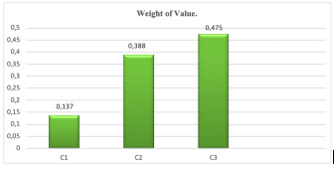
Objective: This study explores strategies for shaping children’s social ethics within female migrant families through the lens of Islamic values and the Sustainable Development Goals (SDGs), particularly SDG 4 (Quality Education) and SDG 5 (Gender Equality). Theoretical framework: The theoretical framework integrates the concepts of social behavior formation in families, character education theory (especially honesty and modeling), and religious education theory in the family context. This is reinforced by the Analytical Hierarchy Process (AHP) to determine strategic priorities in an objective and data-driven manner. Literature review: Literature review findings indicate that female migrant workers, despite limited physical presence, still play a pivotal role in shaping their children’s social ethics through intentional education, values transmission, and exemplary behavior. Prior research emphasizes family-based value education and identifies the need for measurable strategic frameworks such as AHP in prioritizing parenting methods. Methods: This research employs a qualitative descriptive approach using purposive sampling. Data were gathered through interviews, observation, document analysis, and structured questionnaires. Analytical Hierarchy Process (AHP), supported by Expert Choice 11 software, was used to prioritize educational strategies based on expert judgments. Results: The results identified three priority strategies: religious education (42.1%)—with emphasis on daily religious values (47.5%); exemplary behavior (43.5%)—highlighting the importance of parents as role models; and honesty education—prioritizing the alignment between words and actions (46.9%). The results were confirmed by a low inconsistency index (0.01), validating the reliability of the findings. Implications: The implications highlight the importance of reinforcing Islamic values in children’s social development, especially in the context of parental absence due to migration. The study provides guidance for mothers and educators to implement practical, measurable, and value-based approaches aligned with Islamic teachings and the SDGs. Novelty: The novelty lies in applying AHP to evaluate parenting strategies in migrant contexts—a method rarely used in character education research.
References
[1] R. G. Rosardi, S. D. W. Prajanti, H. T. Atmaja, and Juhadi, “Sustainable tourism model in Pagilaran tea plantation agrotourism, in Indonesia,” Int. J. Sustain. Dev. Plan., vol. 16, no. 5, pp. 981–990, 2021, https://doi.org/10.18280/ijsdp.160519.
[2] M. Hornung, E. Stuffolino, and H. Zagel, “Poverty among migrant, mixed, and non-migrant households: the role of non-teleworkability and single-earnership in Germany,” J. Ethn. Migr. Stud., pp. 1–28, 2024, https://doi.org/10.1080/1369183X.2024.2404219.
[3] M. L. Forrer, M. H. M. de Moor, C. Schuengel, and M. Oosterman, “Early Parenting Precursors of Child Developmental Outcomes: What Counts Beyond Parental Sensitivity?” Parenting, vol. 24, no. 2–3, pp. 67–77, 2024, https://doi.org/10.1080/15295192.2024.2310853.
[4] S. Kapetanovic and T. Skoog, “In their voices: immigrant mothers’ experiences and perceptions of the group-based self-assured parents programme for parents in disadvantaged areas in Sweden,” J. Fam. Stud., vol. 30, no. 4, pp. 700–718, 2024, https://doi.org/10.1080/13229400.2024.2318319.
[5] N. Favez, V. Rattaz, N. Puglisi, C. Razurel, M. Epiney, and H. Tissot, “The Interplay Between Maternal and Paternal Senses of Efficacy Moderates the Link Between Perinatal Parental Stress and Family Alliance at 3 Months,” Parenting, vol. 24, no. 1, pp. 30–38, 2024, https://doi.org/10.1080/15295192.2023.2254818.
[6] J. E. Lansford et al., “The Future of Parenting Programs: II Implementation,” Parenting, vol. 22, no. 3, pp. 235–257, 2022, https://doi.org/10.1080/15295192.2022.2086807.
[7] A. Okorn, M. Verhoeven, and A. Van Baar, “The Importance of Mothers’ and Fathers’ Positive Parenting for Toddlers’ and Preschoolers’ Social-Emotional Adjustment,” Parenting, vol. 22, no. 2, pp. 128–151, 2022, https://doi.org/10.1080/15295192.2021.1908090.
[8] S. Imrie, S. Zadeh, K. Wylie, and S. Golombok, “Children with Trans Parents: Parent–Child Relationship Quality and Psychological Well-being,” Parenting, vol. 21, no. 3, pp. 185–215, 2021, https://doi.org/10.1080/15295192.2020.1792194.
[9] C. Hechler, R. Beijers, M. Riksen-Walraven, and C. De Weerth, “Studying Quality of Caregiving Behavior: The Roles of Infant, Mother, Father, and Culture,” Parenting, vol. 19, no. 1–2, pp. 133–136, 2019, https://doi.org/10.1080/15295192.2019.1556021.
[10] J. Elizabeth et al., “Touching Technology — Parents ’ Experiences of Remote Consultations for Children With Severe Congenital Cardiac Conditions : Quasi-Experimental Cohort Study,” JMIR Pediatr. Parent, vol. 7, no. 33, pp. 1–13, 2024, https://doi.org/10.2196/54598.
[11] N. T. Širca, V. Dermol, A. N. Trunk, and A. Trunk, “Responsible Management and Challenges of Inclusion in Multicultural School Environment in Slovenia,” in Procedia - Social and Behavioral Sciences, The Author(s), 2018, pp. 670–679. https://doi.org/10.1016/j.sbspro.2018.04.049.
[12] H. Scheithauer, M. Hess, M. Zarra-Nezhad, C. Peter, and R. Wölfer, “Developmentally Appropriate Prevention of Behavioral and Emotional Problems, Social-Emotional Learning, and Developmentally Appropriate Practice for Early Childhood Education and Care: The Papilio-3to6 Program,” Int. J. Dev. Sci., vol. 16, no. 3–4, pp. 81–97, 2022, https://doi.org/10.3233/dev-220331.
[13] S. B. Gesell et al., “Leveraging Emergent Social Networks to Reduce Sedentary Behavior in Low-Income Parents With Preschool-Aged Children,” SAGE Open, vol. 11, no. 3, pp. 1–10, 2021, https://doi.org/10.1177/21582440211031606.
[14] M. R. Sanders et al., “Parenting, Child Maltreatment, and Social Disadvantage: A Population-Based Implementation and Evaluation of the Triple P System of Evidence-Based Parenting Support,” Child Maltreat., vol. 0, no. 0, pp. 1–15, 2024, https://doi.org/10.1177/10775595241259994.
[15] P. Setoh, P. H. X. Low, G. D. Heyman, and K. Lee, “Parenting by Lying,” Curr. Dir. Psychol. Sci., vol. 33, no. 1, pp. 51–57, 2024, https://doi.org/10.1177/09637214231206095.
[16] A. Živoder, A. Švab, and J. Vuga Beršnak, “Coping with the absence of parents: growing up in military families in Slovenia,” J. Fam. Stud., pp. 1–22, 2024, https://doi.org/10.1080/13229400.2024.2395286.
[17] T. Arsal, D. L. Setyowati, P. Hardati, Suroso, and H. T. Atmaja, “Social harmony model for social conflict management in Central Java,” IOP Conf. Ser.. Earth Environ. Sci., vol. 747, no. 1, 2021, https://doi.org/10.1088/1755-1315/747/1/012087.
[18] P. Hardati and H. N. Rahayu, “Level of population mobility in Wonogiri regency,” IOP Conf. Ser.. Earth Environ. Sci., vol. 683, no. 1, pp. 1–9, 2021, https://doi.org/10.1088/1755-1315/683/1/012008.
[19] E. Kurniawan, T. M. P. Astuti, and M. Syifauddin, “Community Participation in Creating Sustainable Community-Based Tourism,” Visions Sustain., vol. 17 no. November, pp. 39–55, 2022, https://doi.org/10.13135/2384-8677/5997.
[20] A. Souralová, “‘My parents did everything for us but nothing with us’: Parenting and mothering in Vietnamese immigrant families in the Czech Republic,” Asian Pacific Migr. J., vol. 30, no. 1, pp. 39–59, 2021, https://doi.org/10.1177/0117196820981376.
[21] D. W. Bitalo, K. Piotrowski, and L. Naudé, “Fatherhood, manhood, and personhood: South African fathers’ experiences of parental identity development,” J. Fam. Stud., pp. 1–24, 2024, https://doi.org/10.1080/13229400.2024.2398579.
[22] I. Hoiting, “Triangulations of ‘Motherly Love’: Negotiated Intimacies among Migrant Domestic Workers, Mothers, and Children,” J. Fam. Issues, vol. 43, no. 2, pp. 324–349, 2022, https://doi.org/10.1177/0192513X21993858.
[23] M. Kalmijn, “Discrepancies in parents’ perceptions of adult children’s well-being: evidence from mother–father–child triads,” J. Fam. Stud., no. May, pp. 1–23, 2024, https://doi.org/10.1080/13229400.2024.2335493.
[24] A. Dafinoiu, B. Olaya, and C. A. Essau, “Parental Economic Migration and Children’s Outcomes in Romania: The Role of Social Support, Parenting Styles, and Patterns of Migration,” J. Fam. Issues, vol. 43, no. 3, pp. 567–587, 2022, https://doi.org/10.1177/0192513X21993855.
[25] R. C. van der Wal, L. Levelt, E. Kluwer, and C. Finkenauer, “Exploring Associations Between Children’s Forgiveness Following Parental Divorce and Psychological Well-Being,” Fam. Transitions, vol. 65, no. 3, pp. 248–270, 2024, https://doi.org/10.1080/28375300.2024.2310432.
[26] K. Larouche, T. Pierce, S. Drapeau, and M. C. Saint-Jacques, “Understanding Fathers’ Involvement Relative to the Other Parent After Parental Separation,” J. Divorce Remarriage, vol. 64, no. 7–8, pp. 254–279, 2023, https://doi.org/10.1080/10502556.2023.2290899.
[27] C. Hickman, “Eco-Anxiety in Children and Young People–A Rational Response, Irreconcilable Despair, or Both?” Psychoanal. Study Child, vol. 77, no. 1, pp. 356–368, 2024, https://doi.org/10.1080/00797308.2023.2287381.
[28] X. Gu, “‘Save the children!’: Governing left-behind children through family in China’s Great Migration,” Curr. Sociol., vol. 70, no. 4, pp. 513–538, 2022, https://doi.org/10.1177/0011392120985874.
[29] M. Osinga, D. D. van Bergen, O. J. van Brummen-Girigori, T. Kretschmer, and M. C. Timmerman, “‘We Say “Mothers” But Mean “Parents”’: Qualitative Perceptions and Experiences With Father Absence Among Curaçaoan, Curaçaoan-Dutch, and Dutch Young People,” J. Adolesc. Res., vol. 38, no. 6, pp. 983–1015, 2023, https://doi.org/10.1177/07435584211014878.
[30] T. P. Ramatsetse and E. Ross, “Understanding the perceived psychosocial impact of father absence on adult women,” South African J. Psychol., vol. 53, no. 2, pp. 199–210, 2023, https://doi.org/10.1177/00812463221130194.
[31] B. Shu, “Parental Migration, Parental Emotional Support, and Adolescent Children’s Life Satisfaction in Rural China: The Roles of Parent and Child Gender,” J. Fam. Issues, vol. 42, no. 8, pp. 1663–1705, 2021, https://doi.org/10.1177/0192513X20946345.
[32] E. Sihvonen, “‘They are Alone in Their Parenthood’: Parenting Support and (Re)building Community,” Sociol. Res. Online, vol. 28, no. 3, pp. 644–661, 2023, https://doi.org/10.1177/13607804221075358.
[33] A. Riemens, C. M. Portengen, and J. J. Endendijk, “Associations between parental dispositional attributions, dismissing and coaching reactions to children’s emotions, and children’s problem behaviour moderated by child gender,” Cogn. Emot., vol. 37, no. 6, pp. 1057–1073, 2023, https://doi.org/10.1080/02699931.2023.2214350.
[34] R. Shukia and S. Marobo, “Parental Engagement in Children’s Pre-Primary Education in Marginalized Communities in Tanzania Before and During the COVID-19 Era,” J. Res. Child. Educ., vol. 38, no. sup1, pp. S61–S76, 2024, https://doi.org/10.1080/02568543.2023.2281556.
[35] I. Butean, M. Buta, L. Visu-Petra, and A. Opre, “Moral Stories and Young Children’s Confession of Misdeeds in Relation to Their Perception of Honesty and Its Consequences,” Early Educ. Dev., vol. 32, no. 5, pp. 714–728, 2021, https://doi.org/10.1080/10409289.2020.1796089.
[36] A. P. Mugno and L. C. Malloy, “Interview and child factors that influence children’s true disclosures of a parent’s versus a stranger’s wrongdoing,” Appl. Dev. Sci., vol. 28, no. 4, pp. 457–472, 2023, https://doi.org/10.1080/10888691.2023.2231846.
[37] D. Jacobvitz, A. I. Aviles, S. Reisz, and N. Hazen, “Frightening maternal behavior over the first 2 years of life: effects on children’s behavior problems in middle childhood,” Attach. Hum. Dev., vol. 27, no. 1, pp. 99–115, 2024, https://doi.org/10.1080/14616734.2024.2406289.
[38] L. Hagan and M. Tovin, “The exemplary physical therapist students in clinical education: a phenomenological study,” Physiother. Theory Pract., vol. 41, no. 5, pp. 968–980, 2024, https://doi.org/10.1080/09593985.2024.2376677.
[39] C. Jensen, “Rhetorical uses of the exemplary child trope in the Biographies of Eminent Monks and Biographies of Nuns,” Stud. Chinese Relig., vol. 7, no. 1, pp. 63–111, 2021, https://doi.org/10.1080/23729988.2020.1854572.
[40] N. Rickey, M. Dubek, and C. DeLuca, “Toward a Praxis-Oriented Understanding of Student Self-Assessment in STEAM Education: How Exemplary Educators Leverage Self-Assessment,” Cambridge J. Educ., vol. 53, no. 5, pp. 605–625, 2023, https://doi.org/10.1080/0305764X.2023.2196245.
[41] N. A. Fajriyani and M. Maemonah, “Application of Aswaja Character in Religious Programs Through the Approach of B.F. Skinner with Reinforcement Model at Islamic Elementary School Nurul Bayan Sumenep,” Educ. J. Pendidik. Islam, vol. 6, no. 2, p. 330, 2022, https://doi.org/10.21111/educan.v6i2.8039.
[42] Ferdinan, M. Nurhidayah, and M. Pewangi, “Integration of Islamic Values in the Field of General Studies at SMP Unismuh Makassar: Evaluation of the Stake Countenance Model Approach,” Educ. Process Int. J., vol. 14, no. February, pp. 2564–8020, 2025, https://doi.org/10.22521/edupij.2025.14.59.
[43] I. Widiastuti, R. Munawati, E. Gustina, and Y. Estriyanto, “Academic Integrity, Religiosity, and Morality of Indonesian Pre-Service Teachers: Does Field of Study Matter?” Educ. Process Int. J., vol. 15, no. Maret, pp. 2–15, 2025, https://doi.org/10.22521/edupij.2025.15.138.
[44] B. A. Rukiyanto, T. K. Christiani, and S. Almirzanah, “Religious education to develop respect for plurality in Indonesia,” J. Beliefs Values, vol. 46, no. 2, pp. 365–380, 2024, https://doi.org/10.1080/13617672.2024.2308982.
[45] Y. R. Park, M. Duhon, K. A. Kwon, A. H. Beisly, M. Walker, and E. Miguel, “Parent psychological well-being, home learning environment, and child development among Kenyan families,” J. Appl. Dev. Psychol., vol. 97, no. February, pp. 1–13, 2025, https://doi.org/10.1016/j.appdev.2025.101760.
[46] A. N. Andri Nirwana, Mahmudulhassan, F. D. Marshal, Muthoifin, and N. Fadli, “Human Rights and Social Justice in Quranic Contexts: A Global Trend,” Leg. J. Ilm. Huk., vol. 32, no. 2, pp. 453–471, 2024, https://doi.org/10.22219/ljih.v32i2.35088.
[47] S. Uddin Ahmed Khondoker, “Understanding the Essence of Islamic Education: Investigating Meaning, Essence, and Knowledge Sources,” Solo Univers. J. Islam. Educ. Multicult. E, vol. 2, no. 1, pp. 27–36, 2024, https://doi.org/10.61455/sujiem.v2i01.115.
[48] S. Rochanah, A. R. Ridha, and A. Nirwana, “Development of Teachers’ Performance of Construct Reliability and Avarice Variance Extracted Measurement Instruments of Certified Islamic Education Teachers,” Int. J. Relig., vol. 3538, no. 10, pp. 3828–3849, 2024, https://doi.org/10.61707/xzjvmb82.
[49] S. Trihariyanto, E. Supriyanto, M. Muthoifin, and Z. ’Uyun, “Strategi Pembelajaran Inovatif Pendidikan Agama Islam Dengan Media Powerpoint Dalam Meningkatkan Mutu Pendidikan Di Sdit Muhammadiyah Sinar Fajar Cawas Dan Sd Muhammadiyah Pk Bayat,” Profetika J. Stud. Islam, vol. 21, no. 1, pp. 109–120, 2020, https://doi.org/10.23917/profetika.v21i1.11653.
[50] M. Muthoifin, I. Amelia, and A. B. Eprahim Ali, “Islamic accounting: Ethics and contextualization of recording in Muamalah transactions,” Multidiscip. Rev.., vol. 7, no. 8, 2024, https://doi.org/10.31893/multirev 2024132.
[51] E. B. G. Suwoko, Waston, Bambang Setiaji, Muthoifin, Huda Kurnia Maulana, “Family Education To Improve The Quality Of Human Resources And Sustainable Development In Samarinda,” Rev. Gestão Soc. e Ambient., vol. 18, no. 6, pp. 1–19, 2024, https://doi.org/10.24857/rgsa.v18n6-011.
[52] M. Muthoifin, “The phenomenon of the rise of online transactions : A case study of Tokopedia. com and Bukalapak. com,” Multidiscip. Rev.., 2024, https://doi.org/10.31893/multirev.2024133.
[53] M. Apriantoro, A. Suryaningsih, and M. Muthoifin, “Bibliometric Analysis of Research Development of Economic Dispute Settlement,” EUDL Eur. Union Digit. Libr., 2023, https://doi.org/10.4108/eai.19-10-2022.2329068.
[54] S. N. Asia, M. Muthoifin, M. S. Apriantoro, A. Amrin, S. Sya’roni, and R. Irfan Rosyadi, “Analysis of Islamic Economic Law on Fishing Pool Business in Indonesia,” Demak Univers. J. Islam Sharia, vol. 1, no. 01, pp. 01–09, 2023, https://doi.org/10.61455/deujis.v1i01.7.
[55] M. M. N. Muthoifin, “Outsourcing System in View of Islamic Law : Study on Employees at Universitas Muhammadiyah Surakarta,” in Proceedings of the International Conference on Engineering, Technology and Social Science (ICONETOS 2020), Atlantis Press, 2021, pp. 91–95, https://doi.org/10.2991/assehr.k.210421.015.
[56] N. Muthoifin, “Mengungkap Isi Pendidikan Islam Perspektif Al- Qur ’ an Surat Al -Ashr Ayat 1-3,” in The 7th University Research Colloqium 2018 STIKES, 2018, pp. 206–218.
[57] A. Haironi and Muthoifin, “Implementasi Metode Taḥfīẓul Qur’an ‘Sabaq, Sabqi, Manzil’ Di Marhalah Mutawasithah Dan Tsanawiyah Putri Pondok Pesantren Imam Bukhari Tahun Pelajaran 2010-2014,” UMS, 2016.
[58] N. Jaafar, “Parents ’ Involvement In The Education Of Children With Islam Based On Imam Al-Ghazali,” Profetika J. Stud. Islam, vol. 25, no. 1, pp. 95–106, 2024, https://doi.org/10.23917/profetika.v25i01.4210.
[59] N. Humphrey and J. Hebron, “Bullying of children and adolescents with autism spectrum conditions: A ‘state of the field’ review,” Int. J. Incl. Educ., vol. 19, no. 8, pp. 845–862, 2015, https://doi.org/10.1080/13603116.2014.981602.
[60] N. Senan, W. A. Wan Ab Aziz, M. F. Othman, and S. Suparjoh, “Embedding Repetition (Takrir) Technique in Developing Al-Quran Memorizing Mobile Application for Autism Children,” in MATEC Web of Conferences, N. H. M.N., A. E. I., S. M., A. K., M. F. M.B., I. Z., M. R. I., M. A. S. Md.J., and A. M. T.A., Eds., Department of Multimedia, Faculty of Computer Science and Information Technology, Universiti Tun Hussein Onn Malaysia, Parit Raja, Batu Pahat, Johor, 86400, Malaysia: EDP Sciences, 2017. https://doi.org/10.1051/matecconf/201713500076.
[61] Z. Gjeleshi, D. Kaleci, and E. Miftari, “Physical and psychological violence in high schools, teaching their treatment,” Mediterr. J. Soc. Sci., vol. 5, no. 19, pp. 546–552, 2014, https://doi.org/10.5901/mjss.2014.v5n19p546.
Submitted
Accepted
Published
Issue
Section
License
Copyright (c) 2025 Nahrul Faidin, Tri Marhaeni Pudji Astuti, Sucihatiningsih Dian Wisika Prajanti, Puji Hardati, Alwy Ahmed Mohamed

This work is licensed under a Creative Commons Attribution 4.0 International License.