ANALYSIS OF PROCESS PARAMETERS OF THE ENDER-3 V2 SERIES 3D PRINTER ON THE TENSILE AND COMPRESSIVE STRENGTH OF PLA FILAMENT TEST SPECIMEN USING TAGUCHI METHOD
DOI:
https://doi.org/10.23917/mesin.v27i2.9853Keywords:
FDM (Fused Deposition Modeling), tensile strength, compressive strength, Taguchi Method, process parameters, polylactic acidAbstract
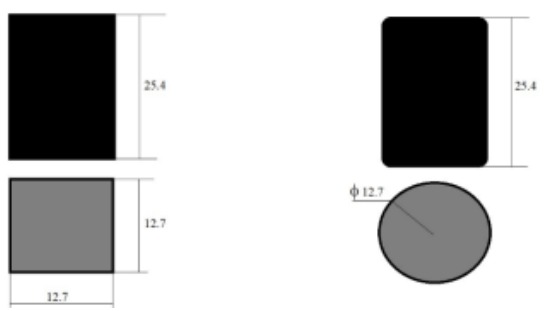
FDM (Fused Deposition Modeling) has emerged as one of the most popular additive manufacturing technologies in recent years, possessing the capability to produce objects with intricate designs. In this process, the object is constructed layer by layer using thermoplastic polymer materials. One notable FDM machine is the Ender-3 V2 series 3D printer. The strength and quality of the printed object are influenced by key process parameters, namely infill density, printing speed, and wall thickness. This research aims to analyze the impact of these process parameters; infill density, printing speed, and wall thickness on the tensile and compressive strength of polylactic acid (PLA) using the Taguchi Method. Standard specimens of ASTM D638 and ASTM D695, printed on the Ender-3 V2 series 3D printer, were employed. The Taguchi L4(23) orthogonal array design incorporated a combination of process parameters: infill density (50, 75) %, printing speed (30, 60) mm/s, and wall thickness (0.8, 1.2) mm, representing the quality of the printed parts. The results indicate that the compressive strength response is primarily influenced by infill density, while the tensile strength response is predominantly influenced by wall thickness. Thus, it can be concluded that lower printing speeds produce higher tensile and compressive strengths. The object density is greatly influenced by infill density and wall thickness, as confirmed by the results of microstructural examination.
Downloads
Downloads
Submitted
Accepted
Published
Issue
Section
License
Copyright (c) 2026 Mohammad Yazid Diratama, Muhammad Rizki Gorbyandi Nadi, Dedy Ariefijanto, irfan Maulana, Andri Suhendri

This work is licensed under a Creative Commons Attribution 4.0 International License.