GEOMETRIC DESIGN OPTIMIZATION OF SUBMERSIBLE PUMP CASING FOR IMPROVED STRUCTURAL STRENGTH AND EROSION RESISTANCE UNDER FLUID FLOW USING FEA AND CFD APPROACHES
DOI:
https://doi.org/10.23917/mesin.v27i2.16506Keywords:
Pump Casing Submersible, Computational Fluid Dynamics (CFD), Finite Element Analysis (FEA), Geometry Variations, Reverse EngineeringAbstract
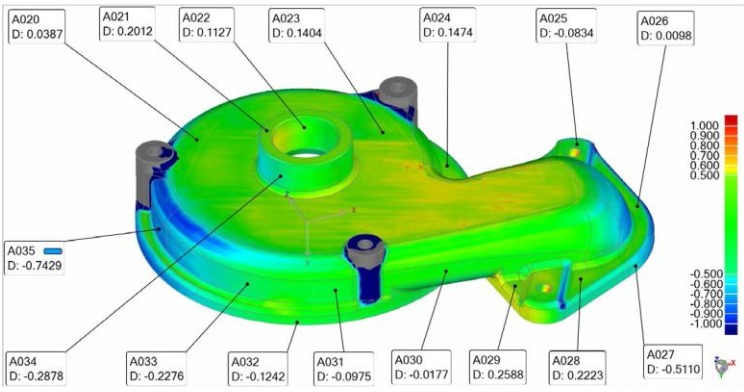
The structural performance of submersible pump components, particularly the casing, is influenced by its geometric configuration and the impact of fluid flow. Premature damage to submersible pump casings in mining environments is often triggered by the interaction of fluid flow with erosive solid particles. This study analyzes the effect of variations in the internal geometry of the submersible pump casing on the durability of FCD 700 cast iron materials. The method used in this study is the integration of Computational Fluid Dynamics (CFD) and Finite Element Analysis (FEA). The reverse engineering process to obtain a 3D model of the existing pump, followed by fluid flow simulations to obtain pressure distribution, and continued with structural analysis to determine the Von Mises stress and Safety Factor. Variations in geometric parameters such as bend radius (R-bend), chamfer angle (C-angle), and inlet radius (R-in) are analyzed against the distribution of pressure, stress, and particle erosion rate. CFD simulations are performed to analyze the pressure distribution resulting from internal flow conditions, which are then applied as boundary conditions in the FEA model to evaluate the resulting stress and deformation. Simulation results show that geometric changes significantly affect stress concentrations and erosion patterns in critical areas of the casing. Geometry with smoother curved transitions can reduce maximum stress and erosion potential compared to existing designs. These findings contribute to the optimization of submersible pump casing designs to increase service life and operational reliability in mining industry applications.
Downloads
Downloads
Submitted
Accepted
Published
Issue
Section
License
Copyright (c) 2026 Dede Buchori Muslim, Meri Rahmi, Muhammad Rifky Ramdhani, Reza Yadi Hidayat, Asep Indra Komara, Muhammad Nahrowi, Antonius Adi Soetopo, Paulus Mudji S

This work is licensed under a Creative Commons Attribution 4.0 International License.