STRUCTURAL AND OPTICAL CHARACTERIZATION OF HEAT-TREATED SIC PARTICLES DERIVED FROM RICE HUSK ASH FOR PHOTOVOLTAIC
DOI:
https://doi.org/10.23917/mesin.v27i1.16145Keywords:
Silicon carbide , nanoparticles , heat treatment, UV-Vis spectroscopy, solar panel, light absorbanceAbstract
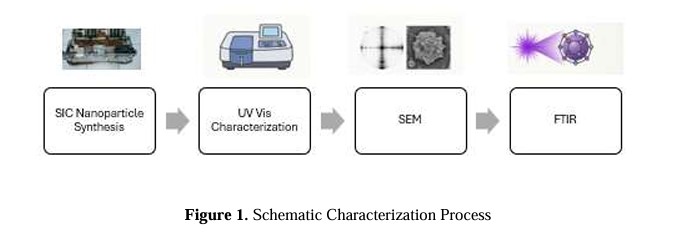
This study explores the potential of nanoscale silicon carbide (SiC) particles synthesized from rice husk ash to enhance light absorption characteristics in solar panel applications. The SiC particles were produced by burning rice husks, followed by purification and division into two groups: one group underwent heat treatment at 400 °C, while the other was kept untreated for comparative analysis. High-Energy Milling (HEM) for 60 hours was used to reduce the particle size of selected samples. Comprehensive characterization was performed using Scanning Electron Microscopy (SEM), X-ray Diffraction (XRD), Fourier Transform Infrared Spectroscopy (FTIR), and UV-Vis spectroscopy in the wavelength range of 200–1100 nm. The results of the study indicate that heat-treated SiC exhibits significantly reduced agglomeration and better particle dispersion compared to untreated samples. FTIR analysis confirmed the presence of additional functional groups (C=C and O–H) in the treated SiC, which contribute to surface chemical modification. Most importantly, the UV-Vis spectra show that the treated SiC maintains consistently higher absorbance values (0.5–0.6) in the visible to near-infrared region (400–1100 nm), whereas the untreated SiC exhibits a decreasing trend (0.4–0.2). These findings suggest that thermal processing can enhance the optical performance of SiC nanoparticles by improving dispersion and introducing functional groups that strengthen light-matter interactions. The superior absorption characteristics of the processed SiC demonstrate promising potential as an additive or nanostructured layer to improve photon capture and overall efficiency in photovoltaic devices
Downloads
References
[1] P. M. Ajayan, L. S. Schadler, and P. V Braun, “Nanocomposite Science and Technology,” Materials Today, vol. 6, no. 11, p. 52, 2003, doi: 10.1016/s1369-7021(03)01139-8.
[2] M. A. Morsi, A. Rajeh, and A. A. Al-Muntaser, “Reinforcement of the optical, thermal and electrical properties of PEO based on MWCNTs/Au hybrid fillers: Nanodielectric materials for organoelectronic devices,” Compos. B Eng., vol. 173, p. 106957, 2019, doi: https://doi.org/10.1016/j.compositesb.2019.106957.
[3] S. Noreen et al., “A DFT and Molecular Correlational Analysis on Newly Designed Silicon-Carbide Quantum Dots with Extended Acceptors for their Photovoltaic Performance,” Silicon, vol. 17, no. 10, pp. 2249–2261, 2025, doi: 10.1007/s12633-025-03313-8.
[4] R. I. Riza, W. N. Putra, and S. Harjanto, “Cooling rate observation in quenching process using carbon nanofluids for S45C carbon steel,” Key Eng. Mater., vol. 833 KEM, pp. 13–17, 2020, doi: 10.4028/www.scientific.net/KEM.833.13.
[5] J. Rao, G. Catherin, I. Murthy, D. Rao, and B. Raju, “Production of nano structured silicon carbide by high energy ball milling,” International Journal of Engineering, Science and Technology, vol. 3, no. 4, pp. 82–88, 2011, doi: 10.4314/ijest.v3i4.68544.
[6] B. Bakthavatchalam, K. Habib, R. Saidur, N. Aslfattahi, and A. Rashedi, “Investigation of electrical conductivity, optical property, and stability of 2D MXene nanofluid containing ionic liquids,” Applied Sciences (Switzerland), vol. 10, no. 24, pp. 1–20, 2020, doi: 10.3390/app10248943.
[7] Aminatun, A. Supardi, Z. I. Nisa, D. Hikmawati, and Siswanto, “Synthesis of Nanohydroxyapatite from Cuttlefish Bone (Sepia sp.) Using Milling Method,” Int. J. Biomater., vol. 2019, p. 1831208, 2019, doi: 10.1155/2019/1831208.
[8] J. Xie et al., “Simple preparation of WO3-ZnO composites with UV-Vis photocatalytic activity and energy storage ability,” Ceram. Int., vol. 40, no. 8 PART A, pp. 12519–12524, 2014, doi: 10.1016/j.ceramint.2014.04.106.
[9] T. E. Saraswati, U. H. Setiawan, M. R. Ihsan, I. Isnaeni, and Y. Herbani, “The Study of the Optical Properties of C60 Fullerene in Different Organic Solvents,” Open Chem., vol. 17, no. 1, pp. 1198–1212, 2019, doi: 10.1515/chem-2019-0117.
[10] N. NGAFWAN et al., “Study on novel fluorescent carbon nanomaterials in food analysis,” Food Science and Technology, vol. 42, pp. 1–6, 2022, doi: 10.1590/fst.37821.
[11] C. S. S. R. Kumar, UV-VIS and photoluminescence spectroscopy for nanomaterials characterization. 2013. doi: 10.1007/978-3-642-27594-4.
[12] R. Begum et al., “Applications of UV/Vis Spectroscopy in Characterization and Catalytic Activity of Noble Metal Nanoparticles Fabricated in Responsive Polymer Microgels: A Review,” Crit. Rev. Anal. Chem., vol. 48, no. 6, pp. 503–516, 2018, doi: 10.1080/10408347.2018.1451299.
[13] Y. Guo, C. Liu, R. Ye, and Q. Duan, “Advances on water quality detection by uv-vis spectroscopy,” Applied Sciences (Switzerland), vol. 10, no. 19, pp. 1–18, 2020, doi: 10.3390/app10196874.
[14] A. R. A. Scharnberg, A. C. de Loreto, and A. K. Alves, “Optical and structural characterization of Bi2fexNbO7 nanoparticles for environmental applications,” Emerging Science Journal, vol. 4, no. 1, pp. 11–17, 2020, doi: 10.28991/esj-2020-01205.
[15] A. Ray, K. Santhosh, and S. Bhattacharya, “Absorption spectrophotometric, fluorescence, transient absorption and quantum chemical investigations on fullerene/phthalocyanine supramolecular complexes,” Spectrochim. Acta A Mol. Biomol. Spectrosc., vol. 78, no. 5, pp. 1364–1375, 2011, doi: 10.1016/j.saa.2011.01.011.
[16] M. H. Binsabt, H. M. Al-Matar, A. L. Balch, and M. A. Shalaby, “Synthesis and Electrochemistry of Novel Dumbbell-Shaped Bis-pyrazolino[60]fullerene Derivatives Formed Using Microwave Radiation,” ACS Omega, vol. 6, no. 31, pp. 20321–20330, 2021, doi: 10.1021/acsomega.1c02245.
[17] P. Bermejo-barrera, M. Aboal-somoza, and M. Fondo, “Semiconductor Quantum Dots as Target Analytes : Properties , Surface Chemistry and Detection,” pp. 1–35, 2022.
[18] S. Prof and P. Rauwel, “Institute of Technology ABSORPTION SPECTROSCOPY STUDIES OF SILICON DIOXIDE NANOPARTICLES AND THEIR APPLICATIONS IN SOLAR NENDE RAKENDUS PÄIKESEPANEELIDES Bakalaureusetöö Tehnika ja tehnoloogia õppekava Tartu 2021,” 2021.
[19] D.-X. Chen, Y. Wang, Y.-X. Song, and W. Zhang, “TCAD Analysis of Single-Event Burnout Hardness for an Improved CoolSiC Trench MOSFET,” IEEE Trans. Electron Devices, vol. 71, no. 8, pp. 4596–4603, Aug. 2024, doi: 10.1109/TED.2024.3418727.
[20] M. Alim-Al-Razy, G. M. A. Bayazid, R. U. Rahman, R. Bosu, and S. S. Shamma, “Silver nanoparticle synthesis, UV-Vis spectroscopy to find particle size and measure resistance of colloidal solution,” J. Phys. Conf. Ser., vol. 1706, no. 1, 2020, doi: 10.1088/1742-6596/1706/1/012020.
[21] L. C. Chen, C. H. Hsu, P. S. Chan, X. Zhang, and C. J. Huang, “Improving the performance of dye-sensitized solar cells with TiO2/graphene/TiO2 sandwich structure,” Nanoscale Res. Lett., vol. 9, no. 1, pp. 1–7, 2014, doi: 10.1186/1556-276X-9-380.
[22] D. A. Pratiwi et al., “Experimental Study of Amorphous Photovoltaic Systems in Indoor Performance with Different Coolants,” Engineering Proceedings, vol. 84, no. 1, 2025, doi: 10.3390/engproc2025084024.
Downloads
Submitted
Accepted
Published
Issue
Section
License
Copyright (c) 2026 Ramzul Irham Riza, Ngafwan, Masyrukan, Ridwan Krisnoadi, Adhyaka Billy Kurniawan

This work is licensed under a Creative Commons Attribution 4.0 International License.