ANALYSIS OF THE CAPABILITY OF FIBER METAL LAMINATE COMPOSITES AS BULLETPROOF VEST MATERIAL USING FINITE ELEMENT METHOD
DOI:
https://doi.org/10.23917/mesin.v27i2.15652Keywords:
aluminium, composite, projectile, vest, simulationAbstract
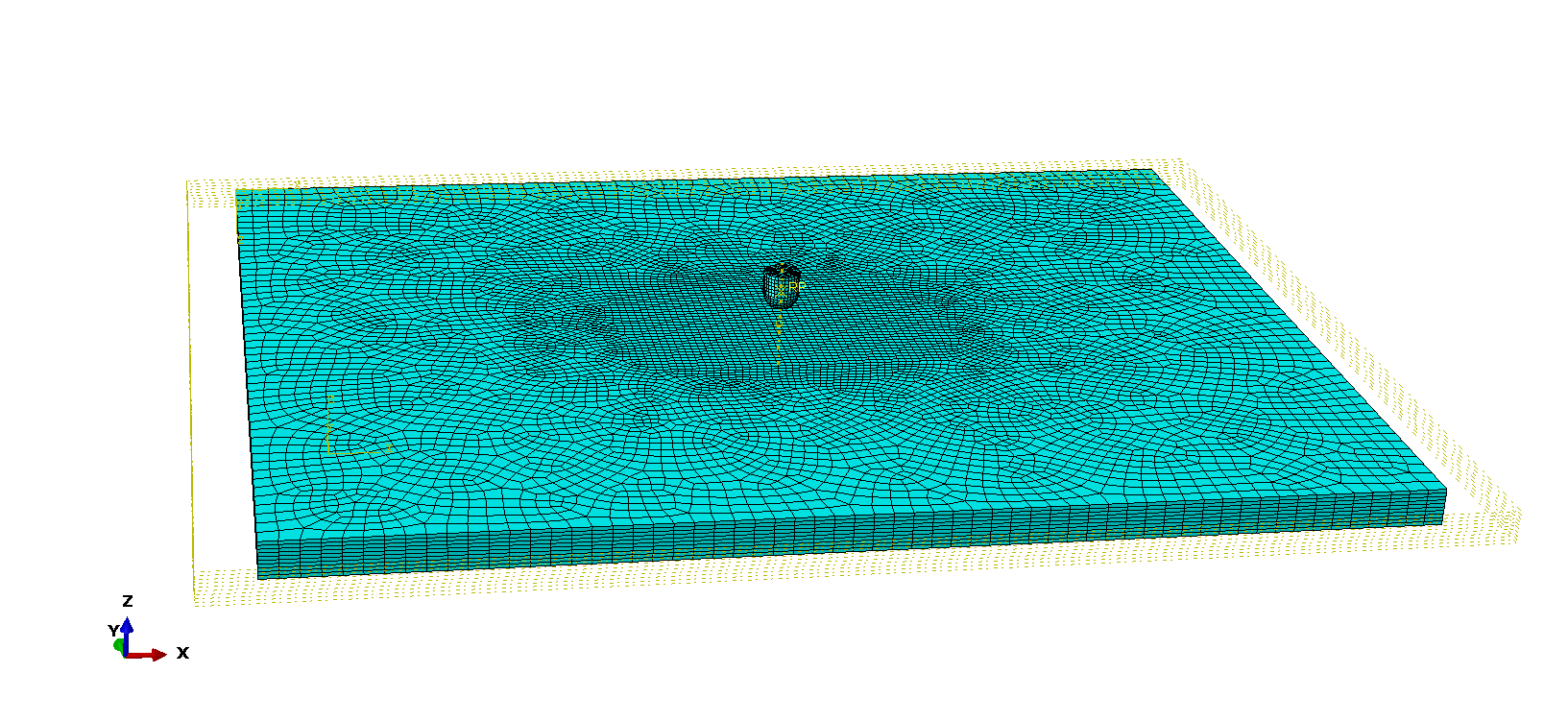
This study analyzes the capability of Fiber Metal Laminate (FML) composites as bulletproof vest materials using the Finite Element Method (FEM) by varying the position of the aluminum layers on the composite plate. The material consists of 25 layers with an aluminum configuration at the front, middle, and back. The project Element Method (FEM) involves varying the position of the aluminum layer on the composite plate. The material consists of 25 layers with aluminum configurations at the front, center, and rear. A 9 mm diameter projectile model was used to simulate the impact and analyze the kinetic energy reduction of the bullet. The simulation results show that the aluminum position at the front produces the fastest kinetic energy reduction and the lowest residual energy of 128.726 J, while the middle and rear positions produce 156.566 J and 129.585 J, respectively. All configurations meet the safety limits of the National Institute of Justice (NIJ) with residual energy values below 170 J. These results indicate that the position of the metal layer significantly affects impact energy absorption capacity. The combination of aluminum and composite fibers in the FML structure effectively distributes impact energy through matrix cracking, fiber fracture, and delamination mechanisms. Thus, FML composite has the potential to become an alternative material for bulletproof vests that are lightweight, strong, and efficient in protecting the body from projectile penetration.
Downloads
Downloads
Submitted
Accepted
Published
Issue
Section
License
Copyright (c) 2026 Rudi Amme, Muhammad Syahid, Hairul Arsyad, Lukman Kasim

This work is licensed under a Creative Commons Attribution 4.0 International License.