
Uncovering metacognitive awareness and meaningful learning of prospective mathematics teachers after learning absolute value inequalities
Article Sidebar
- Metacognitive awareness , Meaningfulness, Absolute value inequality, Intuitive thinking, Analytical thinking
Abstract
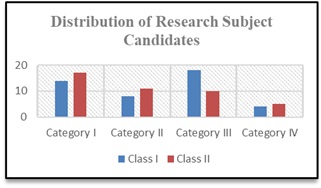
Learners who lack adequate metacognitive awareness and meaningful have the potential to work mechanically. The aims of this study is to uncover the characteristics and description of metacognitive awareness and meaningful of prospective mathematics teachers after learning absolute value inequalities and the involvement of intuitive and analytical thinking. This study uses a qualitative approach with an exploratory type. A total of 5 prospective mathematics teachers who were taking differential calculus courses were selected as subjects from 87 candidate subjects from two different universities in Indonesia. Data collection was carried out by administering tests and conducting semi-structured interviews. Data analysis in this study went through three stages, namely data reduction, data presentation, and drawing conclusions. The results of data analysis show that: 1) unaware and not meaningful, 2) aware but not meaningful, 3) unaware but meaningful, 4) aware and meaningful. In addition, a pattern of intuitive and analytical thinking was also found, whereby prospective mathematics teachers who were not conscious activated analytical thinking, while those who were conscious activated intuitive thinking. These findings imply the importance of emphasizing mindful and meaningful during the learning process so that students can understand concepts holistically and deeply, enabling them to solve problems accurately.
Full text article
References
Agusman, Purwanto, & Rahardi, R. (2025). An exploration of critical thinking stages of junior high school students in solving contradictory mathematical problems. Journal of Research and Advances in Mathematics Education, 10(3), 200–217. https://doi.org/10.23917/jramathedu.v10i3.8911
Andrews, D., van Lieshout, E., & Kaudal, B. B. (2023). How, Where, And When Do Students Experience Meaningful Learning? International Journal of Innovation in Science and Mathematics Education, 31(3), 28–45. https://doi.org/10.30722/IJISME.31.03.003
Ausubel, D. P. (1963). The Psychology of Meaningful Verbal Learning. Grune & Stratton: New York.
Barahmand, A., & Barahmand, A. (2022). Different intuitive rules in mathematical thinking. International Journal of Mathematical Education in Science and Technology, 55(7), 1619–1636. https://doi.org/10.1080/0020739X.2022.2105269
Çini, A., Järvelä, S., Dindar, M., & Malmberg, J. (2023). How multiple levels of metacognitive awareness operate in collaborative problem solving. Metacognition and Learning, 891–922. https://doi.org/10.1007/s11409-023-09358-7
Creswell, J. W. (2018). Research Design: Qualitative, Quantitative, and Mixed Methods Approaches. Los Angeles: Sage publications.
El-khateeb, M. M. A. (2016). Errors Analysis of Solving Linear Inequalities among the Preparatory Year Students at King Saud University. 7(12), 124–133.
Faizah, S., Nusantara, T., Sudirman, S., & Rahardi, R. (2020). Exploring students ’ thinking process i n mathematical proof of abstract algebra based on M ason ’ s framework. Journal for the Education of Gifted Young Scientists, 8(June), 871–884. https://doi.org/10.17478/jegys.689809
Folch, A., Gasol, L., Heredia, L., Vicens, P., & Torrente, M. (2023). Mindful schools: Neuropsychological performance after the implementation of a mindfulness-based structured program in the school setting. Current Psychology, 42(14), 12118–12128. https://doi.org/10.1007/s12144-021-02572-z
Hagerman, L.-A., Manankil-Rankin, L., & Schwind, J. K. (2023). A narrative inquiry into the experiences of nursing faculty engaging in mindful practices. International Journal of Teaching and Learning in Higher Education, 35(1), 151–157. https://doi.org/10.7771/1812-9129.1033
Johnson, R. B., & Christensen, L. (2020). Education Researcch: Quantitative, Qualitative, and Mixed Approahes. SAGE.
Jupri, A., Usdiyana, D., & Gozali, S. M. (2022). Pre-Service Teachers’ Strategies in Solving Absolute Value Equations and Inequalities. Education Sciences, 12(11), 743. https://doi.org/10.3390/educsci12110743
Kusumawati, F. L., Pramudya, I., & Nurhasanah, F. (2024). Profile of Intuitive Thinking Ability on the Topic of Limits Assessed Based on Students ’ Representation of Functions. International Journal of Research and Innovation in Social Science (IJRISS), VIII(2454), 1952–1959. https://doi.org/10.47772/IJRISS
Lestari, S., & Roesdiana, L. (2023). Analisis Kemampuan Berpikir Komputasional Matematis Siswa Pada Materi Program Linear. RANGE: Jurnal Pendidikan Matematika, 4(2), 178–188. https://doi.org/10.32938/jpm.v4i2.3592
Loonsakaewong, T., & Julsuwan, S. (2025). Components and Indicators of Mathematics Teachers ’ Learning Management Competency to Enhancing Analytical Thinking in Schools Under the Office of the Basic Education Commission. 14(4), 377–385. https://doi.org/10.5539/jel.v14n4p377
McNulty, D. S. (2021). Creating a Model for Mindfulness in Nursing Professional Development Using Concept Analysis. Journal for Nurses in Professional Development, 37(4), 200–205. https://doi.org/10.1097/NND.0000000000000725
Michael, J. A. (2004). Mental models and meaningful learning. Journal of Veterinary Medical Education, 31(1), 1–5. https://doi.org/10.3138/jvme.31.1.1
Miles, M. B., Huberman, A. M., & Saldana, J. (2016). Qualitative Data Analysis. Nursing standard (Royal College of Nursing (Great Britain) : 1987), 30(25), 33. https://doi.org/10.7748/ns.30.25.33.s40
Neff, K. D., & Germer, C. K. (2013). A Pilot Study and Randomized Controlled Trial of the Mindful Self-Compassion Program. Journal of Clinical Psychology, 69(1), 28–44. https://doi.org/10.1002/jclp.21923
Newton, C., Feeney, J., & Pennycook, G. (2024). On the Disposition to Think Analytically : Four Distinct Intuitive-Analytic Thinking Styles. 50(6), 906–923. https://doi.org/10.1177/01461672231154886
Nur, S., & Kartini, K. (2021). Analisis Kemampuan Pemahaman dan Pemecahan Masalah Matematis Siswa Kelas X Materi Persamaan Pertidaksamaan Nilai Mutlak. Pythagoras: Jurnal Program Studi Pendidikan Matematika, 10(1), 47–56. https://doi.org/10.33373/pythagoras.v10i1.2928
Panjaitan, M. A., & Juandi, D. (2024). Analysis of Problems in Learning Mathematics Based on Difficulties, Errors, and Misconceptions in the Material of Equations and Inequality Absolute Values of One Variable: Systematic Literature Review. 2024, 316–324. https://doi.org/10.18502/kss.v9i13.15932
Polman, J., Hornstra, L., & Volman, M. (2021). The meaning of meaningful learning in mathematics in upper ‑ primary education. Learning Environments Research, 24(3), 469–486. https://doi.org/10.1007/s10984-020-09337-8
Pytlik, N., Soll, D., & Mehl, S. (2020). Thinking Preferences and Conspiracy Belief : Intuitive Thinking and the Jumping to Conclusions-Bias as a Basis for the Belief in Conspiracy Theories. Frontiers in Psychiatry, 11(September), 1–11. https://doi.org/10.3389/fpsyt.2020.568942
Rumite, W., Purwanto, P., Parta, I. N., & Rahardjo, S. (2023). Unpacking Mental Models, Strategies, and Schemas Pre-Service Mathematics Teacher in Solving Maximum Rectangular Areas. Eurasia Journal of Mathematics, Science and Technology Education, 19(8), 1–13. https://doi.org/10.29333/ejmste/13430
Tuononen, T., Hyytinen, H., Räisänen, M., Hailikari, T., & Parpala, A. (2023). Metacognitive awareness in relation to university students’ learning profiles. 18, 37–54. https://doi.org/10.1007/s11409-022-09314-x
van der Riet, P., Levett-Jones, T., & Aquino-Russell, C. (2018). The effectiveness of mindfulness meditation for nurses and nursing students: An integrated literature review. Nurse Education Today, 65, 201–211. https://doi.org/10.1016/j.nedt.2018.03.018
Verberg, D., Purcell, E. J., & Rigdon, S. E. (2010). Applications of the Derivative. In Calculus (hal. 151–185). Upper Saddle River, New Jersey: Pearson Prentice Hall.
Wang, Y., & Liu, C. (2016). Cultivate Mindfulness: A Case Study of Mindful Learning in an English as a Foreign Language Classroom. IAFOR Journal of Education, 4(2). https://doi.org/10.22492/ije.4.2.08
Yanko, M., & Yap, P. (2020). A symbiotic link between music, movement, and social emotional learning: Mindful learning in early learners. Learning Landscapes, 13(1), 249–264. https://doi.org/10.36510/learnland.v13i1.1018
Yaşar, F. Ö., Özden, M., & Yaşar, E. (2025). Critical and Analytical Thinking : Unique and Overlapping Aspects from the Perspective of Teacher Candidates. Educational Policy Analysis and Strategic Research, 20(2), 1–26. https://doi.org/10.29329/epasr.2025.1329.2
Yazici, G., & Dogan, F. (2025). Reflection on designing: metacognitive interventions to enhance metacognitive awareness, motivation, and performance in design learning. International Journal of Technology and Design Education. https://doi.org/10.1007/s10798-025-10044-9
Yorulmaz, A., Uysal, H., & Çokçalışkan, H. (2021). Pre-service primary school teachers ’ metacognitive awareness and beliefs about mathematical problem solving. Journal of Research and Advances in Mathematics Education, 6(3), 239–259. https://doi.org/10.23917/jramathedu.v6i3.14349
Yu, S., Jantharajit, N., & Srikhao, S. (2024). Collaborative inquiry-based instructional model to enhance mathematical analytical thinking and reasoning skills for fourth-grade students. 10(1), 10–17. https://doi.org/10.20448/edu.v10i1.5323
Authors
Copyright (c) 2026 Wayan Rumite, Halil Arianto, Syamsinar Syamsinar

This work is licensed under a Creative Commons Attribution-NonCommercial 4.0 International License.