
Editorial Board Reviewers Peer Review Process Author Guidelines Publication Ethics Plagiarism Policy Focus and Scope Article Processing Charge Contact Abstracting & Indexing Journal Metrics Scopus Citation Generative AI
Peer Review Process
PEER REVIEW POLICY
1. General Policy
The Journal implements a rigorous and transparent peer review process to ensure the quality, originality, and academic integrity of all published manuscripts. All submissions undergo a structured evaluation procedure designed to uphold scholarly publishing standards and ethical practices.
The journal adopts a double-blind peer review system, in which the identities of both authors and reviewers are concealed throughout the review process to ensure objectivity and impartiality. All publication process are handled by the editorial boards and the Editor-in-Chief retains full authority over all editorial decisions.
2. Manuscript Submission
All manuscripts must be submitted through the journal's official online submission system. Submissions must comply with the journal's Author Guidelines, including formatting, referencing style, ethical statements, and required supporting documents. The workflow of publication process is described in the Figure 1.
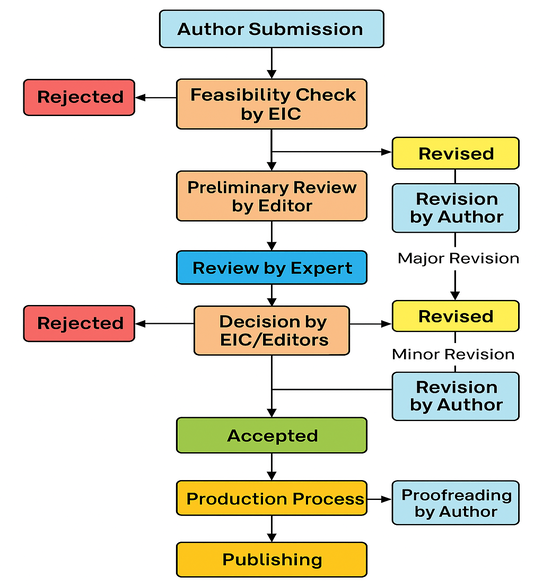
Figure 1. The workflow of the journal's publication process
3. Initial Administrative Screening
Upon submission, manuscripts are screened for:
- Completeness of required documents
- Compliance with formatting and author guidelines
- Similarity check (plagiarism screening)
- Basic relevance to the journal's scope
Manuscripts that fail to meet administrative requirements may be returned to the authors for correction or rejected at this stage. Authors will normally be notified within 2–4 weeks.
4. Editorial Desk Evaluation
Manuscripts that pass administrative screening undergo an editorial evaluation conducted by the Editor-in-Chief or a designated Handling/Section Editor.
The evaluation considers:
- Originality and scholarly contribution
- Relevance to the journal's aims and scope
- Conceptual clarity and methodological soundness
- Academic writing quality
Based on the mentioned assessment, the manuscript may be:
- Rejected without external review (desk rejection), with constructive feedback provided where appropriate; or
- Assigned to external peer reviewers.
5. Peer Review Process
5.1 Reviewer Assignment
Each manuscript is evaluated by at least two independent reviewers with relevant expertise. Reviewers are selected based on academic qualifications, publication record, and subject-matter competence.
5.2 Review Criteria
Reviewers are requested to evaluate the manuscript based on:
- Originality and significance of contribution
- Relevance to the journal's scope
- Adequacy and rigor of methodology
- Quality of analysis and interpretation
- Coherence of argument and conclusions
- Organization and clarity of writing
Reviewers provide:
- Anonymous comments and recommendations to the authors
- Optional confidential comments to the Editor
Reviewers are not responsible for copyediting or language correction.
5.3 Review Timeline
The peer review process typically takes between 4 and 12 weeks. In cases of delayed or conflicting reviews, an additional reviewer may be appointed.
6. Editorial Decision
Based on reviewers' reports and editorial assessment, one of the following decisions will be issued:
- Accept – The manuscript is accepted without revision.
- Minor Revision – The manuscript requires minor revisions.
- Major Revision – Substantial revisions are required and may undergo a further round of peer review.
- Reject – The manuscript is declined for publication.
The Editor-in-Chief makes the final decision.
7. Revision Process
Authors receiving a revision decision must:
- Submit a revised manuscript within the specified timeframe; and
- Provide a detailed point-by-point response addressing all reviewer comments.
Major revisions may undergo additional peer review. Multiple rounds of revision may be requested if necessary to meet the journal's quality standards.
Failure to submit revisions within the specified time may result in withdrawal of the manuscript from the review process.
8. Ethical Standards and Confidentiality
All manuscripts are treated as confidential documents. Editors and reviewers must not disclose any information regarding submissions to individuals not involved in the review process.
The journal adheres to established publication ethics principles and reserves the right to conduct additional ethical or legal review where necessary.
9. Production and Publication
Accepted manuscripts proceed to the production stage, which includes:
- Copyediting
- Layout and typesetting
- Author proofreading
- Final publication
The journal may publish accepted articles online as early view versions prior to issue compilation. Publication timelines typically range from 4–8 weeks following final acceptance.