

Article Sidebar
Downloads
Main Article Content
Abstract
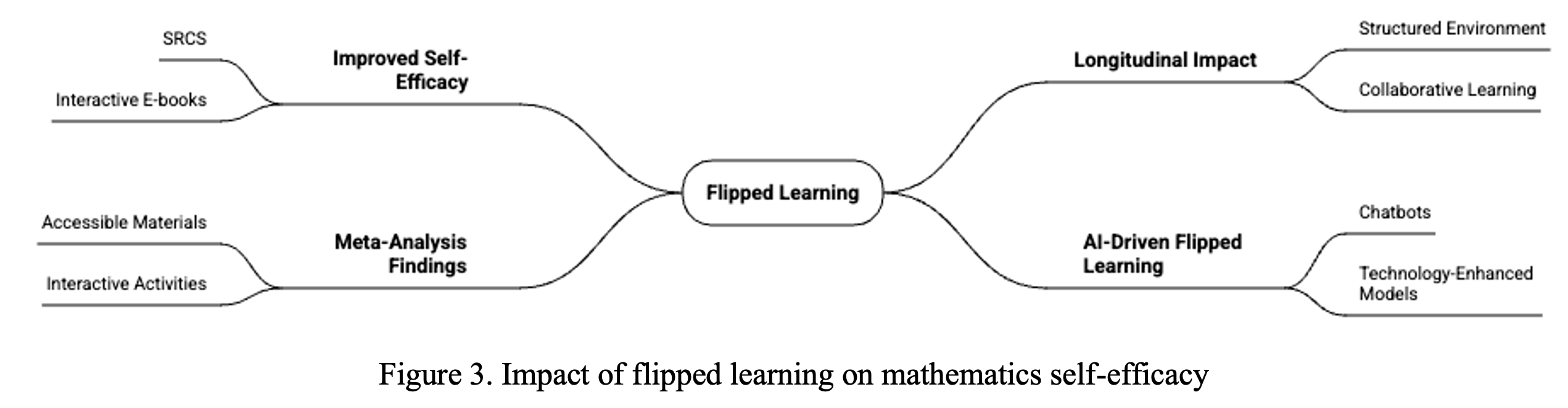
Although the flipped learning model has been widely recognized to improve student engagement, its specific pedagogical effectiveness on self-efficacy in the context of abstraction-laden mathematics education has not been explored in depth. In addition, there has been no critical study that dissects the ambiguity of empirical findings related to operational challenges and cognitive burdens faced by students and educators in the field. Therefore, this critical review research aims to investigate the impact of the implementation of flipped learning on mathematical self-efficacy while identifying methodological and operational challenges in practice. The study adopted the PRISMA framework and the PICO search strategy to curate and critically evaluate 10 highly reputable empirical articles published in the 2020–2025 time frame from the Scopus, Web of Science, and ERIC databases. The results of the synthesis showed that flipped learning was significantly able to significantly improve math self-efficacy, mitigate anxiety, and serve as an equity intervention for low-performing students, especially when supported by self-regulated cognitive strategies (SRCS) and interactive media in the pre-grade phase. However, this success was severely limited by significant challenges, including students' difficulties in understanding abstract concepts independently, spikes in workload, as well as the scarcity of digital literacy and time constraints experienced by educators. Theoretically and practically, these findings provide an essential foundation for educators and policymakers to integrate pedagogical scaffolding and assistive technologies, such as AI-driven chatbots, to minimize students' cognitive barriers and design a more responsive and equitable future math learning ecosystem.
Keywords
Article Details
Copyright (c) 2026 Naufal Ishartono, Rizky Oktaviana Eko Putri, Kristof Fenyvesi, Manuel O. Malonisio

This work is licensed under a Creative Commons Attribution 4.0 International License.
References
- Algarni, B. (2025). Impact of Flipped Learning on Student Self-Efficacy Across Age Groups and Subject Domains: A Systematic Review of 44 Studies (2015-2024). Journal of Information Technology Education: Research, 24, 004. https://doi.org/10.28945/5442
- Buhl-Wiggers, J., La Cour, L., & Kjærgaard, A. L. (2023). Insights from a randomized controlled trial of flipped classroom on academic achievement: The challenge of student resistance. International Journal of Educational Technology in Higher Education, 20(1), 41. https://doi.org/10.1186/s41239-023-00413-6
- Chen, Y., Shahrill, M., & Abdullah, N. A. (2026). Innovative Approaches to Mathematics Instruction Through Historical Perspectives: A Descriptive Systematic Review. International Journal of Review in Mathematics Education. https://doi.org/10.23917/ijrime.16135
- Cooke, A., Smith, D., & Booth, A. (2012). Beyond PICO: The SPIDER tool for qualitative evidence synthesis. Qualitative Health Research, 22(10), 1435–1443. https://doi.org/10.1177/1049732312452938
- Cuetos, M. J. (2023). Application of the flipped classroom model to stimulate university students’ learning with online education. Journal of Technology and Science Education, 13(1), 368. https://doi.org/10.3926/jotse.1806
- Elhilal, A. (2025). Cracking the math code: The impact of flipped classroom on problem-solving, digital fluency and self-directed learning. Cogent Education, 12(1), 2580767. https://doi.org/10.1080/2331186X.2025.2580767
- Han, L., Hu, G., Chen, Z., & Liu, M. (2025). Integrating Self-Regulated Cognitive Strategies in Preclass Learning of Mathematics Flipped Classroom: Effects on Students’ Self-Efficacy and Anxiety. TechTrends, 69(5), 900–913. https://doi.org/10.1007/s11528-025-01073-1
- Hwang, G. J., & Lai, C. L. (2017). Facilitating and bridging out-of-class and in-class learning: An interactive E-book-based flipped learning approach for math courses. Educational Technology and Society, 20(1), 184–197.
- Ishartono, N., Nurcahyo, A., Waluyo, M., Prayitno, H. J., & Hanifah, M. (2022). Integrating Geogebra Into the Flipped Learning Approach To Improve Students ’ Self-Regulated Learning During the Covid-19 Pandemic: An. Journal on Mathematics Education, 13(1), 69–85. https://doi.org/10.22342/jme.v13i1.pp69-86
- Janibek Saukhanov & Kudiyarov Kishibay. (2023). Scopus, Web of Sciense, Springer international database. https://doi.org/10.13140/RG.2.2.28119.44962
- Jeong, J. S., & González-Gómez, D. (2021). Flipped-ocn method in mathematics learning to analyze the attitudes of pre-service teachers. Mathematics, 9(6). https://doi.org/10.3390/math9060607
- Kim, S. H., Evans, T., & Marmur, O. (2024). Navigating flipped learning: Insights from a graduate-level algebraic geometry course (p. 198085 Bytes). The University of Auckland. https://doi.org/10.17608/K6.AUCKLAND.26169946
- Kraus, S., Breier, M., & Dasí-Rodríguez, S. (2020). The art of crafting a systematic literature review in entrepreneurship research. International Entrepreneurship and Management Journal, 16(3), 1023–1042. https://doi.org/10.1007/s11365-020-00635-4
- Lai, C. L., & Hwang, G. J. (2016). A self-regulated flipped classroom approach to improving students’ learning performance in a mathematics course. Computers and Education, 100, 126–140. https://doi.org/10.1016/j.compedu.2016.05.006
- Lo, C. K. (2020). Systematic Reviews on Flipped Learning in Various Education Contexts. In O. Zawacki-Richter, M. Kerres, S. Bedenlier, M. Bond, & K. Buntins (Eds.), Systematic Reviews in Educational Research (pp. 129–143). Springer Fachmedien Wiesbaden. https://doi.org/10.1007/978-3-658-27602-7_8
- Lo, C. K., Hew, K. F., & Chen, G. (2017). Toward a set of design principles for mathematics flipped classrooms: A synthesis of research in mathematics education. Educational Research Review, 22, 50–73. https://doi.org/10.1016/j.edurev.2017.08.002
- Maarif, S., Umam, K., Soebagyo, J., & Pradipta, T. (2022). Critical review on mathematics virtual classroom practice in private university. International Journal of Nonlinear Analysis and Applications, 13(1). https://doi.org/10.22075/ijnaa.2022.5616
- Moher, D., Liberati, A., Tetzlaff, J., Altman, D. G., & Group, P. (2009). Preferred Reporting Items for Systematic Reviews and Meta-Analyses: The PRISMA Statement. Annals of Internal Medicine, 151(4), 246–269.
- Nokelainen, P., Kaarakka, T., Hirvonen, J., Puhakka, I., Kangaslampi, R., Ali‐Löytty, S., Vuorenpää, V., & Viro, E. (2025). Self‐Efficacy, Emotions and Mathematics Achievement: Longitudinal Effects of Flipped Learning. Journal of Computer Assisted Learning, 41(6), e70148. https://doi.org/10.1111/jcal.70148
- OECD. (2023). PISA 2022 Results (Volume I): The State of Learning and Equity in Education. OECD Publishing. https://doi.org/10.1787/53f23881-en
- Palalas, A., & Wark, N. (2020). The relationship between mobile learning and self-regulated learning: A systematic review. Australasian Journal of Educational Technology, 36(4), 151–172. https://doi.org/10.14742/ajet.5650
- Setianingsih, R., Prayogo, M. R. A. Y., & Putri, A. M. Y. (2026). Multiple Mathematical Representations in Ethnomathematics-Based Realistic Mathematics Education: A Systematic Literature Review. International Journal of Review in Mathematics Education. https://doi.org/10.23917/ijrime.16307
- Snead, W. (2022). Position Paper: Implementation of pre-reading assignments in the classroom. International Journal of Youth-Led Research, 2. https://doi.org/10.56299/pma991
- Surur, A. M., Pujilestari, S., & Ridwanulloh, M. U. (2026). Pedagogical Anchors Amid Pedagogical Dilemmas: The Myth of Innovation and Unsustainable Expectations within Mathematics Education Research. International Journal of Review in Mathematics Education, 108–123. https://doi.org/10.23917/ijrime.15736
- Umam, K., Nusantara, T., Parta, I. N., Hidayanto, E., & Mulyono, H. (2019). An Application of Flipped Classroom in Mathematics Teacher Education Programme. International Journal of Interactive Mobile Technologies (iJIM), 13(03), 68. https://doi.org/10.3991/ijim.v13i03.10207
- Wang, G. (2022). Comparison Between Flipped Classroom Teaching Model And Traditional Teaching. Learning & Education, 10(8), 20. https://doi.org/10.18282/l-e.v10i8.3050
- Wei, X., Cheng, I.-L., Chen, N.-S., Yang, X., Liu, Y., Dong, Y., Zhai, X., & Kinshuk. (2020). Effect of the flipped classroom on the mathematics performance of middle school students. Educational Technology Research and Development, 68(3), 1461–1484. https://doi.org/10.1007/s11423-020-09752-x
- Yu, W., Zhou, S., & Zhou, Y. (2024). Intervention on Mathematics Self-Efficacy: Solution-Focused Brief Therapy. Psychology Research and Behavior Management, Volume 17, 129–145. https://doi.org/10.2147/PRBM.S432569
- Zakariya, Y. F. (2022). Improving students’ mathematics self-efficacy: A systematic review of intervention studies. Frontiers in Psychology, 13, 986622. https://doi.org/10.3389/fpsyg.2022.986622
- Zheng, B., Ward, A., & Stanulis, R. (2020). Self-regulated learning in a competency-based and flipped learning environment: Learning strategies across achievement levels and years. Medical Education Online, 25(1). https://doi.org/10.1080/10872981.2019.1686949
- Zhou, W., Zhao, L., & Kaabar, M. (2022). The Effect of Teachers’ Support on Learners’ Online Self-Regulated Learning: Mediating Analysis Based on Self-Efficacy. International Journal of Emerging Technologies in Learning (iJET), 17(17), 207–217. https://doi.org/10.3991/ijet.v17i17.34027
References
Algarni, B. (2025). Impact of Flipped Learning on Student Self-Efficacy Across Age Groups and Subject Domains: A Systematic Review of 44 Studies (2015-2024). Journal of Information Technology Education: Research, 24, 004. https://doi.org/10.28945/5442
Buhl-Wiggers, J., La Cour, L., & Kjærgaard, A. L. (2023). Insights from a randomized controlled trial of flipped classroom on academic achievement: The challenge of student resistance. International Journal of Educational Technology in Higher Education, 20(1), 41. https://doi.org/10.1186/s41239-023-00413-6
Chen, Y., Shahrill, M., & Abdullah, N. A. (2026). Innovative Approaches to Mathematics Instruction Through Historical Perspectives: A Descriptive Systematic Review. International Journal of Review in Mathematics Education. https://doi.org/10.23917/ijrime.16135
Cooke, A., Smith, D., & Booth, A. (2012). Beyond PICO: The SPIDER tool for qualitative evidence synthesis. Qualitative Health Research, 22(10), 1435–1443. https://doi.org/10.1177/1049732312452938
Cuetos, M. J. (2023). Application of the flipped classroom model to stimulate university students’ learning with online education. Journal of Technology and Science Education, 13(1), 368. https://doi.org/10.3926/jotse.1806
Elhilal, A. (2025). Cracking the math code: The impact of flipped classroom on problem-solving, digital fluency and self-directed learning. Cogent Education, 12(1), 2580767. https://doi.org/10.1080/2331186X.2025.2580767
Han, L., Hu, G., Chen, Z., & Liu, M. (2025). Integrating Self-Regulated Cognitive Strategies in Preclass Learning of Mathematics Flipped Classroom: Effects on Students’ Self-Efficacy and Anxiety. TechTrends, 69(5), 900–913. https://doi.org/10.1007/s11528-025-01073-1
Hwang, G. J., & Lai, C. L. (2017). Facilitating and bridging out-of-class and in-class learning: An interactive E-book-based flipped learning approach for math courses. Educational Technology and Society, 20(1), 184–197.
Ishartono, N., Nurcahyo, A., Waluyo, M., Prayitno, H. J., & Hanifah, M. (2022). Integrating Geogebra Into the Flipped Learning Approach To Improve Students ’ Self-Regulated Learning During the Covid-19 Pandemic: An. Journal on Mathematics Education, 13(1), 69–85. https://doi.org/10.22342/jme.v13i1.pp69-86
Janibek Saukhanov & Kudiyarov Kishibay. (2023). Scopus, Web of Sciense, Springer international database. https://doi.org/10.13140/RG.2.2.28119.44962
Jeong, J. S., & González-Gómez, D. (2021). Flipped-ocn method in mathematics learning to analyze the attitudes of pre-service teachers. Mathematics, 9(6). https://doi.org/10.3390/math9060607
Kim, S. H., Evans, T., & Marmur, O. (2024). Navigating flipped learning: Insights from a graduate-level algebraic geometry course (p. 198085 Bytes). The University of Auckland. https://doi.org/10.17608/K6.AUCKLAND.26169946
Kraus, S., Breier, M., & Dasí-Rodríguez, S. (2020). The art of crafting a systematic literature review in entrepreneurship research. International Entrepreneurship and Management Journal, 16(3), 1023–1042. https://doi.org/10.1007/s11365-020-00635-4
Lai, C. L., & Hwang, G. J. (2016). A self-regulated flipped classroom approach to improving students’ learning performance in a mathematics course. Computers and Education, 100, 126–140. https://doi.org/10.1016/j.compedu.2016.05.006
Lo, C. K. (2020). Systematic Reviews on Flipped Learning in Various Education Contexts. In O. Zawacki-Richter, M. Kerres, S. Bedenlier, M. Bond, & K. Buntins (Eds.), Systematic Reviews in Educational Research (pp. 129–143). Springer Fachmedien Wiesbaden. https://doi.org/10.1007/978-3-658-27602-7_8
Lo, C. K., Hew, K. F., & Chen, G. (2017). Toward a set of design principles for mathematics flipped classrooms: A synthesis of research in mathematics education. Educational Research Review, 22, 50–73. https://doi.org/10.1016/j.edurev.2017.08.002
Maarif, S., Umam, K., Soebagyo, J., & Pradipta, T. (2022). Critical review on mathematics virtual classroom practice in private university. International Journal of Nonlinear Analysis and Applications, 13(1). https://doi.org/10.22075/ijnaa.2022.5616
Moher, D., Liberati, A., Tetzlaff, J., Altman, D. G., & Group, P. (2009). Preferred Reporting Items for Systematic Reviews and Meta-Analyses: The PRISMA Statement. Annals of Internal Medicine, 151(4), 246–269.
Nokelainen, P., Kaarakka, T., Hirvonen, J., Puhakka, I., Kangaslampi, R., Ali‐Löytty, S., Vuorenpää, V., & Viro, E. (2025). Self‐Efficacy, Emotions and Mathematics Achievement: Longitudinal Effects of Flipped Learning. Journal of Computer Assisted Learning, 41(6), e70148. https://doi.org/10.1111/jcal.70148
OECD. (2023). PISA 2022 Results (Volume I): The State of Learning and Equity in Education. OECD Publishing. https://doi.org/10.1787/53f23881-en
Palalas, A., & Wark, N. (2020). The relationship between mobile learning and self-regulated learning: A systematic review. Australasian Journal of Educational Technology, 36(4), 151–172. https://doi.org/10.14742/ajet.5650
Setianingsih, R., Prayogo, M. R. A. Y., & Putri, A. M. Y. (2026). Multiple Mathematical Representations in Ethnomathematics-Based Realistic Mathematics Education: A Systematic Literature Review. International Journal of Review in Mathematics Education. https://doi.org/10.23917/ijrime.16307
Snead, W. (2022). Position Paper: Implementation of pre-reading assignments in the classroom. International Journal of Youth-Led Research, 2. https://doi.org/10.56299/pma991
Surur, A. M., Pujilestari, S., & Ridwanulloh, M. U. (2026). Pedagogical Anchors Amid Pedagogical Dilemmas: The Myth of Innovation and Unsustainable Expectations within Mathematics Education Research. International Journal of Review in Mathematics Education, 108–123. https://doi.org/10.23917/ijrime.15736
Umam, K., Nusantara, T., Parta, I. N., Hidayanto, E., & Mulyono, H. (2019). An Application of Flipped Classroom in Mathematics Teacher Education Programme. International Journal of Interactive Mobile Technologies (iJIM), 13(03), 68. https://doi.org/10.3991/ijim.v13i03.10207
Wang, G. (2022). Comparison Between Flipped Classroom Teaching Model And Traditional Teaching. Learning & Education, 10(8), 20. https://doi.org/10.18282/l-e.v10i8.3050
Wei, X., Cheng, I.-L., Chen, N.-S., Yang, X., Liu, Y., Dong, Y., Zhai, X., & Kinshuk. (2020). Effect of the flipped classroom on the mathematics performance of middle school students. Educational Technology Research and Development, 68(3), 1461–1484. https://doi.org/10.1007/s11423-020-09752-x
Yu, W., Zhou, S., & Zhou, Y. (2024). Intervention on Mathematics Self-Efficacy: Solution-Focused Brief Therapy. Psychology Research and Behavior Management, Volume 17, 129–145. https://doi.org/10.2147/PRBM.S432569
Zakariya, Y. F. (2022). Improving students’ mathematics self-efficacy: A systematic review of intervention studies. Frontiers in Psychology, 13, 986622. https://doi.org/10.3389/fpsyg.2022.986622
Zheng, B., Ward, A., & Stanulis, R. (2020). Self-regulated learning in a competency-based and flipped learning environment: Learning strategies across achievement levels and years. Medical Education Online, 25(1). https://doi.org/10.1080/10872981.2019.1686949
Zhou, W., Zhao, L., & Kaabar, M. (2022). The Effect of Teachers’ Support on Learners’ Online Self-Regulated Learning: Mediating Analysis Based on Self-Efficacy. International Journal of Emerging Technologies in Learning (iJET), 17(17), 207–217. https://doi.org/10.3991/ijet.v17i17.34027