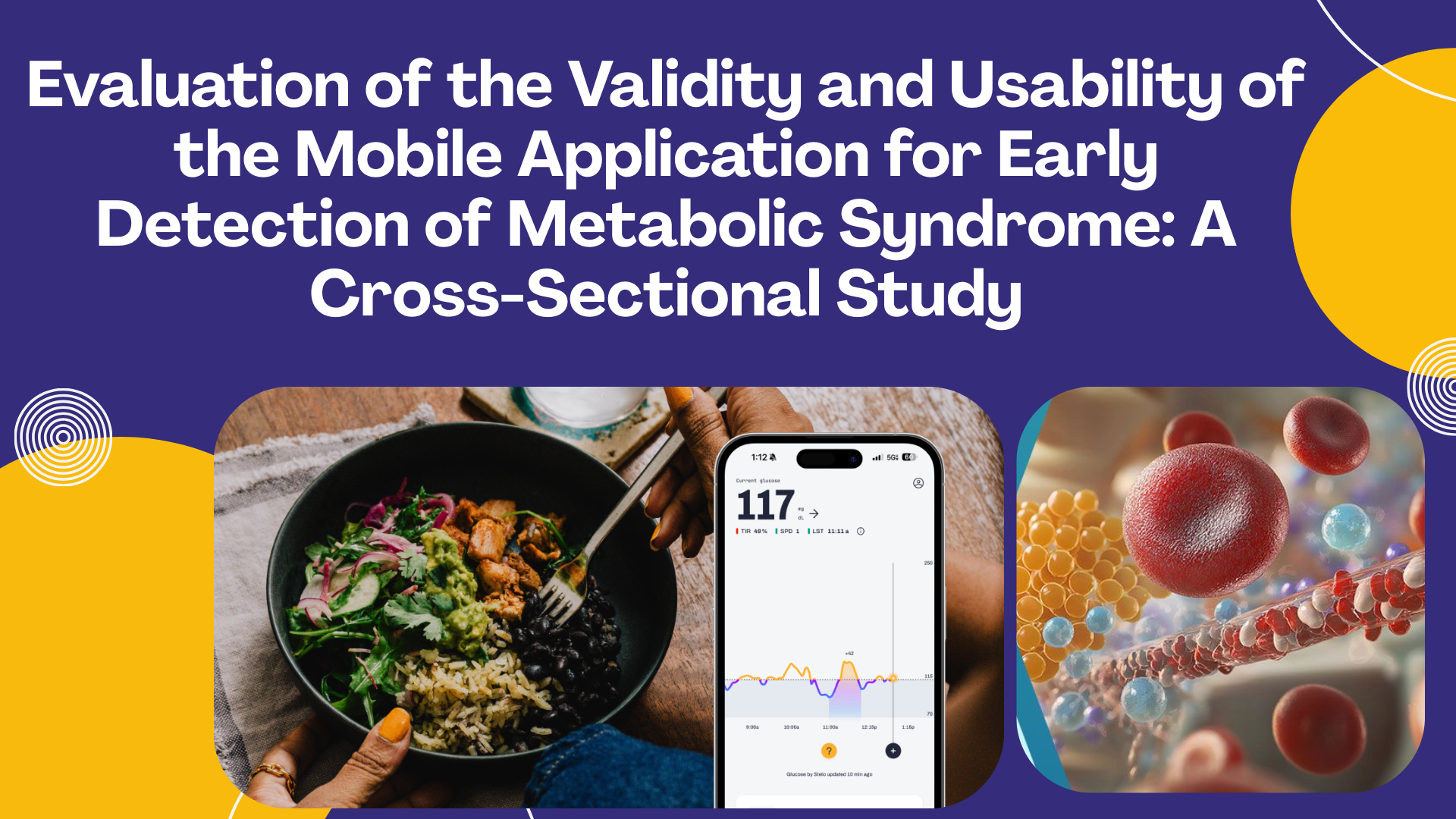
Evaluation of the Validity and Usability of the Mobile Application for Early Detection of Metabolic Syndrome: A Cross-Sectional Study
DOI:
https://doi.org/10.23917/bik.v19i1.13103Keywords:
content validity index, early detection, health application, metabolic syndrome, system usability scaleAbstract
Metabolic syndrome is a cluster of risk factors for cardiovascular disease and type 2 diabetes mellitus in adults. The development of a health application-based instrument is important. This study aims to evaluate the Content Validity Index (CVI) and System Usability Scale (SUS). This study used a cross-sectional study design. Content validity was analyzed using the Content Validity Index (CVI) method involving five experts. Researchers evaluated the usability of the application using the System Usability Scale (SUS) and tested it on nine users. Researchers analyzed the data descriptively to obtain CVI and SUS scores. The test results showed that the I-CVI value was 1.00 and the S-CVI/Average was 1.00, indicating that all items in the application were highly relevant. The SUS score was 76.11, and the application was categorized as acceptable (good), indicating that the application was easy to use and well received by users. This mobile application has excellent content validity and good usability, making it suitable for use as an early detection instrument for metabolic syndrome. This application has the potential to support health promotion and prevention efforts to reduce non-communicable diseases in the community
Downloads
References
Abdulrazzaq, N. A. (2022). Risk Factors Associations of Metabolic Syndrome. International Journal of Rural Development, Environment and Health Research. https://doi.org/10.22161/ijreh.6.6.1 DOI: https://doi.org/10.22161/ijreh.6.6.1
Arifin, S. R. (2024). System Usability Scale (SUS) implementation in Ruang Baca Virtual – UT Library. MATRIX: Jurnal Manajemen Teknologi Dan Informatika, 14(1), 1–8. https://doi.org/10.31940/matrix.v14i1.1-8 DOI: https://doi.org/10.31940/matrix.v14i1.1-8
Athar, M. (2024). Potentials of artificial intelligence in familial hypercholesterolemia: Advances in screening, diagnosis, and risk stratification for early intervention and treatment. International Journal of Cardiology, 132315. https://doi.org/10.1016/j.ijcard.2024.132315 DOI: https://doi.org/10.1016/j.ijcard.2024.132315
Bovolini, A., Garcia, J., Andrade, M., & Duarte, J. (2020). Metabolic Syndrome Pathophysiology and Predisposing Factors. International Journal of Sports Medicine, 42, 199–214. https://doi.org/10.1055/a-1263-0898 DOI: https://doi.org/10.1055/a-1263-0898
Chen, Y., Xu, W., Zhang, W., Tong, R., Yuan, A., Li, Z., Jiang, H., Hu, L., Huang, L., Xu, Y., Zhang, Z., Sun, M., Yan, X., Chen, A., Qian, K., & Pu, J. (2023). Plasma metabolic fingerprints for large-scale screening and personalized risk stratification of metabolic syndrome. Cell Reports Medicine, 4. https://doi.org/10.1016/j.xcrm.2023.101109 DOI: https://doi.org/10.1016/j.xcrm.2023.101109
Dewi, G. A. P. K., & Faozi, E. (2023). An Overview: Quality of Life of Diabetes Mellitus Type 2 Patients who Participate in The Prolanis Program in Sukoharjo Regency. Jurnal Berita Ilmu Keperawatan, 16(1 SE-Articles), 29–38. https://doi.org/10.23917/bik.v16i1.762 DOI: https://doi.org/10.23917/bik.v16i1.762
Duan, J., Wang, Y., Chen, L., Chen, C., & Zhang, R. (2023). Employing broad learning and non-invasive risk factor to improve the early diagnosis of metabolic syndrome. IScience, 27. https://doi.org/10.1016/j.isci.2023.108644 DOI: https://doi.org/10.1016/j.isci.2023.108644
Elsayed, D., Al-Kuwari, M., Naeim, J., Al-Marri, A., Al-Thani, N., Al-Mohannadi, H., Al-Suliati, H., Al-Ali, A., & Doi, S. (2025). Lipid Accumulation Product Outperforms BMI and Waist Circumference in Metabolic Disorders. Metabolic Syndrome and Related Disorders. https://doi.org/10.1089/met.2024.0198 DOI: https://doi.org/10.1089/met.2024.0198
Gesteiro, E., Megía, A., Guadalupe-Grau, A., Fernández-Veledo, S., Vendrell, J., & González-Gross, M. (2021). Early identification of metabolic syndrome risk: A review of reviews and proposal for defining pre-metabolic syndrome status. Nutrition, Metabolism, and Cardiovascular Diseases : NMCD. https://doi.org/10.1016/j.numecd.2021.05.022 DOI: https://doi.org/10.1016/j.numecd.2021.05.022
Hayden, M. (2023). Overview and New Insights into the Metabolic Syndrome: Risk Factors and Emerging Variables in the Development of Type 2 Diabetes and Cerebrocardiovascular Disease. Medicina, 59. https://doi.org/10.3390/medicina59030561 DOI: https://doi.org/10.20944/preprints202302.0115.v1
Hernández-Baixauli, J., Quesada-Vázquez, S., Mariné-Casadó, R., Cardoso, K. G., Caimari, A., Del Bas, J., Escoté, X., & Baselga-Escudero, L. (2020). Detection of Early Disease Risk Factors Associated with Metabolic Syndrome: A New Era with the NMR Metabolomics Assessment. Nutrients, 12. https://doi.org/10.3390/nu12030806 DOI: https://doi.org/10.3390/nu12030806
Huynh, P., Fleisch, E., Brändle, M., Kowatsch, T., & Jovanova, M. (2024). Digital health technologies for metabolic disorders in older adults: a scoping review protocol. BMJ Open, 14. https://doi.org/10.1136/bmjopen-2024-085797 DOI: https://doi.org/10.1101/2024.02.26.24303372
Ismail, M. H., & Yulian, V. (2019). Pengaruh Dukungan Kelompok Terhadap Kualitas Hidup Penderita Diabetes Melitus. Jurnal Berita Ilmu Keperawatan, 12(2), 51–58. https://doi.org/https://doi.org/10.23917/bik.v12i2.9806 DOI: https://doi.org/10.23917/bik.v12i2.9806
Keshet, A., Reicher, L., Bar, N., & Segal, E. (2023). Wearable and digital devices to monitor and treat metabolic diseases. Nature Metabolism, 5, 563–571. https://doi.org/10.1038/s42255-023-00778-y DOI: https://doi.org/10.1038/s42255-023-00778-y
Kurniawan, E., Nofriadi, N., & Nata, A. (2022). Penerapan System Usability Scale (Sus) Dalam Pengukuran Kebergunaan Website Program Studi Di Stmik Royal. Journal of Science and Social Research, 5(1), 43. https://doi.org/10.54314/jssr.v5i1.817 DOI: https://doi.org/10.54314/jssr.v5i1.817
Kurniawan, F. (2024). Evaluasi Usability pada Aplikasi Glasgow Coma Scale (GCS) berbasis Android menggunakan Metode System Usability Scale (SUS). Jurnal Sains Dan Ilmu Terapan. https://doi.org/https://doi.org/10.59061/jsit.v7i2.820 DOI: https://doi.org/10.59061/jsit.v7i2.820
Liew, M., Zhang, J., See, J., & Ong, Y. L. (2019). Usability Challenges for Health and Wellness Mobile Apps: Mixed-Methods Study Among mHealth Experts and Consumers. JMIR MHealth and UHealth, 7. https://doi.org/10.2196/12160 DOI: https://doi.org/10.2196/12160
Liu, J., Liu, Z., Liu, C., Sun, H., Li, X., & Yang, Y. (2025). Integrating Artificial Intelligence in the Diagnosis and Management of Metabolic Syndrome: A Comprehensive Review. Diabetes/Metabolism Research and Reviews, 41. https://doi.org/10.1002/dmrr.70039 DOI: https://doi.org/10.1002/dmrr.70039
Maharani, A. P., & Purwanti, O. S. (2025). Perilaku Merokok Dengan Aktivitas Fisik Pada Pasien Diabetes Melitus Tipe 2 Di Rumah Sakit Dr. Moewardi Surakarta. Jik Jurnal Ilmu Kesehatan, 9(1), 111. https://doi.org/10.33757/jik.v9i1.1271 DOI: https://doi.org/10.33757/jik.v9i1.1271
Maramba, I., Chatterjee, A., & Newman, C. (2019). Methods of usability testing in the development of eHealth applications: A scoping review. International Journal of Medical Informatics, 126, 95–104. https://doi.org/10.1016/J.IJMEDINF.2019.03.018 DOI: https://doi.org/10.1016/j.ijmedinf.2019.03.018
4i-Takalloo, S., Mozaffari‐khosravi, H., Mohseni, H., Mirzaei, M., & Hosseinzadeh, M. (2023). Metabolic syndrome prediction using non-invasive and dietary parameters based on a support vector machine. Nutrition, Metabolism, and Cardiovascular Diseases : NMCD. https://doi.org/10.1016/j.numecd.2023.08.018 DOI: https://doi.org/10.1016/j.numecd.2023.08.018
Mosquera-Lopez, C., & Jacobs, P. (2024). Digital twins and artificial intelligence in metabolic disease research. Trends in Endocrinology & Metabolism, 35, 549–557. https://doi.org/10.1016/j.tem.2024.04.019 DOI: https://doi.org/10.1016/j.tem.2024.04.019
Nazhiifah, R. N., & Purwanti, O. S. (2024). The impact of education on the prevention of diabetes mellitus on the level of knowledge of families with diabetes mellitus. Malahayati Nursing Journal, 07(9), 1130–1136. DOI: https://doi.org/10.33024/minh.v7i9.563
Park, Y., Kang, S. H., Jang, S., & Park, E. (2022). Association between lifestyle factors and the risk of metabolic syndrome in the South Korea. Scientific Reports, 12. https://doi.org/10.1038/s41598-022-17361-2 DOI: https://doi.org/10.1038/s41598-022-17361-2
Periáñez, Á., Del Río, A. F., Nazarov, I., Jan’e, E., Hassan, M., Rastogi, A., & Tang, D. (2024). The Digital Transformation in Health: How AI Can Improve the Performance of Health Systems. Health Systems & Reform, 10. https://doi.org/10.1080/23288604.2024.2387138 DOI: https://doi.org/10.1080/23288604.2024.2387138
Putri, M. S., & Supratman, S. (2021). Gambaran Kualitas Hidup Pada Lansia Pada Aspek Hubungan Sosial Penderita Hipertensi di Wilayah Puskesmas Pajang Surakarta. Berita Ilmu Keperawatan, Vol. 14 (2, 65–72. DOI: https://doi.org/10.23917/bik.v14i2.10441
Quaye, L., Owiredu, W., Amidu, N., Dapare, P., & Adams, Y. (2019). Comparative Abilities of Body Mass Index, Waist Circumference, Abdominal Volume Index, Body Adiposity Index, and Conicity Index as Predictive Screening Tools for Metabolic Syndrome among Apparently Healthy Ghanaian Adults. Journal of Obesity, 2019. https://doi.org/10.1155/2019/8143179 DOI: https://doi.org/10.1155/2019/8143179
Ramírez-Manent, J., Jover, A., Martinez, C., Tomás-Gil, P., Martí-Lliteras, P., & López-González, Á. (2023). Waist Circumference Is an Essential Factor in Predicting Insulin Resistance and Early Detection of Metabolic Syndrome in Adults. Nutrients, 15. https://doi.org/10.3390/nu15020257 DOI: https://doi.org/10.3390/nu15020257
Rhee, S., Kim, C., Shin, D., & Steinhubl, S. (2020). Present and Future of Digital Health in Diabetes and Metabolic Disease. Diabetes & Metabolism Journal, 44, 819–827. https://doi.org/10.4093/dmj.2020.0088 DOI: https://doi.org/10.4093/dmj.2020.0088
Weichbroth, P. (2020). Usability of Mobile Applications: A Systematic Literature Study. IEEE Access, 8, 55563–55577. https://doi.org/10.1109/ACCESS.2020.2981892 DOI: https://doi.org/10.1109/ACCESS.2020.2981892
Yusoff, M. S. B. (2019). ABC of Content Validation and Content Validity Index Calculation. Education in Medicine Journal, 11(2), 49–54. https://doi.org/10.21315/eimj2019.11.2.6 DOI: https://doi.org/10.21315/eimj2019.11.2.6
Zheng, J., Zhang, Z., Wang, J., Zhao, R., Liu, S., Yang, G., Liu, Z., & Deng, Z. (2023). Metabolic syndrome prediction model using Bayesian optimization and XGBoost based on traditional Chinese medicine features. Heliyon, 9. https://doi.org/10.1016/j.heliyon.2023.e22727 DOI: https://doi.org/10.1016/j.heliyon.2023.e22727
Downloads
Submitted
Accepted
Published
How to Cite
Issue
Section
License
Copyright (c) 2026 Okti Sri Purwanti, Diaz Aziz Pramudita, Agus Sudaryanto, Tanjung Anita Sari Indah Kusmaningrum, Syarif Fathurozaq Wibowo, Ulfa Munawaroh Diniyah, Muhammad Hananfajri Rasyid, Danar Wasis Pambudi, Annisa Niken Larasati, Nimas Zuhrufana

This work is licensed under a Creative Commons Attribution 4.0 International License.