Hadith-Based Moral Integration in Islamic Education: A Faith-Based Framework for Achieving the SDGs
DOI:
https://doi.org/10.23917/profetika.v26i03.15295Keywords:
moral integration, hadith-based, islamic education, religious approach, sustainable development goalsAbstract
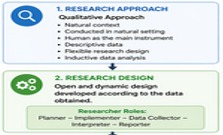
Objective: Develop moral integration based on hadith in Islamic education through a religious approach to support the achievement of the Sustainable Development Goals (SDGs), especially in the aspects of social justice, environmental sustainability, and governance integrity. Theoretical framework: The research relies on the prophetic moral concept sourced from hadith as the foundation of character formation, combined with a religious approach in Islamic education, as well as the SDGs value framework as an orientation for sustainable global development. Literature review: The literature review includes the study of moral values in hadith, the role of Islamic education in character building, the concept of social and environmental ethics from an Islamic perspective, and the relationship of religious values to the sustainable development agenda. Methods: The research method uses a qualitative approach with a library research design, which involves analyzing relevant literature sources in the form of hadiths, books, and previous research to formulate a conceptual integration model. Results: The results of the study show that prophetic moral values such as justice, trust, social responsibility, and environmental ethics have a fundamental role in the formation of students' character, as well as the moral integration based on hadith, not only forms ritual piety but also ethical, reflective, and transformative awareness in educational and social life. Implications: Hadith-based moral integration can strengthen ethical orientation in achieving the SDGs and has strategic relevance in the development of a sustainable Islamic education curriculum. Novelty: Conceptual integration between hadith-based morality in Islamic education with a religious approach that bridges prophetic ethics and the goals of the SDGs in one integrated theoretical framework.
References
[1] S. MacFeely, “Measuring the Sustainable Development Goal Indicators: An Unprecedented Statistical Challenge,” J. Off. Stat., vol. 36, no. 2, pp. 361–378, 2020, https://doi.org/10.2478/jos-2020-0019.
[2] E. Belényesi and P. Sasvári, “Research Performance on the UN Sustainable Development Goals in the EU27 (2019–2023),” Adm. Sci., vol. 15, no. 9, 2025, https://doi.org/10.3390/admsci15090361.
[3] D. Hariyani, P. Hariyani, and S. Mishra, “Digital technologies for the Sustainable Development Goals,” Green Technol. Sustain., vol. 3, no. 3, 2025, https://doi.org/10.1016/j.grets.2025.100202.
[4] H. B. Jaiyeoba and N. M. Osmani, “Hadith Preservation: Techniques And Contemporary Efforts,” J. Fatwa Manag. Res., vol. 29, no. 3, pp. 31–45, 2024, https://doi.org/10.33102/jfatwa.vol29no3.597.
[5] T. Supriyadi, J. Julia, A. N. Aeni, and E. Sumarna, “Action research in hadith literacy: A reflection of hadith learning in the digital age,” Int. J. Learn. Teach. Educ. Res., vol. 19, no. 5, pp. 99–124, 2020, https://doi.org/10.26803/ijlter.19.5.6.
[6] A. Fibrianto, J. Husna, and W. Waharjani, “Hasbi Ash-Shiddieqy’S Thoughts in the Pearl of Hadith: Intertextual Analysis of Idea,” Profetika J. Stud. Islam, vol. 24, no. 01, pp. 74–84, 2023, https://doi.org/10.23917/profetika.v24i01.1686.
[7] N. L. Inayati, “Implementation of Differentiated Learning in Islamic Studies and Ethics in Secondary Schools,” Profetika J. Stud. Islam, vol. 24, no. 2, pp. 332–342, 2023, https://doi.org/10.23917/profetika.v24i02.3797.
[8] M. D. Fajri, “The Concept of Islamic Education Living Together in Diversity: A Study of Hamka’s Perspective to Support the Achievement of the SDGs,” Profetika J. Stud. Islam, vol. 25, no. 02, pp. 501–516, 2024, https://doi.org/10.23917/profetika.v25i02.7924.
[9] A. Mahmud and H. Ilyas, “Islam and Tolerance Education for the Sustainable Development Goals ( SDGs ),” Profetika J. Stud. Islam, vol. 25, no. 2, pp. 387–404, 2024, https://doi.org/10.23917/profetika.v25i02.8510.
[10] D. I. Al Fikri and M. Shobahiya, “The Effect of the Project-Based Learning (PjBL) Model on Students’ Critical Reasoning and Learning Achievement in Islamic Education Based on the SDGs,” Profetika J. Stud. Islam, vol. 25, no. 2, pp. 547–566, 2024, https://doi.org/10.23917/profetika.v25i02.7556.
[11] Meti Fatimah, Edy Muslimin, Aminatus Sayidah, and Alwy Ahmed Mohamed, “Technological Mastery and Competence Development of Islamic Religious Education Teachers in Wonogiri: Supporting SDG 4 on Quality Education,” Profetika J. Stud. Islam, vol. 26, no. 01, pp. 245–258, 2025, https://doi.org/10.23917/profetika.v26i01.11744.
[12] M. L. Arqam, Y. S. Haris, E. T. Somae, and R. W. Suwarno, “Reconceptualizing Islamic Education through al-Islam and Kemuhammadiyahan (AIK) for Advancing the SDGs in Indonesia,” Profetika J. Stud. Islam, vol. 26, no. 2, pp. 383–406, 2025, https://doi.org/10.23917/profetika.v26i02.12327.
[13] D. Vanello, “Autobiographical Memory and Moral Identity Development,” J. Conscious. Stud., vol. 31, no. 7–8, pp. 86–108, 2024, https://doi.org/10.53765/20512201.31.7.086.
[14] G. Fernández-Caminero, J.-L. Álvarez-Castillo, H. González-González, and L. Espino-Díaz, “Teaching morality as an inclusive competence in higher education: Effects of dilemma discussion and contribution of empathy,” Rev. Esp. Pedagog., vol. 81, no. 286, pp. 489–509, 2023, https://doi.org/10.22550/REP81-3-2023-03.
[15] D. Faturahman and N. Kholis, “Kontribusi dan tipologi pemikiran hadis Muhammad Dailamy dalam bidang hadis di Jawa Tengah,” Profetika J. Stud. Islam, vol. 21, no. 1, pp. 31–44, 2020, https://doi.org/10.23917/profetika.v21i1.11055.
[16] A. Diana and M. Z. Azani, “The Concept and Context of Islamic Education Learning in the Digital Era : Relevance and Integrative Studies,” Profetika J. Stud. Islam, vol. 25, no. 1, pp. 33–44, 2024, https://doi.org/10.23917/profetika.v25i01.4239.
[17] C. I. Berliana, S. Nurkhasanah, and D. Rohmah, “Integrating Islamic Values and AI-Based Deep Learning: Implementation at SMK Negeri 1 Kebumen Towards Achieving Educational SDGs,” Profetika J. Stud. Islam, vol. 26, no. 1, pp. 33–48, 2025, https://doi.org/10.23917/profetika.v26i01.10632.
[18] L. S. Fauziyah et al., “Rehabilitating Juvenile Offenders through Islamic Education: Komunitas Pemuda Insyafh and the SDGs,” Profetika J. Stud. Islam, vol. 25, no. 3, pp. 629–644, 2024, https://doi.org/10.23917/profetika.v25i03.9946.
[19] A. Mattes and C. Novak, “Translocal feeds of faith: how mobility and digitalisation shape the religious life of young believers,” J. Contemp. Relig., vol. 40, no. 1, pp. 23–43, 2025, https://doi.org/10.1080/13537903.2025.2470024.
[20] N. F. Bowers du Toit, “Unapologetically faith-based: The nature of donor engagement in the context of South African faith-based organisations,” HTS Teol. Stud. / Theol. Stud., vol. 75, no. 4, 2019, https://doi.org/10.4102/hts.v75i4.5529.
[21] A. Stavytskyy and A. Dligach, “The Global Economic Model in Crisis: An Analysis of the Obstacles to the Sustainable Development Goals,” Sustain., vol. 17, no. 19, 2025, https://doi.org/10.3390/su17198537.
[22] I. Suprayogo, Metodologi Penelitian Sosial-Agama. Remaja Rosdakarya, 2003.
[23] D. Ary, An Invitation to Research in Social Education. Sage Publications, 2002.
[24] N. Zuruiyah, Metode Penelitian Sosial dan Pendidikan: Teori dan Aplikasi. Bumi Aksara, 2006.
[25] L. j Moleong, Metodologi Penelitian Kualitatif, 40th ed. Bandung: Remaja Rosdakarya, 2021.
[26] N. Muhajir, Metode Penelitian Kualitatif. Rake Sarasin, 2003.
[27] B. Suyanto, Metode Penelitian Sosial: Berbagai Alternatif Pendekatan. Kencana, 2007.
[28] Metode Penelitian Kuantitatif, Kualitatif, dan R & D. Bandung: Alfabeta, 2020.
[29] M. A. Shaukat and T. Basharat, “A Study of Relativistic Theory of Ethics in the Light of Islamic Theory of Morality,” J. Islam. Thought Civiliz., vol. 12, no. 2, pp. 286–298, 2022, https://doi.org/10.32350/jitc.122.20.
[30] S. Kamoliddin, “The infancy and development of hadith in Central Asia,” Int. J. Recent Technol. Eng., vol. 8, no. 3, pp. 4537–4541, 2019, https://doi.org/10.35940/ijrte.C6821.098319.
[31] A. M. B. Salman, “Reconstructing Ḥadīth Discourse in the Digital Age: From Text to Discourse,” J. Ecohumanism, vol. 3, no. 7, pp. 426–436, 2024, https://doi.org/10.62754/joe.v3i7.4084.
[32] S. Yang, “A Commentary Reflection of Moral Psychology Based on Embodied Cognition,” Ethics Prog., vol. 8, no. 2, pp. 59–68, 2017, https://doi.org/10.14746/eip.2017.2.5.
[33] D. W. Dunivan, P. Mann, D. Collins, and D. P. Wittmer, “Expanding the empirical study of virtual reality beyond empathy to compassion, moral reasoning, and moral foundations,” Front. Psychol., vol. 15, 2024, https://doi.org/10.3389/fpsyg.2024.1402754.
[34] L. Cai and M. Lin, “Integrating Mental Health Education with Ideological and Moral Teaching,” Int. J. Healthc. Inf. Syst. Informatics, vol. 20, no. 1, 2025, https://doi.org/10.4018/IJHISI.384592.
[35] A. A. Sarvestani, “Insights into Self-Knowledge from Islamic Teachings : A Path Towards Ethical Environmental Stewardship within the Framework of the SDGs,” Profetika J. Stud. Islam, vol. 25, no. 2, pp. 375–386, 2024, https://doi.org/10.23917/profetika.v25i02.6721.
[36] M. H. M. A. Khalaj, “Faith and Inquiry,” J. Philos. Theol. Res., vol. 25, no. 3, pp. 83–100, 2023, https://doi.org/10.22091/JPTR.2023.9903.2948.
[37] N. Deo, B. Rajeshwari, F. Naz, M. Van Wessel, and S. Pahwa, “Faith-based organizations and religious nationalism,” Polit. Relig., 2025, https://doi.org/10.1017/S1755048325000057.
[38] K. Beecheno, “Faith-based organisations as welfare providers in Brazil: The conflict over gender in cases of domestic violence,” Soc. Incl., vol. 7, no. 2, pp. 14–23, 2019, https://doi.org/10.17645/si.v7i2.1977.
[39] F. Martanti, as Shobirin, M. Fatkhurronji, and A. Surjanto, “Integration of Learning, Innovation, and SDGs Value in Pesantren: Sustainable Islamic Education Development,” J. Stud. Islam, vol. 26, no. 2, pp. 457–470, 2025, https://doi.org/10.23917/profetika.v26i02.11553.
[40] J. P. Davim, “Sustainable Development Goals: A Bibliometric Analysis,” J. Sustain. Res., vol. 7, no. 1, 2025, https://doi.org/10.20900/jsr20250008.
[41] A. Lu-Gonzales et al., “Evaluating the Contribution of Complex International Research-for-Development Programmes to the Sustainable Development Goals,” Eur. J. Dev. Res., vol. 35, no. 2, pp. 380–401, 2023, https://doi.org/10.1057/s41287-022-00573-7.
Downloads
Submitted
Accepted
Published
Issue
Section
License
Copyright (c) 2026 Irfan Yuhadi, Nurul Budi Murtini, Ardian Dananjaya; Ariangga Ramadhansyah, Muhammad Raiham Al Farez; Seno Bayu Aji, Hastowohadi

This work is licensed under a Creative Commons Attribution 4.0 International License.