Analysis of Anti-Tuberculosis Medication Adherence Among TB Patients in Private Medical Practices in Cirebon City
DOI:
https://doi.org/10.23917/pharmacon.v22i2.12444Keywords:
Adherence Rate, Anti-Tuberculosis Drugs, MARS-5, TuberculosisAbstract
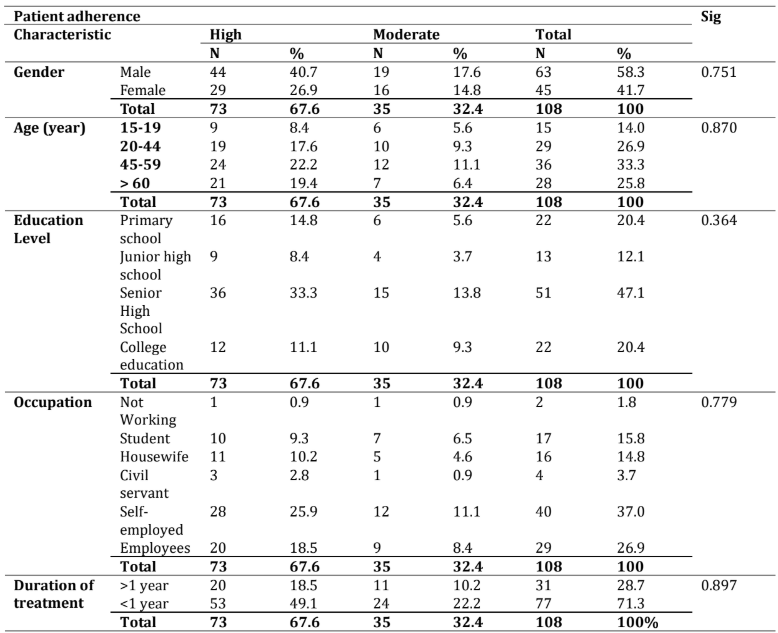
Tuberculosis (TB) is a disease caused by infection with the bacterium Mycobacterium tuberculosis. This disease is highly contagious, so adherence to anti-TB treatment is very important. The aim of this study is to determine patient characteristics (gender, age, educational level, occupation, and duration of tuberculosis treatment), assess patient adherence to tuberculosis treatment, and examine the relationship between patient characteristics and medication adherence in private practice settings in the city of Cirebon. This type of research is non-experimental. Data collection was conducted prospectively using a tuberculosis patient characteristic questionnaire and MARS-5 questionnaire (Medication Adherence Report Scale-5). The sample consisted of all tuberculosis patients undergoing treatment at private medical practices in Cirebon City who met the inclusion criteria, totaling 108 respondents. The characteristics of tuberculosis patients at private medical practices in Cirebon City were predominantly male (58.3%), aged 45–59 years (33.3%), with a high school education level (47.2%), self-employed occupation (37,0%), and treatment duration < 1 year (71.3%). The rate of high treatment adherence was 67.6%. Based on the results of the Multivariate Logistic Regression statistical test, there was no significant relationship between gender (p=0.751), age (p=0.870), education level (p=0.364), occupation (p=0.779), and duration of treatment (p=0.897) with adherence to tuberculosis medication.
Downloads
References
Agustin, F. P., Sihura, S. S. G., & Rizal, A. (2025). Relationship between Family Support as Drug Supervisor (PMO) and Respondent Characteristics with Patient Compliance in Taking Pulmonary Tuberculosis Medication in the Sirsak Ward, Cengkareng Hospital in 2024. Jurnal Intelek Insan Cendekia (JIIC), 2(4), 7365–7375. https://doi.org/https://jicnusantara.com/index.php/jiic.
Ahdiyah, N. N., Andriani, M., & Andriani, L. (2022). Level of Adherence to Anti-Tuberculosis Medication Use in Adult Pulmonary TB Patients at the Putri Ayu Community Health Center. Lumbung Farmasi: Jurnal Ilmu Kefarmasian, 3(1), 23. https://doi.org/10.31764/lf.v3i1.6817. DOI: https://doi.org/10.31764/lf.v3i1.6817
Ambarwati, S. C., & Perwitasari, D. A. (2022). Compliance Of Taking Anti-Tuberculosis Drugs In Tuberculosis Patients At Several Puskesmas In Sleman Regency, Yogyakarta. Journal Farmasi Klinik Dan Sains, 2(April 2020), 59–65. https://doi.org/10.26753/jfks. DOI: https://doi.org/10.26753/jfks.v2i1.732
Amran, R., Abdulkadir, W., & Madania. (2021). Level of Adherence to Anti-Tuberculosis Drug Use Among Patients at the Tombulilato Community Health Center in Bone Bolango District. Indonesian Journal of Pharmaceutical, 1(1), 57–66. https://doi.org/10.22487/.ijpe.vlil.101223. DOI: https://doi.org/10.37311/ijpe.v1i1.10123
Christy, B. A., Susanti, R., Farmasi, J., Kedokteran, F., & Tanjungpura, U. (2022). The Relationship Between Tuberculosis Patients’ Medication Adherence and the Side Effects of Anti-Tuberculosis Drugs (OAT). Journal Syifa Sciences and Clinical Research (JSSCR), 4, 484–493. https://doi.org/https://doi.org/10.37311/jsscr.v4i2.14830. DOI: https://doi.org/10.37311/jsscr.v4i2.14830
Dinkes, J. (2020). Profil Kesehatan Jawa Barat Tahun 2022 (Issue July).
Elizah, E., Zaman, C., & Wahyudi, A. (2024). Analysis Of Compliance With Taking Anti-Tuberculosis Pulmonary Medications In The Working Area Of The Puskesmas In 2024. Cendekia Medika : Jurnal STIKES Al-Ma’arif Baturaja, 9(1), 176–187. https://doi.org/10.52235/cendekiamedika.v9i1.352. DOI: https://doi.org/10.52235/cendekiamedika.v9i1.352
Firdiawan, A., Kristina, S. A., & Andayani, T. M. (2021). Relationship of Medication Adherence to Clinical Outcome in Patients Type 2 Diabetes with Medication Adherence Rating Scale-5 ( MARS-5 ). Majalah Farmaseutik, 17(1), 22–28. https://doi.org/10.22146/farmaseutik.v17i1.48053. DOI: https://doi.org/10.22146/farmaseutik.v17i1.48053
Fitri, L. D. (2018). Kepatuhan Minum Obat pada Pasien Tuberkulosis Paru. Jurnal Ilmu Kesehatan Masyarakat, 7(01), 33–42. https://doi.org/10.33221/jikm.v7i01.50. DOI: https://doi.org/10.33221/jikm.v7i01.50
Halim, M., Nofrika, V., Widiyanto, R., & Puspitasari, D. (2023). The Relationship Between Knowledge Level and Adherence to Anti-Tuberculosis Drug (OAT) Treatment in Patients with Pulmonary TB. Majalah Farmaseutik, 19(1), 24. https://doi.org/10.22146/farmaseutik.v19i1.81858. DOI: https://doi.org/10.22146/farmaseutik.v19i1.81858
Hasina, S. N., Rahmawati, A., Faizah, I., Sari, R. Y., & Rohmawati, R. (2023). Hubungan Tingkat Pengetahuan Dengan Kepatuhan Minum Obat Anti Tuberkulosis (OAT) Pada Pasien Tuberkulosis Paru. Urnal Ilmiah Permas: Jurnal Ilmiah STIKES Kendal, 13(2), 453–462. https://doi.org/http://journal.stikeskendal.ac.id/index.php/PSKM. DOI: https://doi.org/10.32583/pskm.v13i2.908
Humaidi, F., & Anggarini, D. R. (2020). Adherence to Anti-Tuberculosis Medication in TB Patients Regimen. Jurnal Ilmiah Farmasi Attaamru, 01(01). https://doi.org/https://journal.uim.ac.id/index.php/Attamru/index.
Jupriadi, L., Pratiwi, D. R., Firmansyah, D., & Pujiastutik, T. D. (2023). Analysis of Knowledge Levels and Treatment Compliance Among Tuberculosis Patients at Regional General Hospitals in NTB Province. Jurnal Farmasi Indonesia, 15(2), 122–125. https://doi.org/https://doi.org/10.35617/jfionline.v15i2.139. DOI: https://doi.org/10.35617/jfionline.v15i2.139
Kemenkes. (2022). Tim Promkes RSUP dr. Soeradji Tirtonegoro Klaten.
Kementerian Kesehatan Republik Indonesia. (2023). Penyelenggaraan 5th Indonesia Tuberkulosis International Research Meeting (INA – TIME) di Yogyakarta.
Kurniasih, N., Nina Muthoharoh, Nurhidayati Harun, Siti Rahmah Kurnia Ramdan, & Marlina Indriastuti. (2022). The Relationship Between Knowledge and Drug Side Effects on Treatment Adherence Among Tuberculosis Patients at the Sukaratu Community Health Center in Tasikmalaya. Medical Sains : Jurnal Ilmiah Kefarmasian, 7(2), 203–212. https://doi.org/10.37874/ms.v7i2.301. DOI: https://doi.org/10.37874/ms.v7i2.301
Maifitrianti, Wiyati, T., & Hasanah, N. (2024). Relationship between Patients’ Knowledge and Medication Adherence of Tuberculosis at Islamic Hospital Pondok Kopi Jakarta. Jurnal Manajemen Dan Pelayanan Farmasi (JMPF), 14(1), 69–75. https://doi.org/10.22146/jmpf.86864. DOI: https://doi.org/10.22146/jmpf.86864
Nailius, I. S., & Anshari, D. (2022). The Relationship Between Socio-Demographic Characteristics and Health Literacy with Medication Adherence Among Tuberculosis Patients in Kupang City. Indonesian Journal of Health Promotion and Behavior, 4(2), 44–57. https://doi.org/10.47034/ppk.v4i2.6332. DOI: https://doi.org/10.47034/ppk.v4i2.6332
Novalisa, Susanti, R., & Nurmainah. (2022). Analysis of Factors Affecting Adherence to Tuberculosis Medication Use in Patients at Community Health Centers. Journal Syifa Sciences and Clinical Research (JSSCR), 4(2), 342–353. https://doi.org/https://doi.org/10.37311/jsscr.v4i2.14195. DOI: https://doi.org/10.37311/jsscr.v4i2.14195
Nurhaini, R., Hidayati, N., & Oktavia, W. N. (2019). Overview of Medication Adherence Among Tuberculosis Patients at the Klaten District Public Health Center (Balkesmas). University Research Colloqium, 788–795.
Octavia, D. R., Sholikha, J., & Utami, P. R. (2024). Validity and Reliability Test of the Medication Adherence Report Scale (MARS) Questionnaire for Tuberculosis (TB) Patients. Journal Pharmasci (Journal of Pharmacy and Science), 9(1), 7–11. https://doi.org/https://scispace.com/journals/journal-pharmasci-journal-of-pharmacy-and-science-1c052m3o. DOI: https://doi.org/10.53342/pharmasci.v9i1.362
Papeo, D. R. P., Immaculata, M., & Rukmawati, I. (2021). Relationship Between Medication Adherence (MMAS-8) and Quality of Life (WHOQOL-BREF) of Tuberculosis Patients at Community Health Centers in Bandung City. Indonesian Journal of Pharmaceutical Education, 1(2), 86–97. https://doi.org/10.37311/ijpe.v1i2.11143. DOI: https://doi.org/10.37311/ijpe.v1i2.11143
Prihantana, A. S., & Wahyuningsih, S. S. (2016). The Relationship Between Knowledge and Treatment Adherence Levels in Tuberculosis Patients at Dr. Soehadi Prijonegoro Regional General Hospital, Sragen. Jurnal Farmasi Sains Dan Praktis, II(1), 47. https://doi.org/https://doi.org/10.31603/pharmacy.v2i1.188.
Priyaputranti, A. S. D. ., Rahmawati, F., & Yasin, N. M. (2023). Overview of Antituberculosis Drug Adherence in Patients with Pulmonary Tuberculosis at the Pahandut Community Health Center in Palangkaraya City. Jurnal Manajemen Dan Pelayanan Farmasi (JMPF), 13(3), 140–152. https://doi.org/10.22146/jmpf.83777. DOI: https://doi.org/10.22146/jmpf.83777
Riyanti, E., & Yardes, N. (2019). The Role of Medication Adherence Supporters (PMO) in Ensuring Regular Medication Consumption by TB Clients. JKEP, 4(1), 54–61. https://doi.org/https://doi.org/10.32668/jkep.v4i1.280. DOI: https://doi.org/10.32668/jkep.v4i1.280
Rojali, & Noviatuzzahrah. (2018). Risk Factors for Treatment Adherence in Patients with BTA-Positive Pulmonary Tuberculosis. Jurnal Kesehatan, 9(April), 70–79. https://doi.org/10.26630/jk.v9i1.754. DOI: https://doi.org/10.26630/jk.v9i1.754
Rosadi, D. (2020). Factors Associated with Patient Compliance with Anti-Tuberculosis Drugs for Pulmonary Tuberculosis. Jurnal Berkala Kesehatan, 6(2), 80–84. https://doi.org/http://dx.doi.org/10.20527/jbk.v6i2.9452. DOI: https://doi.org/10.20527/jbk.v6i2.9452
Saraswati, F., Zulfitriani, M., Rasfayanah, E., Pandu, W., Marlyanti, A., Rusman, & Rachmat, L. (2022). Characteristics of Patients with Relapsed Pulmonary Tuberculosis at Ibnu Sina Hospital, Makassar Fakumi Medical Journal, 2(5), 319–328. https://doi.org/10.33096/fmj.v2i5.8. DOI: https://doi.org/10.33096/fmj.v2i5.8
Sari, E. A., Pdw, K. S., & Rafika, D. (2023). Relationship Between Knowledge Level and Compliance in Tuberculosis Patients. 3(1), 103–109. https://doi.org/10.37311/ijpe.v3i1.18774. DOI: https://doi.org/10.37311/ijpe.v3i1.18774
Setyowati, L., & Emil, E. S. (2021). Analysis of Tuberculosis Drug Adherence Using the Medication Adherence Rating Scale (MARS). JI-KES (Jurnal Ilmu Kesehatan), 5(1), 14–18. https://doi.org/https://doi.org/10.33006/ji-kes.v6i1.307. DOI: https://doi.org/10.33006/ji-kes.v5i1.224
Siswanto, I. P., Yanwirasti, & Usman, E. (2015). The Relationship between Knowledge and Family Support with Adherence to Anti-Tuberculosis Medication at the Andalas Community Health Center in Padang City. Jurnal Kesehatan Andalas, 4(3), 724–728. https://doi.org/https://doi.org/10.25077/jka.v4i3.354. DOI: https://doi.org/10.25077/jka.v4i3.354
WHO. (2022). Global Tuberculosis Report.