Simulation and Modeling CUK H-Bridge Current-Controlled Inverter Using a Proportional-Integral Algorithm
DOI:
https://doi.org/10.23917/emitor.v26i2.17937Keywords:
H-Bridge Inverter, PI Controller, PSIM, CUK Converter, THDAbstract
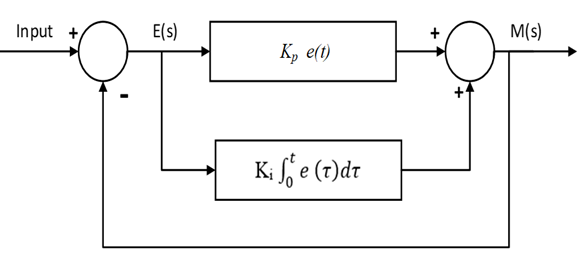
The growing demand for renewable energy drives the need for efficient and reliable power conversion systems. This paper presents the simulation and modeling of a CUK H-Bridge Inverter with current control using a Proportional Integral (PI) algorithm implemented in Power Simulator (PSIM) software. The proposed topology combines an H-Bridge inverter with a CUK AC–AC converter, enabling bidirectional power flow, buck-boost voltage operation, and low Total Harmonic Distortion (THD) in the output current. The current control loop uses a PI controller tuned using the empirical Ziegler–Nichols (Z-N) method, followed by fine-tuning, resulting in optimal parameters of Kp = 0.6, Ti = 0.0167, and Ki = 35. Simulation results show that the actual output current (Iact) accurately follows the reference current (Iref) with minimal steady-state error. The topology operates in buck mode (Vo < Vin), steady-state mode (Vo ≈ Vin), and boost mode (Vo > Vin) depending on the given reference current value. A maximum output power of 2.25 kW is achieved at a reference current of 15 A with a maximum output voltage of 150 V. The measured output current THD is 3.6%, meeting the IEEE 519 standard. These results confirm the effectiveness of the PI-controlled CUK H-Bridge Inverter topology for renewable energy applications.
Downloads
Downloads
Submitted
Accepted
Published
How to Cite
Issue
Section
License
Copyright (c) 2026 Emitor: Jurnal Teknik Elektro

This work is licensed under a Creative Commons Attribution 4.0 International License.