Water quality assessment and characterization of pathogenic Escherichia coli in the Bangkahulu River, Bengkulu, Indonesia
DOI:
https://doi.org/10.23917/bioeksperimen.v12i2.18135Keywords:
Bangkahulu Rivers, Escherichia coli, Hemolytic Activity, Pollution Index, Water QualityAbstract
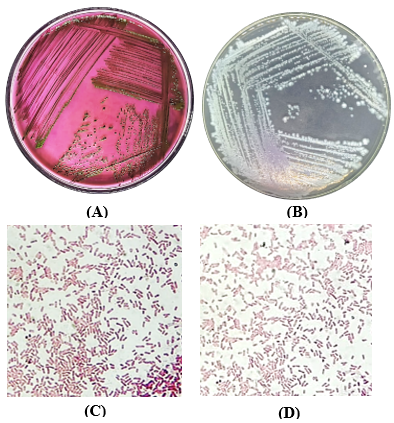
The Bangkahulu River is one of the main rivers that is very important in Bengkulu Province, which is currently facing significant human-induced pressures. This study aims to evaluate the water quality of the Bangkahulu River, as well as to isolate, characterize, and profile the hemolytic Escherichia coli isolated from the upstream to downstream areas. Water samples were taken from five stations using a purposive sampling method. Physical, chemical, and microbiological parameters were analyzed according to the Indonesian national standards (SNI), while E. coli was isolated and identified through morphological characterization, Gram staining, and biochemical tests. Hemolytic activity of the isolates was tested on blood agar. The results showed that Biological Oxygen Demand (BOD), Chemical Oxygen Demand (COD), Total Suspended Solids (TSS), and Total Dissolved Solids (TDS) exceeded the Class I water quality standards as regulated by Government Regulation Number 22 of 2021. The Pollution Index values range from 2.15 to 6.32, indicating a light to moderate level of contamination. Out of 35 identified E. coli isolates, 18 showed ß-hemolytic activity, 12 showed γ-hemolytic activity, and 2 had hemolytic activity. The prevalence of ß-hemolytic isolates suggests the presence of potentially active phenotypic strains in the aquatic environment. The dominance of β-hemolytic isolates points to strains with phenotypic traits related to potential virulence, although hemolytic activity alone is not enough to determine pathogenicity. This finding provides basic information about the physical and chemical pollution levels of the Bangkahulu River and serves as a foundation for further knowledge and research on the importance of continuously monitoring water quality and implementing effective pollution control strategies to reduce potential public health risks from microbial contamination and physical and chemical pollution, ensuring the sustainable use of river water resources.
Downloads
References
Adjovu, G.E., Stephen, H., James, D. and Ahmad, S. (2023). Measurement of total dissolved solids and total suspended solids in water systems: A review of the issues, conventional, and remote sensing techniques. Remote Sensing, 15(14), 3534. https://doi.org/10.3390/rs15143534.
Badan Standardisasi Nasional. (2008). SNI 6989.57:2008 tentang Metoda pengambilan contoh air permukaan. Jakarta: Badan Standardisasi Nasional.
Badan Standardisasi Nasional. (2019). SNI 6989.2:2019 Air dan air limbah—Bagian 2: Cara uji kebutuhan oksigen kimiawi (Chemical Oxygen Demand/COD) dengan refluks tertutup secara spektrofotometri. Jakarta: Badan Standardisasi Nasional.
Badan Standardisasi Nasional. (2019). SNI 6989.72:2019 Air dan air limbah—Bagian 72: Cara uji kebutuhan oksigen biokimia (Biochemical Oxygen Demand/BOD). Jakarta: Badan Standardisasi Nasional.
Badan Standardisasi Nasional. (2019). SNI 6989.3:2019 Air dan air limbah—Bagian 3: Cara uji padatan tersuspensi total (Total Suspended Solids/TSS) secara gravimetri. Jakarta: Badan Standardisasi Nasional.
Badan Standardisasi Nasional. (2019). SNI 6989.27:2019 Air dan air limbah—Bagian 27: Cara uji padatan terlarut total (Total Dissolved Solids/TDS) secara gravimetri. Jakarta: Badan Standardisasi Nasional.
Cappucino, J.G., dan Chad, Welsh. (2021). Microbiology A Laboratory Manual Elevanth Edition. London. Pearson.
Dinas Kesehatan Kota Bengkulu. (2025). Profil Dinas Kesehatan Kota Bengkulu Tahun 2024. Dinas Kesehatan Kota Bengkulu. https://dinkes.bengkulukota.go.id/wp-content/uploads/2025/06/Profil-Dinkes-2024-Finis.pdf.
Dinas Lingkungan Hidup Kota Bengkulu. (2023). Laporan pemantauan kualitas air sungai dan danau: Status mutu dan indeks kualitas air. Pemerintah Kota Bengkulu. https://dlh.bengkulukota.go.id/wp-content/uploads/2023/08/Laporan-Pemantauan-Kualitas-Air-Sungai-Dan-Danau-Status-Mutu-Dan-Indeks-Kualitas-Air.pd.
Gazali, M., & Widada, A. (2021). Analisis kualitas dan perumusan strategi pengendalian pencemaran air Sungai Bangkahulu Bengkulu. Journal of Nursing and Public Health, 9(1), 115–124. https://doi.org/10.37676/jnph.v9i1.1441
Ghernaout, D., Elboughdiri, N., & Lajimi, R. (2022). Electrocoagulation of Escherichia coli culture: Effects of temperature and cell concentration. Open Access Library Journal, 9, 1–23. https://doi.org/10.4236/oalib.1108763.
Ha, D. D., Nguyen, D. H., Nguyen, B. C., & Nguyen, T. Q. (2024). Application of multivariate statistical techniques in the assessment of long-term surface water quality in Dong Thap Province, Vietnam. Environmental Monitoring and Assessment, 196, 1–18. https://doi.org/10.1007/s10661-024-13436-x.
Horecha, A. N., & Mekonen, S. (2025). Assessment of Escherichia coli contamination risk across different environmental media in rural Ethiopia. Journal of Water and Health, 23(8), 940–951. https://doi.org/10.2166/wh.2025.050.
Islam, M. M., Moniruzzaman, M., Shoeb, M., & Mamun, M. I. R. (2025). Spatiotemporal dynamics, quality appraisal and source apportionment of water quality parameters in Shitalakshya River, Bangladesh. Heliyon, 11(6), e42013. https://doi.org/10.1016/j.heliyon.2025.e42013.
Jang, J., Hur, H. G., Sadowsky, M. J., Byappanahalli, M. N., Yan, T., & Ishii, S. (2017). Environmental Escherichia coli: Ecology and public health implications. Microbiology Spectrum, 5(5), 1–19. https://doi.org/10.1128/microbiolspec.BAD-0015-2016.
Jones, J. I., Murphy, J. F., Collins, A. L., Sear, D. A., Naden, P. S., & Armitage, P. D. (2012). The impact of fine sediment on macro-invertebrates. River Research and Applications, 28(8), 1055–1071. https://doi.org/10.1002/rra.1516.
Leimbach, A., Hacker, J., & Dobrindt, U. (2013). Escherichia coli as an all-rounder: The many faces of a core member of the intestinal microbiota. Current Topics in Microbiology and Immunology, 358, 347–364. https://doi.org/10.1007/82_2012_268.
Mainil, J. G. (2013). Escherichia coli virulence factors. Veterinary Immunology and Immunopathology, 152(1–2), 2–12. https://doi.org/10.1016/j.vetimm.2012.09.032.
Mauwalan, Y., Kallau, N., & Laut, M. (2022). Kajian Escherichia coli Resisten Antibiotik pada Lingkungan Air di Indonesia. Jurnal Veteriner Nusantara, 5(1), 23-30. https://doi.org/10.35508/jvn.v5i1.3264.
Mueller, M., Rausch-Phung, E. A., & Tainter, C. R. (2025). Escherichia coli infection. In StatPearls. Treasure Island, FL: StatPearls Publishing. Available from https://www.ncbi.nlm.nih.gov/books/NBK564298.
Ouellet, V., St-Hilaire, A., Dugdale, S. J., Hannah, D. M., Krause, S., & Proulx-Ouellet, S. (2020). River temperature research and practice: Recent challenges and emerging opportunities for managing thermal habitat conditions in stream ecosystems. Science of The Total Environment, 736, 139679. https://doi.org/10.1016/j.scitotenv.2020.139679.
Pinheiro, J. P. S., Windsor, F. M., Wilson, R. W., & Tyler, C. R. (2021). Global variation in freshwater physico-chemistry and its influence on chemical toxicity in aquatic wildlife. Biological Reviews, 96(4), 1528–1546. https://doi.org/10.1111/brv.12711.
Rahmi, Y., Darmawi, Abrar, M., Jamin, Fakhrurrazi, & Fahrimal, Y. (2015). Identifikasi bakteri Staphylococcus aureus pada preputium dan vagina kuda (Equus caballus). Jurnal Medika Veterinaria, 9(2), 154–157. https://doi.org/10.21157/j.med.vet..v9i2.3805.
Reynolds, J. (2021). Eosin methylene blue agar (EMB). Biology LibreTexts. https://bio.libretexts.or.
Sora, V. M., Meroni, G., Martino, P. A., Soggiu, A., Bonizzi, L., & Zecconi, A. (2021). Extraintestinal pathogenic Escherichia coli: Virulence factors and antibiotic resistance. Pathogens, 10(11), 1355. https://doi.org/10.3390/pathogens10111355.
Sunarti, R.N., Budiarti, S., Verawaty, M., Siregar, B.A., & Hariani, P.L. (2022) Diversity of antibiotic-resistant Escherichia coli from rivers in Palembang City, South Sumatra, Indonesia. AIMS Environmental Science, 9(5), 721–734. https://doi.org/10.3934/environsci.2022041.
Tarigan, L.R.W.B., Muharni, Verawaty, M. (2019). Uji Coliform dan Resistensi Escherichia coli Terhadap beberapa Antibiotik pada Sampel Air Sungai Sekanak di Kota Palembang. Prosiding Seminar Nasional Hari Air Dunia 2019. e-ISSN : 2621-7469.
Vigiak, O., Grizzetti, B., Udias-Moinelo, A., Zanni, M., Dorati, C., Bouraoui, F. & Pistocchi, A. (2019). Predicting biochemical oxygen demand in European freshwater bodies. Science of the Total Environment, 666, 1089–1105. https://doi.org/10.1016/j.scitotenv.2019.02.252.
World Health Organization. (2022). Global antimicrobial resistance and use surveillance system (GLASS) report 2022. World Health Organization.
Additional Files
Submitted
Accepted
Published
How to Cite
Issue
Section
License
Copyright (c) 2026 Bioeksperimen: Jurnal Penelitian Biologi

This work is licensed under a Creative Commons Attribution-NonCommercial 4.0 International License.