Recontextualising UTAUT2 for Voluntary Religious Giving: Evidence from Indonesia’s Digital Zakat
DOI:
https://doi.org/10.23917/jisel.v9i01.14470Keywords:
Digital Zakat, Islamic Religiosity, Trust in Zakat Institutions, Zakat Literacy, UTAUT2Abstract
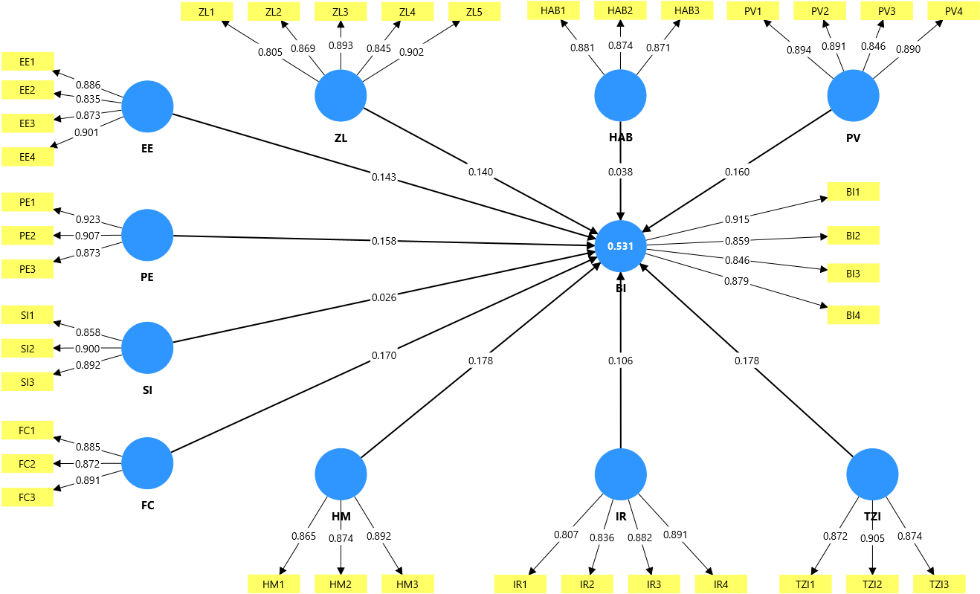
Indonesia is home to the largest Muslim community on earth and to a zakat base estimated above IDR 327 trillion, yet the funds actually collected amount to less than fifteen percent of that ceiling. Digital zakat services have multiplied in recent years, but their take-up among muzakki remains patchy, and what actually motivates voluntary religious giving through online channels is still poorly mapped. The current research broadens the second-generation of Unified Theory of Acceptance and Use of Technology by adding three constructs that become essential once the technology mediates an act of worship rather than an ordinary purchase: zakat literacy, Islamic religiosity, and trust in zakat institutions. Employing a quantitative approach, explanatory devise, survey data were collected from 373 Indonesian Muslims via a purposive online questionnaire and analysed with Partial Least Squares Structural Equation Modelling in SmartPLS 4. The findings show that the exogenous constructs jointly and positively shape the intention to give zakat through digital means (p < 0.01), with effort expectancy, trust in zakat institutions, and facilitating conditions standing out as the leading drivers. Overall, the model accounts for a substantial share of the variance in behavioural intention, and discriminant validity is upheld under the Fornell-Larcker, cross-loading, and Heterotrait-Monotrait criteria. The contribution is a context-adjusted acceptance model showing that, for voluntary religious giving, technological readiness works in concert with, not separately from, spiritual conviction and institutional credibility. The discussion draws out implications for amil zakat bodies, fintech developers, and regulators aiming to build digital zakat ecosystems that are more trustworthy, easier to use, and demonstrably Sharia-compliant.
Downloads
References
Ahimsa, E. A., Sudarsono, H., Abdul Ghoni, M., & Affandi, M. T. (2023). Understanding muzaki adoption of digital zakat payments in Indonesia. journal.uii.ac.idEA Ahimsa, H Sudarsono, MA Ghoni, MT AffandiReview of Islamic Social Finance and Entrepreneurship, 2023•journal.uii.ac.id, 2023(2), 182–193. https://doi.org/10.20885/RISFE.VOL2.ISS2.ART7
Al-Qudah, A. A., Al-Okaily, M., Shiyyab, F. S., Taha, A. A. D., Almajali, D. A., Masa’deh, R., & Warrad, L. H. (2024). Determinants of digital payment adoption among Generation Z: An empirical study. mdpi.comAA Al-Qudah, M Al-Okaily, FS Shiyyab, AAD Taha, DA Almajali, R Masa’deh, LH WarradJournal of Risk and Financial Management, 2024•mdpi.com, 17(11). https://doi.org/10.3390/JRFM17110521
Alalwan, A. A., Dwivedi, Y. K., Rana, N. P., & Algharabat, R. (2018). Examining factors influencing Jordanian customers’ intentions and adoption of internet banking: Extending UTAUT2 with risk. ElsevierAA Alalwan, YK Dwivedi, NP Rana, R AlgharabatJournal of Retailing and Consumer Services, 2018•Elsevier, 40, 125–138. https://doi.org/10.1016/J.JRETCONSER.2017.08.026
Anggraini, Y., Islam, R. I.-J. E. D. B., & 2022, undefined. (2022). Analisis pengaruh literasi zakat dan kepercayaan terhadap minat membayar zakat melalui zakat digital pada masyarakat di Kabupaten Sidoarjo. journal.unesa.ac.idYN Anggraini, R IndrariniJurnal Ekonomika Dan Bisnis Islam, 2022•journal.unesa.ac.id, 5(1), 54–66. https://doi.org/10.26740/JEKOBI.V5N1.P54-66
Bajunaied, K., Hussin, N., & Kamarudin, S. (2023). Behavioral intention to adopt FinTech services: An extension of unified theory of acceptance and use of technology. Elsevier, 9(1). https://doi.org/10.1016/J.JOITMC.2023.100010
BAZNAS. (2024). BAZNAS Laporan Pengelolaan Zakat Nasional Akhir Tahun 2024. https://drive.google.com/file/d/1aMeDyn7IN8YVDeOugSor59UcGWX6YmLK/view
Cahyani, U., Sari, D., Wakaf, A. A.-Z. J. Z. D., & 2022, undefined. (2022). Determinant of behavioral intention to use digital zakat payment: the moderating role of knowledge of zakat. researchgate.netUE Cahyani, DP Sari, A AfandiZISWAF: Jurnal Zakat Dan Wakaf, 2022•researchgate.net, 9(1), 1. https://doi.org/10.21043/ZISWAF.V9I1.13330
Etab, M. M., … I. E. E. S.-ا. ا. ل., & 2023, undefined. (n.d.). Determinants of Behavioral Intentions to Adopt Online Platforms to Pay Zakah and Sadaqah. journals.ekb.egM Mohamed Etab, I Essam Eldin Salama, H Mohamed Elmenshawyالمجلة العلمية للدراسات التجارية والبيئية, 2023•journals.ekb.eg. Diambil 21 Mei 2026, dari https://journals.ekb.eg/article_324353.html
Febriandika, N. R., Kusuma, D. G., & Yayuli. (2023). Zakat compliance behavior in formal zakat institutions: An integration model of religiosity, trust, credibility, and accountability. International Journal of Advanced and Applied Sciences, 10(6), 187–194. https://doi.org/10.21833/IJAAS.2023.06.022
Feldman. (2004). Resources in Emerging Structures and Processes of Change on JSTOR. https://www.jstor.org/stable/30034734
Fharadilla, N., Jurnal, M. M.-I., & 2023, undefined. (2023). Empowering Muzakki Through Digital Media Platforms in Collecting Zakat Funds in Baznas. ejournal.radenintan.ac.idN Fharadilla, M MuhtadiIjtimaiyya: Jurnal Pengembangan Masyarakat Islam, 2023•ejournal.radenintan.ac.id, 16(2), 23. https://doi.org/10.24042/IJPMI.V16I2.16848
Finance, A. Z.-I. J. of I., & 2025, undefined. (2025). A Behavioral Analysis Behind the Intention to Adopt Islamic Financial Products and Services in Malaysia: Underpinning Social Cognitive Theory. ejournal.uin-suka.ac.idA ZulfakaInternational Journal of Islamic Finance, 2025•ejournal.uin-suka.ac.id, 3(1), 42–62. https://doi.org/10.14421/IJIF.V3I1.2335
Fornell, C., research, D. L.-J. of marketing, & 1981, undefined. (1981). Evaluating structural equation models with unobservable variables and measurement error. journals.sagepub.comC Fornell, DF LarckerJournal of marketing research, 1981•journals.sagepub.com, 18(1), 39. https://doi.org/10.2307/3151312
Ghofar, A., Fawwaz, M., Prestianawati, S. A., Mubarak, M. F., Manzilati, A., & Imamia, T. L. (2024). Young muslim generation’s preferences for using digital platforms for Zakat payments: A cross-country study of Indonesia and Malaysia. academia.eduA Ghofar, M Fawwaz, SA Prestianawati, MF Mubarak, A Manzilati, TL ImamiaJournal of Infrastructure, Policy and Development, 2024•academia.edu, 8(6). https://doi.org/10.24294/JIPD.V8I6.3249
Gupta, S., Kiran, R., & Sharma, R. K. (2023). Embedding technology interface and digital payment drivers in the unified theory of acceptance and use of technology 2 model: Transforming behavioral. mdpi.comS Gupta, R Kiran, RK SharmaSustainability, 2023•mdpi.com, 15(17). https://doi.org/10.3390/SU151713018
Hair, J. F., Risher, J. J., Sarstedt, M., & Ringle, C. M. (2019). When to use and how to report the results of PLS-SEM. emerald.comJF Hair, JJ Risher, M Sarstedt, CM RingleEuropean business review, 2019•emerald.com, 31(1), 2–24. https://doi.org/10.1108/EBR-11-2018-0203
Hamdani, L., Sunarsih, S., Yusfiarto, R., Rizal, A., & Khoirunnisa, A. N. (2024). Social media, trust and intention to pay zakat through institution: lessons from Indonesian experience. emerald.comL Hamdani, S Sunarsih, R Yusfiarto, A Rizal, AN KhoirunnisaJournal of Islamic Marketing, 2024•emerald.com, 15(9), 2399–2418. https://doi.org/10.1108/JIMA-01-2023-0016
Haryanto, R., Bakri, A. A., Samosir, H. E. S., Idris, D. L., Fauzan, T. R., & Agustina, W. (2023). Digital Literacy and Determinants of Online Zakat Payments Lessons from Indonesia Experience With UTAUT. Journal of Law and Sustainable Development, 11(4). https://doi.org/10.55908/SDGS.V11I4.575
Henseler, J., Ringle, C. M., & Sarstedt, M. (2015). A new criterion for assessing discriminant validity in variance-based structural equation modeling. SpringerJ Henseler, CM Ringle, M SarstedtJournal of the academy of marketing science, 2015•Springer, 43(1), 115–135. https://doi.org/10.1007/S11747-014-0403-8
Ikhlash, M., Huwaida, J. H., Asmu’, F., Huwaida, H., & Faishal, &. (2023). Loyalty in the post-pandemic landscape: Unraveling how behavioral intentions shape m-banking loyalty. journal.uii.ac.idM Ikhlash, JH Huwaida, F Asmu’iJournal of Contemporary Accounting, 2023•journal.uii.ac.id, 5(3), 142–154. https://doi.org/10.20885/JCA.VOL5.ISS3.ART2
Kasri, R., and, M. S.-J. of I. M. E., & 2023, undefined. (2023). Determinants of the intention to pay zakat online: the case of Indonesia. jimf-bi.orgRA Kasri, MW SosiantiJournal of Islamic Monetary Economics and Finance, 2023•jimf-bi.org, 9(2), 275–294. https://doi.org/10.21098/JIMF.V9I2.1664
Khatimah, H., Pertamina, U., Susanto, P., Negeri, U., Nor, P., & Abdullah, L. (2019). Hedonic motivation and social influence on behavioral intention of e-money: The role of payment habit as a mediator. researchgate.netH Khatimah, P Susanto, NL AbdullahInternational Journal of Entrepreneurship, 2019•researchgate.net, 23(1). https://www.researchgate.net/profile/Perengki-Susanto/publication/332873164_Hedonic_motivation_and_social_influence_on_behavioral_intention_of_e-money_The_role_of_payment_habit_as_a_mediator/links/5ea067c1458515ec3afc54cf/Hedonic-motivation-and-social-inf
Kurniawan, I., Economics, D. D.-J. of S., & 2023, undefined. (2023). Gen Z Behavioral Intentions to Pay Zakat: The Effect Ease of Digital Payments Zakat Literacy and Religiosity. journal.uaindonesia.ac.idI Kurniawan, D DzikrullohJournal of Sharia Economics, 2023•journal.uaindonesia.ac.id, 5(2), 27–38. https://doi.org/10.35896/JSE.V5I2.592
Leedy, P. D., & Ormrod, J. E. (2005). Practical Research: Planning and Design (8th Edition): Paul D. Leedy, Jeanne E. Ormrod: 9780131108950: Amazon.com: Books. 352. https://books.google.com/books/about/Practical_Research.html?hl=id&id=MipiQgAACAAJ
Limanan, C., … K. K.-J. of A. on E. and, & 2023, undefined. (2023). Behavioral Intention To Use Digital Wallets in Indonesia. journal.untar.ac.idCC Limanan, K KeniInternational Journal of Application on Economics and Business, 2023•journal.untar.ac.id, 1(2), 216–227. https://doi.org/10.24912/IJAEB.V1I2.216-227
Malik, A., Alrasyid, H., Islamic, M. K.-A. J. of, & 2024, undefined. (2024). Student compliance in paying zakat: Do zakat literacy and awareness matter? journal.uii.ac.idA Malik, H Alrasyid, MM KamaruddinAsian Journal of Islamic Management (AJIM), 2024•journal.uii.ac.id, 2024(1), 63–73. https://doi.org/10.20885/AJIM.VOL6.ISS1.ART6
Manajemen, K. T.-J. I., & 2024, undefined. (2024). Hubungan Digital Financial Literacy, Facilitating Conditions, Social Influence, Performance Expectancy, Behavioral Intention, Use Behavior terhadap E-Wallet di. ojs.um-palembang.ac.idKA TavidJurnal Ilmu Manajemen, 2024•ojs.um-palembang.ac.id, 14. https://doi.org/10.32502/JIM.V14I1.490
MR Siti Hirdayu - …, & 2024, U. (n.d.). International Journal of Research and Innovation in Social Science-2024: The Role of Technology Acceptance Model on Intentions of Zakat Payers in Using Online. eprints.uptm.edu.my. Diambil 21 Mei 2026, dari https://eprints.uptm.edu.my/id/eprint/4707
Muhammad, A.-S., Uin, K. H., Saifuddin, Z., Purwokerto, I., Nur, S., Uin, A. K. H., Putri, A., & Uin, I. K. H. (2023). Analysis of the potential of zakat institutions in improving socio-economic society. NUsantara Islamic Economic Journal, 2(1), 36–41. https://doi.org/10.34001/NUIEJ.V2I1.528
Nikolopoulou, K., Gialamas, V., & Lavidas, K. (2021). Habit, hedonic motivation, performance expectancy and technological pedagogical knowledge affect teachers’ intention to use mobile internet. ElsevierK Nikolopoulou, V Gialamas, K LavidasComputers and Education Open, 2021•Elsevier, 2. https://doi.org/10.1016/J.CAEO.2021.100041
Ozturk, A. B., Nusair, K., Okumus, F., & Hua, N. (2016). The role of utilitarian and hedonic values on users’ continued usage intention in a mobile hotel booking environment. ElsevierAB Ozturk, K Nusair, F Okumus, N HuaInternational Journal of Hospitality Management, 2016•Elsevier, 57, 106–115. https://doi.org/10.1016/J.IJHM.2016.06.007
Patrik, J., & Lady, Lady. (2022). Faktor yang Mempengaruhi untuk Menggunakan Mobile Banking dari Internet Banking Terhadap Penggunaan Konsumen Perbankan di Indonesia. SEIKO : Journal of Management & Business, 5(1), 284–299. https://journal.stieamkop.ac.id/index.php/seiko/article/view/1575
Perry et al. 2003:660. (n.d.). (Perry et al. 2003:660). The Center for Evidence-Based Crime Policy (CEBCP). Diambil 2 Juni 2026, dari https://cebcp.org/evidence-based-policing/the-matrix/individuals/individuals-perry-et-al-2003/
Rezza, A., Widyana, S., … A. A.-J. (Jurnal P., & 2024, undefined. (2024). Digital payment adoption: the antecedent of habit and behavioral intention. eprints.ulbi.ac.idAM Rezza, SF Widyana, AD Anggraeni, A AndriyantoJPPI (Jurnal Penelitian Pendidikan Indonesia), 2024•eprints.ulbi.ac.id, 10(4), 768–775. https://doi.org/10.29210/020243563
Sharma, S., Management, M. S.-I. J. of I., & 2019, undefined. (2019). Examining the role of trust and quality dimensions in the actual usage of mobile banking services: An empirical investigation. ElsevierSK Sharma, M SharmaInternational Journal of Information Management, 2019•Elsevier, 44, 65–75. https://doi.org/10.1016/J.IJINFOMGT.2018.09.013
Summers, J. O. (2001). Guidelines for conducting research and publishing in marketing: From conceptualization through the review process. Journal of the Academy of Marketing Science, 29(4), 405–415. https://doi.org/10.1177/03079450094243
Sutarso, Y. (2022). The role of Islamic religiosity on the relationship between risk, trust, and intention to use digital payments during the COVID-19 pandemic. journal.umy.ac.idY SutarsoInternational Journal of Islamic Economics and Finance (IJIEF), 2022•journal.umy.ac.id, 5(2). https://doi.org/10.18196/IJIEF.V5I2.13990
Systems, L. L.-I. J. of W. I., & 2021, undefined. (2020). Factors influencing the adoption of mobile payment systems in Indonesia. emerald.comL LisanaInternational Journal of Web Information Systems, 2021•emerald.com, 17(3). https://doi.org/10.1108/IJWIS-01-2021-0004
Varadarajan, P. R., & Cunningham, M. H. (1995). Strategic alliances: A synthesis of conceptual foundations. Journal of the Academy of Marketing Science, 23(4), 282–296. https://doi.org/10.1177/009207039502300408
Venkatesh, V., Morris, M. G., Davis, G. B., & Davis, F. D. (2003). User Acceptance of Information Technology: Toward A Unified View1. misq.umn.eduV Venkatesh, MG Morris, GB Davis, FD DavisMIS quarterly, 2003•misq.umn.edu, 27(3), 425–478. https://doi.org/10.2307/30036540
Venkatesh, V., Thong, J. Y. L., & Xu, X. (2012). Consumer Acceptance and Use of Information Technology: Extending the Unified Theory of Acceptance and Use of Technology1. misq.umn.eduV Venkatesh, JYL Thong, X XuMIS quarterly, 2012•misq.umn.edu, 36(1), 157–178. https://doi.org/10.2307/41410412
Yusfiarto, R., Setiawan, A., Zakat, S. N.-I. J. of, & 2020, undefined. (2020). Literacy and intention to pay zakat. ijazbaznas.comR Yusfiarto, A Setiawan, SS NugrahaInternational Journal of Zakat, 2020•ijazbaznas.com, 5(1), 15–27. https://doi.org/10.37706/IJAZ.V5I1.221
Downloads
Submitted
Accepted
Published
How to Cite
Issue
Section
License
Copyright (c) 2026 Journal of Islamic Economic Laws

This work is licensed under a Creative Commons Attribution-ShareAlike 4.0 International License.